
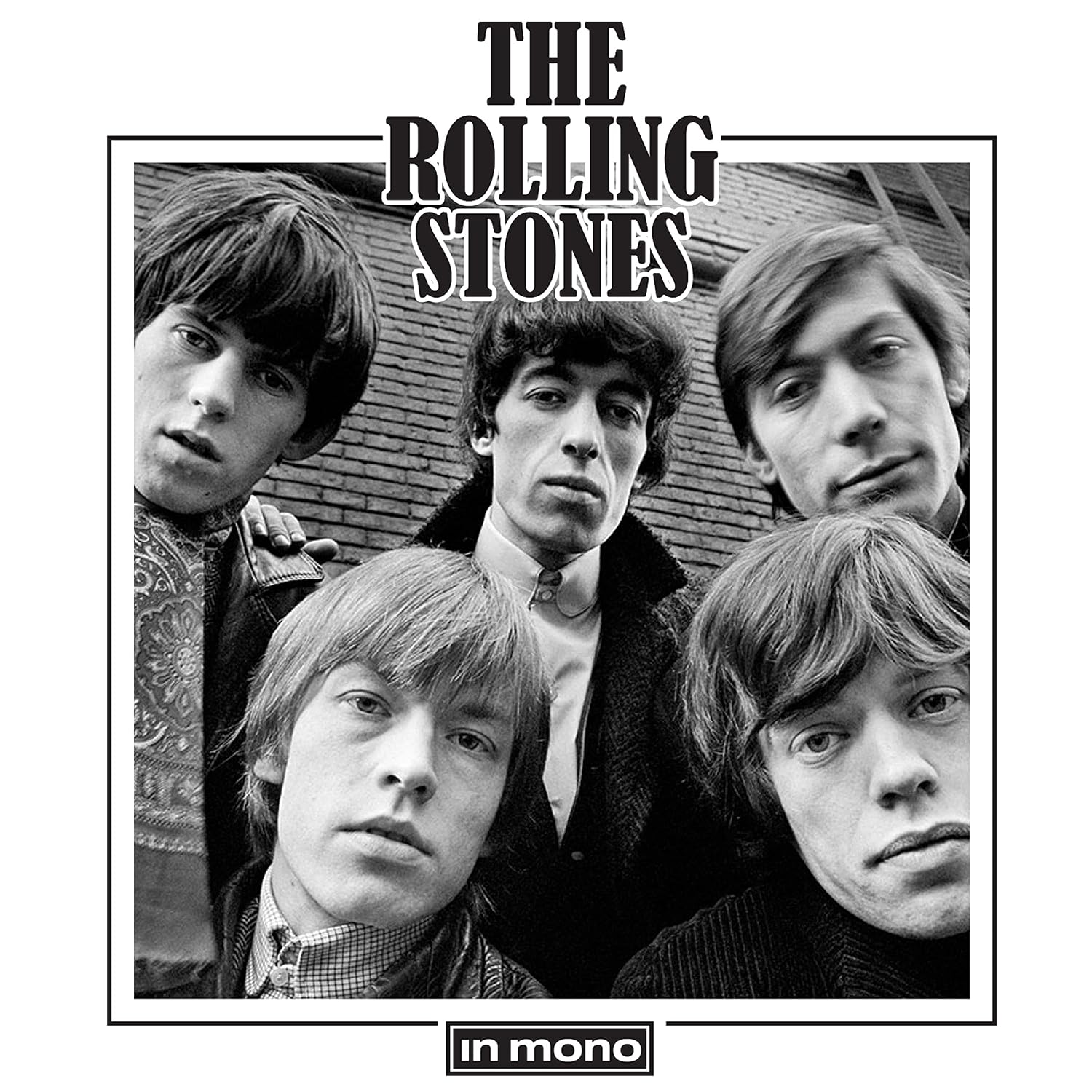
The Rolling Stones in Mono box set cover art.
When the Rolling Stones emerged from the London club scene in 1962, they were driven entirely by a singular obsession with raw American blues. The man who engineered that vision—and literally named the band after a Muddy Waters track—was Brian Jones. While the songwriting powerhouse of Mick Jagger and Keith Richards eventually took the driver’s seat, it was Jones’ multi-instrumental genius that continually rescued the group from blues conformity and expanded their sonic architecture in the studio.
In addition to his foundational blues guitar work, Jones masterfully expanded the band’s palette by playing an array of diverse instruments: sitar, marimba, dulcimer, recorder, Mellotron and saxophone. He added those textures to Stones records from Aftermath through Their Satanic Majesties Request, right up until his exit from the band in June 1969 and his death less than a month later. Here are 15 songs that barely scratch the surface of what he brought to the table.
“Not Fade Away” (Single/England’s Newest Hitmakers, 1964)
Buddy Holly’s 1957 rockabilly hit received a swaggering British makeover that carried the group to #3 in the U.K. but just #48 in the U.S. While the rhythm section drives the heavy Bo Diddley beat, it is Jones’ frantic, wailing blues harmonica that serves as the track’s melodic engine, anchoring Jagger’s vocals rather than competing with them.
“The Last Time” (Single/Out of Our Heads, 1965)
This gospel-inspired track introduced the first Jagger-Richards composition to top the U.K. charts, spending three weeks at #1 while climbing to #9 in America. While Keith Richards anchored the song’s driving rhythmic chords and handled the instrumental solo, Brian Jones played the track’s iconic, looping opening lead guitar riff.
“(I Can’t Get No) Satisfaction” (Single/Out of Our Heads, 1965)
The Rolling Stones’ first global #1 hit was powered by Richards’ iconic electric fuzz riff. While that riff stole the spotlight, Jones tracked the crucial underlying acoustic rhythm guitar. Jones’ rhythmic strumming filled out the sonic space beneath the electric layers to drive the song’s relentless momentum.
“Get Off of My Cloud” (Single/December’s Children, 1965)
Released while its predecessor was still dominating radio waves, this hard-driving follow-up duplicated that success by storming to #1 on both sides of the Atlantic. The track stands as a prime example of the band’s early dual-guitar interplay, the stereo version featuring Jones’ sharp, rhythmic electric guitar stabs in the right channel countering Richards’ open chords in the left.
“Paint It, Black” (Single/Aftermath, 1966)
The haunting sitar gave this dark, hypnotic recording a revolutionary sound that secured another ubiquitous #1 hit in the U.S. and the U.K. Inspired by George Harrison’s work with the Beatles, a self-taught Jones tracked the cyclical Eastern line that defined the song’s entire atmosphere.
“Under My Thumb” (Aftermath, 1966)
One of the defining cuts from the landmark album traded standard blues riffs for an unforgettable, syncopated groove. Seeking to break up the monotony of standard guitar lines at RCA Studios in Hollywood, Jones picked up the marimba, creating the breezy, melodic hook that turned this album track into an enduring classic.
Related: Brian Jones is recalled by Bill Wyman, Jimmy Page and others
“Mother’s Little Helper” (Single/Aftermath UK, 1966)
Prescription drug dependency was a highly uncommon topic in popular music when this sharp, witty social commentary appeared, eventually peaking at #8 on the U.S. singles chart. The track’s iconic, buzzing, Eastern-flavored hook features Jones playing a 12-string Vox Mando-Guitar, which provided an eerie, high-pitched drone that perfectly complemented Richards’ driving acoustic rhythm guitar.
“Lady Jane” (Aftermath, 1966)
Renaissance influences and courtly arrangements revealed just how far the group had traveled from its blues-club origins, helping to push the track to #24 in the U.S. Having discovered the instrument through folk musician Richard Fariña, Jones’ delicate, Elizabethan plucking on the Appalachian dulcimer perfectly frames Jagger’s aristocratic vocals.
“Let’s Spend the Night Together” (Single/Between the Buttons, 1967)
Controversy over its suggestive lyrics caused extensive American radio bans—stalling it at #55 in the U.S.—but couldn’t prevent this pounding rocker from becoming a #3 hit in the U.K. Alongside the driving piano tracks played by Richards and Jack Nitzsche, Jones layered in a rhythmic electric organ that masterfully filled out the choruses to build the song’s massive wall of sound.
“Ruby Tuesday” (Single/Between the Buttons US, 1967)
Issued as a double A-side with “Let’s Spend the Night Together,” this wistful ballad climbed all the way to #1 on the Billboard Hot 100 while reaching #3 at home in England. While Richards handled the primary, elegant piano tracks, it was Jones who gave the song its signature pastoral melancholy by playing the prominent alto recorder melody.
“She’s a Rainbow” (Their Satanic Majesties Request, 1967)
The psychedelic experiments of the album rarely sounded more rewarding than on this colorful, lysergic gem, which peaked at #25 in the U.S. Built around a beautiful piano line by Nicky Hopkins, the track’s symphonic atmosphere combined a real string section arranged by a pre-Led Zeppelin John Paul Jones with Jones’ triumphant Mellotron brass flourishes.
“Jumpin’ Jack Flash” (Non-album single, 1968)
A thunderous guitar riff announced a triumphant return to stripped-down rock and roll, previewing the raw aesthetics of the Beggars Banquet sessions and riding to #1 in the U.K. and #3 in the U.S. Reconnecting with their blues roots, the track’s heavy sonic engine was actually built on Richards’ heavily overdriven acoustic guitars, while an increasingly alienated Jones contributed a clean electric backing part mixed deep in the background.
“No Expectations” (Beggars Banquet, 1968)
Expressive acoustic slide guitar and an unhurried country-blues feel gave this LP highlight a quiet, devastating emotional weight. Played on a Gibson Hummingbird acoustic in open D tuning, Jones’ weeping slide work stands as his beautiful, heartbreaking studio swan song with the band before his departure the following year.
“Street Fighting Man” (Beggars Banquet, 1968)
Inspired by the political unrest of 1968, this uncompromising anthem captured the turbulent mood of its time, reaching #48 in the U.S. despite heavy radio restrictions. Underneath Richards’ heavily overdriven acoustic guitars, Jones layered a traditional Indian tamboura to inject the subtle, vibrating Eastern drone that amplified the track’s tense energy.
“Sympathy for the Devil” (Beggars Banquet, 1968)
Afro-Latin rhythms, literary inspiration and Mick Jagger’s theatrical vocals combined to produce one of rock’s boldest, most controversial album masterworks. Though his studio presence was rapidly fading by late 1968, Jones joined the primal “woo-woo” backing vocal choir, though the acoustic rhythm guitar he recorded was almost entirely mixed out of the final track.
The Stones’ early albums—with Brian Jones—have been reissued on vinyl and are available in the U.S. here, in Canada here and in the U.K. here.





6 Comments so far
Jump into a conversationDidn’t Dave Mason play the tamboura on “Street Fighting Man”?
I feel so fortunate to have seen the Rolling Stones when Brian was in the band. Caught them a couple of times at the Sacramento Memorial Auditorium. It’s hard to believe they are still out there making great music and performing. I’m sure the shows are great but for me, a band, when just starting out is always my favorite. Regardless, they always deliver.
His contributions were strong in the early period, until they were not.
Great article that highlights indeed nails, Brian’s contributions, which are masterful. You could add Jigsaw Puzzle where he played Melotron. And Dave Mason played shehnai on Street Fighting Man, with Brian on tamboura and sitar.
Keith seems not to have understood (or maybe just didn’t care for) the value of what I call 3 dimensional music. Brian and later Mick Taylor brought that. It brings their music up to the ether.
P.S. Must add 2000 Light Years from Home, the b-side to She’s a Rainbow single. Brian plays Mellotron & Electric Dulcimer. The breaks are fabulous, with Keith playing lead riff master backed Brian’s smooth flowing Mellotron.
1. paint it, black. 2. play with fire. 3. the singer not the song. 4. blue turns to grey 5. back street girl. 6. stupid girl 7. satisfaction
these are my all time favorite songs by the stones from any era ever; all happen to be from the brian jones era however.