
The Lost Tapes: Interview with the Late Phil Ramone, Producer of Billy Joel, Paul Simon & Other Giants
by Ben Brooks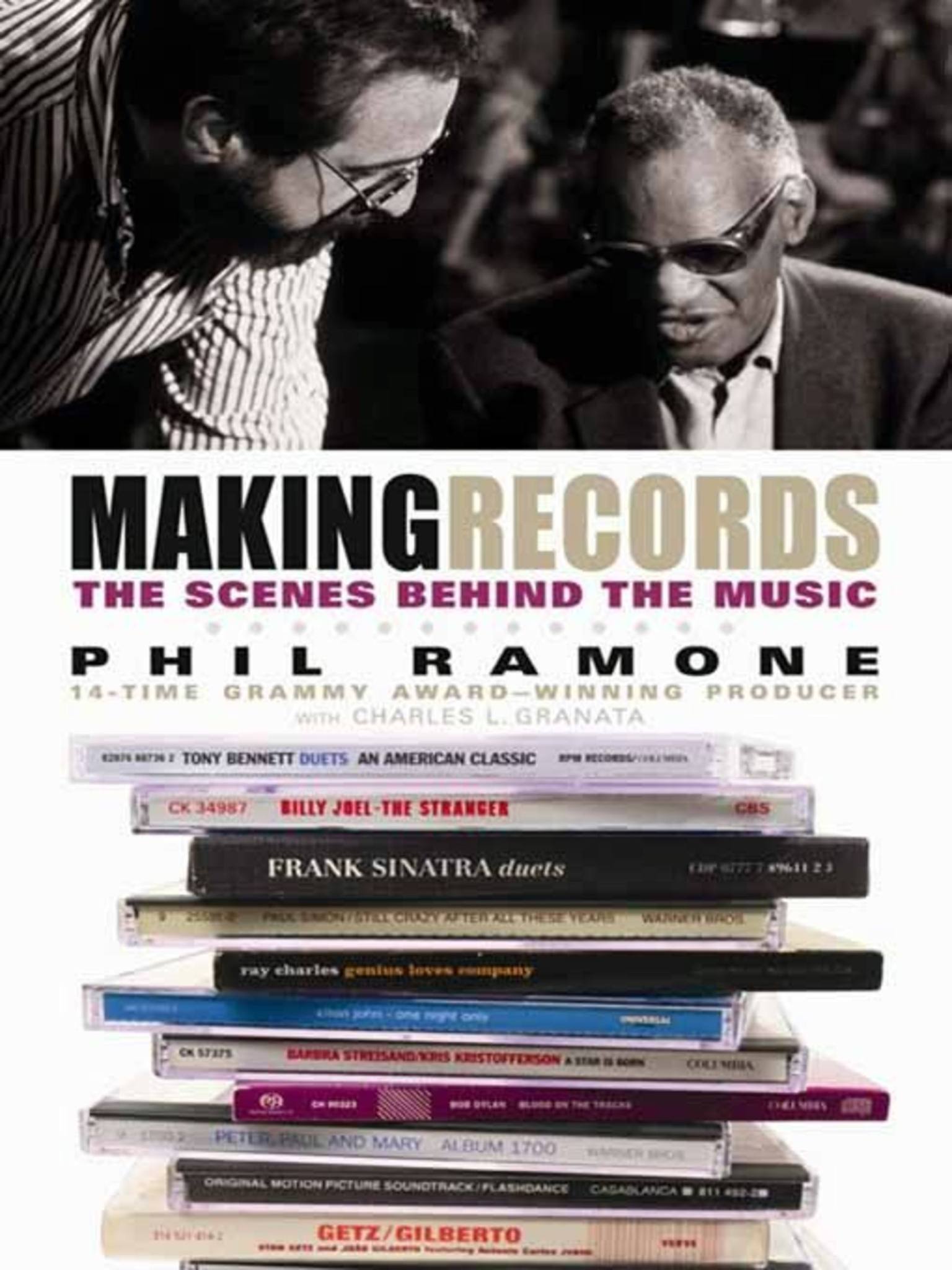
Phil Ramone’s memoir, Making Records: The Scenes Behind the Music
On August 11, 1983, Phil Ramone was at the height of an extraordinary career. He had just produced Billy Joel’s An Innocent Man, one of the year’s biggest albums, and was coming off Flashdance, the blockbuster soundtrack that helped define the sound of the decade. Already regarded as one of the music industry’s most innovative producers, Ramone had spent more than two decades shaping the sound of popular music—and he was far from finished.
Born Philip Rabinowitz on January 5, 1934, in South Africa, and a child violin prodigy, Ramone founded New York’s legendary A&R Recording in 1959, where he engineered landmark sessions for artists including John Coltrane, Dionne Warwick, Peter, Paul & Mary, and Dusty Springfield. As a producer and engineer, his credits would eventually span an astonishing range of artists: Bob Dylan, Billy Joel, Paul Simon, Paul McCartney, Chicago, B.B. King, Rod Stewart, Aretha Franklin, James Taylor, Frank Sinatra, Bono and many more.
But Ramone was more than a hitmaker. Throughout his career, he embraced new technology long before it became standard practice, helping pioneer advances in recording while later founding META (the Music Engineering & Technology Alliance). His work extended beyond records to film, television, live concerts and Broadway, with credits that included A Star Is Born (1976), Midnight Cowboy and Ghostbusters. He remained one of the rare producers equally comfortable with artistic tradition and technological disruption until his death from an aortic aneurysm in 2013 at age 79.
In this wide-ranging, spontaneous conversation, conducted at Soundcastle studio in Los Angeles the morning after an all-night session completing the final mixes for Bossa Nova Hotel, Michael Sembello’s first solo album, Ramone reflects on songwriting, studio technology, the changing role of the producer and the future of the recording business. His observations on home recording, digital production and the craft behind hit records capture the music industry at a pivotal moment, as the analog era was giving way to the digital age.
Ben Brooks: You were in the studio until five this morning. Who were you working with?
Phil Ramone: Michael Sembello. He’s the artist behind “Maniac” from the Flashdance soundtrack. We just finished another mix of his solo album. It’s in the mastering room now. Second time around. Just final touches. It’s pretty good.
Flashdance looks like it’s going to be a huge hit. You supervised the music. Movies take a lot longer to make than records. How do you choose music for a film that’s still months away from being released?
That’s the hell of it. You’re trying to set music for a movie that’s going to come out six months, maybe a year later. You’re predicting the future of music. You’re predicting style while you’re telling a story. Movie producers and directors are usually listening to whatever’s in the Top 10 that week. They don’t necessarily understand how quickly pop music changes.
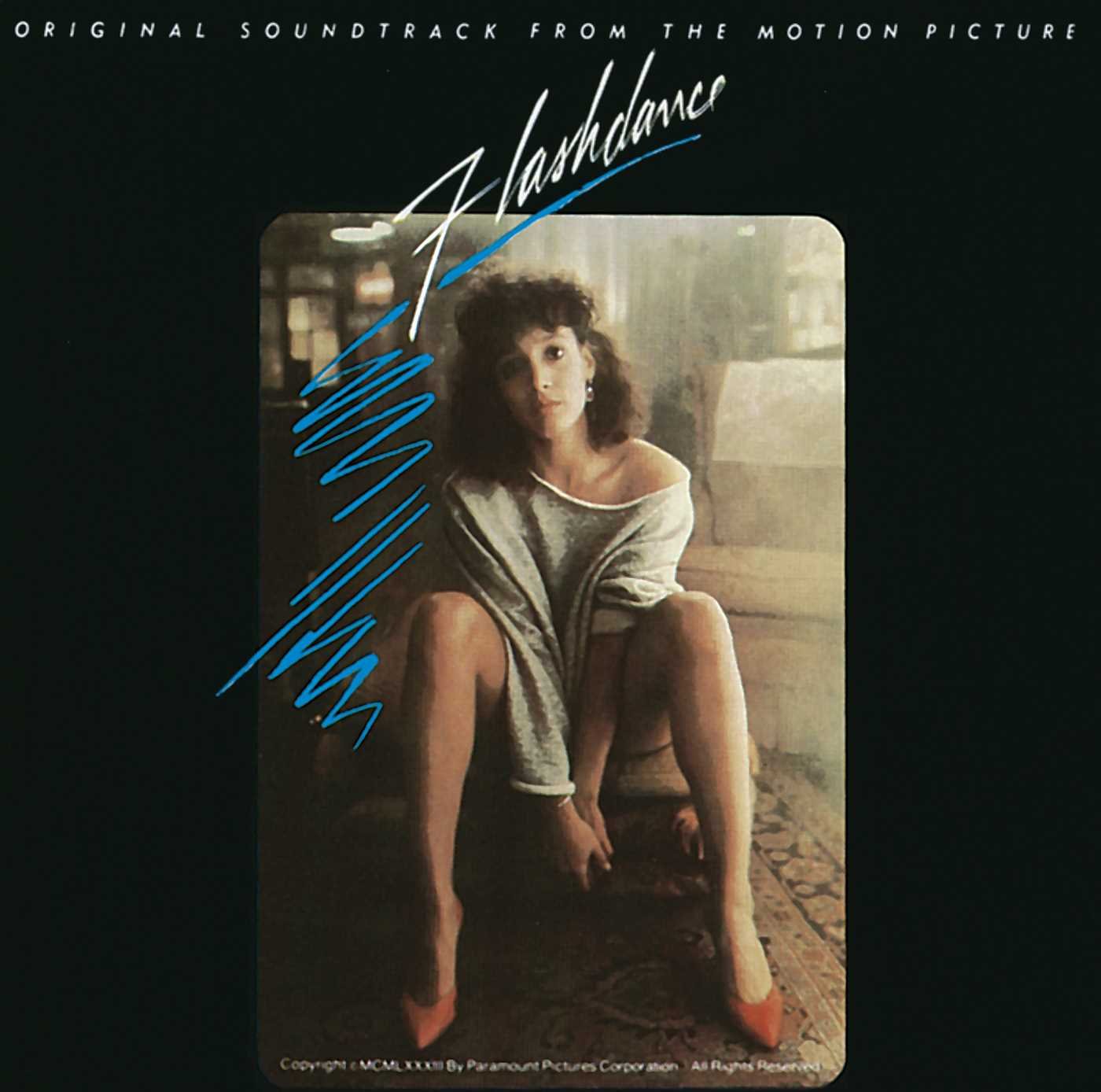
Flashdance album cover
What guided your choices?
I went for something very street, very rhythm-oriented. Most of the songs were written specifically for the picture. Shandi’s “He’s a Dream” started as a demo. Laura Branigan’s “Imagination” was refined for the film. But we also felt that if everything was original, there wouldn’t be enough reality. That’s why I used Branigan’s hit “Gloria” during the skating scene. Jennifer Beals’ character trains for two years and falls on her ass. It’s sad. I didn’t want sad music. “Gloria” has those horrendous trumpets at the end that I love. She’s sitting there on the cold ice, nobody comes near her and those trumpets are blaring. It’s ironic. And when you look at Jennifer’s dance sequences—that’s what “Maniac” is about. It’s an urgent song inside a very technical-sounding production. I think that’s where pop music is headed.
Michael Jackson seems to be pointing in that direction.
Absolutely. Michael is the key. I’d probably give more credit to Michael than Quincy [Jones, Jackson’s producer], although obviously they’re a team. What happens in pop is that today’s hits become tomorrow’s templates. Everybody starts cloning whatever worked two or three months earlier.
Is Flashdance helping push that trend?
I think it’s all connected. The dancing. Jeff Hornaday’s choreography. Michael Sembello. They all have a real street sensibility. People may be surprised by Michael’s album because he’s incredibly eclectic. He spent seven or eight years with Stevie Wonder. Those are tremendous roots.
I didn’t realize he’d worked with Stevie Wonder.
He played guitar for him, wrote songs. He wrote “Mirror Mirror” for Diana Ross and worked with Quincy. He’s very musical. I’ve been fortunate to work with him.
Records like “Maniac,” Peter Gabriel’s “Shock the Monkey, and Thomas Dolby’s “She Blinded Me With Science” are built as much around sound as melody. “Maniac” seems to have both. It seems like artists are relying more on synthesizers and studio technology these days.
Music is cyclical. New technology, changes in the marketplace, changes in public taste—they all take time to settle in. In the beginning of the ’80s, people kept asking me, “What’s the sound of the ’80s going to be?” Well, it’s already 1983, and people don’t realize these things don’t change overnight, especially when the record business has been in a slump.
The business needs to rejuvenate itself.
During a slump, the record and movie businesses usually look backward. They look for something comfortable. Remember when everybody suddenly rediscovered the ’40 and Art Deco? People reach for something secure.
Now we’ve got punk and then new wave. Punk is back-to-basics with an attitude against what came before.
What happened with punk and new wave was different. There was a lack of melody. It was a statement. The songs were short—get in, get out. In England the attitude and the lyrics really came across. In America, not as much. It became more about separating yourself from mainstream pop. But then someone like Elvis Costello comes along. He’s musical. He’s intelligent. He brings melody and lyrics back into it.
Costello stands apart from punk.
Exactly. There are songs built on one chord that are rhythmically fascinating. But for a while everybody seemed to go back to simple hard-rock structures—two or three chords that worked because they were presented the right way. The interesting thing is, you never really invent something completely new. You repackage it.
You once said in an interview pop music has its roots in classical music.
Absolutely. People in England grow up hearing Mozart and the Beatles. The BBC exposes kids to everything. In England, a 10-year-old may not even realize it, but he’s heard opera, show tunes, rhythm and blues, classical music—all mixed together. They don’t separate music into neat little boxes. Here, we’ve become a country of formats. You choose a radio station and that’s all you listen to.
The British are heavily influenced by American music.
That’s exactly my point. I’ve spent a lot of time in England over the years. The British have always had a way of taking a particular period of American music—sometimes one we’ve almost forgotten—and bending it into something new. George Martin has talked about Paul McCartney’s fascination with American rhythm and blues, back when people still called it race music. The Beatles absorbed that sound and reshaped it into something uniquely their own. That’s fascinating to me.
Pop music is really a blending of past music traditions.
There really isn’t an ethnic style to pop music when you look closely. Blues becomes orchestral. Gospel finds its way into pop. Black music can become sophisticated with strings and choir. Everything keeps changing shape.
But here in America, where blues and jazz originated, that music is still pure.
America should be proud of its musical heritage, but sometimes we ignore it. We don’t celebrate our jazz roots nearly enough.
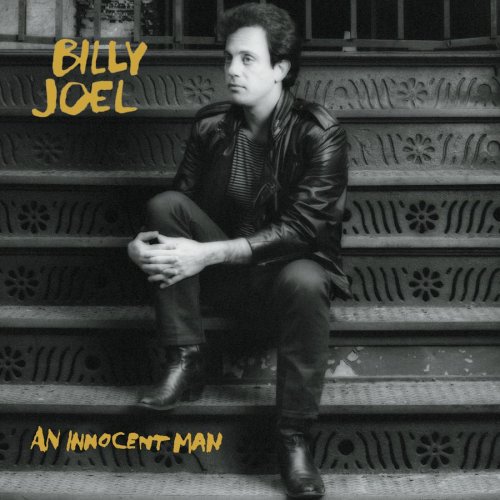
Billy Joel borrows from ’50s R&B and doo-wop on An Innocent Man.
We did that deliberately. Billy loves that music. Paul Simon has done the same thing. Still Crazy After All These Years. One-Trick Pony.
I liked him using the Dixie Hummingbirds on There Goes Rhymin’ Simon.
Paul grew up listening to those records. Then you combine musicians like Richard Tee and Steve Gadd—players who aren’t limited to one style—and suddenly you’ve got something that doesn’t sound nostalgic. It sounds fresh. That’s what I love.
Younger musicians are growing up with all of those influences at once.
That’s what’s exciting. A six- or eight-year-old can pick up a little Casio keyboard, find a drum beat and start discovering melodies. Kids today are years ahead of where kids were 10 years ago. I think that’s part of the appeal of Flashdance. It looks sophisticated, but underneath it’s a street movie. Kids recognize themselves in it.
What else do you see happening in music right now?
I think the singer-songwriter as a performer isn’t as strong as he or she once was. I’ve thought about putting together a traveling show with five or six great songwriters backed by a band. Not vaudeville, not an old television variety show—a real showcase for writers. Too many great songwriters feel they have to become recording artists just to get their songs heard.
A lot of great writers aren’t natural performers.
Right. Look at Bowie. Look at Culture Club. They’re performers, and they understand that performance is part of communicating the songs. Boy George said something I completely agree with. He said he had to become a little bizarre before anybody would listen to his songs. Nobody wanted to hear him when he was just a good singer.
As a producer, do you think he’s a good singer?
I do. I don’t know his full potential—how could I? I only know what I hear on the records. But there’s talent there.
The Police seem to be doing something similar by bringing reggae into pop.
They’ve integrated reggae without sounding like they’re borrowing it. Musically they’re incredibly sophisticated. Synchronicity knocked me out. The first time I heard it on the radio I literally pulled the car over. I just sat there listening. It sounds familiar, but it doesn’t sound like anything else. That’s artistry. I wish I’d made that record. James Taylor can do the same thing from the opposite direction. He can sit down with a guitar, play a few chords and sing a melody that sounds so simple you wonder why nobody thought of it before. Those are magical records.
Do you think today’s artists will have that kind of longevity?
You never know. People talk about overnight success, but there really isn’t such a thing. Most artists struggle for years before anybody notices them.
If they do get noticed and signed, it becomes a different kind of struggle.
Then the first album hits. Maybe they’ve spent five years writing those songs. Suddenly they’re successful. They’re touring.
Right, they have to go on the road for months.
That’s the part people forget. They make a record. Then they spend months touring it. By the time the tour’s over, they’re exhausted. And now everybody wants another album immediately. I don’t care what anybody says, the road isn’t a great place to write songs. Maybe Frank Zappa can do it. Most people can’t. They’re performing every night, trying to stay healthy…trying to survive. Maybe they get pieces of songs. That’s about it. When they finally come back into the studio, a lot of them aren’t ready yet.
Pressure.
Now that they’re successful comes the hardest part. Can they top themselves? Can they live up to what people now expect? Maybe the band can’t even stand each other anymore. Success takes a terrible toll on people. There isn’t any rulebook that says you get to start where you left off with the first hit. You don’t get to say, “I’d like to begin again at number 8 on the chart.” Sorry. That spot’s already taken.
It becomes much harder unless you’ve built a loyal audience.
Some artists will always have that audience. Paul Simon is one of them. It’s been almost five years since One-Trick Pony, and three years before that since Still Crazy After All These Years. I’m rooting for his next record. I know what it’s about. It’s a bitch of an album. [Editor’s note: Still Crazy… was released in 1975, One Trick Pony in 1980.]
Related: Our Album Rewind of Simon’s Still Crazy After All These Years
When are you two going to work together again?
God, I don’t know. Nobody’s asked.
I guess working with a variety of people keeps him fresh.
Paul’s incredibly competitive. He’s always going to find another way forward. He’s not worrying about whether he can bridge the gap. Pardon the pun…bridge over troubled gaps. (laughs) It’s important that we keep hearing Paul Simon songs.
I’d love to hear you produce Paul McCartney someday.
So would I. I’m a huge fan. Years ago, I engineered part of Ram. Four songs. I’d love to work with him again—even if it was only a couple of songs. But he’s done pretty well with the people he’s chosen.
You’ve produced so many singer-songwriters. Was that intentional?
Not really. It happened almost by accident. First Paul Simon. Then Phoebe Snow. Then Billy Joel. Those relationships worked, and suddenly that’s what people associated me with.
But you’ve worked with lots of different artists over the years too.
Early on I tried producing artists who didn’t write their own material, but I never felt comfortable. Partly because I didn’t know where the young writers were. This was 1972 or ’73. Everybody who could write songs was already trying to become a performer. You couldn’t just walk into a publishing company and ask, “Who’s your next great songwriter?” There weren’t many people making careers as writers alone anymore.
It seems fewer singer-songwriters are willing to record outside material.
That’s true. Today the singer-songwriter almost isn’t permitted to record somebody else’s song. I don’t know if there’s a good artistic reason for it. I think it’s become a business equation.
How so?
Ownership. Publishing. Management. Everybody wants a piece. Look at Flashdance. Putting that soundtrack together was one of the hardest business deals I’ve ever worked on. Different record companies. Different publishers. Different managers. Different songwriters. Sometimes a great song couldn’t even be used because the publishing couldn’t be worked out. That’s a shame.
Especially when an artist could benefit from a great outside song.
Exactly. A young artist can sit around and write 20 songs for a first album. Then success happens. Now they have to write another album while they’re touring. Maybe they write three terrific songs. Why shouldn’t somebody pitch them another great one? What’s wrong with building a team? What’s wrong with making the best record possible? That’s what the audience is paying for, after all.
So albums end up with three great songs and the rest is just filler.
That’s what bothers me. I’d rather hear 10 great songs, no matter who wrote them. Elvis Presley didn’t write his songs. Leiber and Stoller wrote songs. Bacharach and David wrote songs. Goffin and King wrote songs. They wrote for singers. People like Jeff Barry and Cynthia Weil spend every day writing. The same for the Bergmans [Alan and Marilyn Bergman]. There are people whose entire lives are songs. Maybe they don’t write 10 hits every year. Maybe they only write two. Two great songs are enough.
I guess it’s a different time now.
I’m not trying to bring back the past. I’m saying there are still great writers today. If somebody writes five incredible songs and another artist needs one of them, why not? We don’t even have many cover records anymore either. I miss that.
Between the recession, cassettes, home taping, cable television and MTV, people have more entertainment choices than ever.
Yup. Why should we assume records can’t be challenged by something else? People only have so much money. The record companies are fighting for survival. They’ve laid off hundreds of people. They’ve dropped artists. People simply aren’t splurging on entertainment the way they used to.
Technology doesn’t seem to be helping.
For a country that’s as inventive as we are, we’re strangely conservative whenever technology changes. Nobody wanted television because they had radio. Then they didn’t want color television. FM versus AM. It’s always the same fight.
You don’t seem wary of new technology.
Quite the opposite. I was in Japan recently when they demonstrated the compact disc. Now we’re moving into digital recording. Yesterday a drummer was complaining about digital. I told him, “You’re getting old.” He said digital doesn’t sound like real drums. I said, “You don’t know what your drums really sound like.” I hear them. Whether you want a cleaner sound or a dirtier one, now you have the choice. That’s what technology gives you.
You’re an early adopter.
I probably have every new toy before anybody else. You walk into this room today and it looks empty, but until recently it was full of equipment. I’m always experimenting. I’ve been working with a little Fostex recording machine I can carry into a hotel room along with a small digital keyboard and drum machine.
Will experimenting with these things lead to spending more time in the recording studio?
No. It saves time. Last week I cut four tracks in two days. That’s unusually fast for me. The preparation made all the difference. By the time we reach the studio, we’re ready. Michael Sembello’s the same way. His little room at home has become incredibly sophisticated. When success finally came, he could have bought himself a new car. Instead, he bought a tape machine. “Maniac” was basically made in his garage. We just came into the studio to sweeten it. That’s the future. Writers can develop ideas before they ever walk into an expensive studio. I hate wasting studio time.
What’s a productive day in the studio?
Six or eight hours. After that you’re really preparing for tomorrow. There’s only so long people can stay completely focused. We’re human beings. If something doesn’t happen today, maybe it’ll happen tomorrow. You can’t force it.
Even under a deadline?
Everybody’s creative under pressure. I just don’t believe in creating pressure on purpose. I don’t like distractions either. I don’t need arcade games or people hanging around. I do like a quiet room outside of the studio with a television if somebody wants to watch the ball game…a telephone if it’s necessary. That’s enough. The music should stay the center of attention.
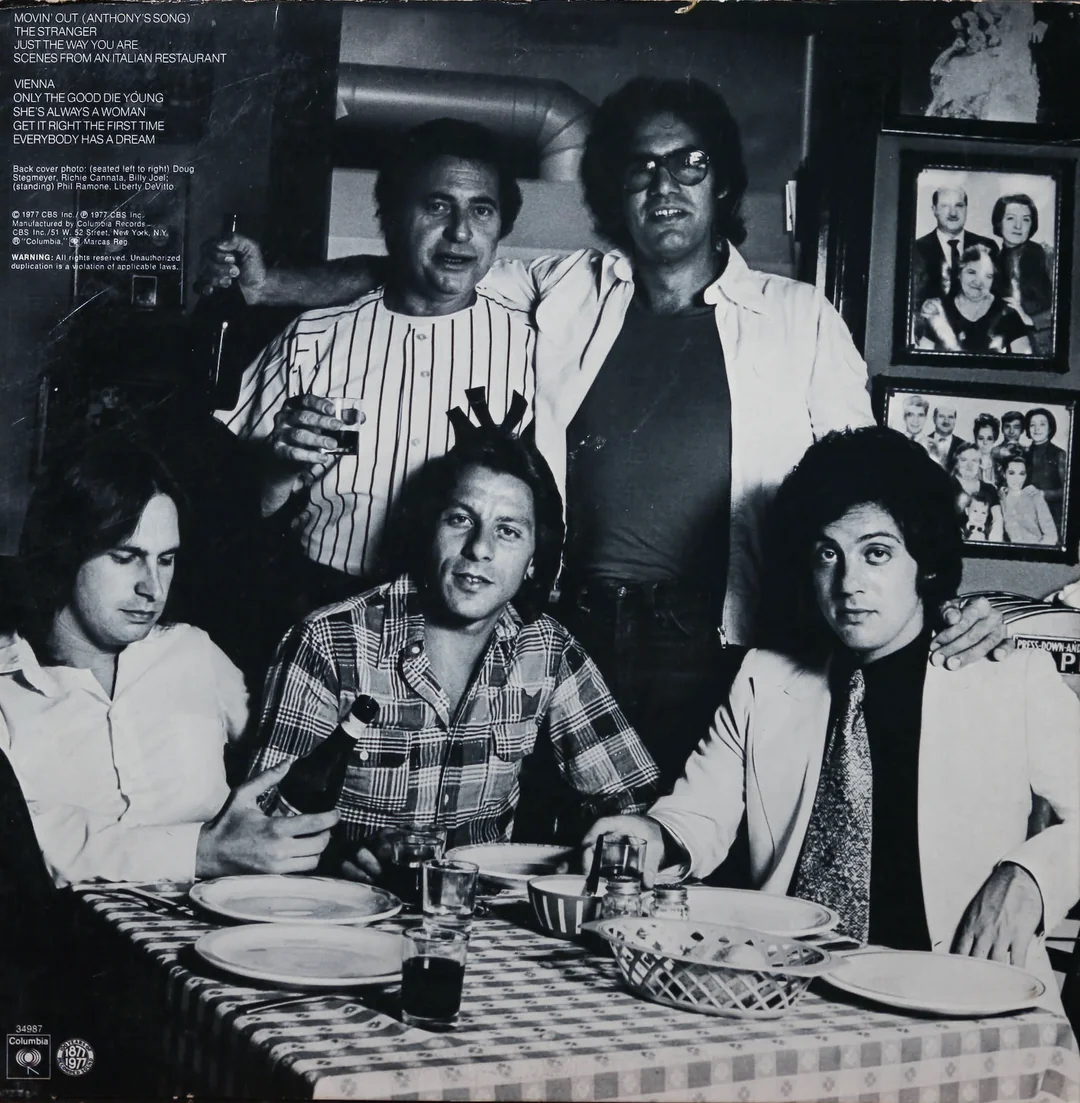
That’s Phil Ramone in the New York Yankees jersey on the back cover of Billy Joel’s 1978 album, The Stranger, which he produced.
I heard you fought to keep Billy Joel’s “Just the Way You Are” on The Stranger.
I had a part in making sure that song made the album and became a single. Now look how many people have recorded it. That’s what a great song does. It belongs to everybody.
A successful songwriter could just as easily write for another major artist.
Of course. David Foster. David Paich. Rod Temperton. Michael Sembello. Michael McDonald ought to be able to sing a Sembello song if it’s the best song. Prince shouldn’t feel he has to write every note on every album. The audience doesn’t care who wrote it. They care whether it moves them. I’ve always wanted to do a concert where the songs come first.
How so?
Paul McCartney sings a Paul Simon song. Paul Simon sings a Stevie Wonder song. Stevie sings somebody else’s song. Imagine hearing great writers interpret each other’s music. That would be wonderful.
Watch Paul Simon perform “Slip Slidin’ Sway” as a tribute to Phil Ramone following the producer’s 2013 passing
Ramone’s book, Making Records: The Scenes Behind the Music, is available in the U.S. here, in Canada here and in the U.K. here.




No Comments so far
Jump into a conversationNo Comments Yet!
You can be the one to start a conversation.