
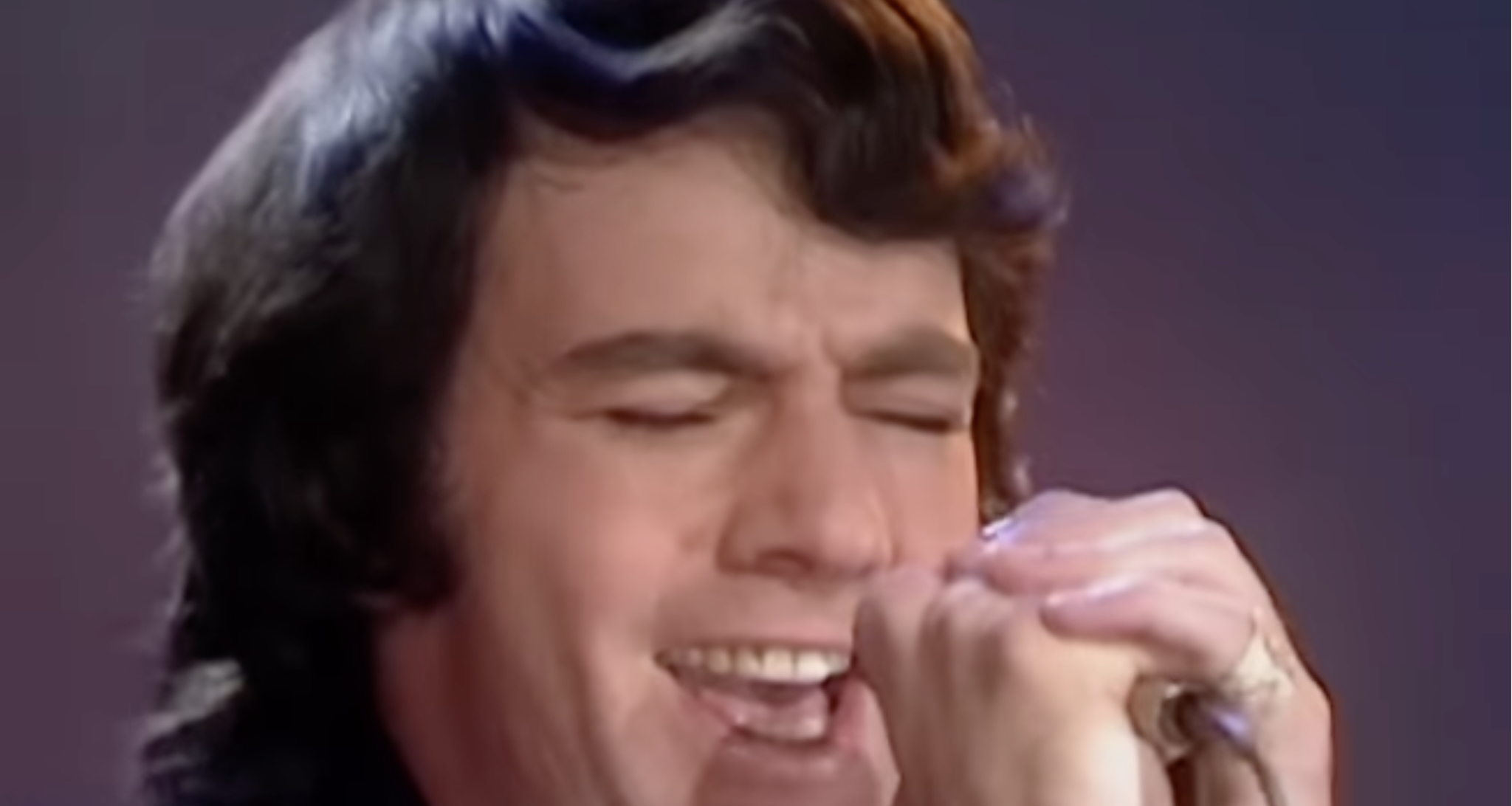
Neil Diamond performing on The Ed Sullivan Show in 1969.
Neil Diamond‘s career ascent was meteoric. In just a few years time, he had evolved from a mid-20s songwriter honing his craft at New York’s famed Brill Building, penning the occasional hit for such stars as Jay and the Americans and the Monkees, to successful recording artist in his own right. By 1966, he began producing a steadily lengthening discography that included such memorable tunes as “Cherry, Cherry,” “Girl, You’ll Be a Woman Soon, and “Thank the Lord For the Night Time.” Such tracks as “Sweet Caroline,” “Cracklin’ Rosie” and “Song Sung Blue” followed, each representing a successive rung on his ladder, as he became one of the more enduringly successful singer-songwriters of his generation.
If 12 of those songs are arranged chronologically, it becomes clear how the shape of his career evolved. Diamond, born Jan. 24, 1941, could craft a tight uptempo pop song or a nostalgic ballad, and he brought that melodic instinct to the ’70s and into the ’80s.
“I‘m a Believer” (1966)
Written before his own career as a recording artist had quite come together, the Monkees propelled it to an extraordinary level of success on their second album. Their recording was at #1 on the Hot 100 for seven weeks, and finished as the best-selling single of 1967. Diamond recorded it as well, earning a minor hit with it. But it was undoubtedly the earliest indicator of how accomplished his songwriting could be.
“Solitary Man”(1966)
His first single as a solo artist was only a minor hit, reaching #55 on the Hot 100. In 1970, with several hit singles under his belt, the brilliant song, produced by fellow Brill Building writers Jeff Barry and Ellie Greenwich, was reissued and somehow peaked at just #21. Go figure. In the decades since, it has become a centerpiece of his oeuvre.
“Cherry, Cherry” (1966)
Diamond’s breakthrough single as a recording artist reached #6 on the Hot 100. It was originally meant to be just a demo, which perhaps accounts for those groovy handclaps throughout and some of the relaxed, spontaneous energy in the track. Another winner produced by Barry and Greenwich (both of whom sing backup vocals on the chorus).
“Girl, You‘ll Be a Woman Soon” (1967)
Another winner that rose to #10 on the U.S. pop chart. It displayed Diamond exploring a somewhat more serious approach to his songwriting as the impassioned lyrics show a maturity from the 25-year-old who wrote it.
“Thank the Lord for the Night Time” (1967)
Diamond was on a serious roll with yet another significant Bang Records release. This lively number hit #13 on the pop chart (and #100 on Billboard‘s top 100 singles chart for the full year, further evidence of its success). The song’s pounding tempo and soaring chorus deserves a spot in the ranks of his early peaks.
“Red Red Wine” (1967)
Diamond’s first take on this was from his Just for You days, reaching #62 on the Hot 100. The delicate offering was described by Cash Box as “a melancholy tale by a figure drowning his sorrow.” Years later, a cover version by the English reggae band UB40 was a significant hit in many countries, reaching #1 on the U.K. chart and elsewhere, though only achieving a modest #34 in the U.S.
“Sweet Caroline” (1969)
The joyous single climbed as high as #4 on the Hot 100. As the years went by, it became a stadium anthem and sing-along mainstay, most notably at Boston’s Fenway Park, where it’s played at every Red Sox game in the middle of the eighth inning as the crowd cheers “So good! So good! So good!” Decades after it was released, Diamond acknowledged that Caroline Kennedy was the inspiration for the song.
“Holly Holy” (1969)
This brilliant follow-up to “Sweet Caroline” reached the #6 position on the U.S. pop chart. It develops at a slow pace, with Diamond alone for a moment before a gospel choir joins in the arrangement as the song expands with significant spiritual overtones. It remains one of the best moments of his late-‘60s work. Sing it out!
“Cracklin’ Rosie” (1970)
The start of a new decade delivered his first #1 single as a recording artist, with significant success overseas as well, elevating his profile to a wider international audience. The breezy track, backed by the Los Angeles session musicians known as the Wrecking Crew, offers the easy confidence that’s a real feature of the record. At this point in his career, you can hear his confidence as a recording star.
“I Am… I Said” (1971)
Another international hit, Diamond revealed in an interview that the song‘s carefully considered emotional frankness “made it a tough thing for me to gather myself after singing [it].”
“Song Sung Blue”(1972)
Diamond earned his second #1 single with this track that was inspired by a Mozart piano concerto. It went on to earn Grammy nominations for Record of the Year and Song of the Year (losing both awards to Roberta Flack’s “The First Time Ever I Saw Your Face”). One of his best-known songs, its title was used for the 2025 feature film that starred Hugh Jackman and Kate Hudson as a Diamond tribute act.
“America” (1980)
A career misstep by Diamond in the starring role of a filmed remake of The Jazz Singer ultimately turned rosy. Though the movie was panned by critics, its soundtrack was a significant success, spawning three top 10 singles, including this one, resulting in the biggest album of his career, with 5x platinum certification in the U.S.
Diamond’s recordings are available in the U.S. here, in Canada here and in the U.K. here.



2 Comments so far
Jump into a conversationThe songs, the voice, the schmaltz …He is my God….I said.
You did it. Perfect 12.