
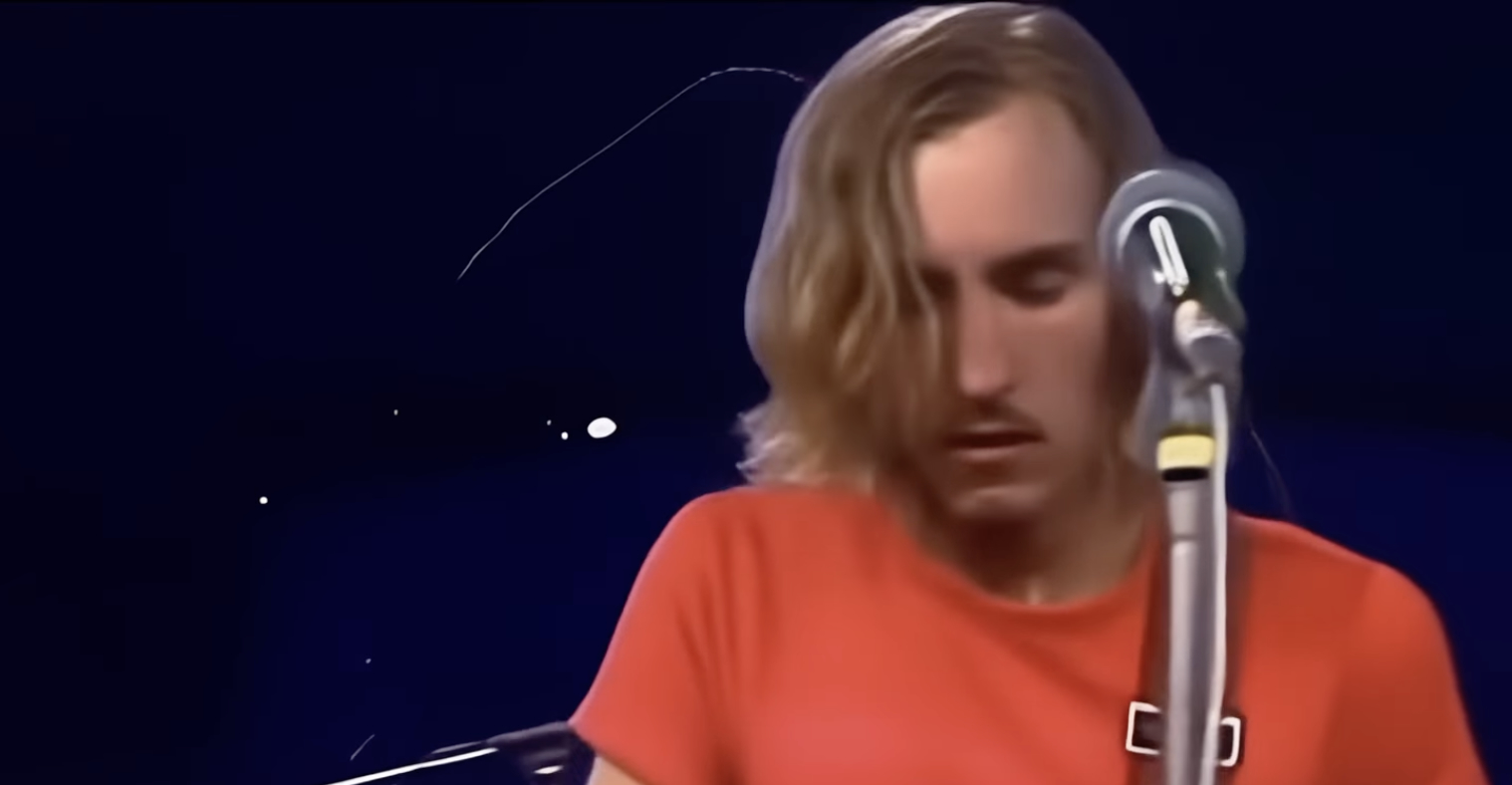
Joe Walsh, performing with James Gang in 1971
A nearly absurd number of classic rock anthems arrived in 1971. You‘ve probably already thought of a few: “Stairway to Heaven,” “Brown Sugar,” “Maggie May” and “Won‘t Get Fooled Again” were all released that year. A book has called 1971 the best year for rock. So, not surprisingly, many recordings from that year are consistently overlooked.
These weren‘t obscure, fan-only B-sides. Many of them were bona fide hits. Some even went Top 10. Others had the “misfortune” of being relegated to an LP cut because of the wealth of classics included on the same album.
Decades later, we’ve identified 12 tracks that we believe truly deserve closer listening.
The Who—“Going Mobile”(Who’s Next)
The song had the “unfortunate” fate of being released on the same album as “Baba O‘Riley,” “Behind Blue Eyes” and “Won‘t Get Fooled Again,” three of The Who’s most-played songs on classic rock radio. Sung by Pete Townshend, this joyful track features acoustic guitar and a rolling groove.
[A significantly expanded edition of the album is available in the U.S. here, in Canada here and in the U.K. here.]
Rod Stewart—“Mandolin Wind” (Every Picture Tells a Story)
A five-minute acoustic ballad about a couple surviving a tough winter was never released as a single. It sits in between “Maggie May” and a great cover of “(I Know) I’m Losing You” on the second half of the album, one of Stewart‘s absolute best. It closes with a knockout of a final minute.
Jethro Tull—“Hymn 43” (Aqualung)
This barnburner was just the second Tull single to chart in the U.S, though it barely resonated with Top 40 stations, peaking at #91 on the Hot 100. It is a fast-paced, riff-based condemnation of religious hypocrisy by Ian Anderson, with some of Martin Barre‘s most straightforward guitar work. Over the years, it has become overshadowed by the title track, “Locomotive Breath and even “Cross-Eyed Mary.” The album became their biggest, with sales in excess of seven million copies worldwide.
Lee Michaels—“Do You Know What I Mean” (5th)
Despite the fact that it reached #6 on the Hot 100, the American musician’s biggest hit isn’t one that comes to mind from this great year. It’s highlighted by his organ riff and lyrics lamenting seeing his ex with his best friend. Michaels’ follow-up, a cover of the Holland-Dozier-Holland track, “Can I Get a Witness,“ was his only other single to chart on the Hot 100.
Ocean—“Put Your Hand in the Hand” (Put Your Hand in the Hand)
The short-lived group scored with this gospel/pop number that peaked at #2 in the U.S., well above its #10 placement in their native Canada. It stayed in the top 10 of the Hot 100 for seven weeks, blocked at the top by Three Dog Night’s “Joy to the World.”
Stephen Stills—“Change Partners” (Stephen Stills 2)
Though his early solo releases sold well, Stills only scored one legitimate pop hit (1970’s “Love the One You’re With”). This one, from his second solo album, peaked at just #43 on the Hot 100 chart. “Captain Many Hands,” as he was known by his CSNY bandmates for his ability to multitask, enlisted Jerry Garcia on pedal steel guitar for the song. Graham Nash has jokingly referred to it as the de facto CSNY theme song due to their frequent on-again, off-again, mix-and-match lineups.
Chase—“Get It On” (Chase)
Under the leadership of Bill Chase (a seasoned member of Woody Herman‘s Thundering Herd), the top line of four trumpets briefly put the band in a class alongside Blood, Sweat & Tears and Chicago. Bill Chase and three other band members died in a plane crash in Jackson, Minn., in 1974. This single from their self-titled debut reached #24 on the Hot 100. They earned a Grammy nomination as Best New Artist, but lost out to Carly Simon.
The Guess Who—“Rain Dance” (So Long, Bannatyne)
The single, penned by Burton Cummings and guitarist Kurt Winter, followed a significant string of hits, “These Eyes,” “Laughing,” and American Woman” among them, ultimately reaching #19 on the Hot 100 and #3 in Canada. The LP was the first without founding guitarist Randy Bachman. [The Bachman Cummings Collection gathers albums from the Guess Who, plus material from Bachman-Turner Overdrive and Cummings’ solo career. Order it in the U.S. here, in Canada here and in the U.K. here.]
Related: 12 overlooked songs of 1974 include tracks from the Doobie Brothers and Bad Company
Grand Funk Railroad—“Feelin’ Alright” (Survival)
This version of the 1968 Traffic song written by Dave Mason was one of two mid-chart covers—”Gimme Shelter” was the other—released from GFR’s fourth studio album. By mid-’71, they were selling out concerts without much pop radio support; their show at Shea Stadium that July is said to have sold-out faster than the Beatles’. “Feelin’ Alright,” a staple on their live setlist, added a big, groove-oriented crowd-pleaser that their more aggressively heavy original songs didn‘t always have.
James Gang—“Walk Away” (Thirds)
The album was Joe Walsh’s final studio effort with the band, before he headed off on his solo career. The song features the power trio playing exactly what they set out to do and reached #51 on the Hot 100, slightly higher from their previous release, “Funk #49,” though the latter has sustained a longer “shelf life” (and has been an Eagles concert staple).
Blood, Sweat & Tears—“Go Down Gamblin”(B,S & T 4)
Their final single to reach the top 40 of the U.S. singles chart features the unmistakable vocal of David Clayton-Thomas, who also wrote the song. The track features the band’s brassy, funky horn section but also seems light years away from their 1969 chart peak when they scored three consecutive #2 hits on the Hot 100.
Edgar Winter—“Keep Playin’ That Rock ’n’ Roll” (Edgar Winter’s White Trash)
Winter‘s first album with his White Trash band followed his 1970 solo debut. The single, a horn-heavy, R&B-influenced recording based on New Orleans funk, was a far cry from the synthesizer-based hard-rock he would eventually be known for (most notably, the surprise #1 hit, “Frankenstein,” as well as “Free Ride”). If you‘re tracing his career back to the beginning, this is the time in which his complete range becomes apparent.
Related: 12 overlooked songs from 1973 include tracks from Three Dog Night, Sweet and Argent



8 Comments so far
Jump into a conversationCarly Simon’s second LP, ‘Anticipation’, snuck in under the wire in November 1971.
The last song on it, ‘I’ve Got To Have You’, is Kris/Carly at their best.
Stephen Stills Change Partners” sounds a lot like he was trying to go back to the country/blue grass sound of Buffalo Springfield The way Stills sings the song you real can envisions the guys dancing with women waltzing around the floor
I don’t know what city the author grew up in, but in Detroit all of these songs were in heavy rotation.
Nice to see Jethro Tull’s ‘Hymn 43’ getting a shout out. A great song that rips from start to finish.
The most overlooked and also classic rock record of 1971 was the MC5 swan song “High Time” with tunes including Sister Ann, Gotta Keep Movin and Miss X.
The Guess Who’s “So Long Bannatyne” album, featuring the excellent hit Rain Dances, was the group’s second album without Randy Bachman. The first was “Share The Land” (1970).
One song way overlooked and forgotten is “One Fine Morning” by Lighthouse.
Grand Funk, my first Rock Festival in Texas, it was a platoon of 3 dudes