
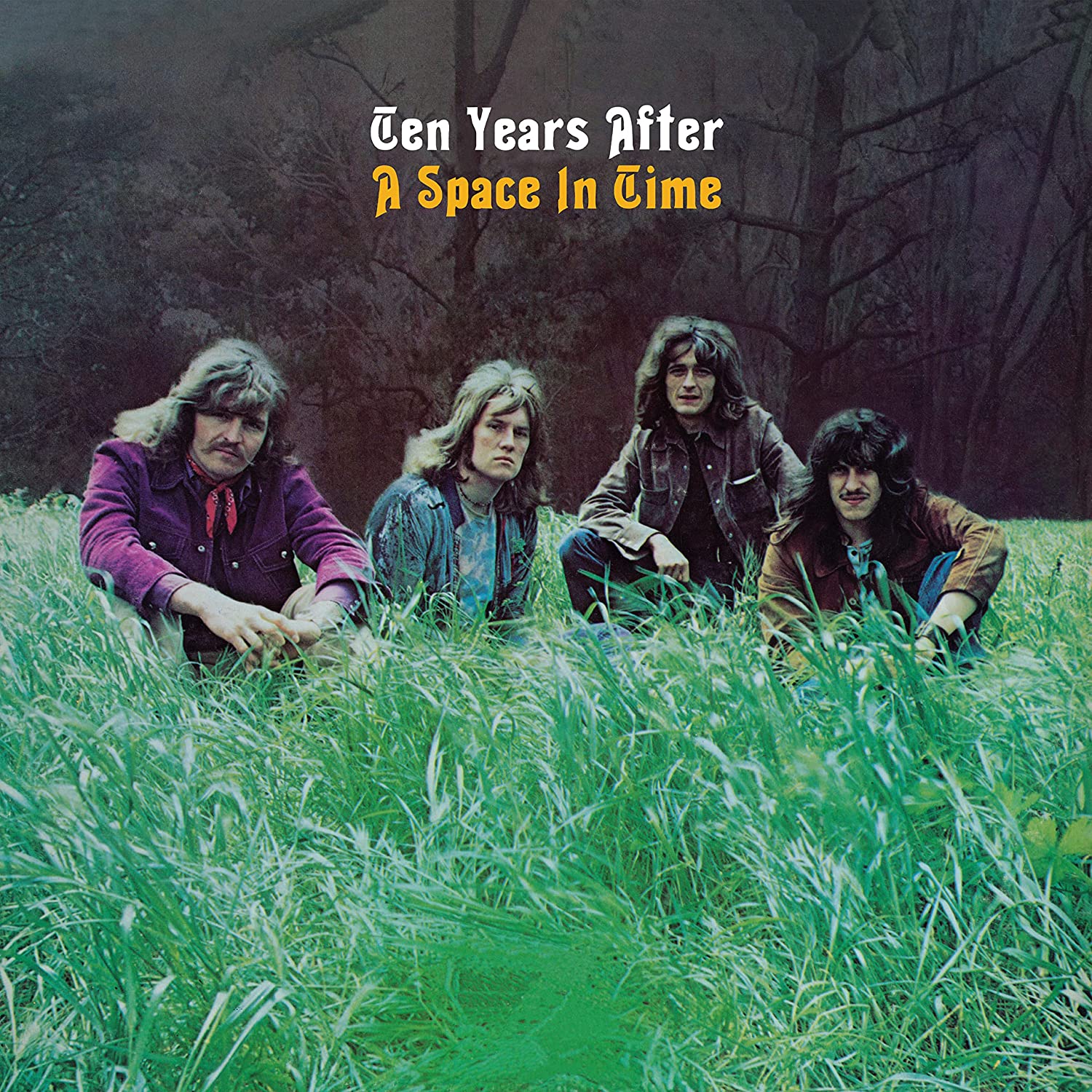
1971’s A Space in Time was Ten Years After’s only Platinum album in the U.S.
Ten Years After arrived at exactly the right moment. As blues-rock evolved into a major force on both sides of the Atlantic, the British quartet emerged as one of the era’s most formidable live acts, powered by Alvin Lee’s lightning-fast guitar work and a catalog that blended traditional blues, psychedelia and hard rock.
While Woodstock provided their defining public moment, the group’s legacy extends far beyond a single festival appearance. Between 1967 and 1972, Ten Years After released a remarkable run of albums that produced concert staples, chart hits and some of the most adventurous blues-rock recordings of the period. These 11 tracks trace that journey from club favorite to international attraction.
“Adventures of a Young Organ” (Ten Years After, 1967)
One of the standout tracks from the band’s debut, this instrumental highlighted the chemistry between Alvin Lee and keyboardist Chick Churchill. At a time when most British blues bands were sticking closely to American templates, it hinted at a willingness to push beyond traditional boundaries.
“I’m Going Home” (Undead, 1968)
Originally recorded for the live album Undead, this high-speed boogie became inseparable from the band’s Woodstock appearance the following year. The performance transformed Alvin Lee into an international guitar hero and remains one of the festival’s defining musical moments.
“Hear Me Calling” (Stonedhenge, 1969)
The song is built on a traditional blues foundation and became one of the group’s earliest concert staples. While it did not chart in the U.K. itself, it remained a fan favorite and was later famously covered by glam rock icons Slade.
“No Title” (Stonedhenge, 1969)
Despite its deliberately simple name, this was among the band’s most adventurous early recordings. The shifting sections and changing tempos reflected a period when many British rock acts were beginning to embrace more progressive ideas.
“Good Morning Little Schoolgirl” (Ssssh, 1969)
This blues standard received a dramatic overhaul from the band. The performance became a showcase for Alvin Lee’s speed and technique while helping establish the group’s reputation as an act to see in concert. The song dated back to a 1937 recording by Sonny Boy Williamson I, making it one of the oldest compositions regularly performed by the band.
“50,000 Miles Beneath My Brain” (Cricklewood Green, 1970)
Its title reflected the psychedelic era’s fascination with expanded consciousness, but the music was equally ambitious. Running more than eight minutes, it gave the group room to blend blues foundations with the improvisational spirit that had become a hallmark of their live shows.
[The album is receiving an expanded, deluxe edition in 2026. It’s available to order in the U.S. here and here, and in the U.K. here.]
“Love Like a Man” (Cricklewood Green, 1970)
Built around one of the band’s most memorable riffs, this became their only U.K. Top 10 single. The original U.K. single was issued with a studio version on one side and an extended live performance on the other, an unusual format for a chart hit. It peaked at #10 on the U.K. Singles Chart and #98 on the Hot 100.
“I’d Love to Change the World” (A Space in Time, 1971)
Addressing issues ranging from inequality to environmental concerns, this became the band’s biggest international hit. Alvin Lee later admitted he was uncomfortable with the lyric because it identified problems without offering solutions. (It peaked at #40 on the U.S. Hot 100 and reached the Top 10 in Canada.)
“Baby Won’t You Let Me Rock ‘n’ Roll You” (A Space in Time, 1971)
Released as the album’s second single, this energetic rocker demonstrated that the group could still deliver concise, radio-friendly material. Its straightforward celebration of rock and roll provided a sharp contrast to the social commentary found elsewhere on the record.
“One of These Days” (A Space in Time, 1971)
Opening the band’s most commercially successful album, this bluesy performance revealed a more melodic side of the songwriting. Its reflective mood helped broaden the group’s appeal beyond the audience that first embraced them through their live performances.
“Rock & Roll Music to the World” (Rock & Roll Music to the World, 1972)
Released as the original lineup approached the end of its run, this served as a fitting statement of purpose. By 1972, the group had become an international touring attraction, and the song’s title reflected rock music’s growing global reach.
Deluxe editions of the band’s catalog are available in the U.S. here, in Canada here and in the U.K. here.
Related: Chrysalis Records’ co-founder talks about the band’s rise




5 Comments so far
Jump into a conversationShrinivas is absolutely on target with this article; Ten Years After released a prolific eight albums in the 1967-1972 run (nine albums, if you include 1973’s “Recorded Live”).
Another song from TYA, which did not chart, but would likely be considered a deep-cut, is “Religion” from the 1972 LP “Rock And Roll Music To The World”.
“Religion” is so well constructed, from reflective and thought-provoking lyrics, to effective utilization of all the TYA instruments throughout – and that almost mystical mid-song guitar run by Alvin Lee — is etheral, effectively utilizing echoplex to create an atmospheric feeling within the song.
Highly overlooked in their catalog.
Agreed very good song as are most of t.y.a. their 73 live album is awesome and does not get any love as a good live l.p. the can’t keep from crying melody is beyond reproach
1967…remember it well, seeing in those days, cool looking album covers of bands I knew nothing about, w/ names that I never heard of, flip over to back side, to see song titles, $2.69 each, quickly deciding to purchase, usually always a winner! TEN YEARS AFTER, band name, british blues-rockers, 1st album, and those that followed, great rocking records, essentially 60 years of love relationship, still ongoing…Alvin & Company major part of soundtrack of my life..as always, thanks BCB for daily presentation of bands artists and music I love and hope this all continues to find new fans and listeners…
Standing at the Station should be on the list, and I agree with the guys who said Religion and I Can’t Keep from Crying need to be on it. The Bluest Blues is great, but I’m not sure if that was TYA or not.
I Woke Up This Morning, Lees greatest solo and arguably Rock musics greatest solo ever. He actually layers three solos on top of each other. Right when you think It can’t get any better Alvin comes on stronger than ever. How could you not have seen it as his top song?