
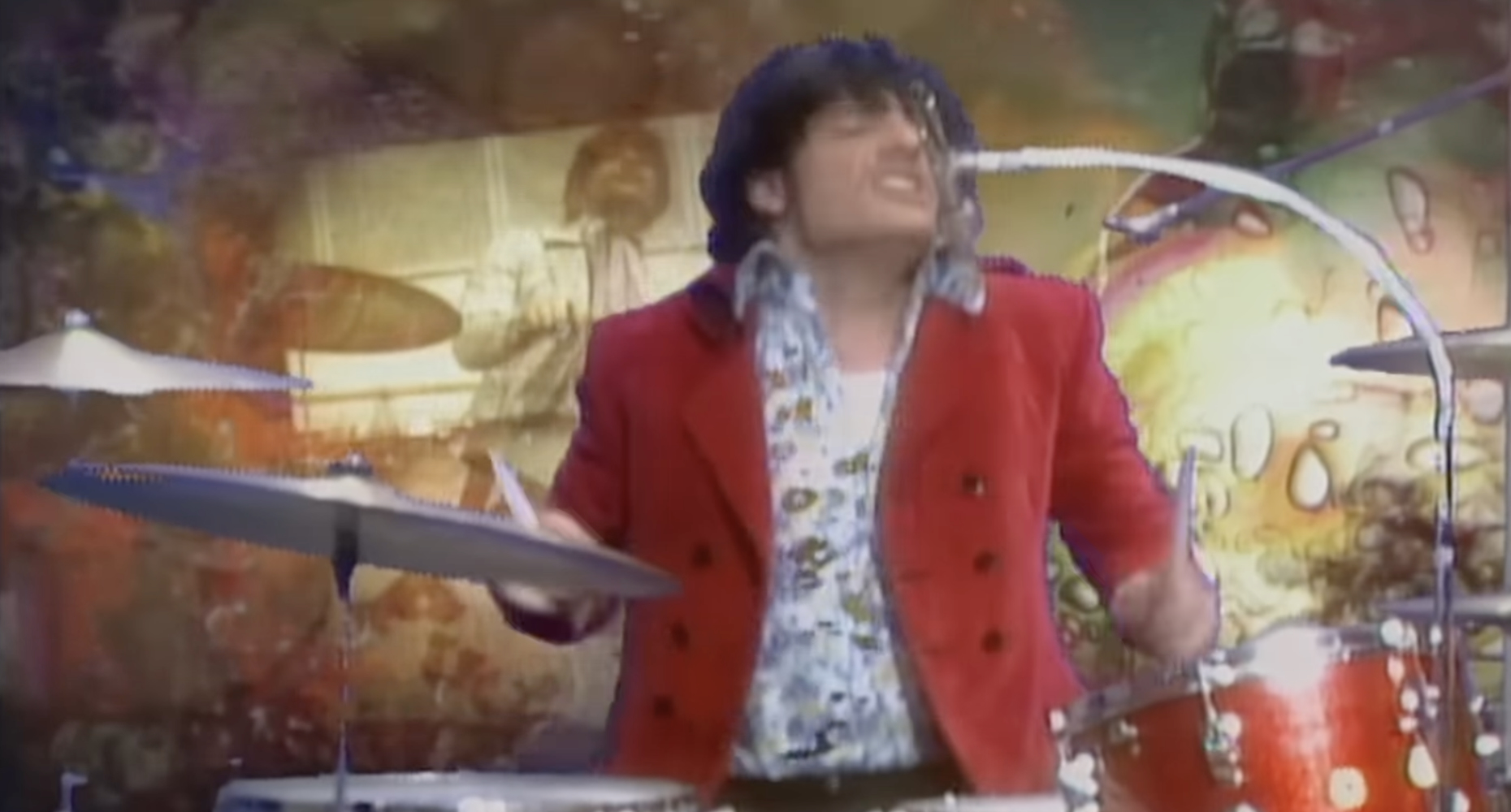
Carmine Appice of Vanilla Fudge, performing on The Ed Sullivan Show in 1968.
Ask a classic rock fan what 1968 gave us and you’ll often get these answers among the top responses: the Beatles’ “White Album,” Jimi Hendrix’s Electric Ladyland, the Stones’ Beggars Banquet and Music from Big Pink, the debut album from the Band. All are worth the anniversary ink they get every year.
But that’s not the whole story*. While recordings from Herb Alpert, Jose Feliciano, Simon and Garfunkel, the Doors and, of course, the Beatles dominated the 1968 pop chart and continue to get airplay, plenty of others have been overshadowed in the decades since. Here are 12 from that year worth a new listen.
“The Pusher”—Steppenwolf (Steppenwolf)
Serving as the dark, heavy blues soul of the band’s landmark debut LP, this Hoyt Axton composition captures early hard rock in its raw, socially conscious infancy. The track’s slow-burning groove and raspy warning against parasitic street dealers later found enduring counterculture fame when it was featured prominently in the opening sequence of the 1969 film Easy Rider.
“Journey to the Center of the Mind”—The Amboy Dukes (Journey to the Center of the Mind)
Before finding fame as a solo guitar icon, a young Ted Nugent anchored the frantic garage-rock velocity and lysergic exploration of this blistering Detroit psych-rock title track, written with bandmate Steve Farmer. Driven by a relentless bassline and searing, feedback-laden fretwork, it stands as one of the definitive, high-energy anthems of the acid era.
“Tin Soldier”—Small Faces (There Are But Four Small Faces)
This powerhouse Mod-rock single blends tough rhythm and blues with a distorted punch that brilliantly features the soaring backing vocals of American soul singer P.P. Arnold. Though hitting U.K. record shops in late 1967, it made its true waves throughout 1968 despite initial BBC attempts to censor the final lyrics after producers mistakenly misheard the line “stay with you” as something explicit.
“Dream a Little Dream of Me”—The Mamas & the Papas (The Papas & The Mamas)
This gorgeous, laid-back arrangement of a traditional 1930s pop standard represented a pivotal transitional milestone for the late-1960s counterculture generation. Pointedly credited to “Mama Cass with the Mamas & the Papas,” the sweet, nostalgic single was tailored specifically by Dunhill Records to launch Cass Elliot’s solo career.
“You Keep Me Hangin’ On”—Vanilla Fudge (Vanilla Fudge)
By slowing this Motown classic to a sludge-like crawl and injecting bombastic organ blasts, the band delivered a radical psychedelic reimagining that laid down the structural blueprint for early heavy metal. Though it was released in 1967, the single exploded in popularity during the summer of 1968 to climb all the way to #6 on the Hot 100.
“Like to Get to Know You”—Spanky and Our Gang (Like to Get to Know You)
Emerging in the spring as the title track of their sophomore album, this sophisticated folk arrangement balances breezy, jazzy vocal layering with a distinctly melancholic undertone. The track proved that beneath their bright sunshine-pop exterior, the outfit possessed a sharp musicality capable of capturing the bittersweet essence of a fleeting romance.
“Sky Pilot”—The Animals (The Twain Shall Meet)
This cinematic, multi-part anti-war epic centers on the heavy moral weight carried by a military chaplain during wartime. Orchestrated after Eric Burdon relocated the band’s moniker to California, the track features a swirling, flanged center section complete with real sounds of dive-bombers and a covertly recorded military bagpipe performance.
“Jennifer Juniper”—Donovan (The Hurdy Gurdy Man)
This whimsical slice of sunshine catches a legendary Scottish troubadour at the peak of his flower-power phase, utilizing lush baroque instrumentation like oboes, flutes and a gentle French horn. Donovan penned the acoustic-led masterpiece specifically for Jenny Boyd, the sister of Pattie Boyd and future wife of Mick Fleetwood, whom he was infatuated with at the time.
“Jennifer Eccles”—The Hollies (Single)
And here’s another Jennifer song… Bouncing back from an underperforming experimental album, this British pop-rock powerhouse crafted an unapologetic, standalone commercial single driven by signature three-part harmonies and a distinctive whistling bridge. The track became an international success, peaking at #7 in the U.K., while its title cheekily mashed together the names of two of the members’ wives, Jennifer and Rose Eccles.
“Baby Come Back”—The Equals (Baby, Come Back)
This brilliant hybrid of garage grit, Caribbean ska rhythms and straightforward pop features a young Eddy Grant on guitar and backing vocals. Formed in North London as one of the U.K.’s first major racially integrated rock bands, the unit took the infectious, riff-driven party starter all the way to #1 on the U.K. chart (though just #32 in the U.S.).
“Cowboys to Girls”—The Intruders (Cowboys to Girls)
This textbook masterpiece of early Philadelphia soul provided a crucial bridge between traditional rhythm and blues and the lush, orchestral pop arrangements that would dominate the next decade. Driven by smooth vocal blends and narrative lyricism, the title track was written and produced by the legendary team of Gamble and Huff and became an enormous crossover success, peaking at #6 on the Hot 100 and #1 on the R&B chart.
“Mr. Businessman”—Ray Stevens (Even Stevens)
In between such broad novelty comedy records such as 1962’s “Ahab the Arab” (a #2 pop hit) and 1974’s chart-topping “The Streak,” this sharp-witted artist delivered a surprisingly dark, cynical piece of socio-political pop that captured the rebellious spirit of the counterculture. The provocative track delivers a scathing critique of corporate materialism over a dramatic, escalating horn arrangement.
*Related: Our feature on 1968 in Rock Music



No Comments so far
Jump into a conversationNo Comments Yet!
You can be the one to start a conversation.