
David Clayton-Thomas, Voice of Blood, Sweat & Tears’ Hits, Dies at 84
by Jeff Tamarkin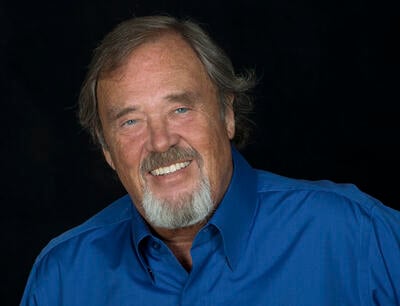
David Clayton-Thomas (Photo: Marie Byers; used with permission)
David Clayton-Thomas, the Canadian singer and songwriter whose powerhouse voice propelled Blood, Sweat & Tears to the top of the U.S. charts with a trio of pop hits and a pair of #1 albums, died peacefully on the evening of June 24, 2026, at St. Michael’s Hospital in Toronto. He was 84. The news of his passing was shared by his publicist, Eric Alper. The cause of death was not revealed.
One of the most recognizable voices of his generation, Clayton-Thomas‘ career carried him from the streets of Toronto to the stage of the 1969 Woodstock festival, and helped shape the sound of jazz-rock beginning in the late ’60s.
Born David Henry Thomsett in Surrey, England, on Sept. 13, 1941, he was the son of a Canadian soldier and an English music student who met while she entertained troops at a London hospital. After the war the family settled in Willowdale, a suburb of Toronto. His early years were marked by hardship and a troubled relationship with his father, and by the age of 14 he was living on the streets, surviving however he could and passing through a series of reformatories. It was there, with a battered guitar left behind by a departing inmate, that he taught himself to play. For the first time, in jailhouse concerts, he found acceptance, and never looked back.
Released in 1962, he gravitated to Toronto’s Yonge Street strip, where the rhythm and blues drifting up from Detroit and Chicago became his education. The rockabilly legend Ronnie Hawkins recognized his formidable gift and took him under his wing, and before long Clayton-Thomas was fronting his own bands, first David Clayton-Thomas and the Fabulous Shays, then the jazz-infused Bossmen, one of the earliest rock bands anywhere to weave jazz musicians into its ranks.
Later in the ’60s, Clayton-Thomas ventured to New York’s Greenwich Village music scene. In an interview with Best Classic Bands in 2019, prior to the 50th anniversary of the Woodstock festival, Clayton-Thomas said that the club owner at the Cafe Au Go Go lamented that he needed a band for that night. “So I played him a couple songs on the guitar,” the singer recalled. “He said, ‘Do you have a band?’ I said, ‘Sure,’ and went out into Greenwich Village looking for anybody carrying a guitar case or even looking like a musician, and we put together a little band and we opened there that night. We ended up staying there for several months.”
His destiny changed one night in New York City, where folk singer Judy Collins heard him perform and told her friend, drummer Bobby Colomby, about the extraordinary voice she had encountered. Colomby’s band, Blood, Sweat & Tears, had recently fractured, and he invited Clayton-Thomas to help rebuild it. In between rehearsals, the band played some gigs at Cafe Au Go Go. “On the second night Clive Davis came in with a whole bunch of CBS [Records] people to see what the heck we’d been up to,” Clayton-Thomas told Best Classic Bands. “He was blown away and said, ‘Yeah, let’s get this into the studio right now,’ and we were into the studio a couple of days later.”
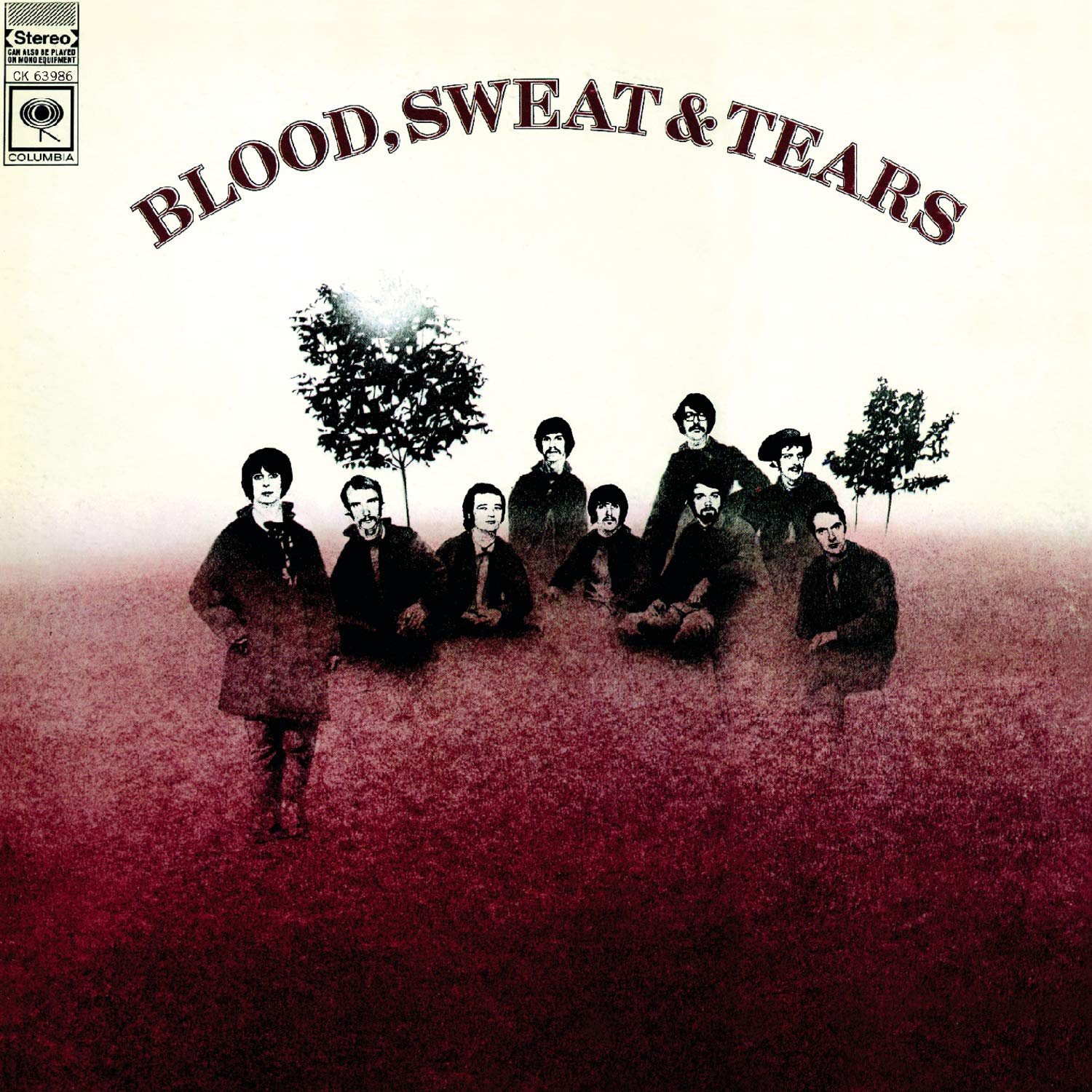
The resulting 1968 self-titled album, Clayton-Thomas’ first with the group as their frontman, sold 10 million copies worldwide, topping the Billboard chart for seven weeks. It won five Grammy Awards, including Album of the Year, famously besting the Beatles’ Abbey Road, and spun off three signature hits that each reached #2 on the Hot 100: “You’ve Made Me So Very Happy,” an old Motown tune first recorded by Brenda Holloway and co-written by Berry Gordy Jr.; “And When I Die,” a Laura Nyro cover; and Clayton-Thomas’ own composition, “Spinning Wheel.” His searing rendition of Billie Holiday’s “God Bless the Child” became a signature of his own.
Watch Blood, Sweat & Tears perform Laura Nyro’s “And When I Die”
Clayton-Thomas had written “Spinning Wheel” several years before joining Blood, Sweat & Tears. “I had been carrying it around in my guitar case trying to get a record company interested,” he told Best Classic Bands. “All the record companies said, ‘We can’t sell that. It’s jazz. Jazz doesn’t sell.’ They were all looking for rock and roll hits. I’d made a little demo cassette up in Canada, and I played it for [BS&T saxophonist] Fred Lipsius and he said, ‘Oh, I know exactly what to do with that.’ And he basically just took the guitar demo and voiced it out for horns and it became our biggest hit ever.”
Watch BS&T perform “Spinning Wheel”
With Clayton-Thomas at the microphone, Blood, Sweat & Tears became one of the defining acts of its era, headlining the Royal Albert Hall, the Metropolitan Opera House, the Hollywood Bowl, Madison Square Garden, the Newport Jazz Festival and Woodstock.
In 2019, he was asked about the band’s experience at the Woodstock festival. “Everybody there knew us,” he told Best Classic Bands. “I would say 70 percent of the people in that audience were from New York, and we were a New York City band. That was our base. They’d seen us play in clubs and colleges around the New York area. We didn’t get too much of a Woodstock experience. We were literally dropped backstage maybe an hour before the show. I ran into Crosby, Stills and those guys backstage; I knew Stephen Stills from Toronto. And the Band was there; they were my old buddies. I was in that band at one point, [when they were] Ronnie Hawkins’ band. I was the second singer in that band. We had a chance to chat a little bit backstage and then it was onstage. We did our show, our one hour, got off and the people were going crazy and the promoter actually came out and said, ‘Go back on and give them an encore.’ We came offstage and literally went right back onto the helicopter. We were out of there.”
The group’s third album, 1970’s Blood, Sweat & Tears 3, also reached #1 and featured the #14 pop hit, “Hi-De-Ho.”
In 1970 the band made history as the first rock group to break through the Iron Curtain, touring Eastern Europe at the request of the U.S. State Department, an extraordinary and fraught chapter later chronicled in the acclaimed 2023 What the Hell Happened to Blood, Sweat & Tears? documentary.
Exhausted by years of relentless touring, he left the band in 1972, returning mid-decade and ultimately leading the group through its many incarnations until 2004. Clayton-Thomas also released nearly a dozen solo albums under his own name.
His contributions were honored many times over. He was inducted into the Canadian Music Hall of Fame, received a special Juno Award for his outstanding contribution to Canadian music, and earned a star on Canada’s Walk of Fame in 2010.
Living back in Toronto in his later years, the city he always considered home, Clayton-Thomas continued to perform and record with characteristic passion. “People like me don’t retire,” he once said with a grin. “This is what I was put here to do.”
Blood, Sweat & Tears’ recordings are available in the U.S. here and in Canada here.
Related: Musician deaths of 2026




9 Comments so far
Jump into a conversationSo glad to hear that he died as he wished, “peacefully”. What an incredible voice and talent he had. “And When I Die” has always been a special song to me. Interestingly, I have been listening to it, and reappreciating it, just this week, as I purchased a greatest hits CD to replace many that I lost in the Eaton fire. Thanks DC-T for bringing joy to so many. RIP.
He was a hero of mine, and I’ve been singing his stuff for decades. (I was the lead singer for a horn band, and we did a lot of BS&T songs.) What a voice that man had! He will be missed, for sure.
Yesterday, as I was walking to work, I thought about DCT, probably because one of the founders of Chicago had just passed. Then to read of his passing this morning…when my father and I were traveling across country, he loved when I put BS&T in the 8-track. Big Band was his thing, so we kind of bonded over that.
Why you didn’t include “God bless the child” is pretty outrageous That’s their best song.with Clayton-Thomas I prefer “Blood Sweat and Tears” with Al Kopper doing the singing , they where not as main sttream.
“God Bless the Child” is mentioned in the article.
I totally agree!
What a first album that was, but not as commercially acceptable at that time.
I wish Al Kooper had stayed as a performer (rather than a producer) longer.
So Saddened to hear about DCT passing he was truly such a force with his singing. In later years, he was a Marvelous Human Being, posting on Facebook about ( in his opinion) his feelings about things happening down here in the US. He will be missed. RIP.
I believe Al Kooper thought their version of “God Bless the Child” was a bit bombastic, which is perhaps true. Still became one of their staples. On balance, I probably preferred the Kooper version of the band, but I also enjoyed the next three albums. Then he departed, and Lipsius and Halligan did the same, and they were the song arrangers. They took a big hit on those departures. By the time DCT came back in ’75, almost everybody who was there in ’72 was gone! If you haven’t seen the documentary, I’m pretty sure it’s on Prime. I highly recommend it. There’s some great footage of their east European tour in 1970, as well as interviews with DCT, Bobby Colomby, Steve Katz, and others.
Just saw the traveling BS&T with Jason Scheff from Chicago, as a guest for the second time. Bobby Columby still owns the band and I spent some time talking to the current manager. He had a very interesting take on Al Kooper and especially Steve Katz. But I guess my preference for the original lineup was born of a background of sixties and seventies rather than 70’s and 80’s tastes.