
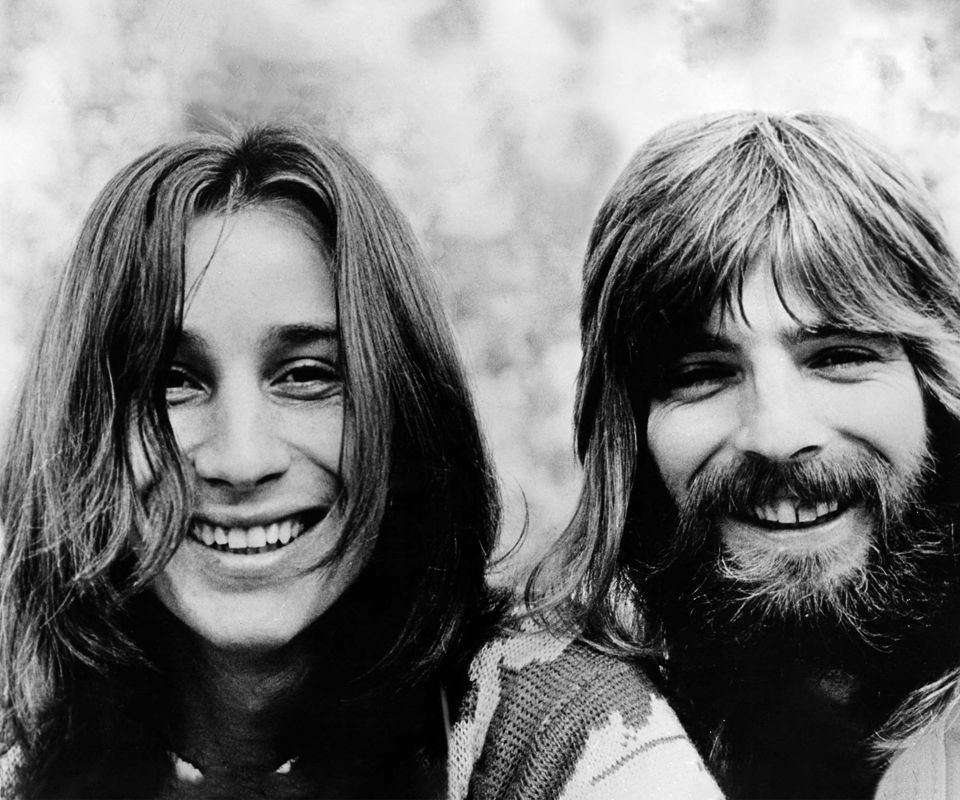
Jim Messina and Kenny Loggins
Columbia Records senior executive Don Ellis introduced Jim Messina to Kenny Loggins in late 1970. The label wanted Messina, a veteran producer who’d played bass in Buffalo Springfield and co-founded Poco, to help launch the solo career of Loggins, a young songwriter who’d already contributed several tracks to the Nitty Gritty Dirt Band. Because Messina was brought in strictly to anchor the project as a seasoned guide rather than a permanent partner, the resulting debut LP was titled Kenny Loggins with Jim Messina Sittin’ In—reflecting a temporary studio favor that quickly outgrew its solo boundaries.
The pairing became a permanent band instead. Messina’s country-rock guitar work and Loggins’ vocal range meshed so naturally from the first sessions that the “sittin’ in” concept completely vanished, giving rise to one of the premier marquee duos of the decade. Over five years, Loggins and Messina sold more than 16 million records, placed three singles in the Billboard Top 20, and toured as one of the era’s biggest live draws. These 10 songs trace the partnership from its accidental beginnings to its creative peak.
“Nobody but You” (Sittin’ In, 1971)
Serving as the definitive opening track of their debut LP, this song seamlessly combined a driving country-rock groove with tight, sun-drenched vocal harmonies. It proved their early commercial viability, cracking the Hot 100 chart and peaking at #86.
“Danny’s Song” (Sittin’ In, 1971)
Written for a brother after the birth of a nephew, this deeply heartfelt acoustic ballad remains one of the duo’s definitive signature recordings. The track’s universal appeal exploded when a 1973 cover version reached #7 on the Billboard Hot 100 and spent two weeks at #1 on the Easy Listening chart.
“Vahevala” (Sittin’ In, 1971)
Showing the duo’s early versatility, this ambitious track brilliantly blended infectious Caribbean rhythms with sophisticated jazz influences. Beyond its success as their first charting single (reaching #84 on the Hot 100), this Dan Loggins-penned fantasy grew into an epic centerpiece for their live performances.
“House at Pooh Corner” (Sittin’ In, 1971)
A dive into the back catalog resurrected this wistful tune, originally written during Loggins’ senior year of high school. Inspired by A.A. Milne’s classic stories, its gorgeous meditation on the loss of childhood innocence that remains an emotionally enduring classic.
“Your Mama Don’t Dance” (Loggins and Messina, 1972)
Powered by an infectious guitar riff and a playful take on the generation gap, this track became their biggest commercial triumph. It skyrocketed all the way to #4 on the Billboard Hot 100, earned a gold certification and remains a staple of classic rock radio.
“Thinking of You” (Loggins and Messina, 1972)
Released as the follow-up single to their signature hit, this upbeat track climbed to #18 on the Hot 100 and #7 on the Adult Contemporary chart. In a classic ’70s move, the version that became a radio hit was a completely separate, punchier recording than the album pressing.
“Angry Eyes” (Loggins and Messina, 1972)
While a heavily truncated 1976 single edit was released for AM radio, the original 7:40 album cut became the definitive staple of FM Album Oriented Rock. It serves as a masterclass in production, giving their jazz-influenced backing band room to execute a brilliantly arranged, extended instrumental breakdown.
Related: Our Album Rewind of Loggins and Messina’s On Stage LP
“My Music” (Full Sail, 1973)
The buoyant lead single from their third studio album rode a joyful, 1950s retro-rock groove all the way to #16 on the Hot 100. It secured their third and final Top 20 hit, perfectly capturing the sunny optimism that defined their catalog at its peak.
“A Love Song” (Full Sail, 1973)
Co-written with Dona Lyn George, this elegant, acoustic-driven ballad beautifully showcases the duo’s softer, more intimate side. Proving the songwriting’s strength, a popular 1974 cover version by Anne Murray hit #5 on the Billboard country chart and #12 on the pop chart.
“Growin’” (Mother Lode, 1974)
An overlooked gem from their fourth studio album, this track perfectly reflects the mature, polished ensemble playing developed from relentless touring. Though it only reached #52 on the Hot 100, its sophisticated arrangements make it an absolute favorite among die-hard fans.
Related: Their brief 2022 reunion celebrated their legacy
The duo’s albums are available in the U.S. here, in Canada here and in the U.K. here.



3 Comments so far
Jump into a conversationI was just looking at my Loggins and Messina 1972 Lp. Good yacht rock for sure. And what guy didn’t want Loggins perfectly coifed shag hair cut?
I saw them in concert five times at the height of their popularity. Not a better band at taking the stage and owning it. The backup musicians in the band were also extremely talented and got their chance to shine. All in all, my favorite concert band of all time.
Just got through with the Loggins autobiography a couple of months ago, and it’s interesting to point out that even though Messina was the “veteran”, which strictly speaking he WAS, since he had at least a couple of years of experience under his belt, he was only a few months older than Loggins. And even though “My Music” was a catchy song, and their second biggest hit, Loggins says it was deliberately crafted to be the next single, following the basic blueprint of “Your Mama Don’t Dance”.