
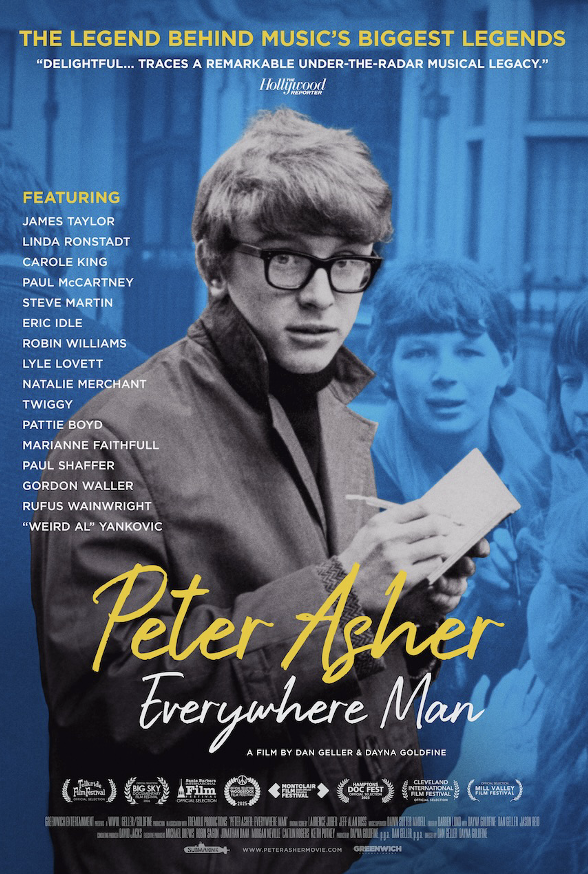
 The new documentary Peter Asher: Everywhere Man couldn’t possibly have a more apropos title. From his high-profile introduction in the mid-’60s as half of the successful British Invasion duo Peter and Gordon, through his years managing and producing two artists—James Taylor and Linda Ronstadt—emblematic of the 1970s rise of the singer-songwriters and the L.A. studio and nightclub world, Asher was a major player. It’s an accomplishment to have such a huge impact in one corner of the entertainment industry, the film points out, but here is a man who helped to shape two of the most important musical movements of rock’s golden era. And he did so while maintaining a surprising degree of relative anonymity.
But Everywhere Man (that title, of course, is a clever play on the Beatles’ “Nowhere Man”) doesn’t stop there, nor could it. Over the course of two hours, the film, directed and produced by Dan Geller and Dayna Goldfine (Hallelujah: Leonard Cohen, A Journey, A Song), justifies its title by patiently and painstakingly guiding viewers across the arc of a most remarkable career, and in doing so delves beyond the basic bio to reveal one “I never knew that” bullet point after another. By the time the filmmakers return viewers to the present day, those who somehow came to Everywhere Man with no idea who Peter Asher is will likely find themselves both in awe and charmed by the redheaded, bespectacled music man whose ubiquity gives both Zelig and Forrest Gump a run for their money.
This is a film that has needed to exist for a long time, about a man whose story needs to be more familiar than it’s been.
That last point is one that raises its head often throughout the film. Repeatedly, we hear from major music-biz figures whose initial brush with his name bordered on a shrug: “I had no idea who Peter Asher was” is a line spoken by more than one of those interviewed for the film. They soon found out just who Peter Asher was, and for many of them, life would never be the same.

Peter Asher in 2022 (Photo from his website)
Given both Asher’s revered status among his peers and his shift from everywhere face to behind-the-scenes macher, it’s to Geller and Goldfine’s credit that they manage to weave together so many of the seemingly disconnected threads of Asher’s life and career so smoothly and deftly. Just how did the former child actor (“They all have red hair,” declared one piece of promotional material hyping Peter and his two also-acting sisters) turned pop star turned big shot at the Beatles’ Apple Records turned California producer get to where he ultimately did, anyway?
When laid out chronologically, it all seems to make much sense. Without replaying the entire timeline here, suffice to say that a plethora of right place/right time moments and very smart, if occasionally random, choices contributed to his ascendance. Teaming with schoolmate Gordon Waller in an Everly Brothers-inspired singing duo, Asher was already enjoying a modicum of recognition when his sister Jane—one of the aforementioned ginger siblings, the one who actually did become a famous actress—started dating a certain rising rock musician named Paul McCartney.
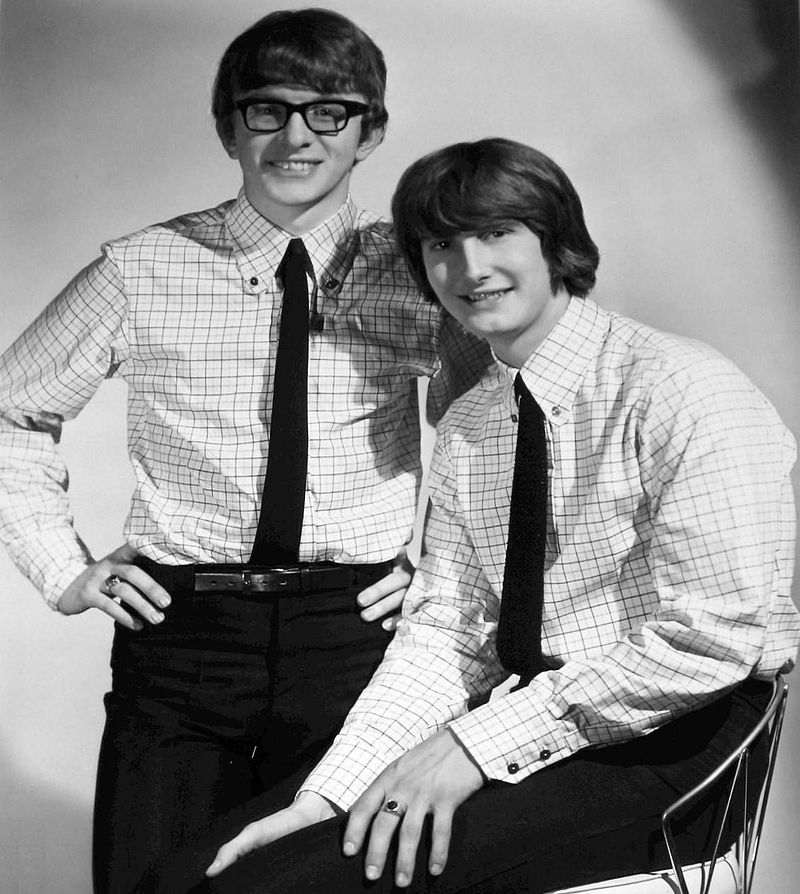
Peter and Gordon in an early promotional photo
Once signed to a record deal, Peter and Gordon were gifted with a few songs written by the “cute one,” who had taken up residence in the Asher family home for some time during the height of Beatlemania, writing “I Want to Hold Your Hand” and other Beatles classics while ensconced there. The Beatles, it seems, had rejected those numbers, most notably “A World Without Love,” which astoundingly catapulted Peter and Gordon to the top of the charts not only in Britain but in several other countries, including the U.S. A level of fame the boys never could have predicted for themselves followed (“America was a mystery,” Asher says of the lads’ first visit abroad), as did, eventually, the sort of trouble that breaks up bands. Although several further hits kept them on top for a few years, by 1968 the screaming girls had moved on and so too had the duo, pursuing separate lives and careers. In archival footage, Waller (who died in 2009) confesses that a breakup was inevitable, as he and Asher possessed such diametrically different personalities: “I had so much fun being an asshole,” he deadpans with typical British candor, while Asher is described as somewhat reserved and demure. And so ended that chapter.
Watch Peter and Gordon perform “A World Without Love” in 1964
An invitation by McCartney to run Apple’s A&R division led Asher, born June 22, 1944, to champion a visiting, unknown American singer-songwriter, James Taylor, who became the label’s first signee. When it was suggested that Asher produce the newcomer—despite having no experience as a producer—a very ’60s “Why not?” put Asher behind the recording console. The debut album didn’t catch on, but Asher believed unflinchingly in Taylor, and off they both went to Hollywood, where they signed to the major Warner Bros’ Records and made Sweet Baby James. You undoubtedly know the rest of that tale, including the part about Taylor facing a heroin addiction that could have, but fortunately did not, return him to obscurity, or worse. Peter Asher was now a producer, helping to construct a sound that couldn’t be more different from the music he’d made with Waller.
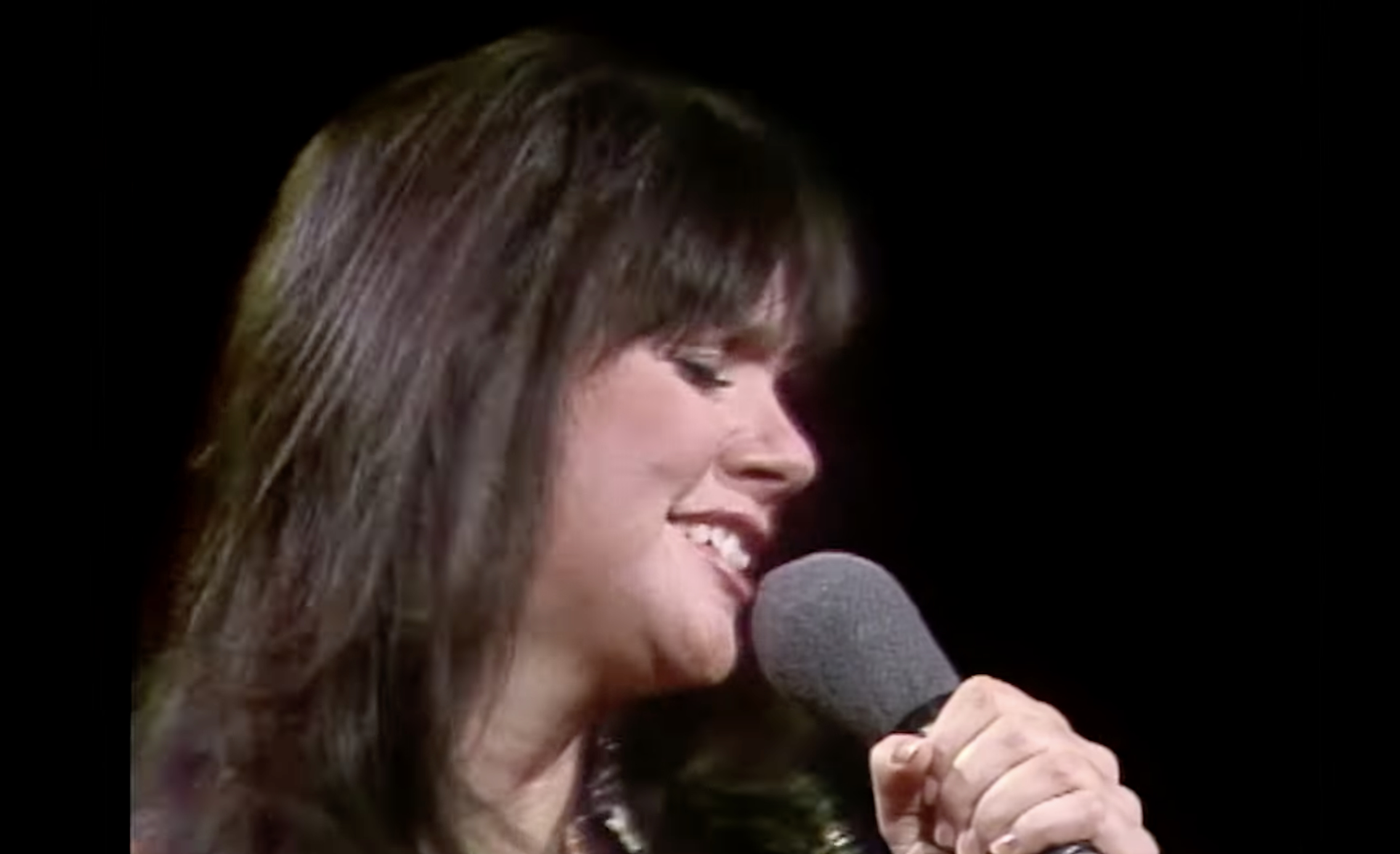
Linda Ronstadt belting one out on The Midnight Special in 1973
Linda Ronstadt was next, a very different kind of artist from Taylor, one who did not write her own songs but sure knew how to pick ’em. So too, it became increasingly apparent, did Asher, and together they made some of the most stunning and durable hit recordings of the next couple of decades. Eventually, Asher branched out, producing a wide variety of successful (and not so successful) recordings by everyone from Neil Diamond to 10,000 Maniacs, picking up one of his three Grammys for—get this—a Robin Williams comedy album.
Everywhere Man could have simply rolled through all of that history without putting it into context, but Asher’s story is too colorful for that. There are some LOL moments (Freddie and the Dreamers, I’ll leave it at that) and lots of glorious period footage. But the co-directors’ smartest move was to base much of the film around snippets from a cabaret show that Asher has brought to many venues in recent years, wherein he tells the stories himself to a live audience, shows clips that illustrate some of what he’s done and performs the songs with which he’s associated, with the assistance of a live band. It’s a thoroughly enjoyable show, one worth catching if he brings it to your town, and it transfers well to film. Asher’s personality is such that you’ll want to invite him over for dinner once you leave the theater, just to have some more of it.
Watch an interview with directors Dayna Goldfine and Dan Geller
Of course, there’s also the expected parade of talking heads recounting their experiences with Asher at one stage of his career or another, and heaping much-deserved praise upon him. McCartney, Ronstadt and Taylor each offer anecdotes and insights. So do Pattie Boyd, Twiggy and Marianne Faithfull, three women who comprise something of a Mt. Rushmore of British birds of the ’60s. Eric Idle is good for a few laughs, while Steve Martin plays it rather seriously, his now omnipresent banjo in hand. British ’60s scenesters John Dunbar and Barry Miles, who partnered with Asher in starting Indica, a combo art gallery/book shop during the peak of the Swinging London period, add some dimension regarding the headiness of it all. (The gallery, many will already know, is where one John Lennon met one Yoko Ono, a factoid that caused one member of an Asher audience to blurt out that it was he who broke up the Beatles!)
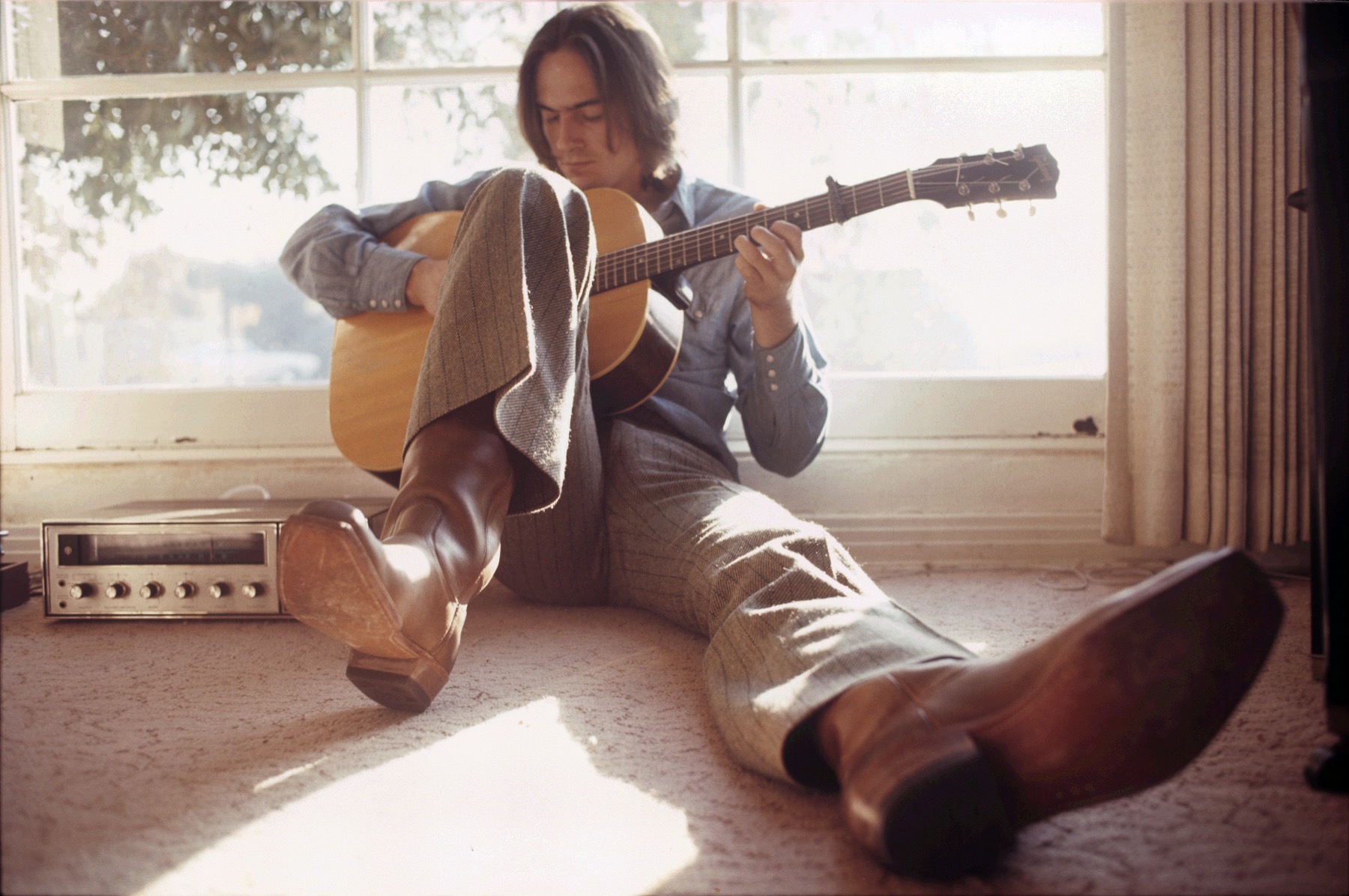
James Taylor at Peter Asher’s House, Dec. 1969 (Photo © Henry Diltz; used with permission)
Musicians with whom Asher has long been associated (Danny Kortchmar, Waddy Wachtel, Leland Sklar, Carole King) all have a few things to say about the now-octogenarian Asher, and he has plenty to say about himself in additional interviews that, the directors have stated, he was initially reluctant to sit for when the film was still in its nascent form.
While much of Everywhere Man is upbeat—Asher never was a downer kind of guy—the film doesn’t shrink away from addressing some of the bumps along the way, from those times when it looked like Asher’s career might have hit a dead end to the problems that ended his first marriage to, most painfully, the suicide of his brilliant physician father. If the film seems somewhat rushed during the last half-hour or so (Asher’s numerous productions outside of Taylor and Ronstadt literally go by in a flash), and the happy-ish ending (sorry, no spoilers) might seem a bit gratuitous, it’s all in the service of creating a balanced narrative. There are sections that drag a bit—notably the inner workings of the L.A. studio system and tangents on those who populated it—but there could be no true understanding of Peter Asher’s contribution to the music of the past six decades without opening up the umbrella fully on the innumerable places he’s been and people he’s known.
Everywhere Man is fascinating, and it should be no less so to anyone who is completely unfamiliar with the man at its center. It’s said—and the film has a lot of fun with this visually—that Peter Asher provided the inspiration for the central character in the Austin Powers films (I mean, just look at them both!). Just as one can enjoy those films without knowing that tidbit, it’s not imperative to know that Asher is also the puzzle piece that connects “A World Without Love” to “Sweet Baby James” to “You’re No Good” and a thousand more from there. But it sure doesn’t hurt either.
[A 2022 biography on Asher is available in the U.S. here and in the U.K. here. Asher wrote a 2019 book about his friends: The Beatles from A to Zed: An Alphabetical Mystery Tour. It’s available in the U.S. here and in the U.K. here.]
Locations and tickets for screenings of Peter Asher: Everywhere Man are available here.
Watch the trailer for Peter Asher: Everywhere Man
Related: Our interview with Peter Asher





1 Comment so far
Jump into a conversationI just saw this film and consider it to be one of the best music documentaries ever made. Highly recommended … and playing all over the country in “film festival”-type theaters throughout the summer – check out the link above to find a showing near you. (You’ll find our full review on forgottenhits60s.blogspot.com starting on Monday, June 22nd)