
12 Overlooked Rock Songs of 1978: The Year New Wave and Mainstream Rock Collided
by Shrinivas Kodape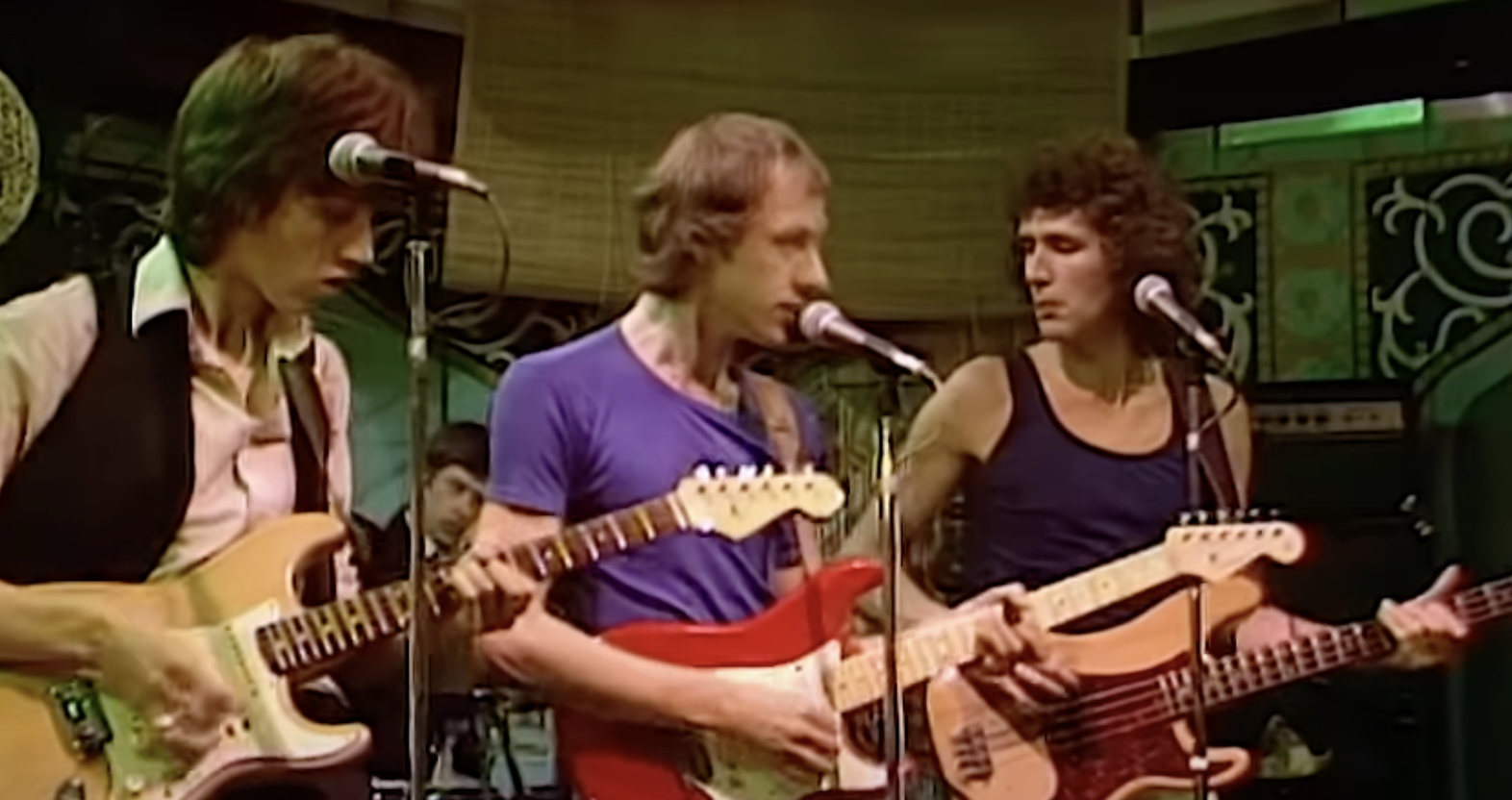
Dire Straits performing on ITV’s What’s On from June 22, 1978.
As part of our ongoing series revisiting overlooked rock songs from the ’70s, we turn to 1978, when FM radio was balancing mainstream rock and the growing influence of new wave, while also figuring out what to do with punk rock. The airwaves were dominated by major hits like the Rolling Stones’ “Miss You,” relative newcomers Foreigner’s twin hits “Hot Blooded” and “Double Vision,” and Billy Joel’s “My Life.”
But 1978 also felt like a turning point. Bands like the Cars, Talking Heads and Dire Straits were introducing a leaner, sharper sound that would soon reshape rock music heading into the next decade. Alongside the major hits were plenty of singles and album tracks like these 12 that deserved far more attention than they received at the time.
The Cars—“Bye Bye Love” (The Cars)
There were enough hits on their smash debut album to overshadow this track. Written and sung by Benjamin Orr, the song fused sleek new wave style with cutting guitar hooks and became an instant FM radio favorite, despite never being issued as a single.
Patti Smith Group—“Privilege (Set Me Free)” (Easter)
This dramatic remake of an obscure song from the 1967 film Privilege sounded darker and more intense than most rock radio in 1978. As the band builds tension behind her, she gradually pushes the song toward something close to emotional collapse. The lack of any action on pop radio was disappointing given the significant success of the album’s first track, “Because the Night,” a #13 single written by Smith with Bruce Springsteen.
Nick Lowe—“I Love the Sound of Breaking Glass” (Jesus of Cool / Pure Pop for Now People)
He was everywhere on the late-‘70s British rock scene, both as a producer and performer. The song mixed pub-rock attitude, power-pop melody and nervous new wave energy to create one of his keenest singles. While it was a big U.K. hit at #7, it would be another year before Lowe enjoyed chart success in the U.S. (with “Cruel to Be Kind”).
Elvis Costello—“(I Don’t Want to Go to) Chelsea” (This Year’s Model)
His second album continued to established him as one of the sharpest songwriters of the era. Fast, tense and sarcastic, “Chelsea” moved with the same nervous energy that defined much of late-‘70s new wave. The single reached #16 in the U.K. but the track was omitted from the album’s U.S. edition.
Dire Straits—“Down to the Waterline” (Dire Straits)
Well before the stadium tours and the MTV success, Dire Straits sounded moodier and more restrained. The opening track from their debut album introduced listeners to Mark Knopfler‘s distinctive guitar sound and set the tone for the entire record.
Related: 12 Overlooked Rock Songs of 1971
Ian Dury and the Blockheads—“Hit Me With Your Rhythm Stick” (Non-album single)
Few late-’70s singles sounded quite like this one. The pub-rock alum, who had made noise for Stiff Records a couple of years earlier with his droll “Sex & Drugs & Rock & Roll,” delivered more clever lyrics here (in English, French and German) with sly humor, as the Blockheads mixed funk, pub-rock and new wave into a groove that sent the single to #1 in Britain.
Cheap Trick—“On Top of the World” (Heaven Tonight)
By 1978, the band had nailed the perfect combination of both the hard-rock crunch and the Beatles’ melodies. This song managed to do both. Though they still didn’t have a pop hit—the album’s “Surrender” peaked at just #62—this LP cut forecasted huge success for the band.
Tom Petty and the Heartbreakers—“I Need to Know” (You’re Gonna Get It!)
The great rock ‘n’ roll band propelled the song along with a sense of urgency from the opening seconds. Though the song, from their second album, wasn’t a chart hit, reaching #41 on the Hot 100, pop radio programmers were clearly warming to them. A little more than one year later, they’d score their first top 10 single.
Talking Heads—“Thank You for Sending Me an Angel” (More Songs About Buildings and Food)
Inexplicably, only their cover of “Take Me to the River” was released as a single from their second album. The LP’s leadoff song was hiding in plain sight and remains the definition of an overlooked track. They had grown tighter and more rhythm-driven by 1978 and this one raced forward with nervous momentum and a giddyap to it.
The Motors—“Airport” (Approved by the Motors)
The biggest hit of the power pop band’s career, it peaked at #4 on the U.K. singles chart but was ignored in the U.S. Built around a soaring chorus, it remains one of the great forgotten British singles of the late ‘70s.
Plastic Bertrand—“Ça Plane Pour Moi”(An 1)
Originally issued in 1977, prior to international success in 1978, Belgian musician Roger François Jouret delivered one of punk-pop‘s defining novelty singles. Sung in French and driven by sheer adrenaline, it was clear punk had already gone global, reaching #1 in several countries and top 5 in many others. In the U.S., though, it peaked mid-chart.
Cindy Bullens—“Survivor”(Desire Wire)
Cindy Bullens was a prominent backup vocalist for Elton John and Rod Stewart, among others. This track from her solo debut peaked at #56 on the Hot 100 and earned her a Grammy nomination for Best Female Rock Vocal Performance. In 2012, the artist publicly came out as a transgender man, and now performs as Cidny Bullens.
Related: 12 Overlooked Rock Songs of 1974



1 Comment so far
Jump into a conversationAnother song that was a “sleeper” in 1978, at least in the States, was John Mellencamp’s penned and recorded original version of “I Need A Lover”, which a year later became a hit for Pat Benatar, in 1979, from her “In The Heat Of The Night” LP.
Full circle – “I Need A Lover” then became a concert staple, and audience favorite, for Mellencamp on subsequent tours, for many years thereafter.