
Remembering King Curtis, Saxophone Giant Who Was Brutally Murdered
by Jeff Tamarkin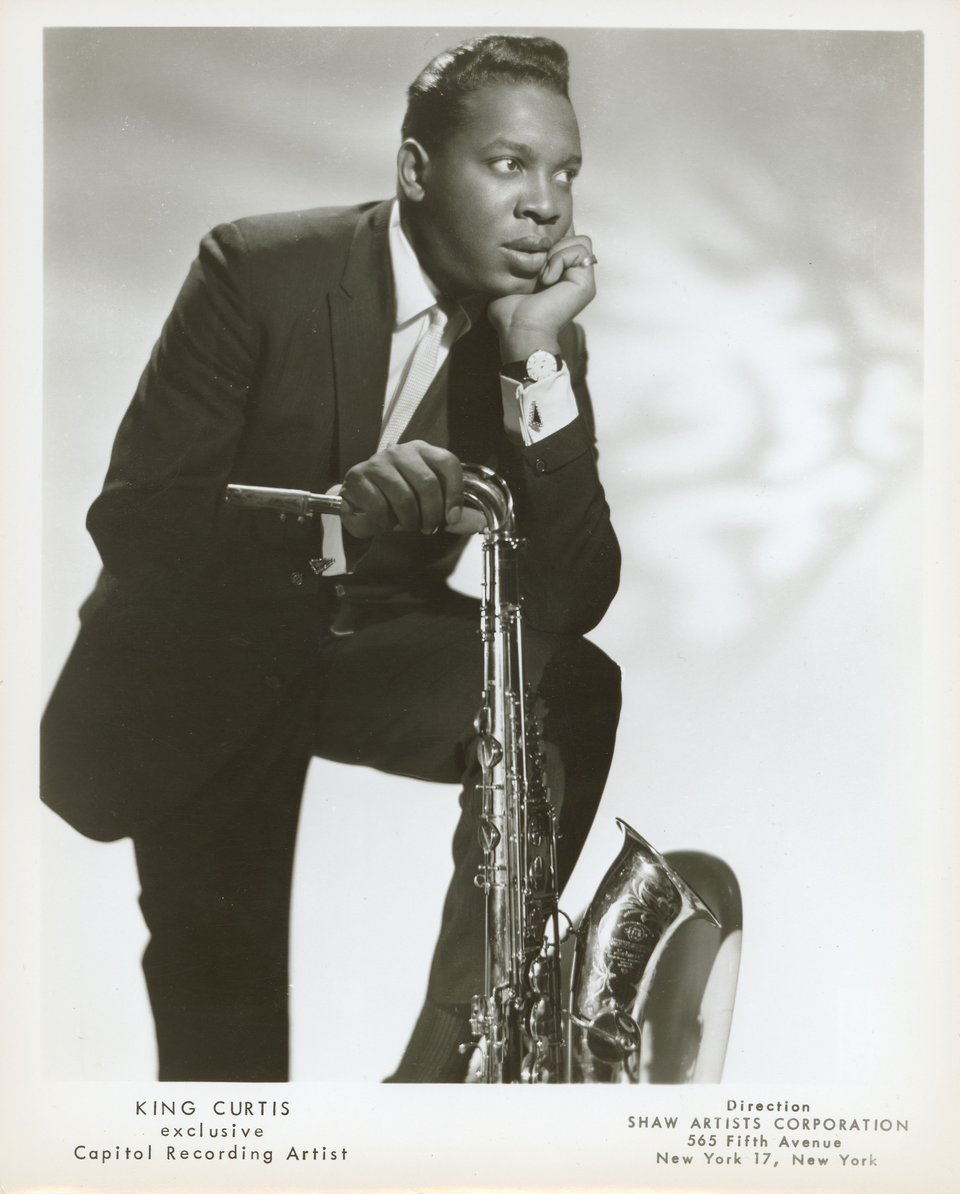
King Curtis’ first publicity photo
On the night of Aug. 12, 1971, in front of an apartment building on New York City’s Upper West Side, one Curtis Ousley got into an argument with one Juan Montanez. The central air conditioning inside 50 West 86th Street, a building owned by Ousley, had been on the blink, and the tenants were tired of sweating. Ousley, on his way to check the fuse box, asked Montanez to move from the stoop of the building, where he was sitting. Montanez refused, became belligerent and the two got into a fracas, Montanez stabbing Ousley during the fight. Although the building owner, who lived 10 blocks north, managed to grab the knife away from his assailant and stab him several times in return, Ousley didn’t make it. He died the following morning at Roosevelt Hospital, another victim of the increasing violence that would continue to plague the city throughout the decade.
Outside of notices in the music press and radio stations, and tributes from fellow musicians, few took notice of the demise of the man professionally known as King Curtis. They should have—King Curtis was one of the finest, most renowned, in-demand saxophonists in the history of rock and roll and rhythm and blues. Although he was active as a frontman and had scored several hit singles and albums under his own name, he was primarily called upon to serve as a sideman. The list of artists with whom he played is an astounding one, ranging from Sam Cooke to the Rascals, Buddy Holly to John Lennon, Lionel Hampton to Stevie Wonder to Otis Redding. And, perhaps more than anyone else, Aretha Franklin, with whom he is often closely associated. With his premature death at only 37 years old, the music world had lost an unsung giant.
He was born Curtis Montgomery on Feb. 7, 1934, in Ft. Worth, Tex. Taking up the saxophone at age 12, he studied under, and sometimes performed with, a schoolmate who would go on to change jazz forever: fellow saxophonist Ornette Coleman. Curtis Ousley, as he became known, quit high school to take a gig with the band of jazz vibraphonist Lionel Hampton. In 1952, at 18, Ousley moved to New York City to pursue session work, finding it with everyone from Holly (on the track “Reminiscing”) to Andy Williams to a very young newcomer in the country field named Waylon Jennings. Ousley continued to play jazz too, cutting records with musicians such as Nat Adderley and Wynton Kelly, and piecing together a small combo with musicians who would all go on to become major players themselves: Richard Tee, Cornell Dupree, Jerry Jemmott and Bernard Purdie.
It was R&B music that really drew him in though, and he was happy to take gigs with artists like the Coasters, on whose hit “Yakety Yak” you can hear his work. That’s also him in the early ’60s blasting the sax on Sam Cooke’s “Twistin’ the Night Away” and Bobby Lewis’ “Tossin’ and Turnin’.”
He carved out a space for his own music too. Taking the professional moniker King Curtis, Ousley cut an instrumental that he wrote himself in 1962, “Soul Twist,” and watched as it rose to #1 on the national R&B chart, as well as landing at #17 on the Billboard Hot 100. Other numbers that helped him spread his name around, including 1964’s “Soul Serenade” and a 1965 cover of “Spanish Harlem,” received some buzz, but it was after he moved to Atlantic Records that King Curtis’ rise accelerated. In 1967, another instrumental that he wrote, “Memphis Soul Stew,” released on Atlantic’s Atco subsidiary, became his next R&B Top 10 hit, bounding to #6, the same position reached by the followup, a cover of the Bobbie Gentry smash “Ode to Billie Joe.”
Watch King Curtis and the Kingpins perform “Memphis Soul Stew” live
By that time, King Curtis had become extremely prolific. He opened American concerts in 1965 for the Beatles with his group the Kingpins (including Shea Stadium), backed an aspiring guitarist named Jimi Hendrix in 1966 (the tapes of the three songs were later destroyed in a fire) and even played sax on a Mad Magazine novelty release called “It’s a Gas.”
But more than anyone else, it was Aretha Franklin who put King Curtis in the spotlight. After the singer moved from Columbia Records to Atlantic in 1967, the label put him in the studio when she cut the song that would become her breakthrough, an Otis Redding composition titled “Respect.” King Curtis’ saxophone work on the track was a big part of what made it cook, and the two would continue to work together until Curtis’ passing, Curtis having become Franklin’s musical director.
Curtis was used often by the producers at Atlantic. When he cut his album Instant Groove in 1969, the label paired him on four tracks with the rising guitarist Duane Allman, whose own Allman Brothers Band was just starting to make some noise. One track, a cover of the Joe South hit “Games People Play,” garnered lots of notice, winning Curtis a Grammy the following year for Best R&B Instrumental. Also in 1969, Curtis discovered a singer he felt had much promise, Donny Hathaway, and brought him to the attention of Atlantic, which signed him. Curtis, of course, helped give the newbie a boost by contributing his sax to a track on Hathaway’s debut album, Everything Is Everything, as well as its self-titled followup.
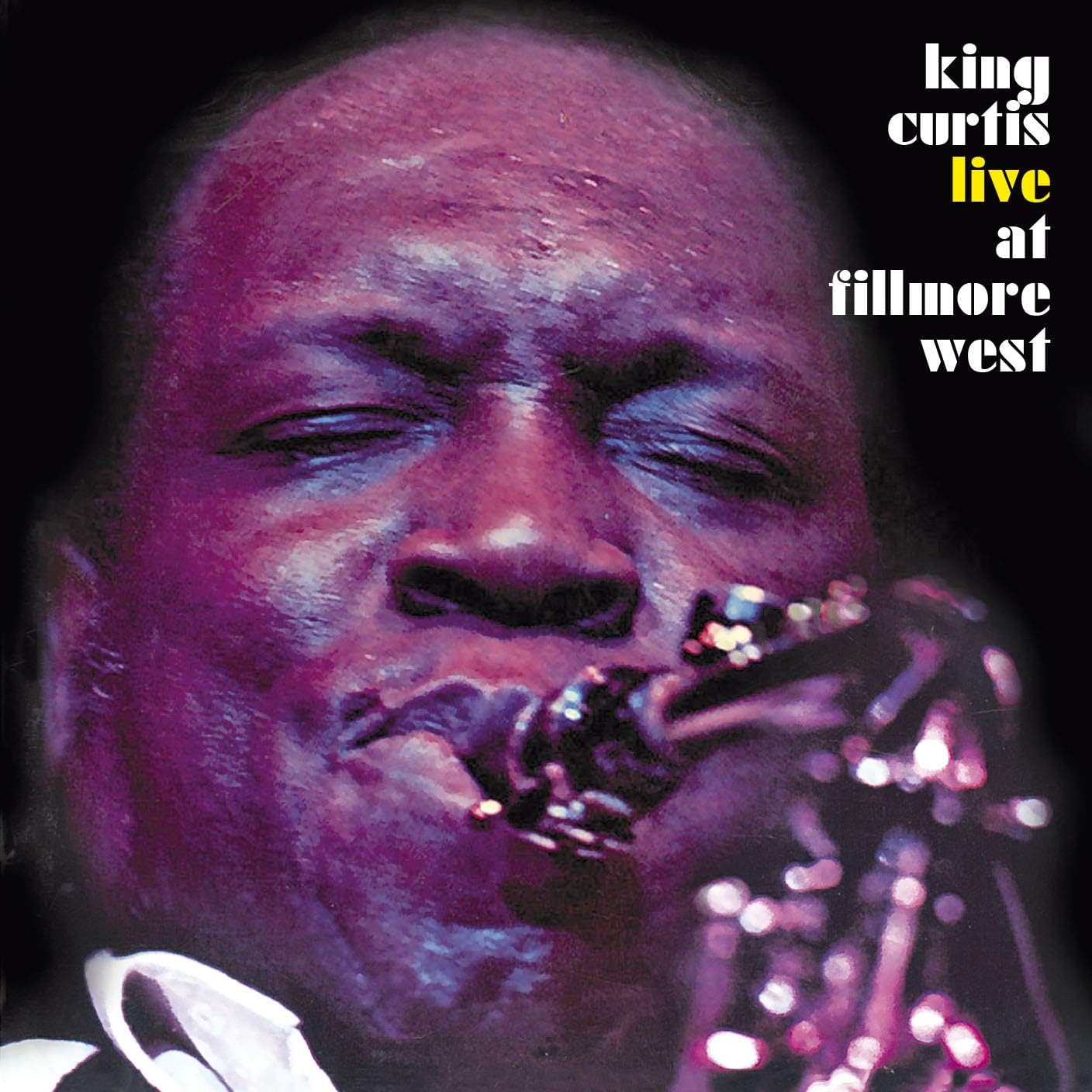
In March 1971, King Curtis and the Kingpins backed Franklin at San Francisco’s Fillmore West, resulting in a Top 10 album simply titled Aretha Live at Fillmore West. The Kingpins, on that occasion, accompanying Curtis’ saxophone, featured Cornell Dupree on guitar, Bernard Purdie on drums, Jerry Jemmott on bass, Billy Preston on organ and the Memphis Horns. The band opened the shows for Franklin and, by that time, there was enough interest in Curtis for Atlantic to release his own set as an LP, also titled Live at Fillmore West. Beside Curtis’ hits “Memphis Soul Stew” and “Soul Serenade,” the album included covers of Procol Harum’s “A Whiter Shade of Pale,” Led Zeppelin’s “Whole Lotta Love,” Jerry Jeff Walker’s “Mr. Bojangles” and Stevie Wonder’s “Signed, Sealed, Delivered.” The album reached the Top 10 of Billboard’s Jazz and Soul charts, while settling in at #54 on the overall Billboard 200.
Related: 50 key albums of 1971
King Curtis was at the top of his game and finally becoming a star in his own right when his life was cut short so unnecessarily that sweltering summer night in New York. In 2000, the Rock and Roll Hall of Fame inducted him, with songwriter Mike Stoller, who’d co-written the Coasters hit that featured Curtis, “Yakety Yak,” giving the testimonial speech. We’ll never know, of course, where King Curtis might have gone if he’d lived longer, but he sure packed a lot into his 37 years.
Watch King Curtis and the Kingpins perform “A Whiter Shade of Pale”
King Curtis recordings are available in the U.S. here, in Canada here and in the U.K. here.



No Comments so far
Jump into a conversationNo Comments Yet!
You can be the one to start a conversation.