
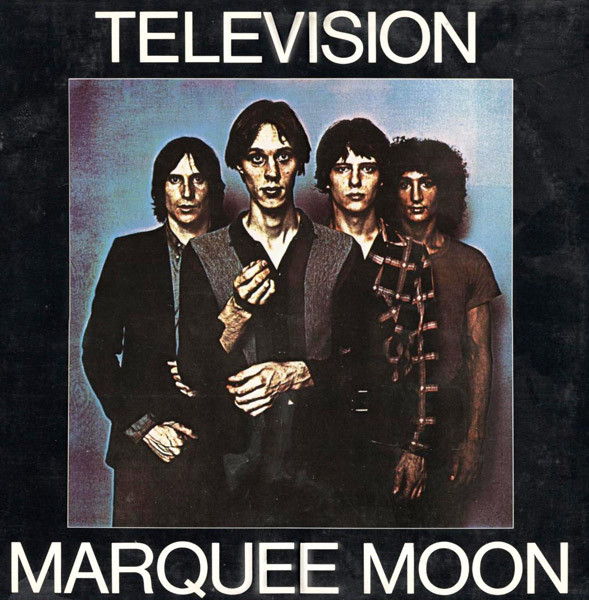
 Richard Lloyd, who—along with the late Tom Verlaine—provided the stunning lyrical guitar work for the New York City-based band Television, has died. An obituary in the New York Times said that Lloyd died at his home in Chattanooga, Tenn., today, Nov. 7, 2026, of cholangiocarcinoma, a bile duct cancer, with which he was diagnosed in March. The article cited Lloyd’s family as the source.
Although Television, formed in 1973, only released two studio albums during their relatively brief initial existence—neither of which made the top 200 of the Billboard album chart—the band, which also included drummer Billy Ficca and bassist Fred Smith, was highly influential. (Richard Hell, an early member, left to form his own band, the Voidoids.)
Aligned with the punk movement but not considered punk itself, the quartet often engaged in extended improvisations during its gigs at the Bowery club CBGB and elsewhere. The group’s debut album, Marquee Moon (1977), and, to a lesser extent, its followup Adventure (1978), are often cited as being among the most impressive to emerge from that scene, and many bands that formed during and after Television’s initial run (which ended in 1978) have cited them as a model for their own sound.
Television reunited on a couple of occasions in later years, releasing a s elf-titled third album in 1992, but never gained a foothold commercially, despite their impact. Lloyd also recorded several solo albums, beginning with the highly touted Alchemy in 1979, which appeared (like the first two Television albums) on Elektra Records.
Verlaine died in 2023 and Smith earlier this year, leaving Ficca as the only surviving member of the core group.
Born Richard John Alt on Oct. 25, 1951, in Pittsburgh, Pa., Richard Lloyd moved to New York City in his youth, where he first studied drums before switching to guitar. He moved to Boston after quitting high school, where he met the likes of Jimi Hendrix and Buddy Guy and played with blues great John Lee Hooker. Returning to New York, he met fellow guitarist Tom Miller in 1973 (who changed his name to Tom Verlaine) and Richard Meyers, who became Richard Hell. With Ficca joining them, they formed Television that year and made their first public performance in March 1974.
That same month, the group’s manager, Terry Ork, arranged for Television to perform at a brand-new downtown club run by Hilly Kristal, to be called CBGB (for Country, Bluegrass & Blues). That moniker stuck, but before long the club was booking solely new rock bands—among them the Ramones, Blondie and Talking Heads—performing stripped-down music that went against the grain of what was popular at the time. Crowds eventually filled the room and a movement was born.
After Hell left and was replaced by Smith in 1975, Television fine-tuned their sound and was signed to Elektra in 1977. Lloyd has stated in interviews that the band split due to creative differences between Verlaine and himself.
Like Television, Lloyd never found commercial success in his solo career, but his influence on other guitarists never subsided. He continued to record and perform throughout the remainder of his life, ultimately releasing nine solo albums.
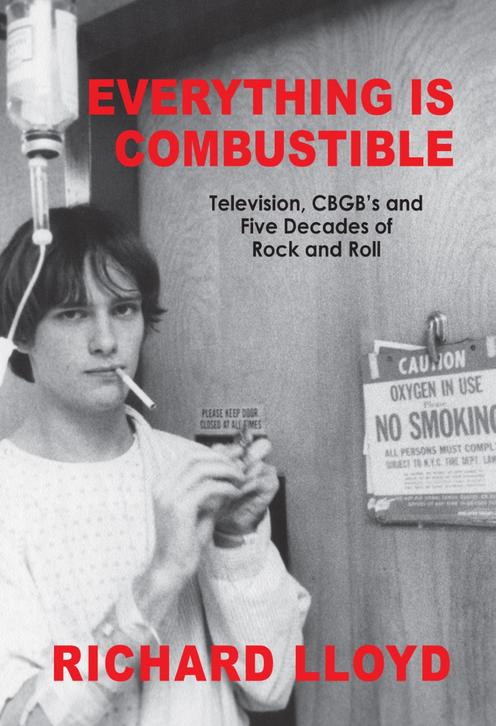
In addition to his recordings, Lloyd left behind a memoir, Everything Is Combustible, published in 2018, available here.
Listen to the title track of Marquee Moon
Related: Musicians who have died in 2026


No Comments so far
Jump into a conversationNo Comments Yet!
You can be the one to start a conversation.