
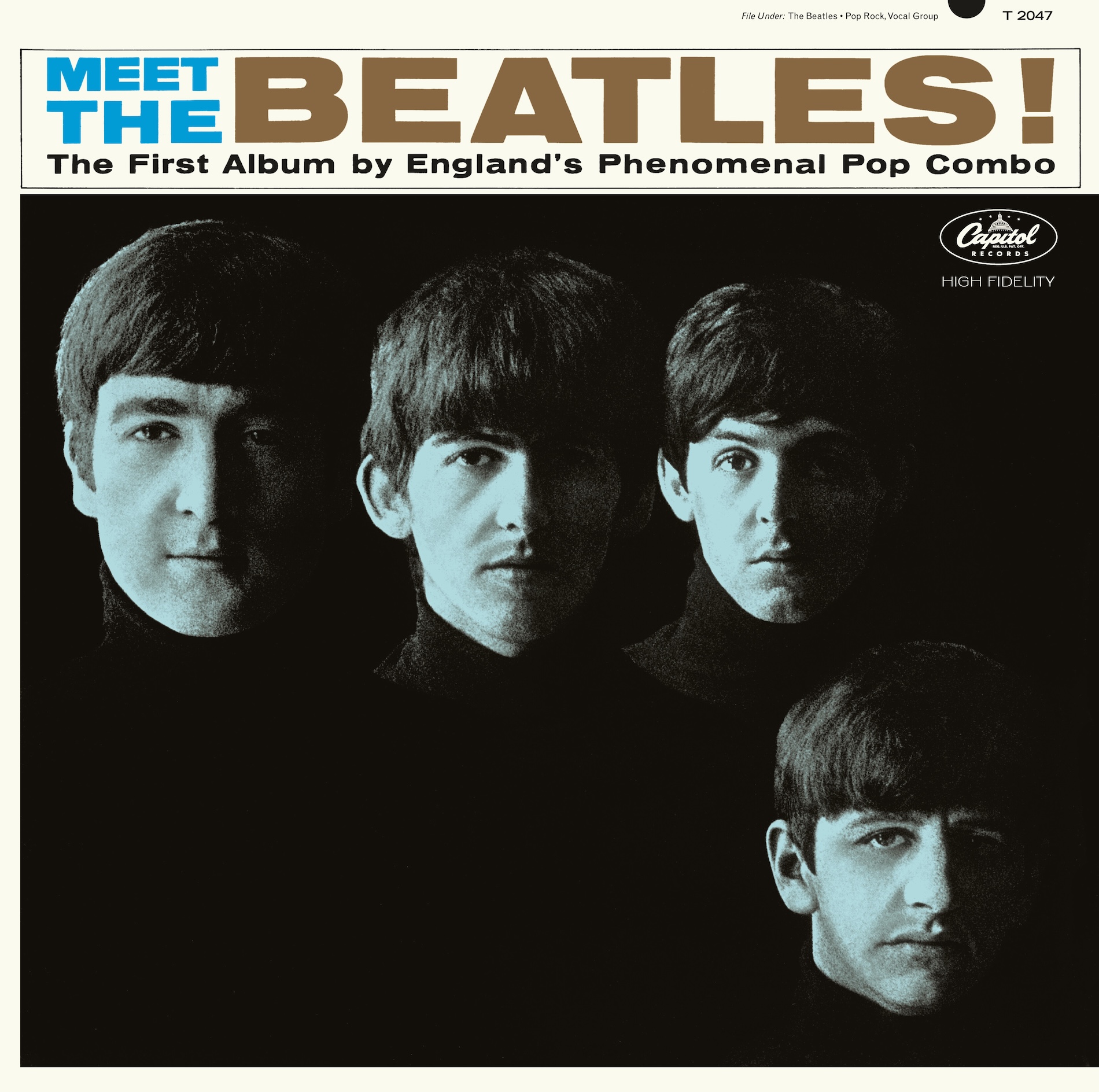
1964’s Meet The Beatles! started it all
Before doing anything else, let’s get this part out of the way. The Beatles: 1964 U.S. Albums In Mono, which assembles seven Beatles albums—originally compiled for U.S. release between January 1964 and March 1965 by Capitol Records and United Artists—into a handsome boxed set for the holidays, sounds amazing. The discs have been analog cut for 180-gram audiophile vinyl from their original mono master tapes for global release on November 22, 2024, by Apple Corps Ltd./Capitol/UMe. Out of print on vinyl since 1995, these mono albums are in a new eight-LP boxed set available in the U.S. here and in the U.K. here. Six of the titles are also available individually; order links are below.
The group’s phenomenal introduction to American audiences, quickly and accurately dubbed Beatlemania, has been captured in all-new Martin Scorsese-produced documentary, Beatles ’64, that made its premiere on Nov. 29 on Disney+. I was just six years old when my mother bought Meet The Beatles! for my older sister and me early that year. And just weeks later, our family crowded around our black-and-white television set, just like in tens of millions of other homes, to watch the Fab Four perform on The Ed Sullivan Show. In a few months, mom again delivered, presenting us with The Beatles’ Second Album. We played those albums nearly every day and came to know each song by heart. (Or so I thought; there were marvelous turns of the phrase in the lyrics that my young self was oblivious to. And I had no idea who the people were behind the mysterious names “Chuck Berry,” “W. Robinson,” and so on, that appeared on some of the song credits on the label of album #2.)
That summer, A Hard Day’s Night (Original Motion Picture Sound Track) arrived, soon followed by the film itself. By now, I was seven and mom drove my nine-year-old sister and me to the nearby movie theater, where we somehow got the last two seats for the matinee. I can still picture my tiny self in the last row, and if I close my eyes, I can even picture John, Paul, George and Ringo on the screen. What I can’t—and will never be able to recall—is the sound of them talking and singing: the theater’s audience of mostly teen and pre-teen girls shrieked and sobbed the entire time. It was very likely the first movie I had ever seen in a theater. It would be years later before I actually heard the film’s dialog and performances. But the recordings, the Sullivan Show appearances, the movie, and my growing collection of Beatles cards and other licensed merchandise, made a significant impact on me and for untold millions of other Americans.
Sonic highlights abound after listening to this great body of work anew. George Harrison’s sensational opening chord on “A Hard Day’s Night” was followed just months later by the stinging feedback at the start of “I Feel Fine.” John Lennon and Paul McCartney’s harmonies on “Baby’s in Black.” Throughout, one feels like they’re in the EMI studio with producer George Martin as these iconic performances are captured.
From the labels’ announcement: These 2024 editions were cut for vinyl from the original master tapes using a completely analog signal path and with constant reference to first generation pressings of the original albums. They were made using a Studer A80 master recorder with analog preview & program paths, and an Neumann VMS70 cutting lathe originally installed in Capitol Studios in 1971. This specific all-analog cutting technique allows faithful representation of the full musical range and dynamics present on the original tapes.
Mastering engineer Kevin Reeves notes, “We’re letting the tapes speak for themselves, without the limitations that we had sixty years ago. These deep bass tones that you hear now that were not present on the ’64 pressings. You can hear John’s chest when he sings. You can hear Paul’s very crystal-clear voice on some of the songs that he’s singing on. There’s this one line in one of the songs where Paul’s bass is following George’s guitar lead and all the way down to the low E and I never necessarily experienced that before. I know it’s there; it’s been there forever but I just never heard it as I heard it from listening to these tapes in their natural state.”
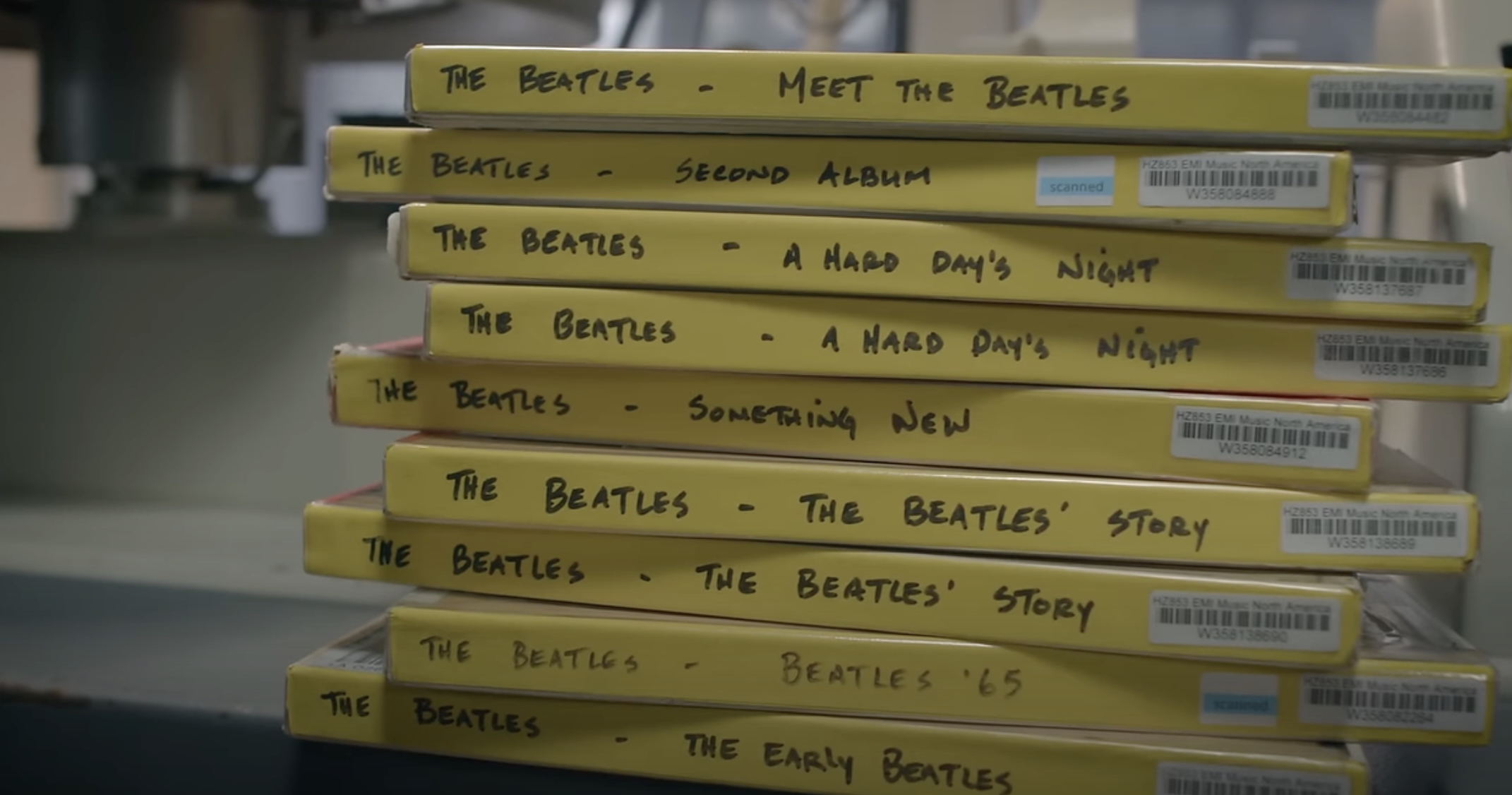
In a fascinating behind-the-scenes look at the cutting process, Reeves says of the tapes, “These are museum pieces. These are Mona Lisa pieces of art.”
All seven albums—iMeet The Beatles!, The Beatles’ Second Album, A Hard Day’s Night (Original Motion Picture Sound Track), Something New, The Beatles’ Story (2-LPs), Beatles ’65, and The Early Beatles—feature faithfully replicated artwork—including the inner sleeves—and new four-panel inserts with essays written by American Beatles historian and author Bruce Spizer. [His many books on the Beatles are available here.] The albums’ new vinyl lacquers were cut by Reeves at Nashville’s East Iris Studios.
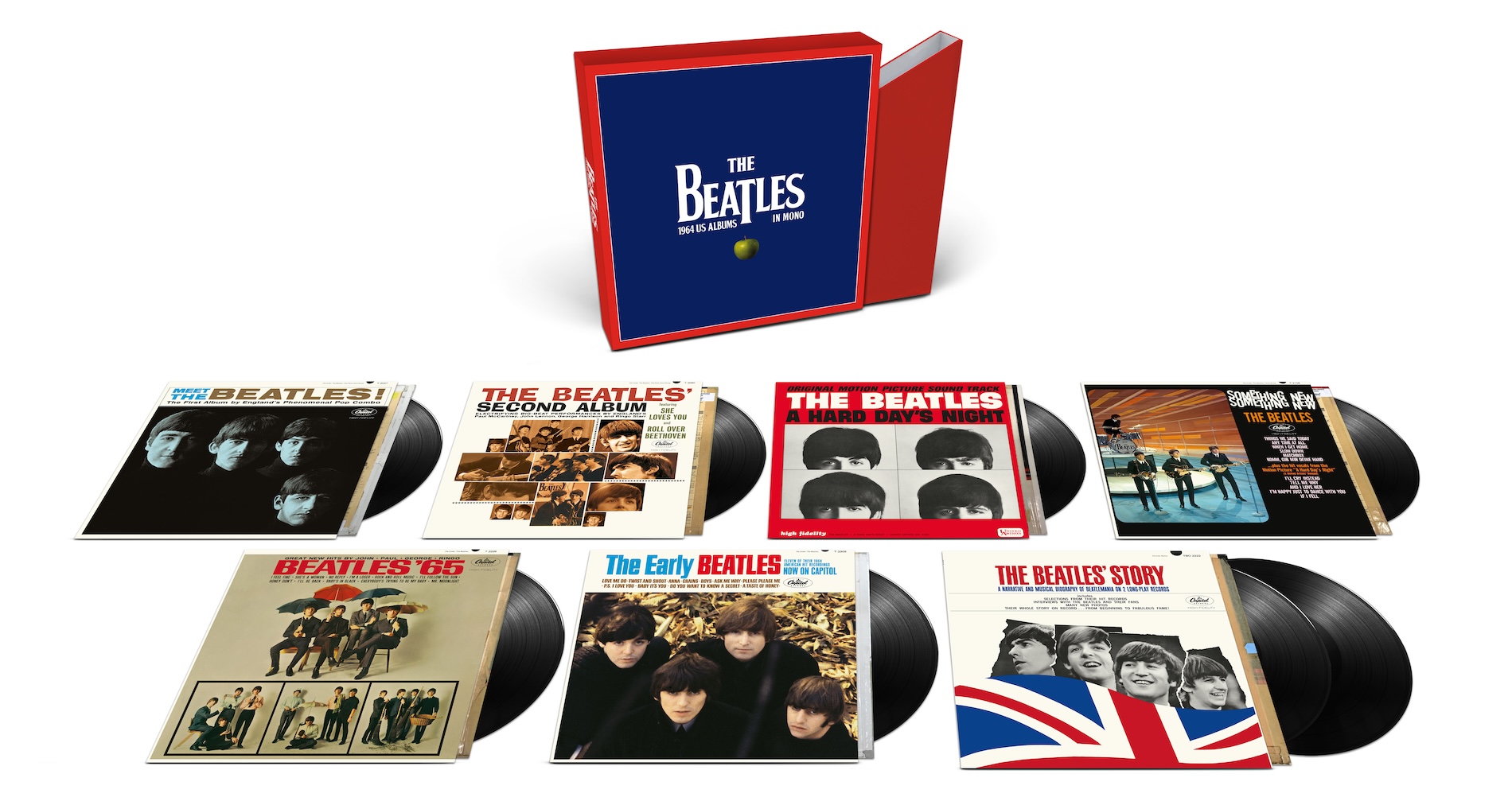
Watch the official trailer
From the set’s original September 12 announcement: On February 7, 1964, scores of screaming, swooning fans gathered at New York’s John F. Kennedy International Airport to catch a glimpse of John, Paul, George and Ringo as the Beatles took their first steps on American soil.
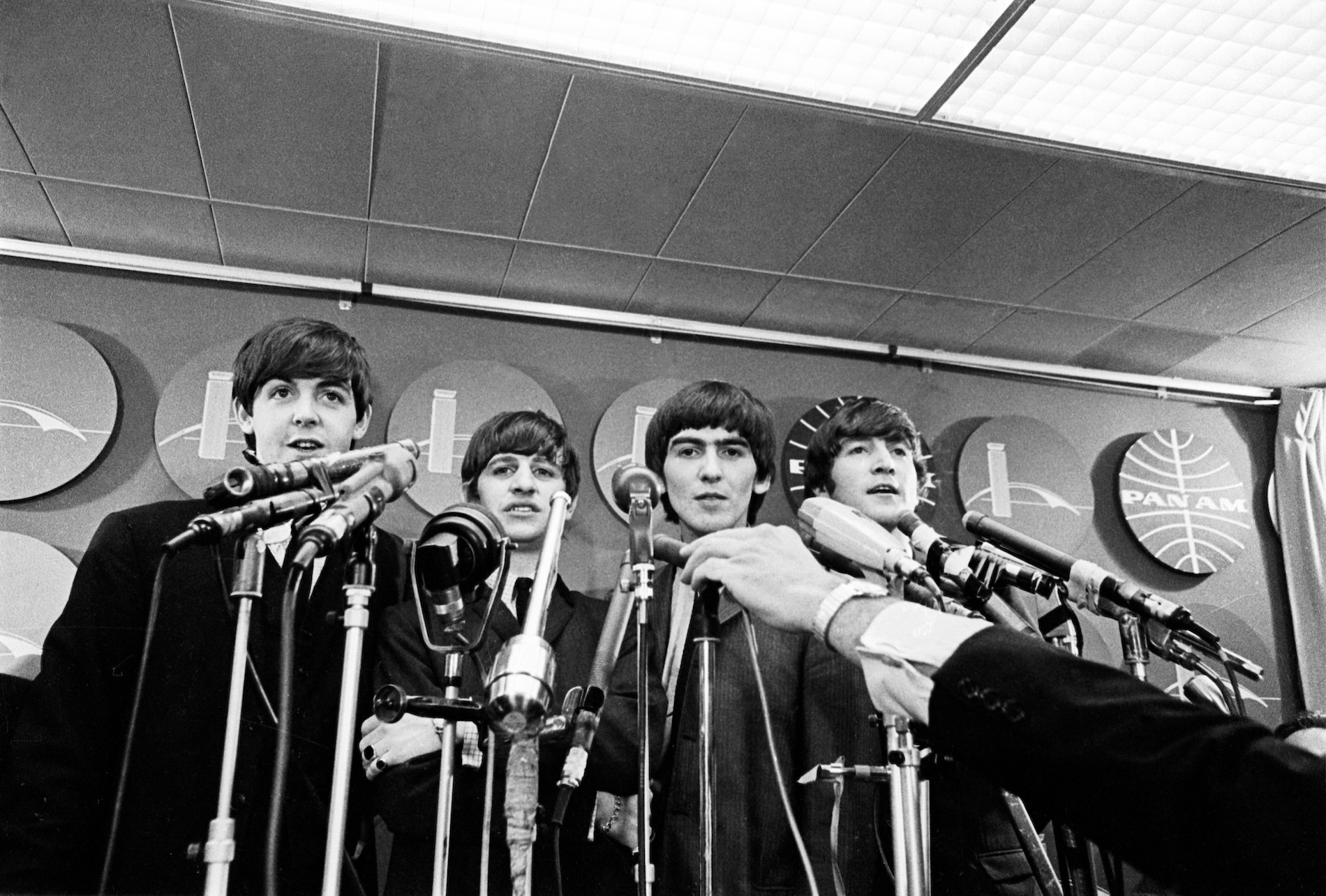
The Beatles at JFK Airport, February 7, 1964 (Photo © Apple Corps Ltd.; used with permission)
Two nights later, 73 million viewers in the U.S. and millions more in Canada tuned in to CBS to watch the Beatles make their American television debut on The Ed Sullivan Show. In this cultural watershed moment in American history, The Beatles performed five songs on the live broadcast. “Beatlemania,” already in full, feverish bloom in the Beatles’ native U.K. and developing in the U.S., exploded with blissful fervor across America and around the world. The British Invasion had begun.
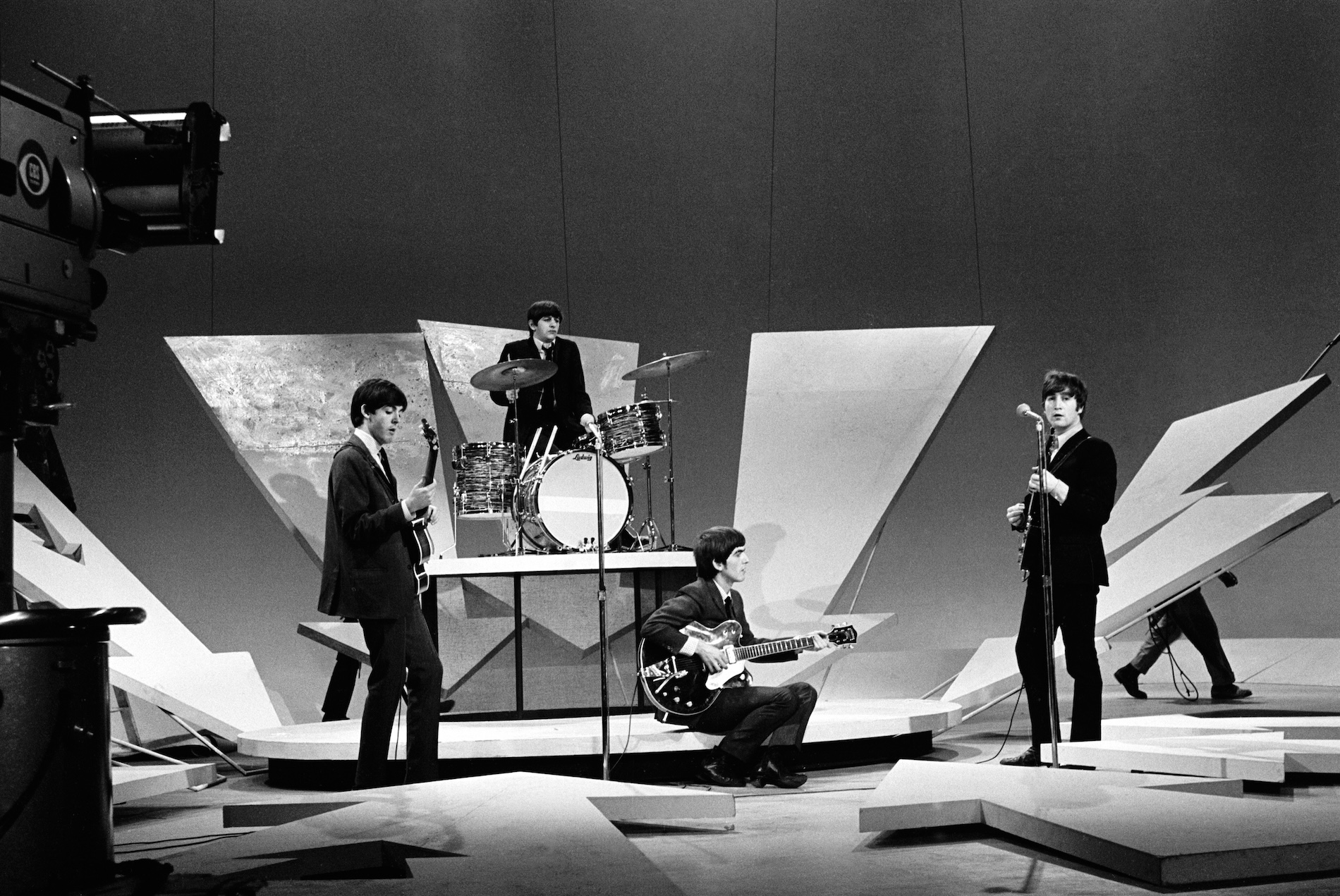
The Beatles rehearsing for their February 9, 1964 appearance on The Ed Sullivan Show (Photo: © Apple Corps Ltd.; used with permission)
Shortly before the Beatles’ history-making Stateside visit, Capitol Records secured exclusive U.S. rights to release the band’s recordings in a deal with EMI. The storied, already iconic record label rush released Meet The Beatles! on January 20, 1964. The album features 12 tracks drawn largely from the band’s U.K. album With The Beatles (released November 22, 1963). Showcasing the band’s original songwriting, Capitol replaced five cover songs from the U.K. album with three originals: both sides of the Beatles’ first Capitol single (“I Want To Hold Your Hand”/“I Saw Her Standing There”) and the latest U.K. single’s B-side (“This Boy”). (And don’t overlook the great LP cut, “Hold Me Tight.”)
Spizer’s notes for the album underscore Capitol’s decisions. “The company believed that the title With The Beatles lacked energy,” he writes. “As the album would be introducing the band to this country, Capitol came up with Meet The Beatles! An exclamation point was added to emphasize the excitement generated by the group. Capitol added text to describe the record as ‘The First Album by England’s Phenomenal Pop Combo.'” The album hit #1 and held the top spot for 11 weeks, launching a hit-making string of Beatles albums compiled, titled and packaged by Capitol for the American market. [It’s available separately in the U.S. here and in the U.K. here.]
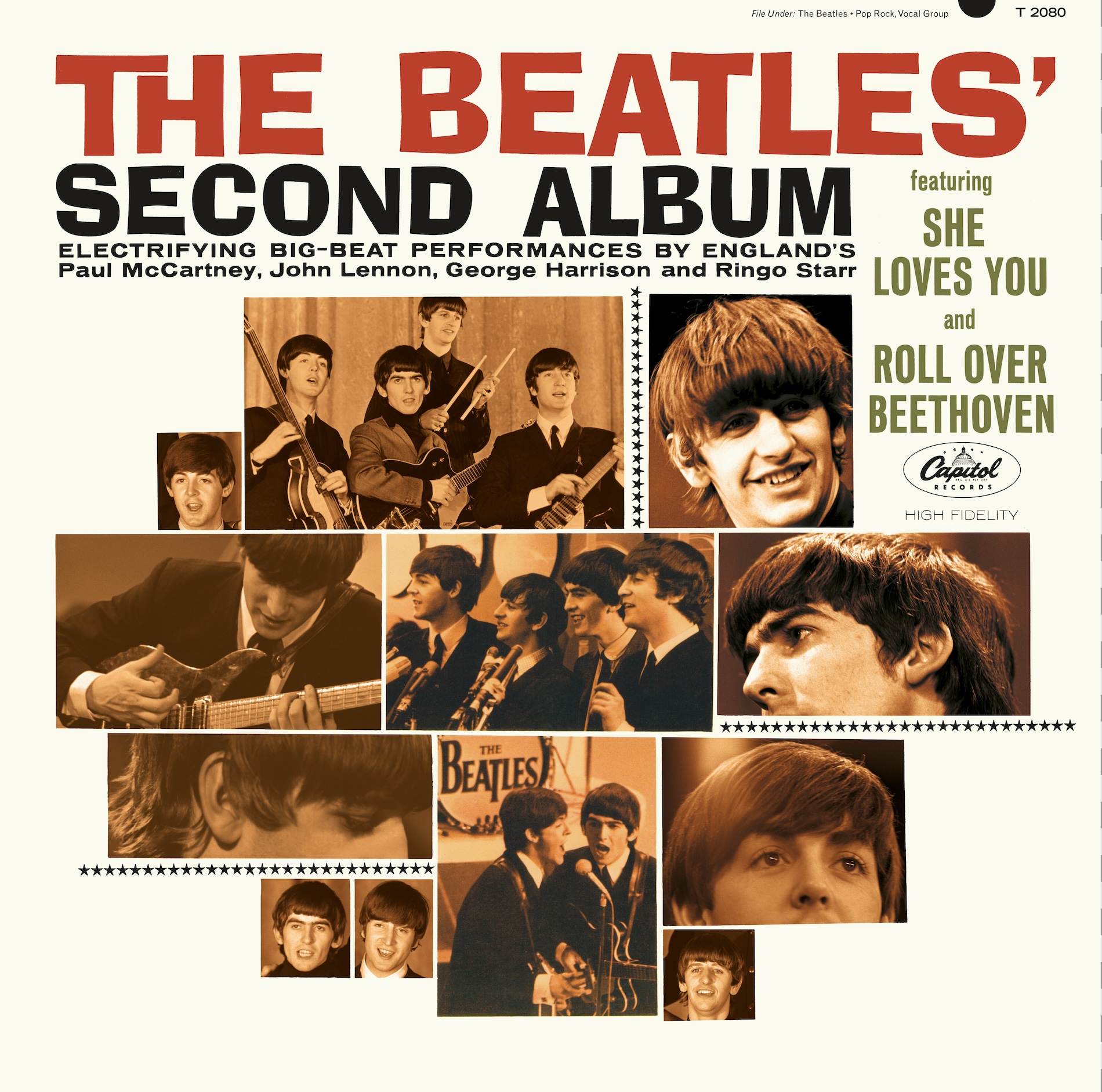 By early April, more than 3.6 million Meet The Beatles! albums had been sold, and on the singles front, the Beatles swept the Billboard Hot 100’s top 5 positions on April 4, a stunning chart record that still stands. On April 10, Capitol released The Beatles’ Second Album. Its 11 tracks include the five covers not included on Meet The Beatles!, three songs previously released in the U.S. by the Swan and Vee-Jay labels, plus the B-side to the band’s U.S. “Can’t Buy Me Love” single (“You Can’t Do That”), and two new songs recorded in March during sessions for the band’s soon to be released debut film, A Hard Day’s Night (“I Call Your Name” and a cover of Little Richard’s “Long Tall Sally”). Their great cover of Berry’s “Roll Over Beethoven” potently leads off the album. [It’s available separately in the U.S. here and in the U.K. here.] Spizer notes, “The eye-catching front cover contains a series of sepia-tinted photographs, informs shoppers that the LP features ‘She Loves You’ and ‘Roll Over Beethoven’ and accurately proclaims: ‘Electrifying Big-Beat Performances by England’s Paul McCartney, John Lennon, George Harrison and Ringo Starr.'” Upon release, The Beatles’ Second Album replaced Meet The Beatles! atop Billboard’s album chart for five weeks.
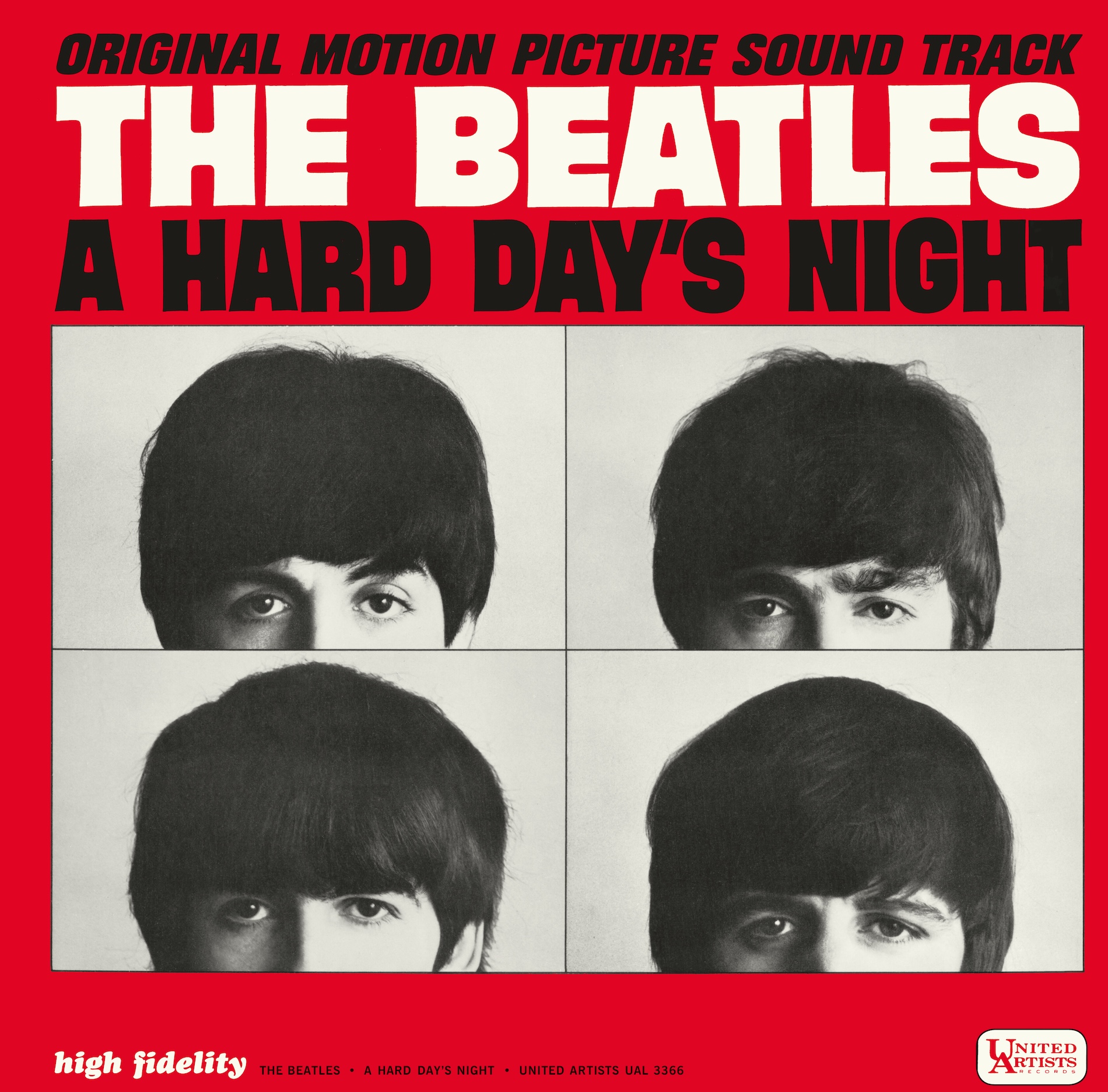 On June 26, United Artists rush-released the U.S. soundtrack album for A Hard Day’s Night, which the studio would release to theaters nationwide in August. Along with its buoyant title track, the album features “Can’t Buy Me Love,” “And I Love Her” and five more Beatles originals. As Spizer notes, “As United Artists only had eight Beatles recordings for its soundtrack album, it had to turn to another source for the needed additional tracks—George Martin, who the company had recently signed as a recording artist. Martin provided four orchestral arrangements of Beatles songs for the LP.”
The soundtrack topped the chart for 14 consecutive weeks, tallying a whopping 51 weeks on the chart. Capitol quickly released “A Hard Day’s Night” as a single, topping the Hot 100 and selling more than a million copies in short order. (And there’s “Tell Me Why,” with its great Lennon lead vocal with harmonies from McCartney and Harrison. [It’s available separately in the U.S. here and in the U.K. here.]
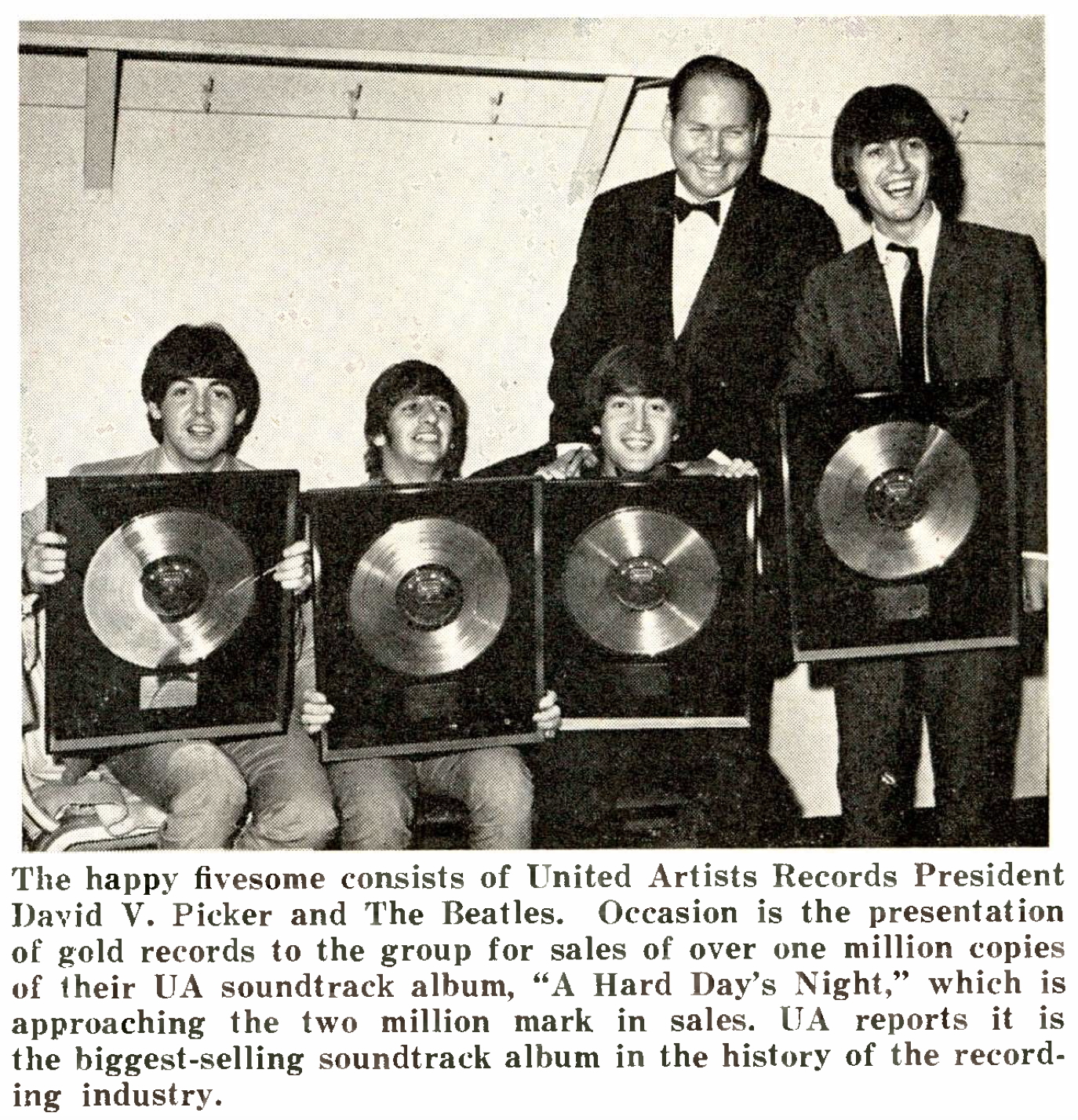
The Beatles receive Gold albums for the A Hard Day’s Night soundtrack in a photo that appeared in the Oct. 3, 1964, issue of Record World.
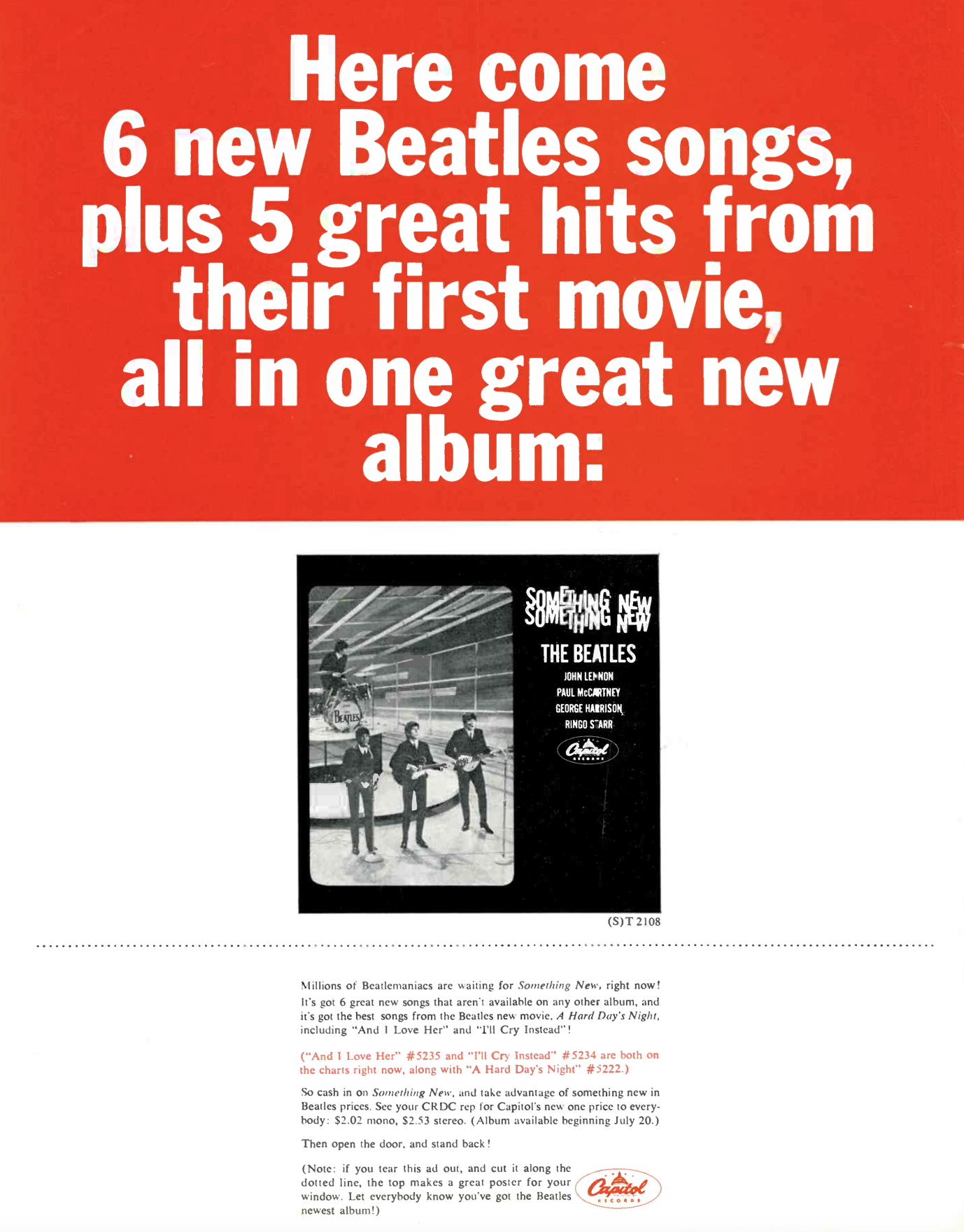
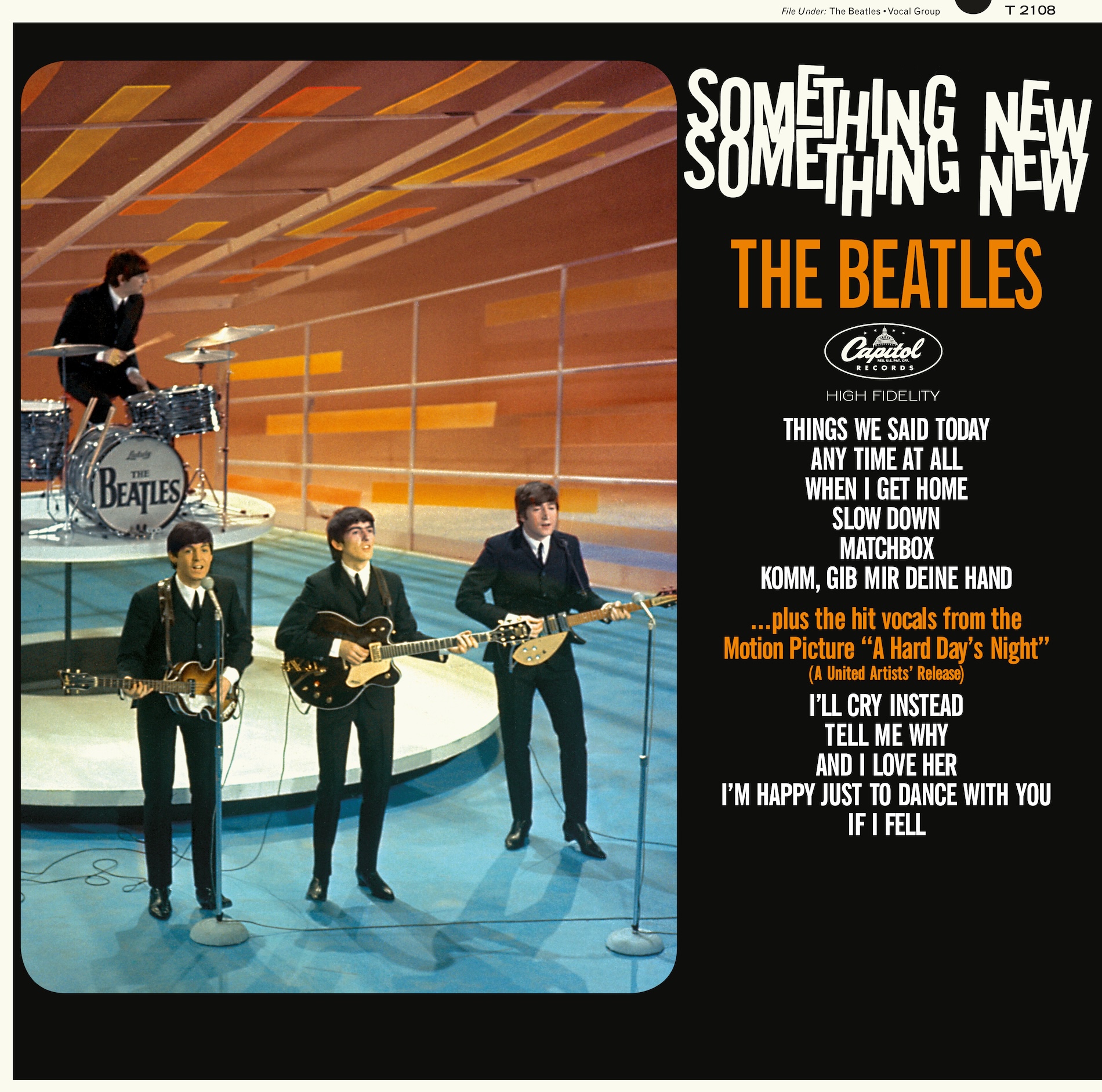 Released by Capitol on July 20, The Beatles’ Something New album includes five songs featured in the band’s A Hard Day’s Night film and six tracks new for America, including “Things We Said Today” and “Any Time At All.” “I’m Happy Just to Dance With You” offers a superb lead vocal from George. Spizer notes, “The Capitol album was set for release in early August to coincide with the American debut of the film. But when United Artists issued its soundtrack LP in late June, Capitol decided to alter the content of its LP and push up its release. Ads appearing in the July 25 issues of Billboard, Cash Box and Record World informed distributors and stores that ‘Millions of Beatlemaniacs are waiting for Something New right now!'” The LP held at #2 on the album chart for nine weeks, just below the soundtrack. [It’s available separately in the U.S. here and in the U.K. here.]
Released in U.S. theaters in August, A Hard Day’s Night was a box office smash and a critics pick, earning two Academy Award® nominations. Within days of the film’s release, the Beatles returned to North America for a monthlong mad dash of 32 concerts across the U.S. and Canada from August 19 to September 20.
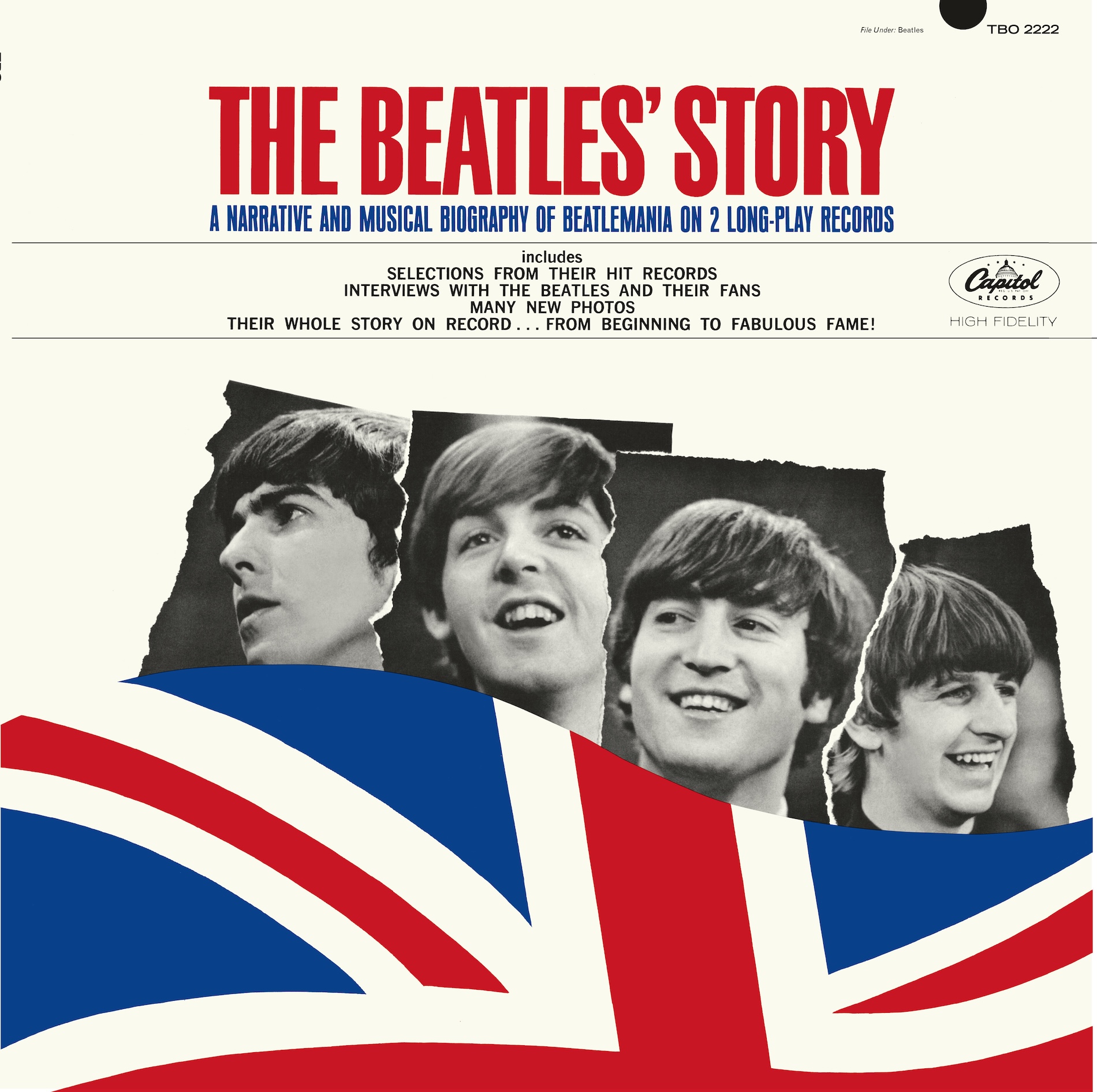 Capitol’s next Beatles release was on November 23: The Beatles’ Story, described on its cover as “A Narrative and Music Biography of Beatlemania on 2 Long-Play Records.” A charming audio grab bag of band member interview clips and quips; Beatles song snips; instrumental versions of Beatles songs performed by the Hollyridge Strings; narration and Beatles storytelling by John Babcock and others; plus various other bits and bobs, the gatefold-packaged double album has a relatively short total runtime of 50 minutes across its four sides.
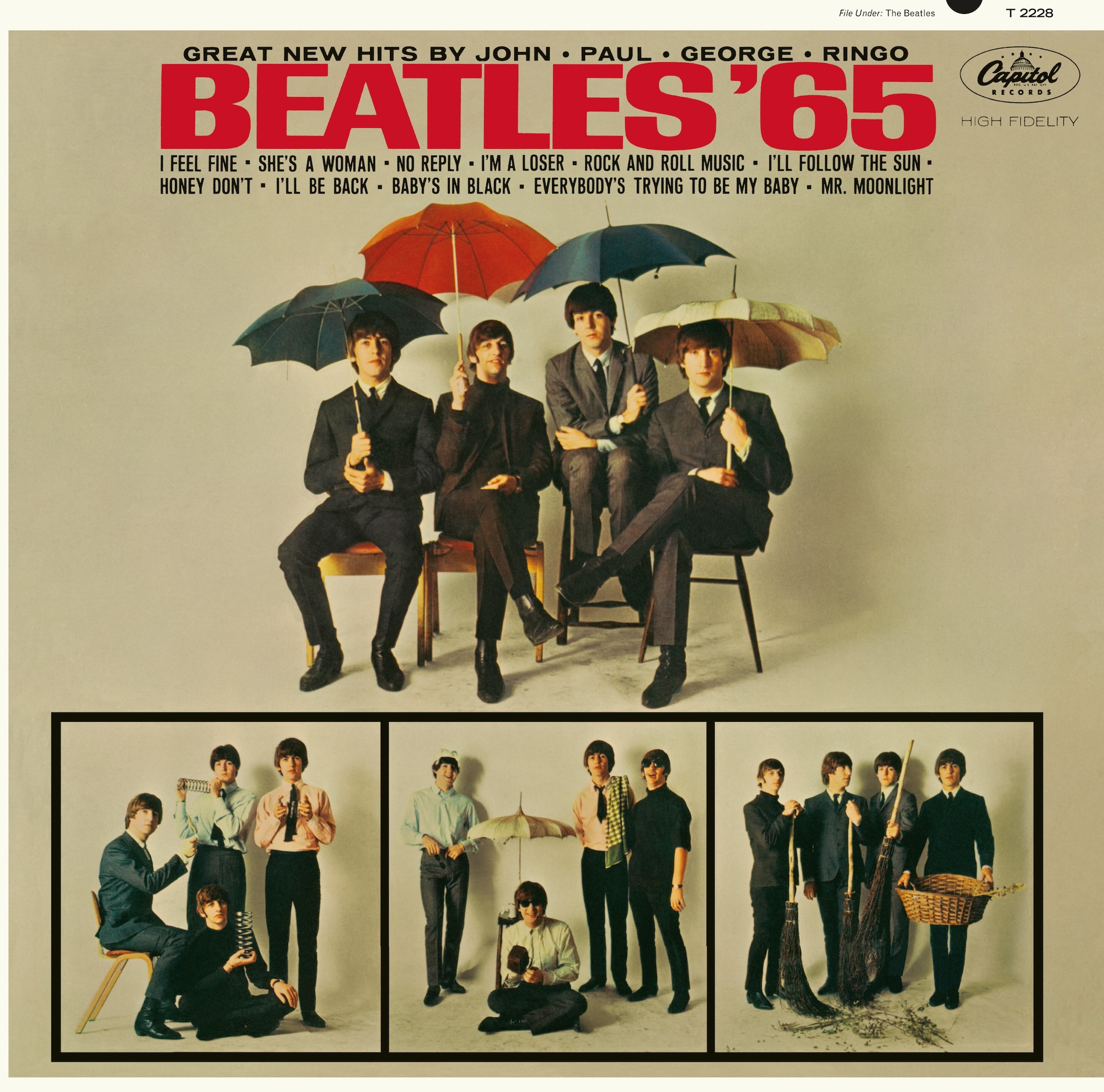 Capitol capped 1964 with the forward-looking Beatles ’65 album, rush released on December 15—”nearly two weeks ahead of its originally scheduled date of December 28,” notes Spizer, thanks to the label subcontracting pressing plants from other labels—and promising “Great New Hits by John ∗ Paul ∗ George ∗ Ringo” on its cover. The album plucks eight tracks from the U.K. #1 Beatles For Sale album (released December 4), plus three more songs new for America, including “I’ll Be Back” and both sides of the band’s latest U.K. single (“I Feel Fine”/“She’s A Woman”). (And don’t overlook “I’ll Follow the Sun,” with Paul’s beautiful vocal.) Out in time for the holidays, Beatles ’65 sold nearly two million copies within its first two weeks of release and held #1 for nine of its 71 weeks on Billboard’s album chart. [It’s available separately in the U.S. here and in the U.K. here.]
1964 was a banner year for the Beatles in the U.S. (and all around the world), even by the band’s own “toppermost of the poppermost” standards. The Beatles racked up 17 U.S. Top 40 singles including six #1s, six Top 10 albums including four #1s, and a blockbuster film. By year’s end, Capitol had sold more than 15 million Beatles records.
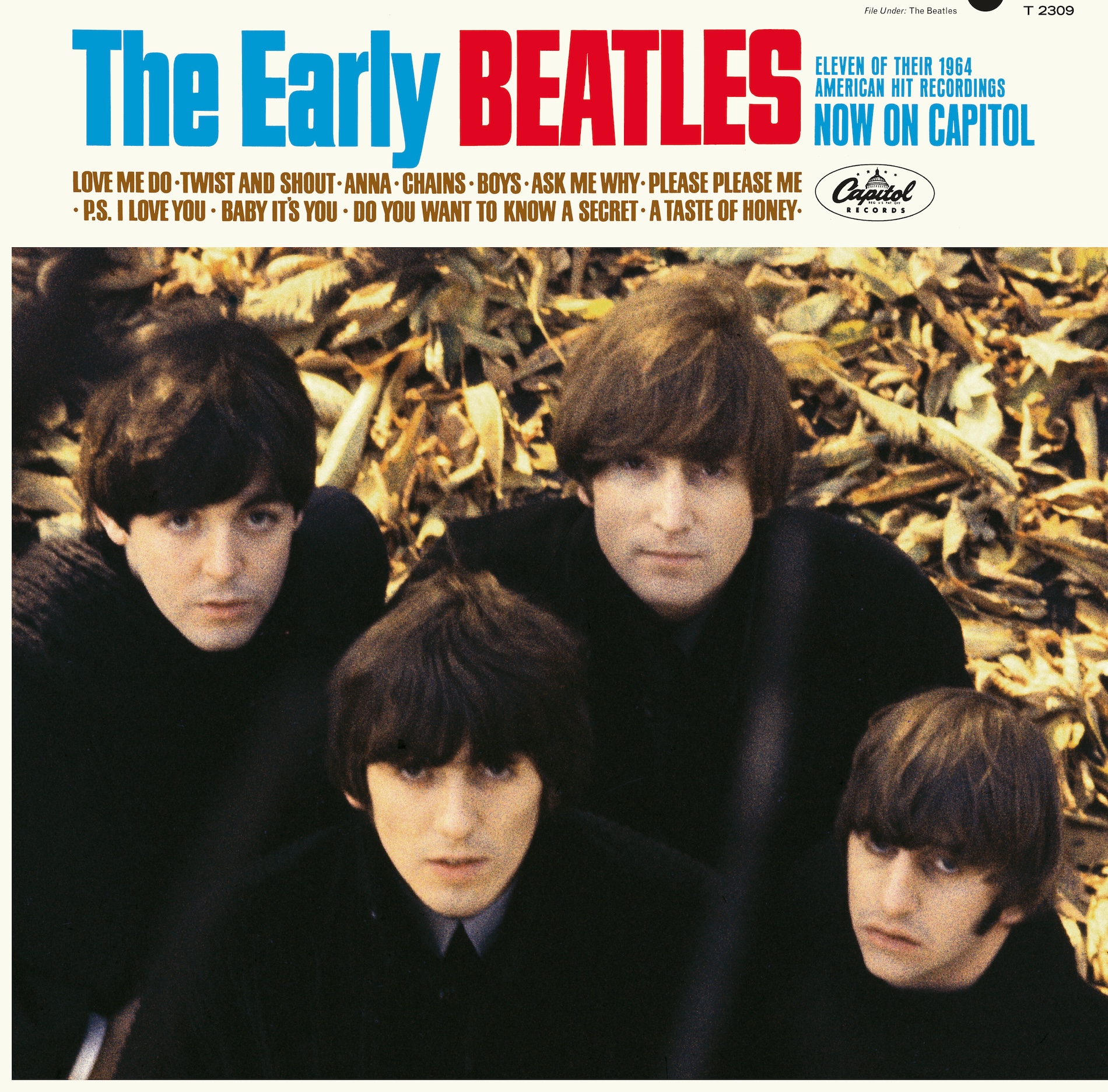 Capitol released The Early Beatles on March 22, 1965. The album’s 11 tracks were first released in the U.S. by Vee-Jay Records, starting in February 1963 with the “Please Please Me”/“Ask Me Why” single, with the rest issued in January 1964 on Vee-Jay’s Introducing The Beatles album. Vee-Jay also released three songs from that album as hitmaking U.S. singles in early 1964 (“Twist And Shout,” “Do You Want To Know A Secret” and “Love Me Do”). Capitol’s exclusive American release rights for the tracks took effect in October 1964 upon settlement with Vee-Jay, and The Early Beatles collected them for their Capitol debut. [It’s available separately in the U.S. here and in the U.K. here.]
The Beatles: 1964 U.S. Albums In Mono is available in the U.S. here and in the U.K. here.




4 Comments so far
Jump into a conversationFor two years I have been anxiously waiting for an updated release of Rubber Soul ( like Revolver etc.). Today I see this release. If this set is this years release instead of Rubber Soul I’m really disappointed.
I think you are confusing these US reissue releases with the Giles Martin UK reissues. One is not related to the other. Giles is working in reverse order – relax, I’m sure Rubber Soul is next on his agenda.
Thank you Dashate. I sure appreciate you responding to my comment. I will continue to wait in anticipation!