
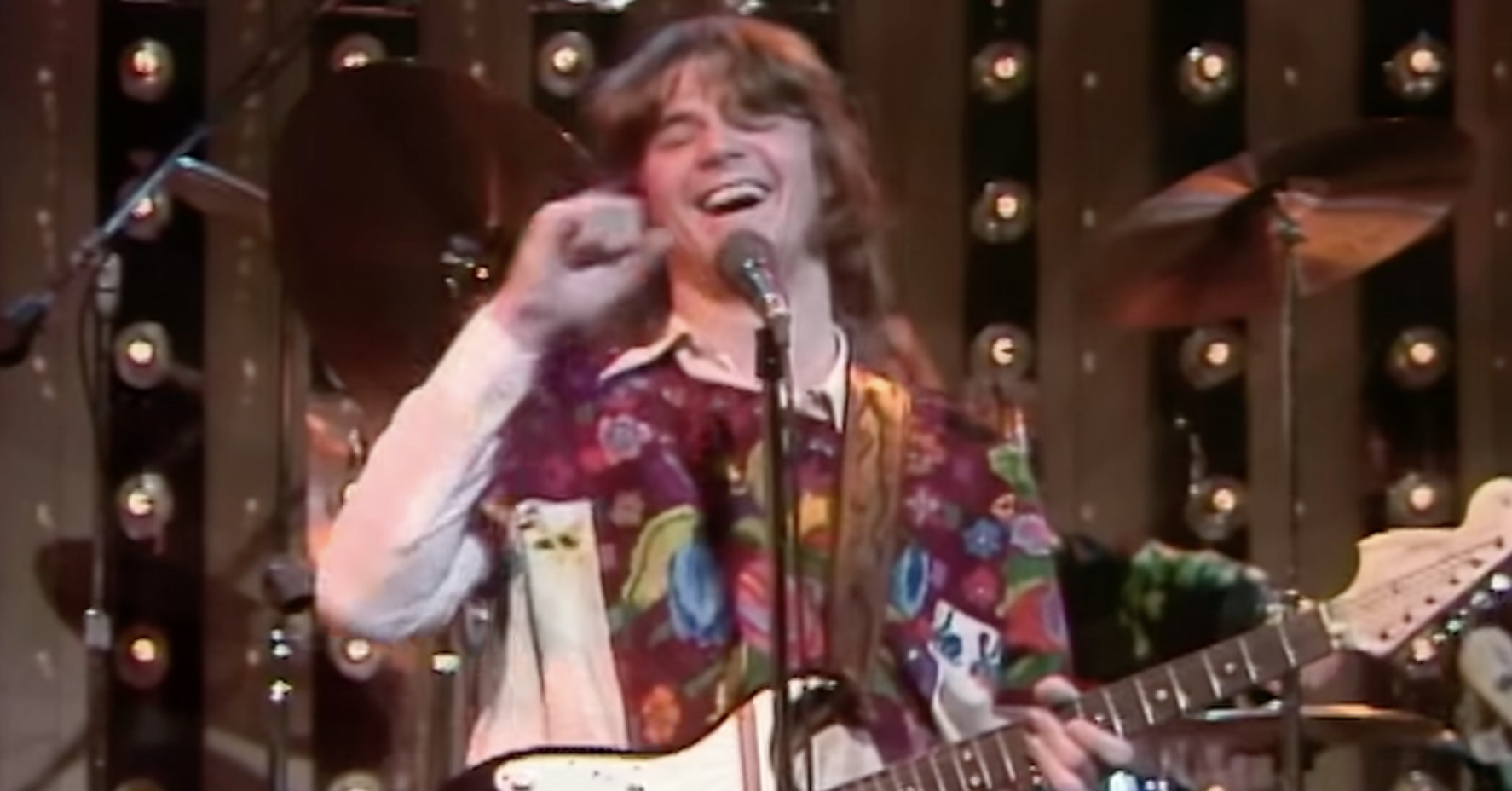
Steve Miller in 1974
Steve Miller spent the better part of a decade building mainstream success after forming his namesake band in 1966. Beginning with the release of Children of the Future in 1968, the Steve Miller Band recorded a series of albums for Capitol Records that blended San Francisco psychedelia, electric blues, folk and jazz into a sound that evolved noticeably from one album to the next. After releasing seven albums, building an audience despite having only two singles barely making the Hot 100, Miller, born Oct., 5, 1943, suddenly became one of the decade’s most dependable hitmakers when the mainstream finally caught up with “The Joker” in 1973.
By the mid ’70s, the follow-up albums, Fly Like an Eagle and Book of Dreams, had turned the band into one of FM radio’s most defining acts. “Rock’n Me,” “Take the Money and Run” and “Jet Airliner” were just some of the Top 40 hits that eventually became permanent fixtures of classic rock radio. By the end of the decade, few American rock bands received as much airplay. The 1978 compilation, Greatest Hits 1974-78, has sold an astonishing 15 million copies in the U.S.
Those hits, however, tell only part of the story. Even during the Steve Miller Band’s most commercially successful years, FM stations continued embracing album tracks that never became major pop singles. And the earlier records — those released before the breakthrough — remain among the most adventurous material Miller ever recorded.
These 12 songs remain some of the strongest examples of what the Steve Miller Band produced beyond the familiar radio staples.
“Children of the Future” (Children of the Future)
From the explosive first notes of the opening track of the debut album, the song immediately introduced the exploratory side of Miller’s songwriting. Built around layered vocals, keyboards and studio experimentation, the song captured the blues-tinged psychedelic rock that defined the band’s earliest work. It featured guitarist Boz Scaggs, Miller’s childhood friend from their Texas school band days together in the Ardells.
“Quicksilver Girl” (Sailor)
One of the softer recordings in the early catalog, the song leaned heavily on melodic folk and West Coast harmonies, its restrained arrangement creating a dreamy atmosphere that contrasted with much of the heavier material surrounding it. Produced by Glyn Johns at London’s Olympic Sound Studios, the record sounded tighter and more polished than much of the band’s earlier work. (A bit of trivia: The song was inspired by Julia Dreyer, the then-wife of Quicksilver Messenger Service’s David Freiberg. She was known as Girl Freiberg.)
“My Dark Hour” (Brave New World)
The song grew out of a late-night session when Paul McCartney was at the studio without his fellow Beatles. Credited as “Paul Ramon”—a pseudonym McCartney had used years earlier—he played drums, bass, guitar and backing vocals on the recording. Released in June 1969, Miller later told music journalist Jim Farber he thought it was “going to be the biggest single of my life!” Unfortunately, it never reached the Hot 100. “It was like it was dropped down the mail chute of the Empire State Building straight into hell.” Even so, the song with a “Fly Like an Eagle” riff remains one of the more fascinating collaborations in both artists’ catalogs.
“Space Cowboy” (Brave New World)
Though it was inexplicably never released as a single, “Space Cowboy” became one of Miller’s defining FM radio favorites. Its relaxed groove and cosmic imagery helped establish the easygoing persona he would refine throughout the decade. Miller later revisited the song’s imagery in “The Joker” four years later.
“Little Girl” (Your Saving Grace)
By 1969, SMB had begun tightening their sound. This song moved away from the extended psychedelic feel of the group’s earliest records and toward a leaner blues-rock approach built around sharper guitar work and a stronger rhythm section.
“Your Saving Grace” (Your Saving Grace)
The title track from the 1969 album, written and sung by SMB drummer Tim Davis, highlighted the blues foundation beneath much of the group’s sound. Loose guitar lines and an unhurried groove reflected Miller’s deep grounding in electric blues—a side of his playing rooted in his early association in Chicago with such greats as Howlin’ Wolf and Muddy Waters.
“Don’t Let Nobody Turn You Around” (Your Saving Grace)
Blending relaxed blues-rock with a smoother melodic style, the joyous track is tucked into one of the group’s strongest early albums, showing the direction they would continue refining throughout the ’70s. The LP’s only single release, it never charted.
“Jackson-Kent Blues” (Number 5)
Written in response to the Kent State shootings of May 4, 1970, the track remains one of Miller’s most topical songs. Instead of turning into a straightforward protest song, it carried a weary, unsettled mood that captured much of the uncertainty surrounding the period. It remains one of the more socially conscious recordings in the Steve Miller Band catalog.
“Journey from Eden” (Recall the Beginning…A Journey from Eden)
The extended title track from the 1972 album reflected the smoother direction Miller was beginning to pursue in the early ’70s. Acoustic passages and layered arrangements gave the song a broader, more melodic feel than much of the band’s earlier material. It marked an important transition away from the group’s psychedelic era and toward the streamlined FM radio sound that would later define the band’s biggest commercial years.
“Sugar Babe” (The Joker)
The album’s leadoff track captured the easygoing California-rock sound he had been refining throughout the early 1970s. The upbeat song pointed toward the commercial breakthrough that began with this album which, thanks to the #1 title track, topped the U.S. chart. It remains one of the band’s best-known LP cuts.
“Shu Ba Da Du Ma Ma Ma Ma” (The Joker)
Part rhythm-and-blues throwback and part studio groove experiment, this song showed the more playful side of Steve Miller’s mid-decade work. Even surrounded by some of the band’s biggest hits, the song became a FM radio album favorite during the LP’s long chart run.
“Wild Mountain Honey” (Fly Like an Eagle)
The album reached #2 on the Billboard 200, spent 88 weeks on the chart and was later certified 6× platinum by the RIAA. While its three singles, “Fly Like an Eagle,” “Rock’n Me, and “Take the Money and Run” dominated Top 40 radio, the ethereal “Wild Mountain Honey” helped shape much of the album’s atmosphere. Floating synthesizers and soft vocal harmonies make it one of the standout deep cuts in their catalog.
Related: Our 2019 concert review of the Steve Miller Band
The band’s extensive catalog is available in the U.S. here, in Canada here and in the U.K. here.



9 Comments so far
Jump into a conversationOkay,I get that this was meant in a fun way,
and everyone is entitled to their choices,
Yet it seems that his total beginnings
of recognition and not quite stardom
were perhaps glossed over quickly
in a manner not devious,but forgetful…
‘Living in the USA’ from 1968,
was not mentioned here at all.
And,not to make a big scene,
‘Something to believe in’, from the
resurrectional lp ‘The Joker’,is ace,
and I remember receiving FM airplay.
‘The Window’ was the for sure
attached-at-the-hip wonderful to
‘Wild Mountain Honey’. For Real.
‘Rock Love’ long player was skipped over,
intentional or otherwise.
”True Fine Love’ was awol as well,
and their fabulous renditon on
Roscoe Gordon’s chestnut
‘No More Doggin” is a delight.
In summary,his pre-hit catalogue lps
where and still are marvelous,
as are his final offerings to us.
GLAD 2 see Steve Miller segment, esp re initial albums pre-JOKER/fm fame…these are my favorite S MILLER albums; I adored these records, still do! Once he went big-time, not as intrigued! tho misc songs enjoyed off post records! it was early albums that thrilled me most! Rock Love big fave! listen to often…did discover J50 2 disc set @ Calif link library, which I will receive soon, and it is mix of preJoker music/comments and Joker tunes, wip, etc…never knew of it, glad it came to my attention…excited to check it out….
I haven’t heard Quicksilver Girl in ages. Had no idea it was written about Girl Frieberg. Learn something new every day. Thank you for the article. Really enjoy Steve Miller’s music. Great memories.
One of my Miller faves is ‘Electro-Lux Imbroglio/Sacrifice’ from Book of Dreams.
And you can’t go wrong with old Clovers music, in Steve’s case the follow-up to ‘The Joker’, ‘Your Cash Ain’t Nothin’ But Trash’.
Whatever happened to “Rock Love”? The Live lp.
His album “Rock Love” was one of my favorites; the one I recall most from that was “Blues without Blame where he gives us a great blues guitar solo that shows his roots and musical ability; like Clapton, he was a great blues guitarist who is mostly known for his pop songs.
I discovered a lot of these songs on a compilation album: Best Of Steve Miller Band 1968 – 1973. I think I prefer these songs to the overplayed later 1970s hits. Thanks for bringing them to light!
Great article, thanks for sharing. You know growing up on the Peninsula during this time was extra special. And I have to say Sailor and the opening track, Song For Our Ancestors really does it for me. The chain banging up against the pole is forever etched into my consciousness. I just turned 70. Thanks Steve.
My older sister turned me on to Steve Miller and Fleetwood Mac just before they started their big run of success.
Of those mentioned in the article I’ll add Seasons, Dear Mary, Going to the country, Harbor Lights, Wintertime and his rendition of You send me.