
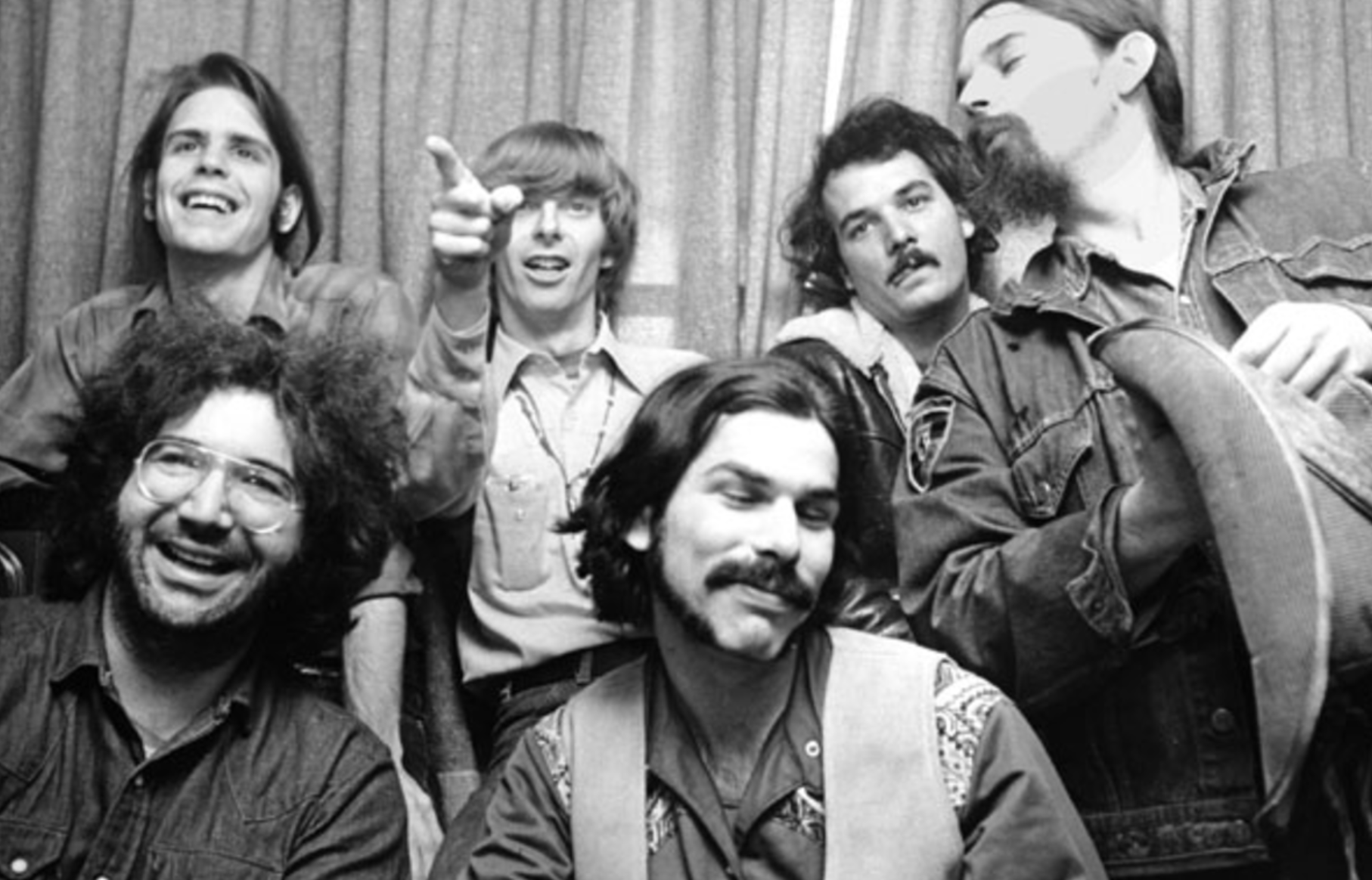
Grateful Dead, 1968
Ask any Dead Head, and you’ll probably hear the same story: The Grateful Dead were best experienced live in concert. Their performances, which featured improvisational romps that allowed them to refine or even reinvent a song virtually every time it was played, were one major reason why many fans followed the band from city to city on tour, taking in multiple shows during a given run and then doing it all over again. There was a popular saying that may have originated on a bumper sticker—“There’s nothing like a Grateful Dead concert”—and that’s true. Or as the late concert promoter extraordinaire Bill Graham put it, “They’re not the best at what they do, they’re the only ones that do what they do.”
During their three-decade existence, the Dead released several live albums (most of them two- or even three-record sets), and in the years since, that number has grown to more than 200, some of them boxed sets housing dozens of discs. But they did also enter the recording studio fairly regularly during their years together, to lock down some of their new songs—and a goodly number of covers—to varying results. Beginning with their self-titled 1967 debut and ending in 1989 with Built to Last, their 13th studio set in all, the group released both acknowledged gems (the back-to-back acoustic-based Workingman’s Dead and American Beauty in 1970), some that were mixed bags (’70s titles like From the Mars Hotel and Blues for Allah) and others that were largely forgettable (the aforementioned Built to Last, which only contained a few memorable tunes).
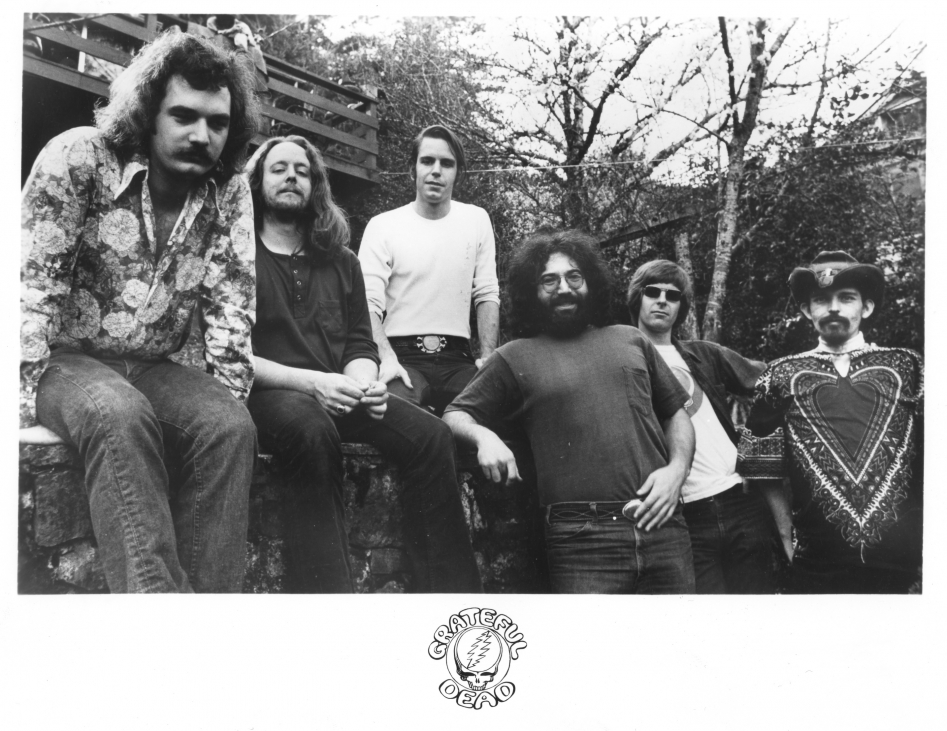
The Grateful Dead in 1972. First Warner Bros. Records publicity shot with new pianist Keith Godchaux. l. to r.: Bill Kreutzmann, Godchaux, Bob Weir, Jerry Garcia, Phil Lesh, Ron “Pigpen” McKernan (used with permission)
If the Dead may sometimes have been reluctant to spend time in the studio, they nonetheless made the best of it once they settled in, and many of the studio versions of their best known songs truly shined. When things came together for them in the studio, as when they landed a stellar live gig, there was also nothing like a Grateful Dead album. Depending on the era and the music itself, they might play a song more straightforwardly than they did on stage or go hog-wild with it, and some of their best tunes found themselves in the studio, even after they’d already been played dozens of times for audiences. They could be hit or miss, and that was part of their charm; audiences took that risk along with the band: A good many of the tunes they laid down in the studio were so esoteric they enjoyed only a brief life as concert choices; others never made it to the stage at all. And then there were others became staples of their gigs, performed literally hundreds of times.
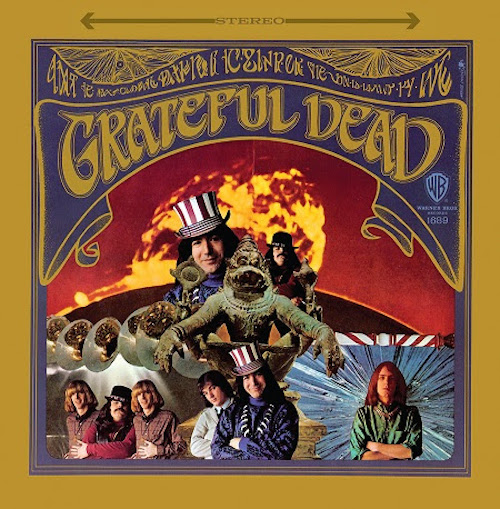
The Grateful Dead’s self-titled debut album, 1967.
The Dead used both the studio and the stage to try out new musical ideas, a shared forte of the musicians stemming from their earliest days as the house band at the Ken Kesey LSD bacchanals known as the Acid Tests. The result of all of this variation is that they continually grew as a unit and individually, particularly in the earliest years when they evolved rapidly and determinedly. That openness to everything also ensured that their recorded output was deliberately all over the place, taking elements from myriad influences—early rock and roll, folk, bluegrass, blues and soul, jazz, electronic music and more—filtered through their particular sensibilities.
Every Dead Head knows the basic repertoire: songs like “Truckin’,” “Morning Dew,” “Dark Star,” “China Cat Sunflower,” “Tennessee Jed,” “Sugar Magnolia” and several dozen others. But during their earliest years, the Dead both recorded and performed in concert numerous songs that never rose to that status or were popular for a while and then settled into the recesses of most Heads’ (and band members’) craniums.
Here are 10 songs from the earliest years of the Grateful Dead, before the group became a fixture in arenas and stadiums, that helped define who they were and where they were heading.
“Rosemary” (Aoxomoxoa)
The Dead’s third studio album, 1969’s Aoxomoxoa (the name is a palindrome of no fixed meaning that they simply thought looked cool), was by most measures an odd affair, retaining some of the psychedelia of their earlier output but mostly presenting it in quieter settings. Dead classics like “China Cat Sunflower” and “St. Stephen” first found life here, but there were a few other tunes that, though quite beautiful (among them “Mountains of the Moon”), quickly fell by the wayside. The acoustic, folkish “Rosemary,” like most of the album an early Jerry Garcia-Robert Hunter collaboration, tossed Garcia’s tender vocal into a whirling Leslie speaker that made it sound like a baroque ballad—if baroque ballads were listened to while inhaling nitrous oxide, reportedly the band’s drug of choice during these sessions. Lyrically, it’s rather oblique, described once on a now defunct website as a song that “weaves together evocative imagery and symbolism to convey a sense of transience, loss, and isolation.” The Dead only performed it live one time, in Kentucky, of all places, on Dec. 7, 1968.
“Operator” (American Beauty)
A rare song written and sung solely by the Dead’s co-founder and resident soul man, Ron “Pigpen” McKernan, the proto-Americana “Operator” is folksier than his usual R&B/blues fare. It slots into that mini-sub-genre of songs in which the singer asks a telephone operator (remember them?) to help him locate his missing lover or, as he calls her here, his “rider.” He sings: “She could be hanging ’round the steel mill, working in a house of blue lights/Riding a getaway bus out of Portland, talking to the night,” then ultimately concludes, “I don’t know where she’s going, I don’t care where she’s been, long as she’s been doing it right.” After four live performances, all in 1970, the song was dropped from the band’s setlist.
“Caution (Do Not Stop on Tracks)” (Anthem of the Sun)
Credited to all five founding members of the band—lead guitarist Garcia, rhythm guitarist Bob Weir, keyboardist McKernan, bassist Phil Lesh and drummer Bill Kreutzmann—this comes from album number two, 1968’s studio/live hybrid Anthem of the Sun. It’s the GD at peak psychedelia but also their most deeply bluesy. Pigpen again takes the lead on this nearly 10-minute, largely vamped track, which segues out of the appropriately swampy “Alligator,” an early concert favorite that he also sang. One of their earliest original numbers—stemming from late 1965—it checklists a handful of blues cliches, from the “gypsy woman” to a “mojo hand,” while still bearing the unmistakable stamp of these fearless San Francisco outlaws. The band performed it more than 50 times in their early years, dropped it in 1972, but still touched on its main themes occasionally thereafter.
“Mason’s Children” (Workingman’s Dead outtake)
We’re sort of cheating by including this one, because the song—credited to Garcia, Hunter, Weir and Lesh and originally headed for Workingman’s Dead—never appeared on that or any other official Dead album during the band’s existence. The driving rocker, which, as implied, focuses on the deceased Mason and—you guessed it—his offspring, made its maiden appearance at a Fillmore West show in 1969. It was only performed a total of 19 times, and then disappeared from their sets forever in early 1970—only to be revived post-GD by former members of the band. Its scarcity aside, it’s a killer tune, sung in delicious three-part harmony throughout by Garcia, Weir and Lesh and driven by Weir’s (and the two drummers’) churning rhythm.
“Easy Wind” (Workingman’s Dead)
Another Pigpen-sung number, credited to him and Hunter, “Easy Wind” did make the cut onto Workingman’s Dead, the 1970 album that marked the beginning of the band’s true ascent to massive acceptance outside of San Francisco. With its mix of acoustic and electric instrumentation (Pigpen blows harp) and material that flitted between rock, country and R&B, for this album the Dead largely put the psychedelic jams on mothballs to concentrate on more conventional song structures. But “Easy Wind,” with its portrayal of the hard-working fellow who likes to have a little fun with the women and the bottle, did allow for stellar Garcia soloing within its blues-based structure, as well as some of Bill Kreutzmann and Mickey Hart’s best tandem drumming. The Dead performed it fewer than 50 times live, abandoning it in 1971, but every time they did, it brought down the house. It was later revived by post-Dead entities like Dead & Company and Phil Lesh & Friends but was never the same after Pigpen’s demise.
Related: Our review of the Dead documentary Long Strange Trip
“It’s All Over Now, Baby Blue” (Vintage Dead)
Two albums, titled Vintage Dead and Historic Dead, were released in 1970 and ’71, respectively, on a dicey label called Sunflower, and while they were not official releases, the band did nothing to prevent or kill their release. That was fine with fans because the two albums featured primal live Dead music from 1966, offering the earliest opportunity for many of the band’s newer adherents to get a taste of what they sounded like in their adventurous infancy. And one highlight is this Garcia-sung cover of a Bob Dylan track that they loved so much they would continue to perform it into the early ’90s. Check out Pigpen’s nifty organ work on this soaring take.
“Till the Morning Comes” (American Beauty)
Although it appeared on one of their most popular albums, American Beauty, the Grateful Dead only performed this Garcia-Hunter song a grand total of six times in concert. Why they gave it up is anyone’s guess as it’s an enjoyable earworm of a rocker that features group harmony singing, an ebullient melody and an upbeat lyric that’s simple and to the point: “Make yourself easy” is the line they repeat often throughout, and who doesn’t want to make themselves easy?
“Sitting on Top of the World” (Grateful Dead)
All but two of the nine songs on the Dead’s 1967 debut were covers, drawn from the folk canon (Bonnie Dobson’s post-apocalyptic warning signal “Morning Dew”) to blues numbers by Noah Lewis, Jesse Fuller and others. Somewhere between those two categories fell “Sitting on Top of the World,” credited to Walter Vinson and Lonnie Chatmon of the country blues outfit the Mississippi Sheiks, who recorded it in 1930. The song was a favorite among ’60s rock bands with a foot in the blues, notably Cream, who included it on their 1968 tour de force Wheels of Fire. The Dead’s version speeds it up considerably, which allows for Garcia to peel out an absolutely ripping guitar solo that undoubtedly left those early fans at the Fillmore Auditorium slack-jawed. They only played it live 45 times, leaving it behind in 1972, by which time they’d moved on, for the most part, to less manic music.
“What’s Become of the Baby” (Aoxomoxoa)
In the same way that many fans of the Beatles skip over “Revolution 9” when they play the White Album, there are more than a few Dead Heads who can’t bear to listen to “What’s Become of the Baby,” which appeared on Aoxomoxoa. An experimental pastiche of random sounds, electronics, tape modulation, phasing, feedback, reverb, processed vocals and whatever else was at their disposal, it’s not so much a song as an avant-garde sonic voyage, apropos of the psychedelic experience, resulting, as one description put it, in a “haunting, disembodied quality.” There is no rhythm, melody or harmony per se, no identifiable guitar, and the lyrics, as such, are as abstruse as can be, worthy of the most out-there prog band. One segment: “Panes of crystal/Eyes sparkle like waterfalls/Lighting the polished ice caverns of Khan/But where in the looking-glass fields of illusion/Wandered the child who was perfect as dawn?” Amazingly, the Dead actually attempted to perform the eight-minute piece, credited to Garcia-Hunter, once in concert, on April 6, 1969, at San Francisco’s Avalon Ballroom. Sure would love to have seen the faces on the audience that night!
“We Bid You Goodnight” (Live/Dead)
It’s often claimed that the Grateful Dead were not very good singers. “We Bid You Goodnight” (sometimes written out as “And We Bid You Goodnight”) would like a word. A traditional gospel tune, the group likely first heard it by Bahamian singer/guitarist Joseph Spence and the Pindar Family’s 1965 recording for an anthology album titled The Real Bahamas in Music and Songs. The Dead, who sang it a cappella in three-part harmony, performed it at more than 60 shows, from 1968-91, often to close out the gig and bid their fans goodnight. The version heard on Live/Dead, their first live album, is a 37-second excerpt of a longer version that came from a 1969 show at Fillmore West. We present the full version here. It’s really quite beautiful.
Grateful Dead’s extensive recorded legacy, books and merch are available in the U.S. here, in Canada here and in the U.K. here.



No Comments so far
Jump into a conversationNo Comments Yet!
You can be the one to start a conversation.