
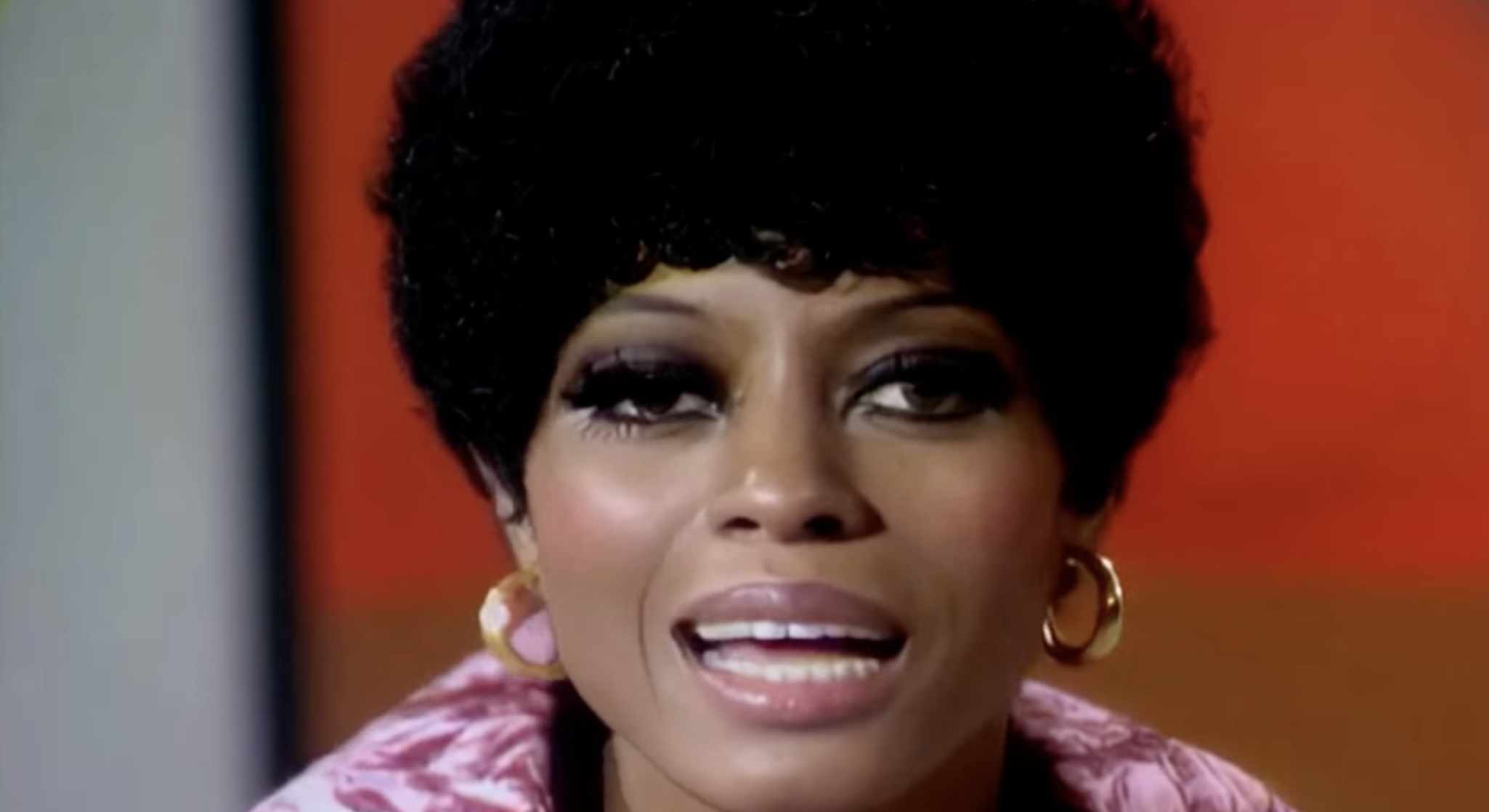
Diana Ross, performing with the Supremes on The Ed Sullivan Show, in 1969.
Motown’s greatest hits have been played for generations, but the label’s story doesn’t end with “My Girl,” “Dancing in the Street” or “I Heard It Through the Grapevine.” Its enormous catalog is full of records with fascinating backstories, including a Temptations B-side that found a life beyond its original release, a Motown composition that became a rock ’n’ roll favorite and a song recorded twice by different acts under the same producer.
Some of these selections were hits in their day; others have been overshadowed by the artists’ better-known work or by later interpretations. All of them offer a fresh reason to revisit Motown’s remarkable musical legacy.
1. Smokey Robinson & the Miracles—“Mickey’s Monkey” (Mickey’s Monkey/Tamla, 1963)
Capitalizing on the dance craze era, this call-and-response rave-up climbed to #8 on the Hot 100 and #3 on the R&B chart. Unusually for the Miracles, the song was not written by Smokey Robinson, but by the burgeoning team of Brian Holland, Lamont Dozier and Edward Holland Jr. Robinson’s charismatic lead vocal and the driving rhythm proved that the Miracles could turn external studio material into a national smash.
2. Shorty Long—“Devil with a Blue Dress On” (Non-Album Single/Soul, 1964)
Two years before Mitch Ryder and the Detroit Wheels merged it with “Good Golly, Miss Molly” for a #4 rock smash, Shorty Long cut the original version on Motown’s Soul imprint. Co-written by Long and William “Mickey” Stevenson, this original take is slower and bluesier, peaking at just #115 on Billboard’s Bubbling Under chart.
3. The Velvelettes—“He Was Really Sayin’ Somethin’” (Non-Album Single/V.I.P., 1964)
Produced and co-written by Norman Whitfield with Mickey Stevenson and Eddie Holland, this track showcases Motown girl-group charm at its sharpest. Reaching #64 on the Hot 100 and #21 on the R&B chart, the breezy, conversational single became an influential favorite, eventually crossing the Atlantic to become a #5 U.K. hit when covered by Bananarama with Fun Boy Three in 1982.
4. Marvin Gaye—“Ain’t That Peculiar” (Moods of Marvin Gaye/Tamla, 1965)
Smokey Robinson and fellow Miracles Pete Moore, Bobby Rogers and Marv Tarplin crafted this sharp account of a man trapped in a cycle with an unfaithful lover. Gaye’s sly, conversational delivery makes the dilemma sound almost lighthearted, while the stuttering, stop-start rhythm gives the production a distinctive bounce. Released as a single in late 1965 before anchoring his 1966 album, the single climbed to #8 on the Billboard Hot 100 and topped the R&B chart.
5. The Four Tops—“Something About You” (Second Album/Motown, 1965)
Levi Stubbs possessed one of the era’s most commanding voices, and this Holland-Dozier-Holland arrangement gave him room to roar. Driven by an urgent, stomping backbeat and tight vocal support, the track reached #19 pop and #9 R&B. While it is frequently overshadowed by titans like “Reach Out I’ll Be There” and “Bernadette,” it remains one of the Tops’ most propulsive performances.
6. The Temptations—“Don’t Look Back” (The Temptin’ Temptations/Gordy, 1965)
Paul Williams delivers an impassioned lead vocal on this Smokey Robinson and Ronald White ballad, stepping out from behind David Ruffin and Eddie Kendricks. Originally issued as the B-side to “My Baby,” the track quickly gathered an ardent following among soul purists moved by Williams’ raw, gospel-honed vulnerability. It also became a hit in its own right, reaching #14 on the R&B chart and #83 on the Hot 100. Its reach extended far past Detroit when Peter Tosh teamed up with Mick Jagger in 1978 to cut a reggae-rock rendition for Bush Doctor.
Related: How many Top 10 singles did Motown actually have?
7. Jr. Walker and the All Stars—“(I’m a) Road Runner” (Road Runner/Soul, 1966)
Jr. Walker played the tenor saxophone with the grit and distortion of an electric guitar. Written and produced by Holland-Dozier-Holland, this driving instrumental-vocal hybrid peaked at #20 on the Hot 100 and #4 on the R&B chart. Walker’s rough-and-tumble delivery proved Motown’s studio setup could produce raw, dancefloor-ready Southern-style soul alongside its polished pop symphonies.
8. Jimmy Ruffin—“What Becomes of the Brokenhearted” (Sings Top Ten/Soul, 1966)
Though his younger brother David fronted Tte Temptations, Jimmy Ruffin carved his own legacy with this sweeping orchestral masterpiece. Written by William Weatherspoon, Paul Riser and James Dean, the song was originally earmarked for the Spinners before Ruffin persuaded the producers to let him record it. His world-weary phrasing carried the single to #7 on the Hot 100 and #6 on the R&B chart.
9. Stevie Wonder—“Shoo-Be-Doo-Be-Doo-Da-Day” (For Once in My Life/Tamla, 1968)
Wonder’s instinct for turning spontaneous syllables into irresistible grooves anchors this high-energy soul cut. Co-written with Sylvia Moy and Henry Cosby, the track highlights Wonder’s signature harmonica work and early experimentation with the Hohner Clavinet. Reaching #9 on the Hot 100 and #1 on the R&B chart, it marks an essential bridge between his teenage pop years and his self-contained 1970s masterpieces.
10. The Isley Brothers—“Take Me in Your Arms (Rock Me a Little While)” (Soul on the Rocks/Tamla, 1968)
First cut by Kim Weston in 1965, this Holland-Dozier-Holland composition was revived by the Isley Brothers shortly before they departed Motown to reactivate T-Neck Records. The Isleys injected the arrangement with raw church power, sending it to #22 on the R&B charts. Seven years later, the Doobie Brothers turned the same song into an arena-pop smash, carrying it to #11 on the Hot 100.
11. The Supremes—“I’m Livin’ in Shame” (Let the Sunshine In/Motown, 1969)
Conceived as a direct thematic successor to “Love Child,” this dramatic narrative drew inspiration from Douglas Sirk’s 1959 melodrama Imitation of Life. The storyline follows a woman who abandons her impoverished mother to climb the social ladder, realizing her cruelty only after her mother passes away. Diana Ross delivers the lyric with theatrical conviction, supported not by fellow Supremes Mary Wilson or Cindy Birdsong, but by Motown’s session vocalists, the Andantes. The single peaked at #10 on the Hot 100.
12. The Undisputed Truth—“Smiling Faces Sometimes” (The Undisputed Truth/Gordy, 1971)
Written by Norman Whitfield and Barrett Strong, this cautionary anthem warned that deceit often arrives cloaked in courtesy. The Temptations recorded a sprawling, 12-minute version first on Sky’s the Limit, but Whitfield tightened and sharpened the arrangement for his psychedelic-soul protégés, the Undisputed Truth. The eerie production and biting guitar fuzz pushed the track to #3 on the Hot 100.
13. The Jacksons—“Enjoy Yourself” (The Jacksons/Epic, 1976)
All right… we snuck this one in here… A pivotal transitional chapter: having formally departed Motown for Epic Records earlier that year, the family group teamed up with Philadelphia International architects Kenneth Gamble and Leon Huff. Featuring shared leads from Michael and Jackie Jackson alongside an infectious rhythm guitar hook by T.J. Tindall, the track earned an RIAA Platinum certification in 1989 and peaked at #6 on the Hot 100, proving the brothers could thrive outside Berry Gordy’s ecosystem.
Great Motown recordings are available here.




No Comments so far
Jump into a conversationNo Comments Yet!
You can be the one to start a conversation.