
‘Mary, Mary’: The Song Recorded by a Blues Band, a TV Rock Band and a Hip-Hop Group
by Jeff Tamarkin
Michael Nesmith in his Monkees days
It’s always fun to compare different versions of the same song, especially when they are radically rearranged with each new attempt. During the early days of the British Invasion, for example, bands like the Beatles, the Rolling Stones, the Yardbirds and the Animals took blues and R&B tracks discovered on singles imported from America (“Please Mr. Postman,” “Little Red Rooster”) and remade them in their own image. During the previous decade, Elvis Presley, in a style far removed from that of the originals, similarly reimagined tunes that he’d come across: his first Sun Records single featured a Bill Monroe bluegrass number, “Blue Moon of Kentucky,” on one side and bluesman Arthur Crudup’s “That’s All Right” on the other.
The quest to create new versions of established songs has never let up: Throughout the subsequent years, countless artists have labored to reinterpret songs in their own style, from Linda Ronstadt’s Buddy Holly covers (“That’ll Be the Day,” “It’s So Easy”) to Bruce Springsteen’s multitude of remakes (“Quarter to Three,” “Santa Claus is Coming to Town”) to the Grateful Dead’s versions of songs from the soul, country and rock and roll well, all of which differed markedly from the originals (“Turn on Your Lovelight,” “El Paso”).
Another great example is “The Loco-Motion,” a song written by Gerry Gofin and Carole King. It first became a #1 hit for Little Eva in 1962, then returned to that position via Grand Funk Railroad in 1974, and finally came back at #3 in 1988 courtesy of Kylie Minogue. The three versions could not be further apart stylistically.
Rarely, however, has one song received treatments as different as “Mary, Mary,” written in 1966 by a still-unknown Michael Nesmith before he was involved with the Monkees. Recorded first by the Paul Butterfield Blues Band, it was then included on The Monkees’ second album and, finally, rediscovered more than two decades later by the mega-popular hip-hop trio Run-DMC.
Nesmith, born in 1942 in Texas, had begun playing music and writing songs following stints in the U.S. Air Force and San Antonio College. Moving to Los Angeles, he began making the rounds of the folk music clubs and was heard by Randy Sparks of the New Christy Minstrels, who hired Nesmith to write songs that Sparks would then publish. Record producer Frazier Mohawk heard one of Nesmith’s songs, “Mary, Mary,” and suggested to Elektra Records that singer-harmonica player Butterfield and his band—which included the hot young guitarist Michael Bloomfield—should cut the song for their sophomore album, to be titled East-West.
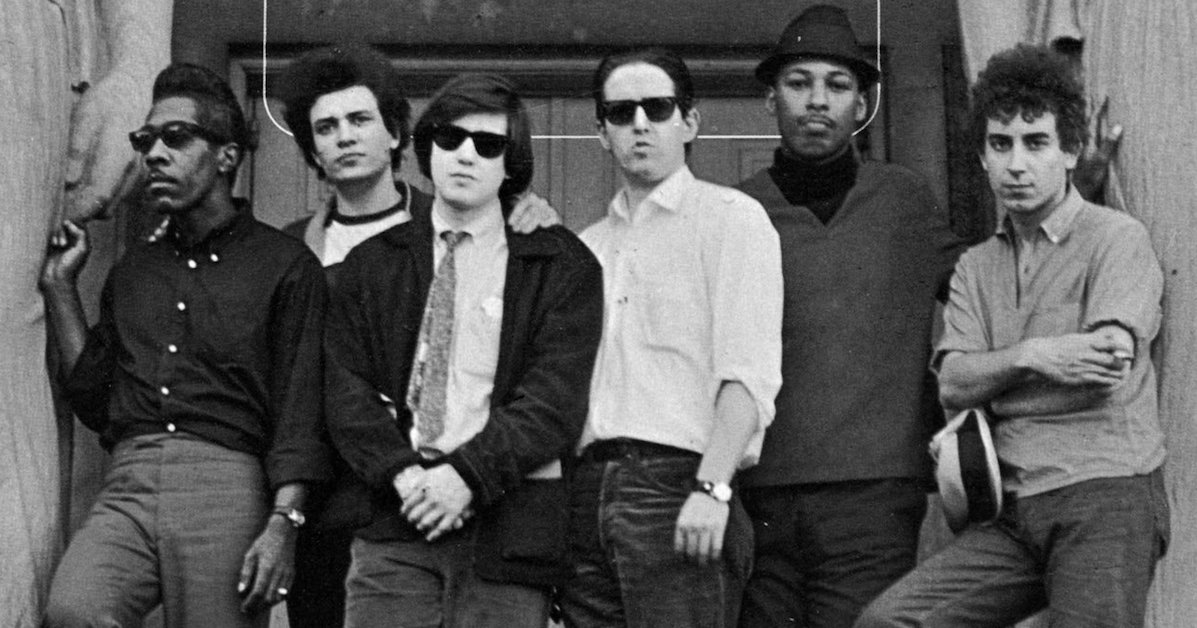
The Paul Butterfield Blues Band (Butterfield third from right)
They did, giving the song a driving, urgent blues arrangement that, truth be told, seemed on paper to go against the lyrics written by Nesmith (“Mary, Mary, where you goin’ to?/Mary, Mary, can I go too/This one thing I will vow ya,/I’d rather die than to live without ya/Mary, Mary, where you goin’ to?”).
Elektra, which had only recently entered the rock field with bands like Love and the Doors after establishing itself with folk and other non-commercial genres, hoped that “Mary, Mary” might elevate the Butterfield Band from underground favorites to hitmakers, but the song was never released as a single. East-West, despite only reaching #65 on the Billboard album chart, subsequently became an enormously influential record, but that had more to do with the psychedelic electric raga, tour de force, instrumental title track and covers of songs written by Muddy Waters, Robert Johnson, Allen Toussaint and jazzman Nat Adderley than the three-minute rocker contributed by Nesmith.
East-West was recorded and released in the summer of 1966, mere weeks before Nesmith became an instant rock star via his role in The Monkees. The NBC comedy, centered around the antics of the quartet that also included Davy Jones, Peter Tork and Micky Dolenz, premiered on Sept. 12 of that year and became a smash hit. So, too, did the debut Monkees single, “Last Train to Clarksville” (released in August but not topping the singles chart until November) and the self-titled first album, which was released in October and went on to top the Billboard LPs chart for a whopping 13 weeks.
Related: Our review of a 2019 performance by Michael Nesmith
With the Monkees’ TV program and recordings a runaway success, the made-for-TV band needed to churn out more product in a hurry, and began piecing together material for a followup album to be called, appropriately, More of the Monkees. As with the debut, virtually all of the instrumentation on the album was provided by the Los Angeles studio crew later to be dubbed the Wrecking Crew, with the four Monkees relegated to vocals. (Not entirely though: Just as Tork had contributed guitar to a couple of tracks on the debut, Nesmith added steel guitar licks to one number on the second, his own “The Kind of Girl I Could Love,” one of two songs the actor/singer nicknamed “Wool Hat” in early episodes of the show was credited with writing for More of the Monkees.)
The other song was “Mary, Mary,” which was already known to savvy listeners by that time from Butterfield’s version. Among those who had noticed that the songwriter covered by the blues band had become a Monkee, few would likely have envisioned that the TV stars might choose to revive the number. After all, this was a blues song, and the Monkees were anything but a blues band.
What fans of neither group realized was that the Monkees had already recorded the song before the TV show had premiered: That had happened at Western Recorders in Hollywood on July 25, 1966, with such top-shelf musicians as James Burton, Glen Campbell, Larry Knechtel, Hal Blaine and Jim Gordon and others fashioning a rendition that retained traces of the song’s inherent bluesiness while—with Dolenz singing the lead vocal—transforming it into pure pop along the way. (Tork also added guitar licks in the studio.)
The Monkees did not include “Mary, Mary” on the debut album, but did place it in the track 3 slot on the followup. Colgems, their label—like Elektra with Butterfield—chose not to release the song as a single in the U.S. (although it was released as one in Australia and reached #4 there), and although “Mary, Mary” reached countless more ears via the Monkees than Butterfield, it went down in rock history as a somewhat minor entry in two bands’ catalogs, destined never to be a hit single in the U.S.
Until 1988.
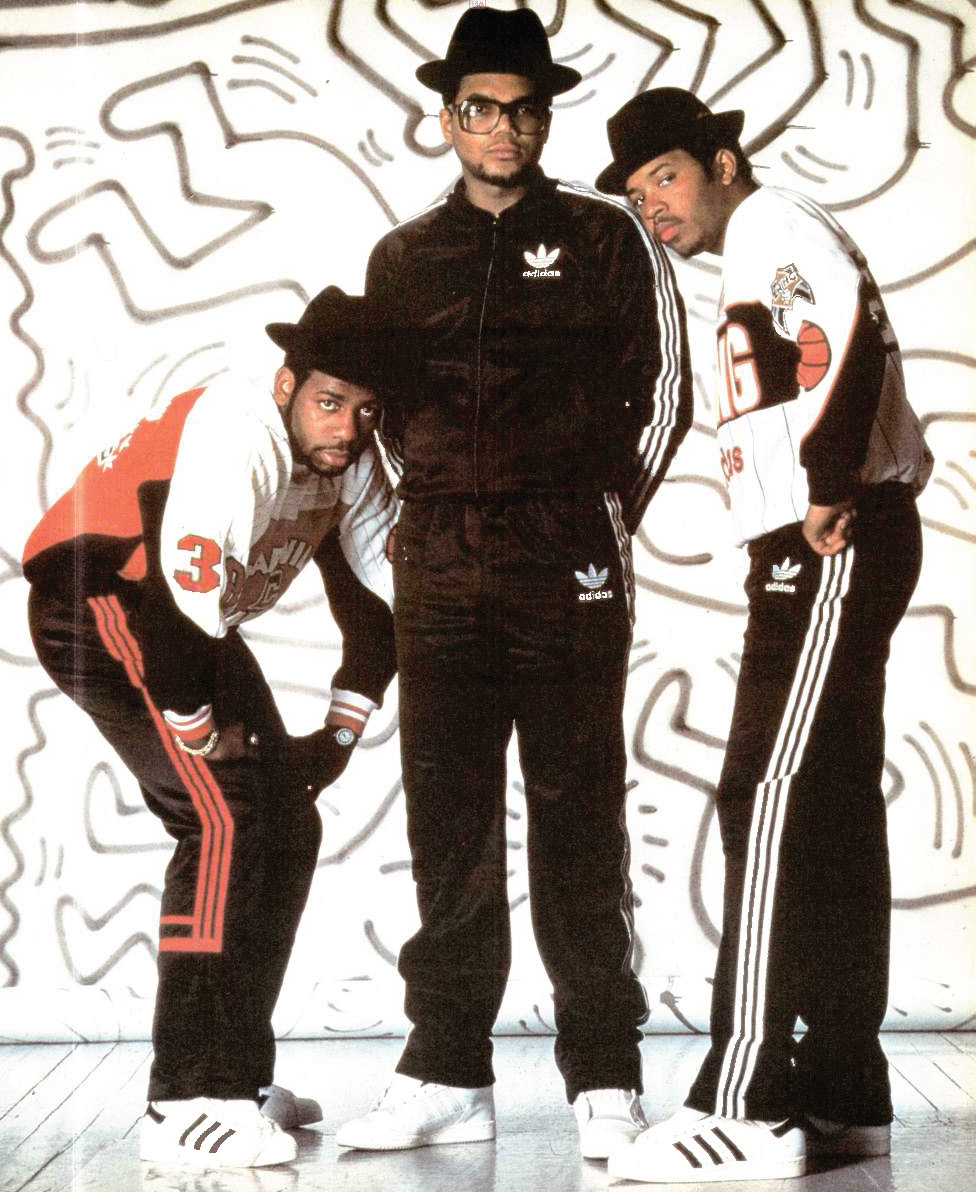
Run-DMC in a 1986 publicity photo
Rappers were famous for utilizing the process of sampling, which basically entailed taking bits and pieces of recordings by other artists and incorporating them into new rap recordings. In 1988, for their fourth album, Tougher Than Leather, Run-DMC, a trio out of Queens, New York—Joseph Simmons, Darryl McDaniels and Jason Mizell—recorded their take on the 1966 Nesmith composition. Although they gave it their own spin, which has been described as rock-rap, they did sample Dolenz’s lead vocal from the Monkees’ track.
Although they rewrote some lyrics (“Mary, Mary, why ya buggin’?”), Run-DMC credited Nesmith as the song’s author on the album, and this time, “Mary, Mary,” produced by the trio and Rick Rubin, was released as a single in March 1988—something that had never happened with either of the ’60s recordings. The remake peaked at #75 on the Billboard Hot 100, but rose to #18 on the Hot Dance Music-Club Play and #29 on the Hot Black Singles chart.
To date, only a few other artists have covered “Mary, Mary,” most of them unknowns. Nesmith himself passed away in 2021 at age 78 (Jones and Tork died before him), after a career that found him helping to popularize the country-rock sound, becoming a pioneer in the music video field and—after years of avoiding Monkees reunions—finally reclaiming his rightful role and reappearing with his former bandmates.
Yes, bandmates. While there are some blowhards who still hold it against the Monkees for initially being created for a television program and not playing their own instruments on their recordings (which they began to do with Headquarters, their third album), many more now recognize that the Monkees were pioneers in the area of video and—although the original quartet only lasted a few years—released some terrific pop-rock music. The Rock and Roll Hall of Fame has, as of this writing, sided with the skeptics—while inducting both the Paul Butterfield Blues Band and Run-DMC—but others have long championed the Monkees’ cause. “Mary, Mary” was just one of many great tunes in their catalog, not even close to the most famous but one that has enjoyed a wild ride since it was written by an aspiring singer-songwriter more than six decades ago.



No Comments so far
Jump into a conversationNo Comments Yet!
You can be the one to start a conversation.