

Clive Davis, Bob Dylan and Carlos Santana at the 2000 Grammy Awards
Among the many artists signed to Columbia Records by Clive Davis—who died yesterday, June 22, 2026, at age 94—was a band that drew together elements of rock, Latin music, jazz, blues and more: Santana. From the group’s 1969 debut until Davis left the label in 1973, the record exec helped guide the band’s career and turned the scrappy San Francisco hybrid act into a multi-platinum sensation. Then, a full three decades later, Davis signed Carlos Santana and the then-current iteration of his namesake group to Arista Records, the label Davis had founded in 1974, and not only returned Santana to the top of the charts but shepherded one of the best-selling albums of all-time, and several massive singles.
In 2023, I had the opportunity to speak with the recording industry titan about how he came to add the still-new band to Columbia’s roster and how he and Carlos Santana found themselves collaborating again so many years later.
Parts of this interview first appeared in my book Carlos Santana: Love, Devotion, Surrender: The Illustrated Story of Santana’s Musical Journey (Insight Editions, 2025). [It’s available in the U.S. here, in Canada here and in the U.K. here.]
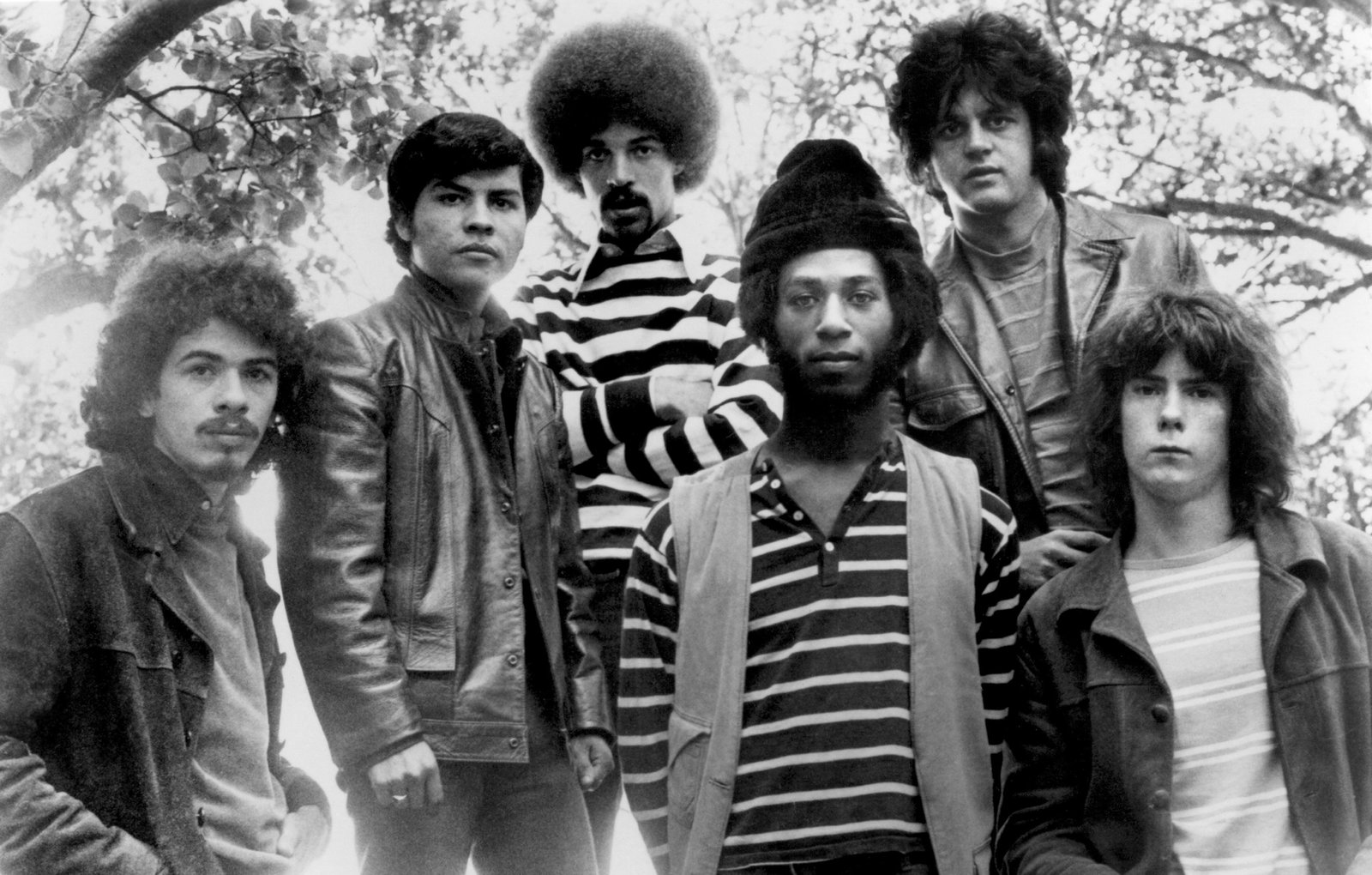
Santana circa 1970.
I’m going to ask you to go all the way back to 1969 and tell me how you first encountered the music of Santana and the first time you met Carlos Santana. The promoter Bill Graham made the introduction, correct?
Clive Davis: Yes, he did. It was Bill and his attorney Brian Rohan, who invited me to audition Carlos and the band. I flew out to San Francisco and met with them and saw them. I was very impressed. I didn’t know that they were auditioning for other labels. All I know is that I had an instant connection with Carlos. There was no real dialogue with any other member of the group. They were a unique first hearing. First of all, it was a new period in my life. I really had only been involved in the creative process since the Monterey Pop Festival in ’67. They were fresh; they were combining rock with jazz, with blues. There was the Latin influence, and Carlos was a dazzling virtuoso. I was subsequently to learn that the band initially had been favoring Atlantic [Records], because of the heritage in the blues area that they had. Carlos was favoring my label, Columbia, because of Miles Davis and Dylan and the others we had. But it was fascinating to me, subsequently, many years later to see that Carlos played unenthusiastically for Atlantic, and it was quite astonishing to the other members of the group when they compared it to how electrifying he was when he played for Columbia. All that I know is that I nicely got word from Bill and Brian that the group had voted for Columbia.
You knew right away that you wanted to sign them?
Oh, there was no equivocation. Yes.
What was Carlos like at that time? Was he ambitious? Did he have any specific goals?
I don’t want to be an expert in the Carlos business because that would be creating a story that wasn’t there. I had the typical degree of connection, mainly dealing with Bill and Brian. But I did have some connection with Carlos.
Did you have ideas already at that time about how to record them, how to present their uniqueness to an audience?
Zero. I had never signed an artist until two years previous, so I didn’t come as a know-it-all. I didn’t come with any suggestions at that time. The creativity was totally within the group, and their recording process.
Did you have any advice for them?
I had zero advice. I’m not trying to be dramatic or melodramatic. In fact, when I signed Blood, Sweat and Tears, the creativity was there with [founder] Al Kooper. I was just learning whether I had ears or not. It was only these early groups that I did sign that gave me the confidence that I might have a natural gift, and I never would otherwise. But I didn’t come as a know-it-all or with creative music. I didn’t play an instrument. I didn’t read music. But I did trust my ears to know what was unique or special, whether it was the Electric Flag, whether it was Chicago, Santana, Blood, Sweat and Tears, Joplin. My confidence grew as the success rate was showing itself to be unusual.
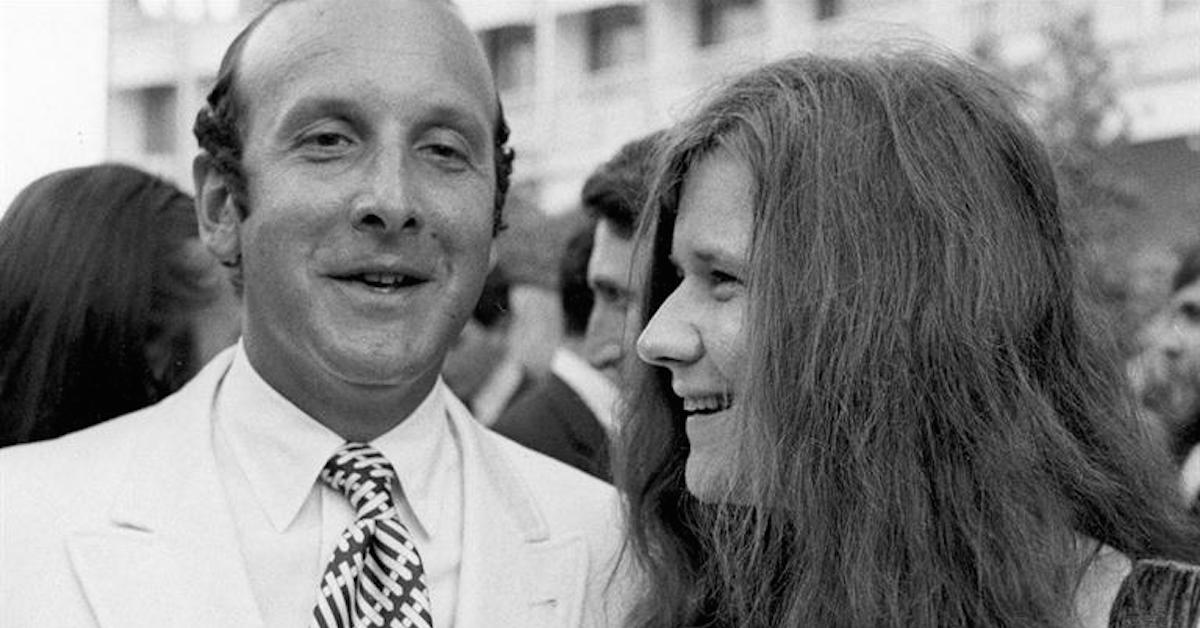
Clive Davis and Janis Joplin.
Santana’s first three albums were all major successes, top 10, a couple of them went number one. And then for the fourth album, Caravanserai, Carlos told me that you didn’t really like the direction they were going in. In fact, he said you used the term “career suicide.”
I’ve seen that written but it doesn’t jog my memory at all. First of all, I would never have spoken in such absolute terms. What we shared were the hits. And apart from their uniqueness of combining rock with blues, with jazz, with Latin influence, those elements, they had hit singles. So, the combination of hit singles—with “Evil Ways,” with “Black Magic Woman,” with “Oye Como Va”—had led them to be multi-platinum. Clearly that album [Caravanserai] did not have hit singles. And the question is, as it always is, how many albums can a group sell without a hit single? To use an absolute term of career suicide, you don’t exactly tell that to someone who out of nowhere has exploded into the multi-platinum area. But you certainly question, “Do you feel you have a single?” And it’s not that they felt they did. I just knew they didn’t and I was worried. With newfound territory, it was the beginning of the rock revolution. It was the beginning of the amplification of the guitar. The question is, “What will be your hit single?” Because that’s what made gold and platinum albums. I would admit to questioning how many albums they would sell and are they prepared? Are they knowing in their career direction? If you read my career, I didn’t take a dictatorial approach. It’s their creativity, and they’re setting that direction.
After you left Columbia in 1973, did you keep in touch with Carlos?
We were not in touch. There were a few occasions where there was communication, celebrating an anniversary. But we did not keep regularly in touch. So, it was highly unusual 25 years later to get a call from their then-manager, “Would I go see Carlos? He’s playing Radio City [Music Hall] and he would love me to see him and meet up with him after and spend time together.”
And clearly you thought he still had the goods.
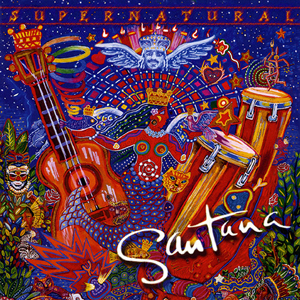
Well, no, that’s not accurate. I didn’t go see him because I thought he had the goods. I wanted to see him out of nostalgia. I went to see him because it was a unique period in my life, the late ’60s, early ’70s period where every rock artist that I signed were self-contained artists. They came up with their own material and ideas. I never felt that because I signed them that I would participate in their creativity. So, I went out of nostalgia, but when I went there and I saw him on stage—and from common sense I knew the growing Hispanic population of America, and I saw how his playing was still amazing—I agreed to meet with him. He told me at that meeting, “Look, I was sitting around with my friends, but mainly with my kids. And my kids, all of a sudden, outta the blue, said, ‘Dad, why don’t we hear you on the radio? We have never heard you on the radio except revisiting classic hits that you had years ago.’ And I realized that the kind of music that I had pledged myself to, and the kind that stimulated me, had nothing to do with being on the radio. I had not been on the radio for all those years in the interim.” Someone that he and his wife regularly saw, not a psychiatric counselor, but some spiritual connection, said, “Well, who did you work with when you had all those hits?” And he mentioned my name [to that person]. [Carlos] said to me, “That’s why I invited you. Can we work together now?” That became the blueprint for [the album] Supernatural. I said, “If you give me half the album, material that would never compromise your integrity but could be arranged to be hit singles, the rest of the album’s yours. Perform them. Choose them, arrange them in whatever manner you feel comfortable. Just give me half. And the material that I would be submitting to you would be songs that I principally felt could be hit songs on the radio for you.” I had been working with the Matchbox Twenty [band’s] producer on a label deal, and he had mentioned to me that [their lead singer] Rob Thomas, as a songwriter, would like to be able to write for artists other than Matchbox Twenty. So if I ever came across an opportunity for him to write, I should alert him and he would put me in touch with Rob Thomas. I was working with Wyclef Jean on the My Love Is Your Love Whitney Houston album and he mentioned, “What else are you working on?” I told him, “I’m looking for songs for Santana.” He submitted to me “Maria, Maria.” And I was working with Lauryn Hill on A Rose is Still a Rose for Aretha Franklin, and that led to the exchange of creativity with each other. And that’s how the album filled out. When we got the track in on “Smooth,” we sent that track to Rob Thomas, who wrote the rest of the song. And when we got the demo in, Rob was singing it. We put in a call to Carlos and played it, and he said, “With your recommendation, of course I’ll do it, but I insist that the demo singer be the same singer on my record.” And that created quite an issue at the time because Rob had never sung outside of Matchbox Twenty. They were very loath to allow him to participate. Obviously the rest of it you know. [Author’s note: The single remained at the top of the Billboard Hot 100 for a staggering 12 weeks. “Maria, Maria” then spent 10 weeks at #1. The Supernatural album went on to win nine Grammys.]
Did you have any inkling that it was going to do as well as it did? The numbers on that album and single are spectacular. Plus, they won practically every award. That just doesn’t happen to artists, making a comeback of that magnitude after so long.
No. In fact, I only learned later that my marketing team, my promotion team, my radio team, my press team, all were labeling it, “Could this be Davis’ folly? He’s signing an artist who is over 50, who does not sing, and will not have written the song that will emerge on the radio.” When “Smooth” came in, when “Maria, Maria” and a few of the other cuts came in, I knew that we had to do something special to create a better mental emotional environment to be on the radio again. Carlos Santana had not had a hit in 25 years. So, I used my pre-Grammy gala for that purpose, and I had Carlos perform with his group, with Rob Thomas, “Smooth.” And then with the Product G&B, “Maria, Maria.”
The album that came after that, Shaman, took a similar approach on your part, utilizing many guest performers.
Well, you must understand Supernatural won nine Grammys. It was selling in the millions. So yes, we tried to do it with “The Game of Love” [on Shaman]. The major story coming out of “The Game of Love” is that the original singer was Tina Turner. That was a call I had made to Roger Davies, her manager, and sent the song. All we knew was that Tina had agreed to sing it, which she did, and gave an incredible performance of “The Game of Love.” We all celebrated it when it came in. It was just the right rock energy, the right combination, dueting with Carlos. It was perfect. It would’ve been the record, except in setting it up as the first single to follow Supernatural, we asked Roger, “Look, apart from the video, we will only ask Tina,” who was living in Europe, “to do three network performances on behalf of the single.” We were confronted with the fact that she really only wanted to sing what she sang and she was not ready. Maybe it was health; whatever it was, she would not do a video and she would not do any network performances. Well, you can imagine we had a lot at stake. We were coming with a followup to a historic album and without the marketing cooperation, collaboration, we moved on and Michelle Branch came in [and sang lead on the record].
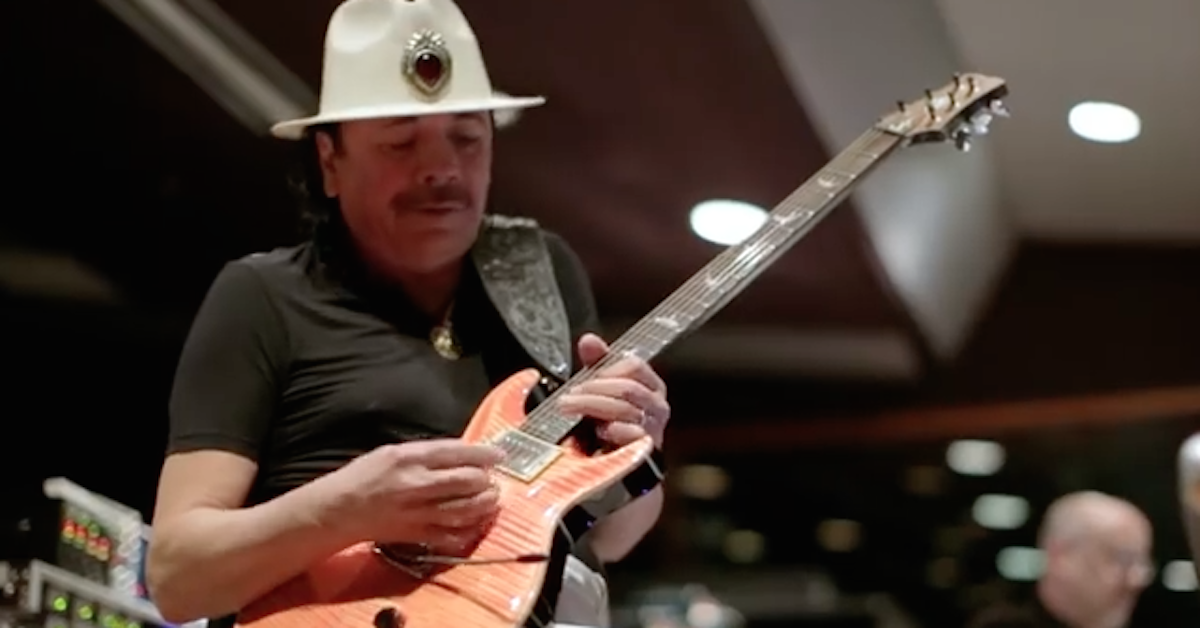
What about the Guitar Heaven album? That one also used several big-name guests, among them Joe Cocker, Chris Cornell and Scott Weiland.
Albums sell on the basis, maybe 98 percent, of how many singles you have. There are very few albums, like Tommy, by the Who, Pink Floyd, that sell from an album concept. Rod Stewart, we did it with It Had to Be You: The Great American Songbook, with marketing. But big sales are mostly invariably from how many and how big singles you have in your album.
One last question. You’ve known Carlos Santana since he was a young kid in his early twenties, more than 50 years ago. How would you say he has evolved over the years, both as an artist and as a person?
Carlos, to me, has been a very unique collaborative experience. He was one of the earliest artists where I was discovering if and whether I might have an ear for music. He’s the only artist in my life that I’ve signed twice. And the second signing, coming as a mature man, breaking every record—I think the 11th or 12th best-selling album of all time. We have a very special connection. He is an independent thinking, bright person. Very thoughtful. There’s not an occasion of mine that he doesn’t mark with beautifully written notes and flowers. We’ve had a very unique life together. Very special. We’re always in touch and definitely a very special place in my heart for him, both personally and professionally.
Watch Clive Davis and John Popper induct Santana into the Rock & Roll Hall of Fame in 1998




2 Comments so far
Jump into a conversationSo when I’m watching this clip of Carlos Santana being inducted into the R&R HOF (no comments about that organization here), I’m thinking “Who the F is John Popper and what band does he play in and why wasn’t he even identified by name when Clive Davis handed things off to him?” Wikipedia answered the first two questions but I’m still not persuaded that this guy is even for real.
John Popper is the frontman of Blues Traveler.