
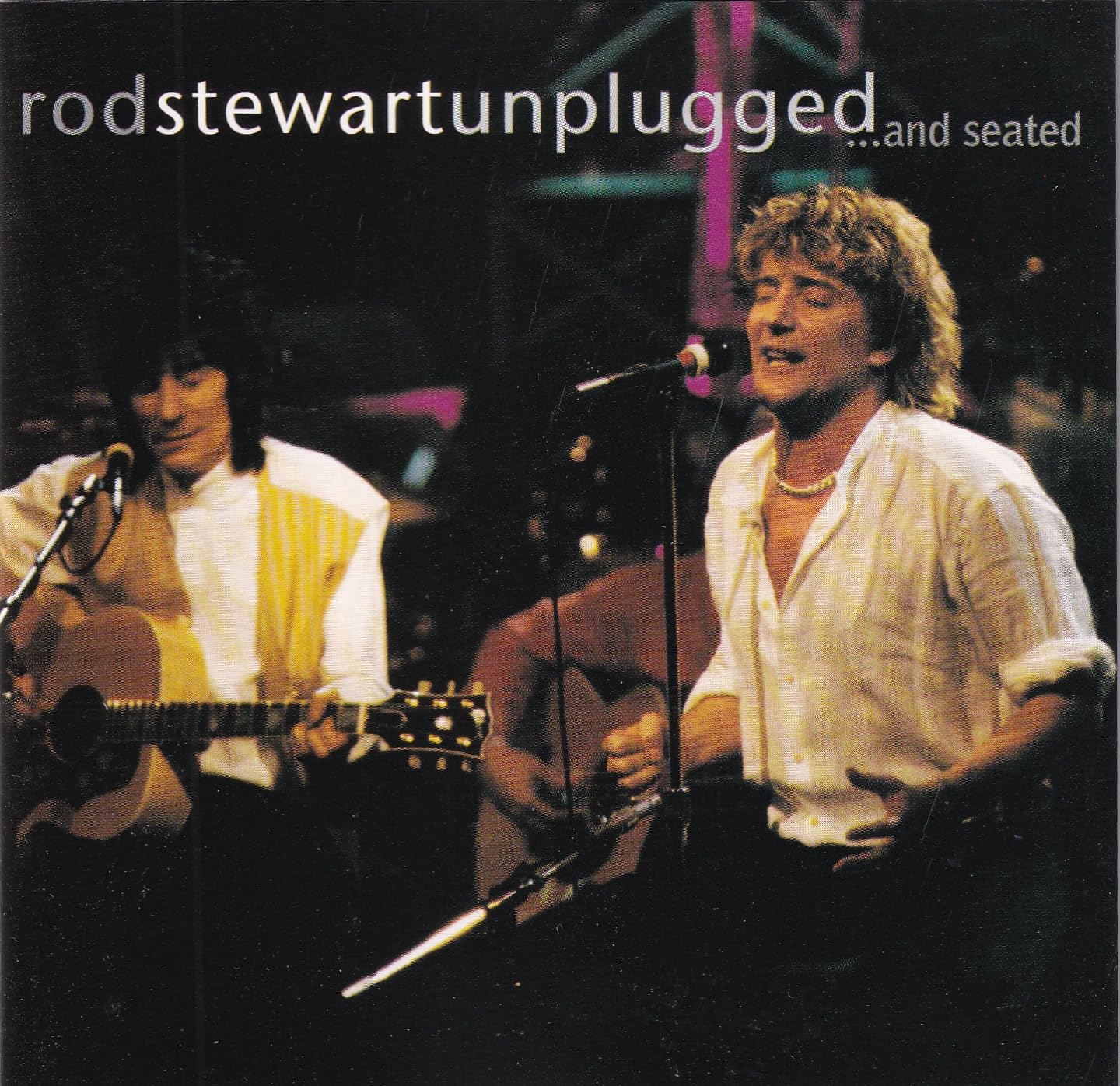
 After the MTV live music series Unplugged launched on November 26, 1989, with a show featuring Squeeze, Syd Straw and Elliot Easton, it took considerable time for it to settle its format and find an audience. The concept called for acts to use acoustic instruments as much as possible, amplified only by conventional microphones, with vocals likewise modestly augmented in volume, without effects. Still, from the start, “cheating” with a plugged-in Hammond B-3 organ or conventionally amplified bass guitar was common.
The show truly “arrived” when the Cure, Sting and Paul McCartney individually appeared in early 1991, all using the format to re-think their original songs in a way that created a kind of “what will they think of next?” excitement. The lower-volume approach gave prominence to lyrics, and a subsequent uptick in the emotional content of the performances.
Taking up the challenge to make something new out of previously released songs, the following year Eric Clapton rearranged many of his signature songs into radically different acoustic arrangements. Warner Bros. Records released an edited version of the broadcast on CD, which immediately sold several million copies (on its way to 25 million copies sold worldwide), becoming Clapton’s best-selling album, earning multiple Grammy Awards and turning the new versions of “Layla” and “Tears in Heaven” into classics.
Seeing the phenomenal success of Clapton’s Unplugged foray, Rod Stewart’s manager Arnold Stiefel, Warner Bros. Records’ Michael Austin (A&R) and John Beug (video) saw an opportunity for Stewart, who had long been stung by criticism that he too often favored mediocre but commercial songs and production, avoiding higher aesthetic goals to appear sexy and live the high life in his new home in Los Angeles.
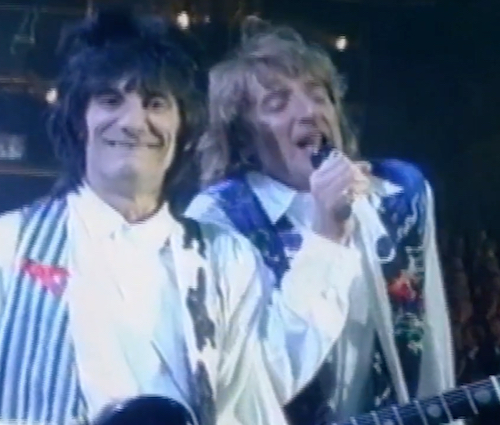
Rod Stewart (r.) with Ron Wood
To Newsday’s Wayne Robins, Stewart admitted the late ’70s and early ’80s were “A period of my life I regret a bit…I got a lot of slagging off from rock critics, which I thought I fairly deserved.” When Rolling Stone’s Greil Marcus wrote, “Rod Stewart has got one of the finest instruments, rock ’n’ roll voices, of the 20th century, and he’s completely wasted it,” Stewart told Robins he could only think, “God, he’s so right.”
From 1969 to 1974, Stewart’s remarkable run of five outstanding albums—including Gasoline Alley, Every Picture Tells a Story and Never a Dull Moment – had plenty of material with an acoustic basis, ripe for inclusion in his Unplugged show. In addition, he called upon Ron Wood, his former co-conspirator on those albums (and in the Faces), to be featured on the show: “I knew if I was going to do those songs I had to get Woody involved somehow. Not only did he play bass and guitar on those records, but his sheer presence brings out something in me.”
Related: Our Album Rewind of Every Picture Tells a Story
Unplugged…And Seated was recorded on a Universal Studios soundstage Feb. 5, 1993, and released as an album May 24th of that year. It proved to be a commercial and creative triumph for Rod the Mod, as the disc went multi-platinum (reaching #2 on the U.S. and U.K. album charts) and yielded two hit singles, his poignant version of Van Morrison’s “Have I Told You Lately,” and a raucous take of Sam Cooke’s “Having a Party” which concluded the live set. (When Warner/Rhino expanded the original 15-track CD in 2009, it was supplemented by a DVD of the show and two tracks, “Gasoline Alley” and “Forever Young,” omitted from the first issue. There are also several outtakes from the broadcast, including versions of “The Killing of Georgie,” “I Was Only Joking” and Chuck Berry’s “Sweet Little Rock ’n’ Roller” which you can find on YouTube.)
Pushing the “unplugged” concept to its limit, Stewart is backed by a full string section and a dozen other musicians and vocalists, including guitarist Jim Cregan, drummer David Palmer, Carmine Rojas on bass and multi-instrumentalists Don Teschner, Kevin Savigar and Phil Parlapiano. Veteran producer Patrick Leonard and engineer Jerry Jordan are in charge of the crystal-clear sound.
To immediately showcase his versatility, Stewart leads with two of his biggest hits, the funky raver “Hot Legs” and slow-burn ballad “Tonight’s the Night.” The former’s Chuck Berry-Little Richard-Jerry Lee Lewis-worthy opening (“Who’s that knocking on my door/Gotta be a quarter to four/Is it you again comin’ ‘round for more?”) is typically randy male fantasy in a performance of unbridled glee. The latter features Stewart’s most relaxed, conversational vocal style in a newly conceived gospel-infused arrangement (Dorian Holley, Darryl Phinnessee and Fred White are the backing vocalists), with acoustic slide guitar as the main solo instrument.
The strings on “Handbags and Gladrags,” conducted by Jeremy Lubbock in close approximation to the original version from Stewart’s first solo LP, envelop one of Stewart’s best vocals before Wood comes on for “Cut Across Shorty,” the Eddie Cochran B-side originally cut in 1960, and turned from a fairly standard country shuffle into a dramatic, erotic thriller for the Gasoline Alley album. Mandolin, violin, multiple guitars including Wood’s slide, wailing organ lines and Palmer recreating Mickey Waller’s drum parts, create an uplifting Phil-Spectorish Wall of Acoustic Sound.
“Every Picture Tells a Story” and “Maggie May” are as energetic as you’d expect, and evidence that Stewart’s voice, 30 years into his professional career, is showing no wear, which is remarkable given the abuse of alcohol and drugs he was known for. At three minutes into “Every Picture Tells a Story,” the intensity keeps up even as the tempo eases, until Stewart whips it to a conclusion, delighting the very vocal audience. The slowed-down first minute of “Maggie May” is turned into a ruminating, intimate introduction to the tale, but the propulsive rhythm soon asserts itself and Stewart absolutely owns the lyrics.
Tim Hardin’s gorgeous, mid-tempo “Reason to Believe” is likewise a showcase for Stewart’s way with words, and his absolute control of pitch, even with a tricky melody line. His homage to Curtis Mayfield, another of his vocal idols, is “People Get Ready,” originally recorded by the Impressions in 1965 and revived by Stewart with his former employer Jeff Beck in 1985, when (as Stewart wrote in his memoir) they went into the studio “for the hell of it.”
Stewart cut “Have I Told You Lately” for his 1991 album Vagabond Heart, a mere two years after Van Morrison debuted it on the Avalon Sunset LP. It’s one of those songs that makes a virtue of simplicity (“You fill my heart with gladness/Take away all my sadness”) but contain a spiritual dimension that connects transcendence to earth-bound love. Morrison was raised a Jehovah’s Witness in the highly sectarian Belfast, and has woven his religious devotion into his lyrics in both direct and oblique ways, in this case asserting “There’s a love that’s divine/And it’s yours and it’s mine/Like the sun at the end of the day/We should give thanks and pray to The One.” Stewart, following Morrison’s version closely, makes the gorgeous melody live.
Rob Dickins, the head of Warner U.K. and a friend of Stewart’s, stoked the singer’s interest in Tom Waits’ song catalog, persuading him to record “Downtown Train” from Waits’ Rain Dogs album, which then became a huge international hit single in 1991. “Tom Traubert’s Blues” is a Waits tune from 1976 that runs a passionate, world-weary variation on the chorus of “Waltzing Mathilda.” Stewart gets all he can out of the cascade of words that circle a boozy, haze-filled, film noir series of locations: “It’s a battered old suitcase to a hotel someplace/And a wound that will never heal/No prima donna, the perfume is on/An old shirt that is stained with blood and whiskey.”
Songwriter Cat Stevens recorded a demo of his emotional I’ve-been-burned-by-love ballad “The First Cut Is the Deepest” in 1967, and the American soul singer P.P. Arnold, living in England at the time, had a hit with it in the U.K. the same year. Stewart would have been very familiar with that version when he recorded it in Muscle Shoals, Alabama, for his 1976 album A Night on the Town. As a U.K. single, Stewart’s take spent four weeks at #1 (it barely missed the top 20 in America). The unplugged take’s vocal high notes are peaks of delicious pain, as Stewart channels his most Sam Cooke-like tones when he sings, “I still want you by my side/Just to help me dry the tears that I’ve cried.”
To Ron Wood’s evident delight, Stewart picks banjo for “Mandolin Wind,” and emotes like he hasn’t sung the words a million times, finding something new in each verse to emphasize, backing his vocal power down to something smoother, light on the rasp. Golub is outstanding playing slide on a National guitar.
Reaching back to the type of blues he sang during his early career with Steampacket and Shotgun Express, Stewart joins Wood in presiding over “Highgate Shuffle,” a simple rave-up that leads into the inevitable “Stay with Me,” for which Stewart tries and fails to stay in his chair. Charles Kentiss III does impressive piano work, Wood does an expert slide solo and the Palmer/Rojas rhythm section holds it all together. It’s as exuberant as the best Faces performances, and a lot less sloppy.
Stewart announces he needs the lyric sheets for Sam Cooke’s “Having a Party,” but has no problem ignoring them, singing “Everybody’s swinging/Sally’s doing that Twist now/If you take requests/I’ve got a few for you.” Savigar handles the swinging piano part. By the end of the goodbyes to the audience, Stewart is grinning ear to ear and says to his mate, “Ron, let’s go get drunk.”
Soccer and model railway fanatic, car collector, Knight Bachelor, cancer survivor twice over, father of eight kids from five different relationships, grandfather, etc., Rod Stewart has never ceased reinventing himself and enjoying life on his terms. His big-selling Great American Songbook series might have detractors, but he tends to weather any criticism nowadays, and continues to thrill in live performance at the age of 81, strutting around to “Do Ya Think I’m Sexy?” and his gazillion other hits.
His latest album is 2024’s Swing Fever, with Jools Holland. Rumors of a reunion of surviving Faces persist. In 2025 he told People magazine, “I still enjoy what I’m doing. I love it. You can tell, it’s written all over my face…there’s no bucket list. I’ve done it all.”
The album is available in the U.S. here, in Canada here and in the U.K. here.



No Comments so far
Jump into a conversationNo Comments Yet!
You can be the one to start a conversation.