
Sonny Rollins, Giant of the Tenor Saxophone, Dies at 95
by Best Classic Bands Staff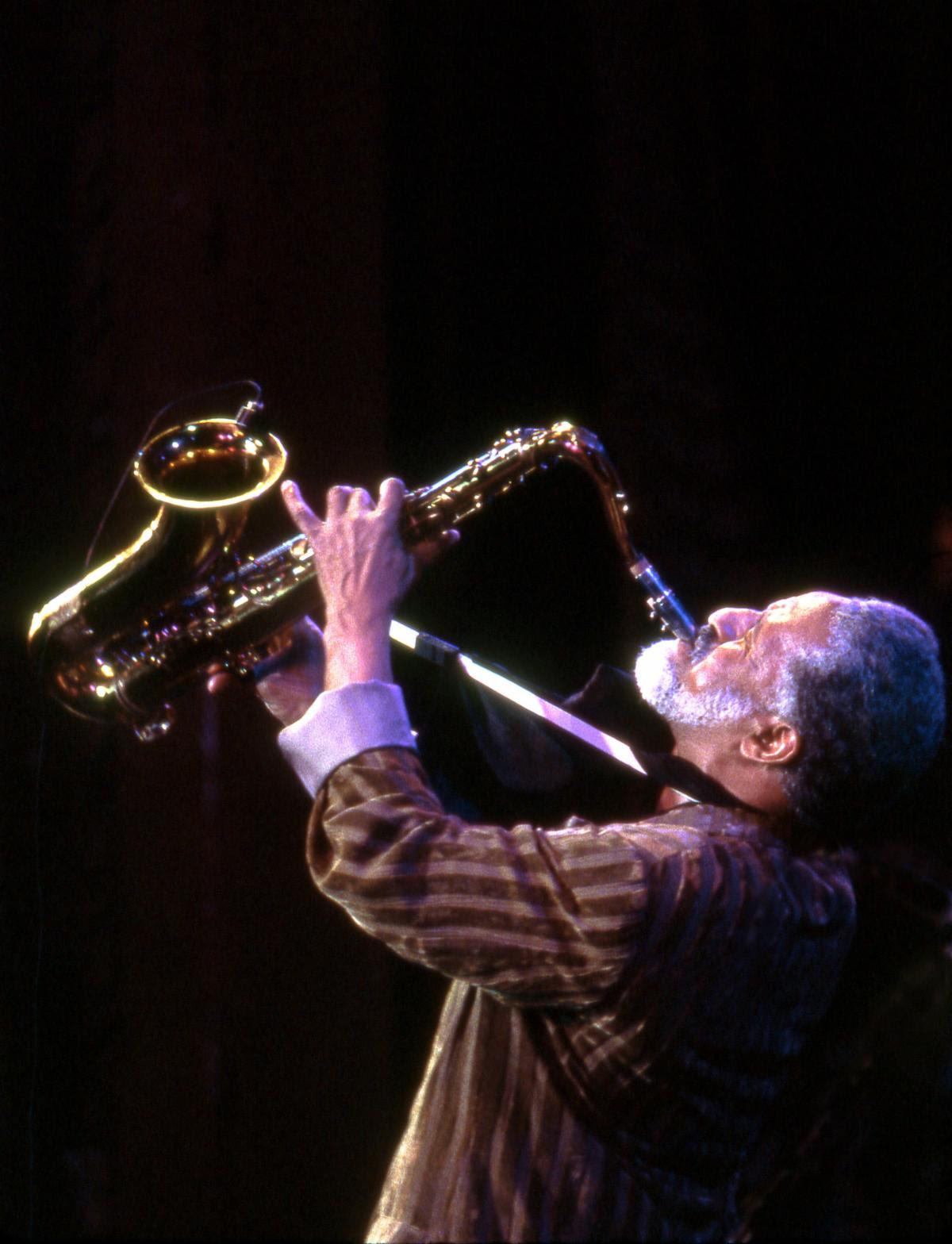
Sonny Rollins, in an uncredited photo via his Facebook page.
Sonny Rollins, the saxophone giant who in a seven-decade career played with a who’s-who of fellow jazz greats, including Miles Davis, Charlie Parker and Thelonious Monk, as well as the Rolling Stones, died today (May 25, 2026), at his home in Woodstock, N.Y. The news of his passing at age 95 was announced on his official Facebook page just before 9:30 p.m. EST. No cause of death was revealed.
The brief post shared a quote from the jazz legend from 2009. “I think when the creative person ends, he continues in the next existence,” it reads. “I’m a person who believes this life isn’t the be-all and end-all of everything. A spiritual person doesn’t feel like that.”
Rollins was also one of music’s most honored artists, with Honorary Doctorate degrees from such institutions as Berklee College of Music, Duke University, New England Conservatory of Music, Bard College, Juilliard School and others. He received a Lifetime Achievement Award from the Recording Academy in 2004, the National Medal of Arts in 2010, and Kennedy Center Honors in 2011.
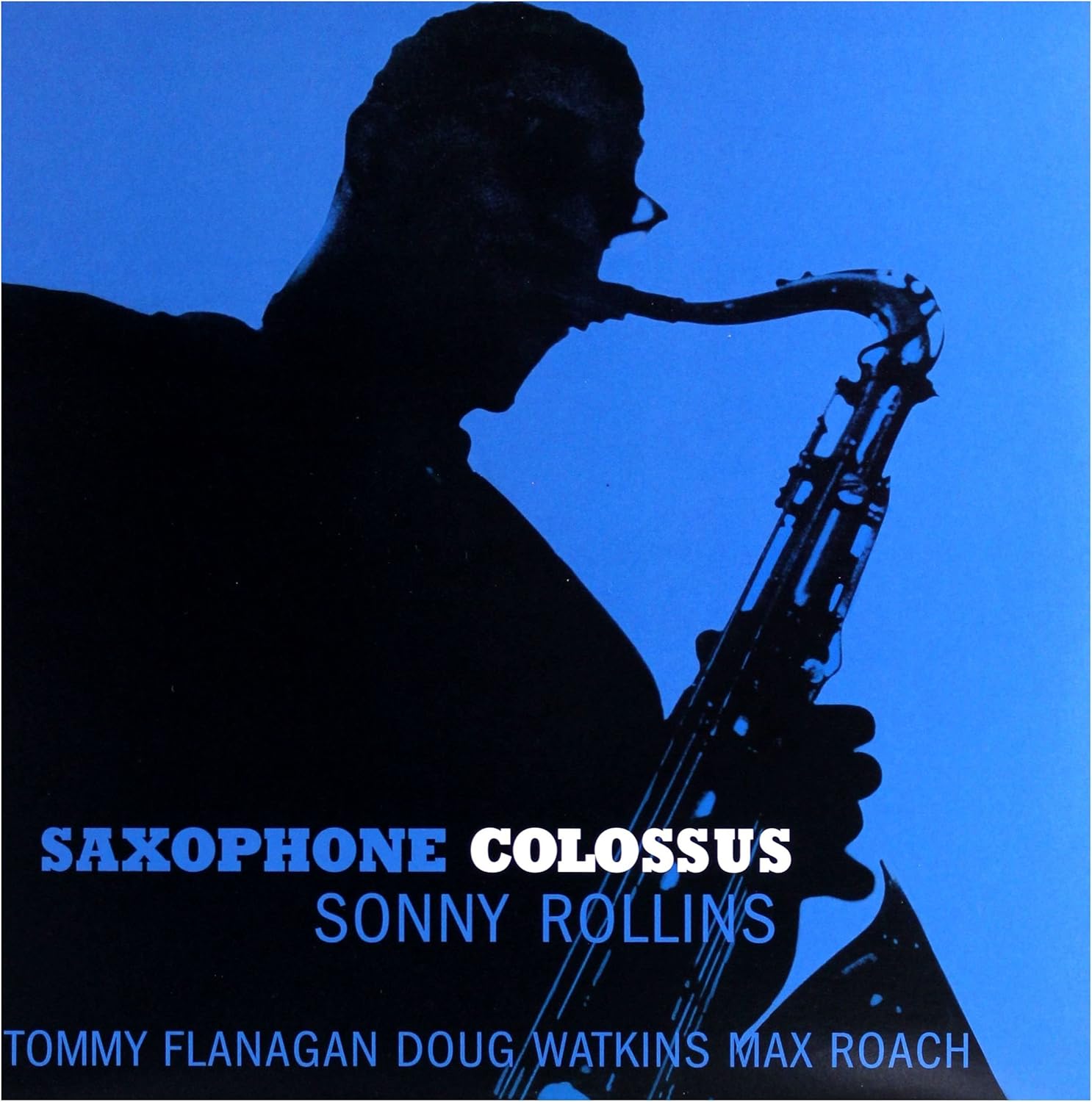
He earned the nickname “Saxophone Colossus,” taken from his 1956 album of the same name. In 1981, he recorded three songs with the Rolling Stones for their 1981 album, Tattoo You, providing a memorable sax solo on their single “Waiting For a Friend.” The other tracks were “Slave” and “Neighbours.”
From the biography on his website: Walter Theodore Rollins was born on September 7, 1930, in New York City. He grew up in Harlem not far from the Savoy Ballroom, the Apollo Theatre and the doorstep of his idol, Coleman Hawkins. After early discovery of Fats Waller and Louis Armstrong, he started out on alto saxophone, inspired by Louis Jordan. At the age of sixteen, he switched to tenor, trying to emulate Hawkins. He also fell under the spell of the musical revolution that surrounded him, bebop.
He began to follow Charlie Parker, and soon came under the wing of Thelonious Monk, who became his musical mentor and guru. When he was living in Sugar Hill, his neighborhood musical peers included Jackie McLean, Kenny Drew and Art Taylor, but it was young Sonny who was first out of the pack, working and recording with Babs Gonzales, J.J. Johnson, Bud Powell and Miles Davis before he turned twenty.
“Of course, these people are there to be called on because I think I represent them in a way,” Rollins said of his peers and mentors. “They’re not here now so I feel like I’m sort of representing all of them, all of the guys. Remember, I’m one of the last guys left, as I’m constantly being told, so I feel a holy obligation sometimes to evoke these people.”
In the early fifties, he established a reputation first among musicians, then the public, as the most brash and creative young tenor on the scene, through his work with Davis, Monk and the Modern Jazz Quartet.
Davis was an early Rollins fan and in his autobiography wrote that he “began to hang out with Sonny Rollins and his Sugar Hill Harlem crowd… anyway, Sonny had a big reputation among a lot of the younger musicians in Harlem. People loved Sonny Rollins up in Harlem and everywhere else. He was a legend, almost a god to a lot of the younger musicians. Some thought he was playing the saxophone on the level of Bird. I know one thing–he was close. He was an aggressive, innovative player who always had fresh musical ideas. I loved him back then as a player and he could also write his ass off…”
Rollins moved to Chicago for a few years to remove himself from elements of negativity around the jazz scene. He reemerged at the end of 1955 as a member of the Clifford Brown-Max Roach Quintet, with an even more authoritative presence. His trademarks became a caustic, often humorous style of melodic invention, a command of everything from the most arcane ballads to calypsos, and an overriding logic in his playing that found him hailed for models of thematic improvisation.
It was during this time that Sonny acquired a nickname, “Newk.” As Davis explains in his autobiography: “Sonny had just got back from playing a gig out in Chicago. He knew Bird, and Bird really liked Sonny, or ‘Newk’ as we called him, because he looked like the Brooklyn Dodgers’ pitcher Don Newcombe. One day, me and Sonny were in a cab… when the white cabdriver turned around and looked at Sonny and said, ‘Damn, you’re Don Newcombe!’ Man, the guy was totally excited. I was amazed, because I hadn’t thought about it before. We just put that cabdriver on something terrible. Sonny started talking about what kind of pitches he was going to throw Stan Musial, the great hitter for the St. Louis Cardinals, that evening…”
In 1956, Rollins began recording the first of a series of landmark recordings issued under his own name: “Valse Hot” introduced the practice, now common, of playing bop in 3/4 meter; “St. Thomas” initiated his explorations of calypso patterns; and “Blue 7” was hailed by Gunther Schuller as demonstrating a new manner of “thematic improvisation,” in which the soloist develops motifs extracted from his theme. Way Out West (1957), Rollins’ first album using a trio of saxophone, double bass and drums, offered a solution to his longstanding difficulties with incompatible pianists, and exemplified his witty ability to improvise on hackneyed material (“Wagon Wheels,” “I’m an Old Cowhand”). “It Could Happen to You” (also 1957) was the first in a long series of unaccompanied solo recordings, and The Freedom Suite (1958) foreshadowed the political stances taken in jazz in the 1960s. During the years 1956 to 1958 Rollins was widely regarded as the most talented and innovative tenor saxophonist in jazz.
From 1959-62, Rollins went on hiatus and spent most of his time practicing solo on the Williamsburg Bridge. He commemorated those years with the 1962 album The Bridge.
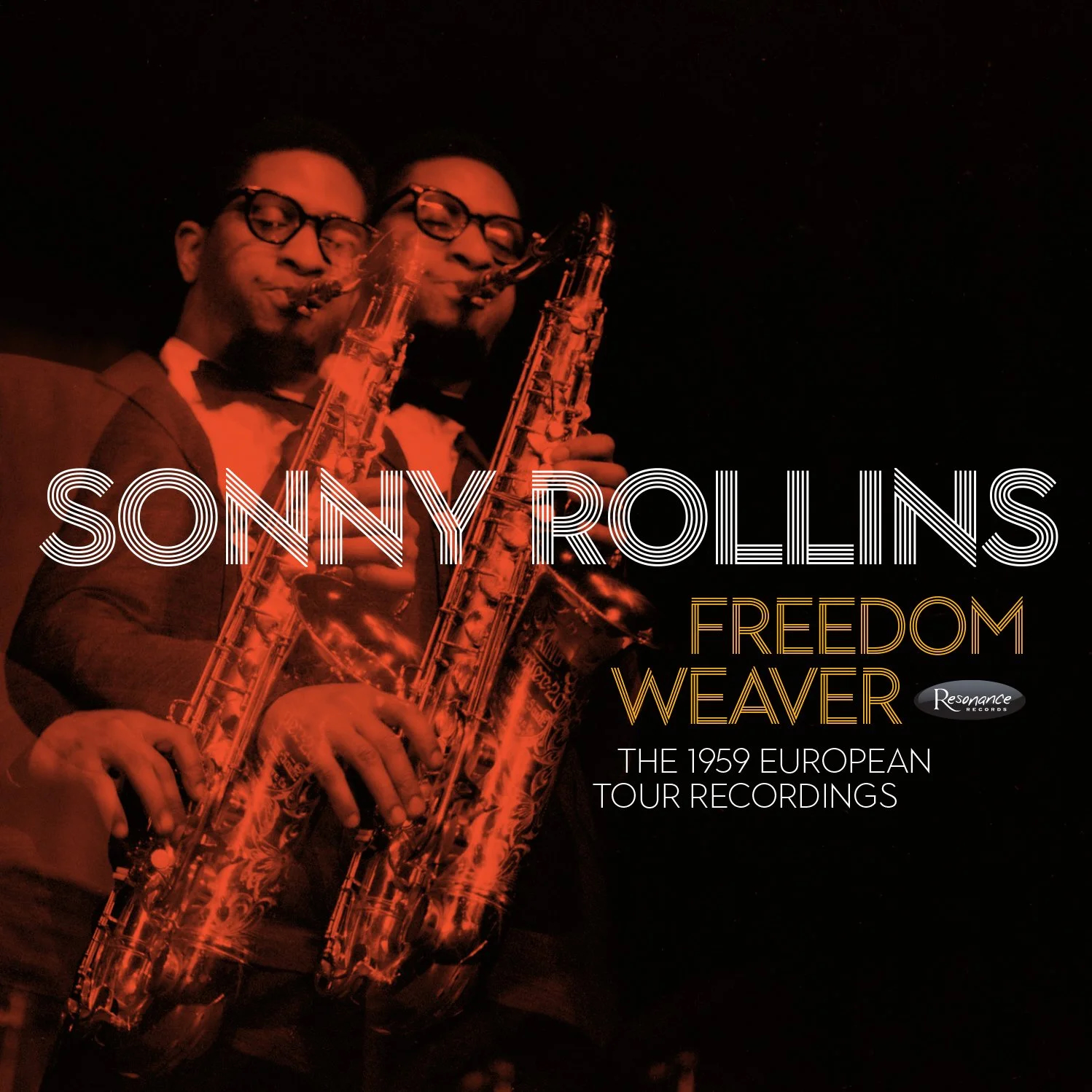
By the mid-’60s, his live sets became grand, marathon stream-of-consciousness solos where he would call forth melodies from his encyclopedic knowledge of popular songs, including startling segues and sometimes barely visiting one theme before surging into dazzling variations upon the next. Rollins was brilliant, yet restless. The period between 1962 and ‘66 saw him returning to action and striking productive relationships with Jim Hall, Don Cherry, Paul Bley and his idol Hawkins, yet he grew dissatisfied with the music business once again and started yet another sabbatical in ‘66. “I was getting into Eastern religions,” he remembers. “I’ve always been my own man. I’ve always done, tried to do, what I wanted to do for myself. So these are things I wanted to do. I wanted to go on the Bridge. I wanted to get into religion. But also, the jazz music business is always bad. It’s never good. So that led me to stop playing in public for a while, again. During the second sabbatical, I worked in Japan a little bit, and went to India after that and spent a lot of time in a monastery. I resurfaced in the early ’70s, and made my first record in ‘72. I took some time off to get myself together and I think it’s a good thing for anybody to do.”
In 1972, with the encouragement and support of his wife Lucille, who had become his business manager, Rollins returned to performing and recording, signing with Milestone and releasing Next Album. (Working at first with Orrin Keepnews, Sonny was by the early ’80s producing his own Milestone sessions with Lucille.) His lengthy association with the Berkeley-based label produced two dozen albums in various settings—from his working groups to all-star ensembles (Tommy Flanagan, Jack DeJohnette, Stanley Clarke, Tony Williams); from a solo recital to tour recordings with the Milestone Jazzstars (Ron Carter, McCoy Tyner); in the studio and on the concert stage (Montreux, San Francisco, New York, Boston). Rollins was also the subject of a mid ’80s documentary by Robert Mugge entitled Saxophone Colossus; part of its soundtrack is available as Sonny Rollins Plays G-Man.
He won his first performance Grammy for This Is What I Do (2000), and his second for 2004’s Without a Song (The 9/11 Concert), in the Best Jazz Instrumental Solo category (for “Why Was I Born”).
Yet another major award was bestowed on Rollins on March 2, 2011, when he received the Medal of Arts from President Barack Obama in a White House ceremony. Rollins accepted the award, the nation’s highest honor for artistic excellence, “on behalf of the gods of our music.”
On December 3, 2011 Sonny Rollins was one of five 2011 Kennedy Center honorees, alongside actress Meryl Streep, singer Barbara Cook, singer-songwriter Neil Diamond and cellist Yo-Yo Ma. Rollins said of the honor, “I am deeply appreciative of this great honor. In honoring me, the Kennedy Center honors jazz, America’s classical music. For that, I am very grateful.”
Related: Musician deaths of 2026
Rollins’ vast catalog is available in the U.S. here and in the U.K. here.




No Comments so far
Jump into a conversationNo Comments Yet!
You can be the one to start a conversation.