
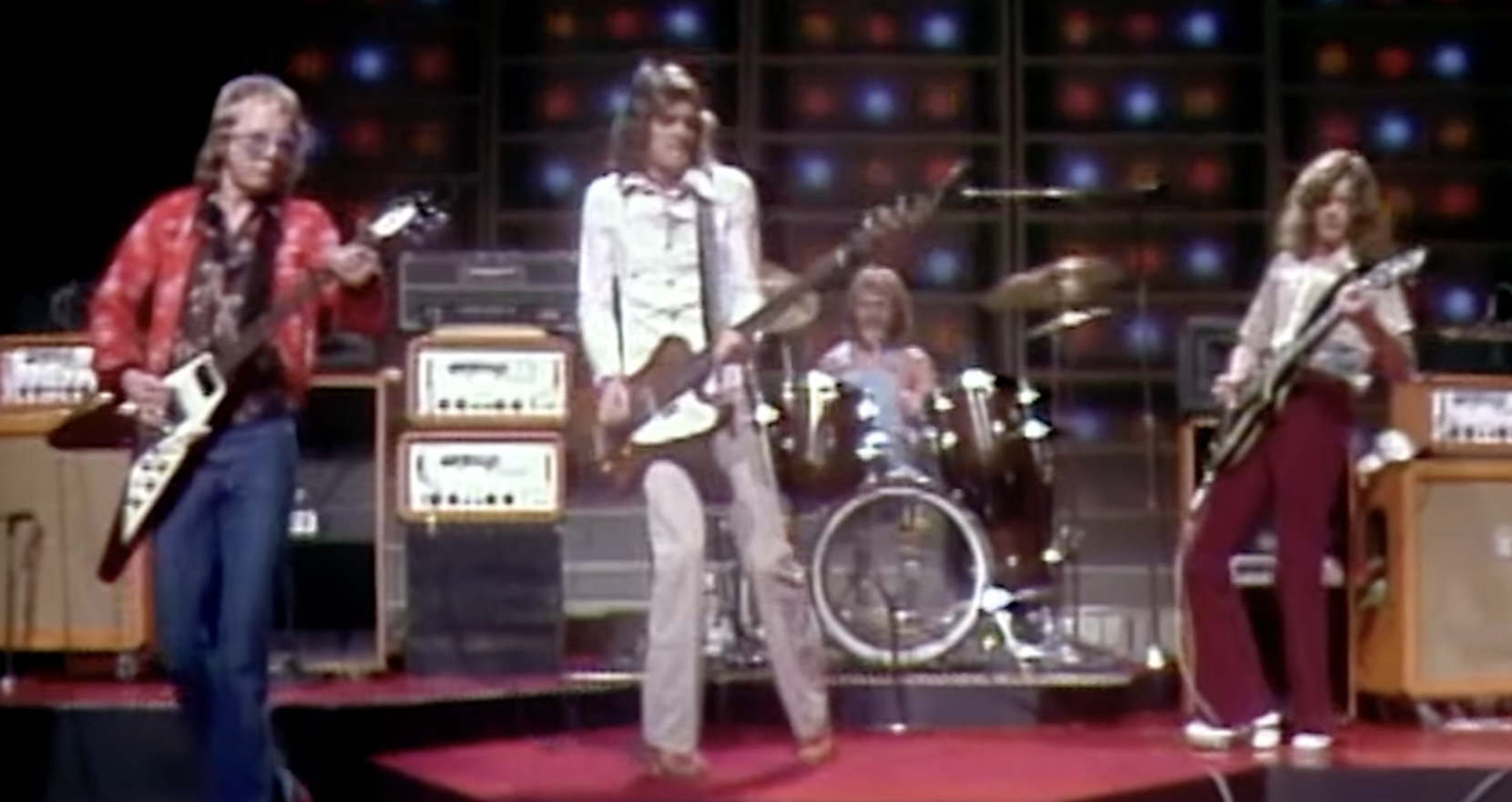
Wishbone Ash performing on The Midnight Special in 1973.
Wishbone Ash never broke through as a singles act on either side of the Atlantic, but the British band built one of the most distinctive catalogs in early-’70s rock. The classic lineup—guitarists Andy Powell and Ted Turner, bassist-vocalist Martin Turner and drummer Steve Upton—combined hard rock, folk and progressive influences into a twin-guitar sound that later influenced acts including Thin Lizzy, Iron Maiden, Judas Priest and Lynyrd Skynyrd.
Their 1972 album Argus reached #3 in the U.K. and was voted Album of the Year by readers of Sounds magazine. The following year’s Wishbone Four reached #44 on the Billboard 200, the band’s highest U.S. chart position. Yet despite a loyal following and a string of acclaimed albums, Wishbone Ash apparently never charted a single in either the U.K. or the U.S.
These 11 tracks—including no less than five from Argus—offer a good introduction to one of classic rock’s most influential cult bands.
“The King Will Come” (Argus, 1972)
The opening track of side two remains their best-known song. A brief guitar introduction gives way to a powerful riff and the twin-guitar attack that became the band’s trademark. More than 50 years later, it remains a centerpiece of their live performances.
“Blowin’ Free” (Argus, 1972)
Created during a soundcheck at the Whisky a Go Go on Sunset Boulevard in 1971, the track quickly became one of the band’s most enduring songs. Its upbeat groove and fluid guitar work made it a fan favorite and a longtime concert staple.
“Phoenix” (Wishbone Ash, 1970)
Running more than 10 minutes, the centerpiece of Wishbone Ash’s debut album helped establish the band’s reputation for ambitious songwriting. It became a concert staple, and a 1972 promotional EP recorded in Memphis features a version that stretches beyond 17 minutes.
“Warrior” (Argus, 1972)
Few songs capture the spirit of the LP better than this one. Driven by dramatic guitar harmonies and dynamic shifts, it helped define the album’s blend of hard rock and progressive influences. It’s also one of Martin Turner’s strongest vocal performances.
“Time Was” (Argus, 1972)
Running nearly 10 minutes, it ranks among the band’s most accomplished recordings. Acoustic guitars, vocal harmonies and extended instrumental passages showcase the musical ambition at the heart of Argus.
“Jail Bait” (Pilgrimage, 1971)
Appearing on the band’s second album, the song highlighted their harder-rocking side. Built around a driving groove, sharp guitar work, and a memorable harmonica solo, it pointed toward the sound the band would refine on Argus the following year.
“Blind Eye” (Wishbone Ash, 1970)
Often overshadowed by the band’s more epic progressive compositions, the track remains one of the sharpest hidden gems of their debut album. Its strong melody and intricate guitar arrangements show how effectively Wishbone Ash balanced musicianship with accessibility.
“Errors of My Way” (Wishbone Ash, 1970)
An absolute gem from their debut album, digging deep into the band’s folk roots. It starts with a gentle acoustic vibe and gorgeous, layered vocal harmonies before shifting into the soaring, dual-lead electric-guitar sound they invented. The lyrics perfectly capture that heavy feeling of looking in the mirror and facing your past mistakes: “Looked at myself, and all that I could say/Was, ‘I think I see the errors of my way.’/There in the glass, there was something that caught my eye.”
“Sometime World” (Argus, 1972)
Another standout from their third album, it balances a powerful riff with thoughtful lyrics and dynamic arrangements. It’s another reminder of why the album remains the centerpiece of their catalog.
“Persephone” (There’s the Rub, 1974)
Recorded after Ted Turner’s departure and featuring new guitarist Laurie Wisefield, this song showed that the group remained a creative force in the mid-’70s. Its graceful melody and polished arrangement helped make it one of the standout tracks.
“F.U.B.B.” (There’s the Rub, 1974)
This track is a masterclass in instrumental chemistry. Clocking in at over nine minutes, it proves the band didn’t lose a step after Laurie Wisefield took over for Ted Turner. The song locks into a relentless groove anchored by Martin Turner’s driving bass, giving the guitarists a massive canvas to trade fiery, jazz-fusion-tinged solos. It is a spectacular, heavy journey that remains a massive fan favorite.
Wishbone Ash never enjoyed the commercial success of many of their contemporaries, but their influence has endured for decades. Andy Powell continues to lead the band today, keeping alive a catalog that remains one of classic rock’s most rewarding discoveries. Their recordings are available in the U.S. here, in Canada here and in the U.K. here.
Related: 12 essential tracks from another British band of the same era



1 Comment so far
Jump into a conversationWishbone Ash made themselves known to me with the debut album, and the song “Blind Eye,” receiving extensive airplay in Western MA where I was at the time. Their melodic sounds of their instrumental works are so different from prog rock groups like Yes, just as stunning and remarkable.