
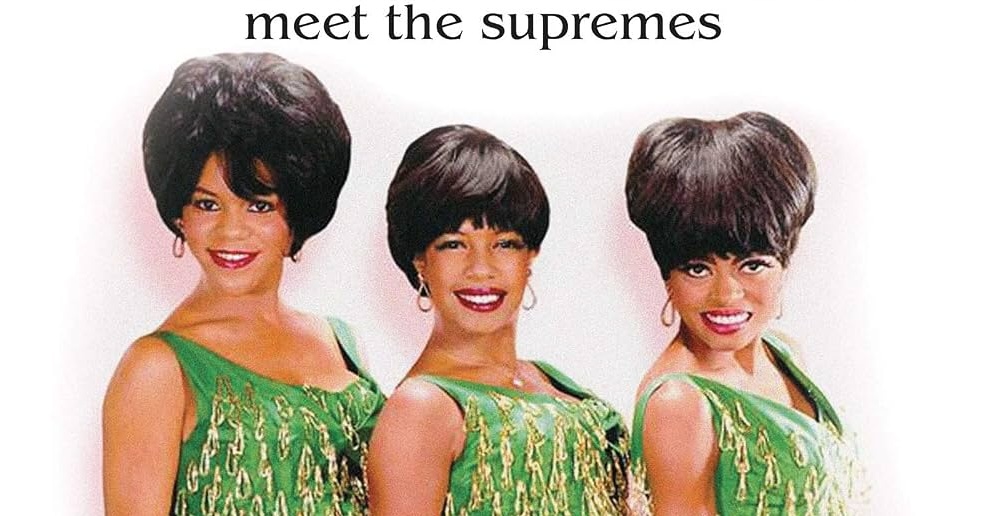
The Supremes on the cover of their debut studio album.
In the heart of the Motown era, one vocal trio became the label’s defining crossover success. Guided by Berry Gordy Jr.’s vision, fueled by the songwriting and production brilliance of Brian Holland, Lamont Dozier and Eddie Holland, and backed by the label’s incomparable house band, the Funk Brothers, the Supremes turned polished soul into a global pop phenomenon.
Their most notable members were Diana Ross, Florence Ballard and Mary Wilson. But at various times, they were joined by Betty McGlown, Cindy Birdsong and others.
They were helped by incredible, sustained exposure on American television’s most popular TV showcase of the ’60s, appearing on The Ed Sullivan Show an incredible 17 times.
Between 1964 and 1969, these dozen monumental recordings all reached #1 on the Billboard Hot 100—an achievement unmatched by any other American vocal group of the rock era.
“Where Did Our Love Go” (Where Did Our Love Go, 1964)
Originally rejected by the Marvelettes, this hypnotic, shuffling breakthrough introduced Motown’s crossover sound to the mainstream pop audience. Diana Ross’ effortless, cooing lead vocal ignited an astonishing streak of five consecutive Billboard Hot 100 chart-toppers.
“Baby Love” (Where Did Our Love Go, 1964)
Built around an irresistible verse-refrain hook and elegant harmonies from Mary Wilson and Florence Ballard, this follow-up proved the trio’s winning formula was no fluke. Radio embraced the track instantly, sending it straight to the summit on both sides of the Atlantic.
“Come See About Me” (Where Did Our Love Go, 1964)
Warm, pulsing melodies and sparkling vocal interplay created one of the year’s definitive singles. Securing two non-consecutive stints at #1 while fighting off the British Invasion cemented the trio’s place alongside the Beatles as America’s biggest musical attraction.
“Stop! In the Name of Love” (More Hits by The Supremes, 1965)
Dramatic phrasing, a piercing Hammond organ hook and a memorable, palm-forward hand gesture transformed this track into an enduring cultural landmark. Its emotional urgency and tight choreography sound every bit as powerful today.
“Back in My Arms Again” (More Hits by The Supremes, 1965)
Joyful, driving energy and a signature James Jamerson bassline carried this anthem of romantic reunion straight to the top. Every element reflected a legendary creative team operating at the absolute peak of its studio powers.
“I Hear a Symphony” (I Hear a Symphony, 1965)
Lush, complex orchestration expanded the familiar Motown blueprint with richer textures, harmonic complexity and graceful dynamics. The sophisticated production met Gordy’s crossover ambitions head-on, proving the group could out-pop anything on the airwaves.
“You Can’t Hurry Love” (The Supremes A’ Go-Go, 1966)
Anchored by one of the most celebrated and fiercely imitated basslines in recording history, this timeless favorite masterfully balances patience and infectious rhythm. Its massive influence continues to echo across generations of pop and rock history.
“You Keep Me Hangin’ On” (The Supremes Sing Holland-Dozier-Holland, 1966)
An urgent pulse, an inventive Morse code-like guitar figure and a commanding vocal performance delivered the most exhilarating rock-edged moment in the Motown catalog. Countless later interpretations—from Vanilla Fudge to Kim Wilde—underscore its cross-genre appeal.
“Love Is Here and Now You’re Gone” (The Supremes Sing Holland-Dozier-Holland, 1967)
Refined storytelling, dramatic spoken-word interludes from Ross and a beautifully layered, harpsichord-driven arrangement turned heartache into high drama. Another swift climb to the peak highlighted the unmatched consistency of their mid-decade run.
“The Happening” (Greatest Hits, 1967)
Cut as the vibrant title theme for a Columbia Pictures film, this recording bursts with bright brass, energetic percussion and youthful exuberance. Co-written by H-D-H alongside film composer Frank De Vol, it effortlessly joined the group’s ever-growing list of chart leaders.
“Love Child” (Love Child, 1968)—(Billed as Diana Ross & the Supremes)
A compelling narrative and gritty, contemporary subject matter gave the newly billed outfit one of its most ambitious mainstream triumphs. With the rest of the group touring, Motown utilized session singers the Andantes to back Ross, and audiences rewarded the raw honesty with another #1 finish.
“Someday We’ll Be Together” (Cream of the Crop, 1969)(Billed as Diana Ross & the Supremes)
Rich gospel warmth and a heartfelt delivery provided a graceful finale to an unforgettable chapter in pop history. Originally intended as a solo debut for Ross, this ultimate track closed out the decade by reaching the top spot one last time.
Ross was born on March 26, 1944. Ballard died in 1976 at just 32. Wilson was 76 when she passed in 2021. Many of the Supremes’ classic collections are available in the U.S. here, in Canada here and in the U.K. here.
Watch the Supremes perform a medley of their hits on The Ed Sullivan Show as the ’60s were coming to a close



3 Comments so far
Jump into a conversationThis article really takes me back. My sister was 3 years older than me and into the Motown Sound so I know all of these songs. Got to go with her to see The Supremes as well as other Motown artists. Always excellent shows. Thanks for the article. I really enjoyed it.
The SUPREMES : the BEST ever girls rock group !!
Far too often the Supremes achievements are criminally overlooked when the history of the 60s is discussed or at best they get lumped in as “Motown artists”.
The Supremes were a phenomenon. What they achieved has remained unsurpassed, no other girl group comes close. They were the first girl group to reach No1 in the UK too.
The Supremes made a major contribution to the Civil Rights Movement using their soft power of vocals, terrific recordings and supreme glamour to help change minds and attitudes breaking decades long negative stereotypes attributed to black women. They became important role models for young black girls in particular- Oprah, Whoopie Goldberg, Janet Jackson, Beyonce and so many more were heavily influenced and inspired by the Supremes and Diana Ross who went onto to have a stellar solo career.