
15 Essential Songs From the Mamas & the Papas (and Mama Cass Solo)
by Shrinivas Kodape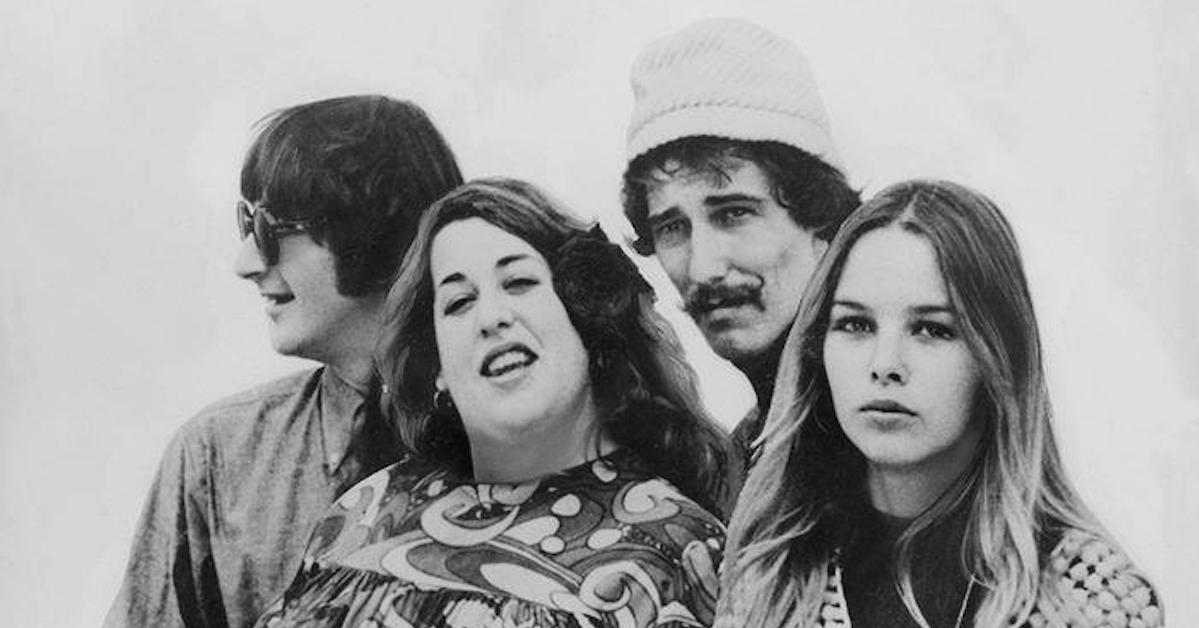
The Mamas and the Papas
Not many groups captured the lightning-in-a-bottle magic of the 1960s quite like The Mamas & the Papas. In a breathtakingly brief window, John and Michelle Phillips, Denny Doherty and Cass Elliot forged a dazzling vocal blend that defined the California sound. Backed by Lou Adler’s pristine production and the legendary studio muscle of the Wrecking Crew’s Hal Blaine, Joe Osborn, Larry Knechtel, Tommy Tedesco, Glen Campbell and others, the group reeled off six Top 10 hits between 1966 and 1967 alone, inventing a sun-drenched aesthetic that masked an intoxicating, bohemian reality.
Here are the 15 tracks that tell that remarkable story—from the Laurel Canyon myth-making and legendary studio accidents to the soaring solo triumphs that outlived the band.
“Go Where You Wanna Go”—If You Can Believe Your Eyes and Ears (1966)
Long before the chart-topping ubiquity arrived, the group’s vocal interplay and airtight harmonies were fully formed on this track. Originally intended as their debut single, its bouncy, folk-rock cadence was so infectious that the 5th Dimension later turned the composition into another major chart hit of their own.
“Got a Feelin’”—If You Can Believe Your Eyes and Ears (1966)
Co-written by John Phillips and Denny Doherty, this deep cut highlights the loose, swinging acoustic side of the group’s early recording chemistry. If you flipped over an original vinyl copy of “Monday, Monday,” this is the gritty, harmonious gem you’d find waiting on the flip side. Watch the group perform the song live at the 1967 Monterey Pop Festival.
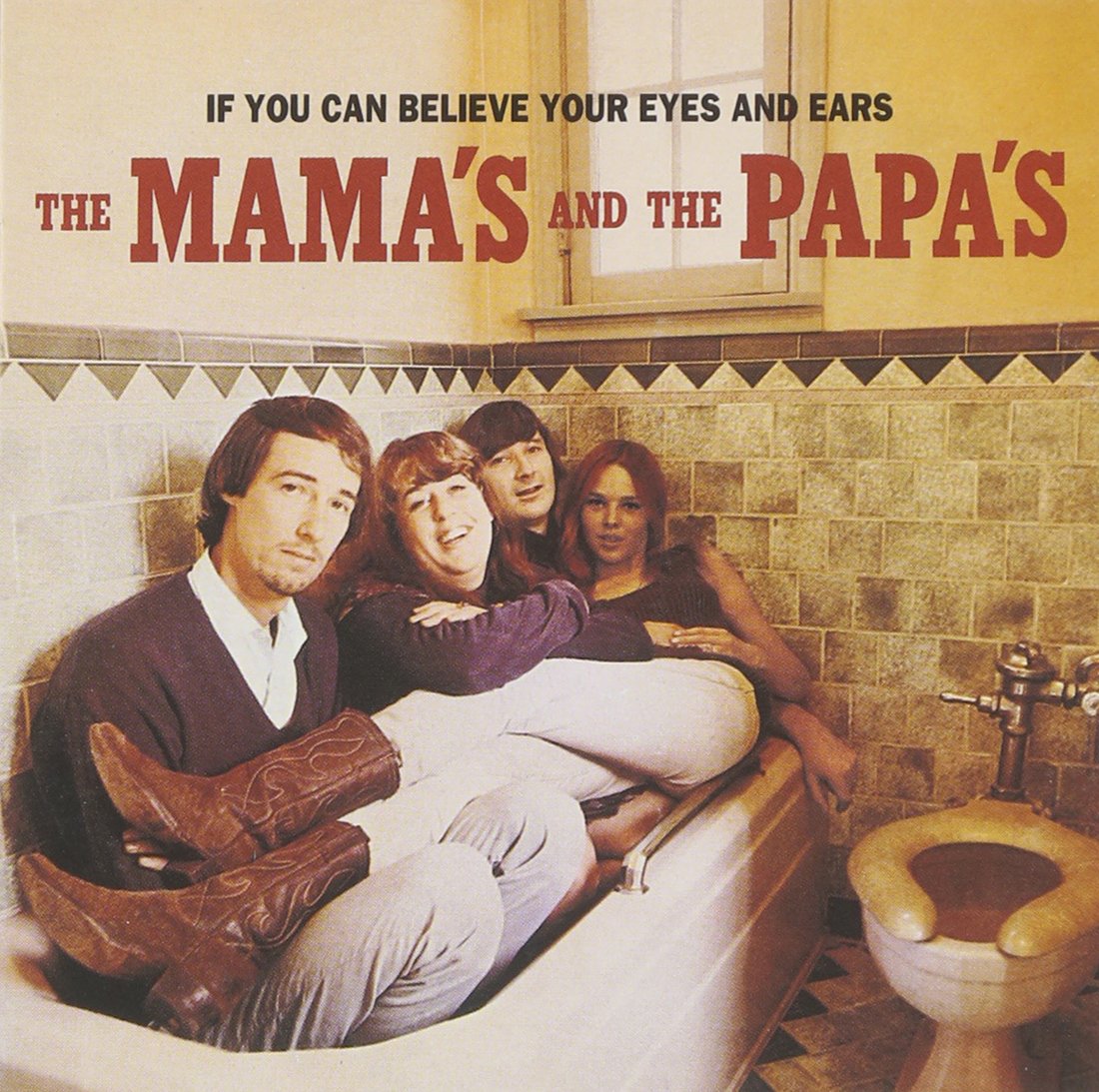
The original cover of the group’s If You Can Believe Your Eyes and Ears album.
“Straight Shooter”—If You Can Believe Your Eyes and Ears (1966)
Sharper, edgier and far more aggressive than much of their sunny AM radio catalog, this debut-album cut rides a relentless, driving rhythm section. It later resurfaced as the strategic B-side to “Twelve Thirty,” giving fans a dose of the group’s sharper rock edge.
“California Dreamin’”—If You Can Believe Your Eyes and Ears (1966)
Written in a shivering New York winter while staring longingly out at gray slush, John and Michelle captured a collective cultural restlessness that became the ultimate soundtrack to the counterculture migration. Backed by the Wrecking Crew, the track relies on a relentless acoustic guitar drive—courtesy of P.F. Sloan laying down an iconic 12-string intro that instantly evokes mid-1960s Southern California even though it was recorded in an icy East Coast mindset—and those piercing, unaccompanied vocal harmonies to freeze a moment of pure escapism in amber. It peaked at #4, immediately establishing the group’s calling card.
“Monday, Monday”—If You Can Believe Your Eyes and Ears (1966)
The group’s only chart-topper earned them a 1967 Grammy Award for Best Contemporary (R&R) Group Performance, but the track’s true genius lies in its emotional sleight-of-hand. There isn’t a hint of genuine gloom in the bouncy arrangement or the soaring, cyclical chorus; that cheerful, almost mocking juxtaposition is precisely what gave the lyric its bite.
“I Saw Her Again”—The Mamas & the Papas (1966)
Pop music history is littered with happy accidents, but few compare to the legendary mix-up on this track. Engineer Bones Howe accidentally left in an early vocal run (“I saw her… I saw her again”) at the end of the opening line, and producer Lou Adler smartly kept it right in the final mix. Underneath that studio quirk is a driving, rhythmic groove born from John Phillips’ real-life romantic turmoil with Michelle and Denny.
“Words of Love”—The Mamas & the Papas (1966)
Instead of relying on a dense wall of instrumentation, this track’s arrangement deliberately steps back to let the raw, unaccompanied human voice carry the melodic weight. Issued as a single in late 1966, it proved the group didn’t need heavy production tricks to dominate the U.S. charts, climbing comfortably to #5.
“Look Through My Window”—Deliver (1967)
Decidedly more melancholic and musically intricate than the bright, breezy pop hits dominating AM radio, this track stalled out at a modest #24. That underwhelming chart showing is the only reason it remains a favorite underground deep cut for casual fans who miss out on the group’s darker, more introspective shades.
“Dedicated to the One I Love”—Deliver (1967)
The “5” Royales originally cut this R&B standard in 1957, and the Shirelles famously revived it, but the Mamas & the Papas found a new gear by stripping the tempo down to a slow crawl. That deliberate pacing forced the spotlight onto their signature, spine-tingling four-part harmonies, pushing the single all the way to #2 in ’67. Watch the group sing it on The Ed Sullivan Show.
“Creeque Alley”—Deliver (1967)
Few bands manage to turn their own résumés into a catchy Top 5 pop hit. John Phillips wrote this brisk autobiographical chronicle to trace the group’s winding genesis from the Virgin Islands and Greenwich Village folk clubs to the California dream. By explicitly naming the players, the coffeehouses and the shared apartments, it served as a mini-history lesson of the folk-rock diaspora—even giving a nod to the Mugwumps, the short-lived outfit that featured future Mamas & the Papas members Denny Doherty and Cass Elliot alongside future Lovin’ Spoonful stars Zal Yanovsky and John Sebastian.
Related: More about “Creeque Alley”
“Glad to Be Unhappy”—Golden Era Vol. 2 (1968)
Richard Rodgers and Lorenz Hart originally penned this bittersweet standard for the 1936 Broadway musical On Your Toes. The group recorded it following an appearance on ABC Stage 67, releasing it as a standalone single before it found a home on later compilations. Reaching #26, it showcased their uncanny ability to make classic Tin Pan Alley songcraft feel entirely contemporary.
“Twelve Thirty (Young Girls Are Coming to the Canyon)”—The Papas & the Mamas (1968)
Laurel Canyon serves as the atmospheric backdrop, and John Phillips acts as an observant, slightly cynical narrator watching the counterculture wave roll in. Released in late 1967, it cracked the Top 20 on the strength of a shifting, cinematic mood that feels bright, intoxicating and subtly uneasy all at once. Watch them sing in for Ed Sullivan.
“Dream a Little Dream of Me”—The Papas & the Mamas (1968)
Originally a breezy 1931 pop standard recorded by dozens of legends ranging from Ozzie Nelson to Nat King Cole, it was Denny Doherty who championed the tune as a deliberate vehicle for Cass Elliot’s vocal prowess. By suggesting they speed it up slightly and hand the mic to Cass, Doherty turned an old-fashioned standard into a contemporary pop masterpiece. Issued with special billing credited to “Mama Cass with the Mamas & the Papas,” it caused some internal friction within the band, but it deservedly became one of the defining recordings of Cass’ career. Watch her sing it on It’s Lulu.
“It’s Getting Better”—Bubblegum, Lemonade &… Something for Mama (1969)
Going solo didn’t mean leaving the California sunshine behind. Legendary hitmakers Barry Mann and Cynthia Weil supplied this soaring, hyper-melodic track, which became an instant radio fixture in 1969 and gave Cass’ post-split solo career an immediate, joyous pop injection.
“Make Your Own Kind of Music”—Bubblegum, Lemonade &… Something for Mama (1969)
Also penned by Mann and Weil, this anthem of rugged individualism peaked at a modest #36 upon its initial release. However, its triumphant, unexpected placement in television and film decades later transformed it into a towering pop-culture classic and arguably Cass Elliot’s finest vocal testament.
The Mamas & the Papas were the subject of a 2023 book, All the Leaves Are Brown, available here. Cass’ daughter published a book, My Mama, Cass, in 2024, available in the U.S. here and in the U.K. here. The group’s recordings are available in the U.S. here and in Canada here.



No Comments so far
Jump into a conversationNo Comments Yet!
You can be the one to start a conversation.