
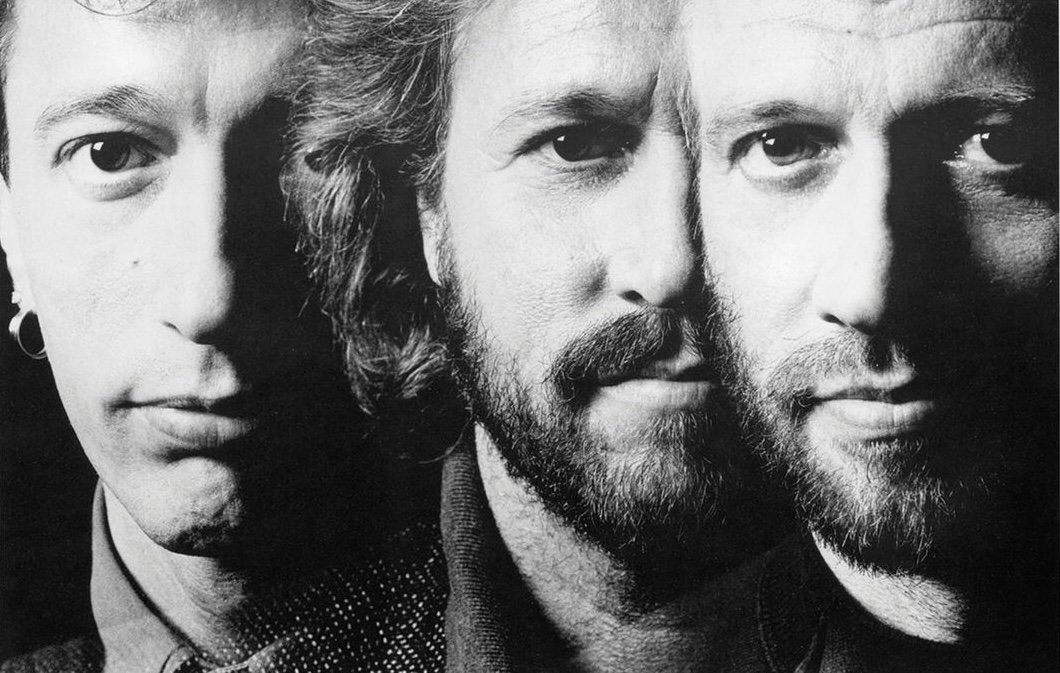
Few groups in popular music have had as many distinct phases as the Bee Gees. Barry, Robin and Maurice Gibb moved from ornate late-’60s pop to sophisticated soul, then became synonymous with disco before successfully navigating several more musical shifts. With such a vast catalog of hits, some excellent songs inevitably wind up living in the shadows of the biggest ones.
These 10 aren’t necessarily obscure. A few were major hits, while others became better known through recordings by other artists. What they share is a place in a catalog deep enough to make even successful songs easy to overlook.
“Heartbreaker”—Their Greatest Hits: The Record (2001)
Dionne Warwick’s recording is the version most listeners know, but the song came directly from Barry, Robin and Maurice Gibb. Written for Warwick’s album of the same name, it became one of her signature recordings, reaching #10 on the Hot 100 and #2 in the U.K., with Barry supplying prominent backing vocals. The group’s own studio recording—cut in 1994 with Barry singing lead—wasn’t officially released until 2001 on Their Greatest Hits: The Record, though a live version had appeared earlier on One Night Only.
“Alone”—Still Waters (1997)
A late-career ballad driven by acoustic guitars and bagpipe-style synthesizer lines, this opening track from Still Waters showed that the brothers could still produce a remarkably direct piece of pop songwriting after more than three decades together. The single reached #5 in the U.K., #2 in New Zealand, and #28 on the Hot 100. It also became their 30th and final U.S. Top 40 hit.
“Fanny (Be Tender with My Love)”—Main Course (1975)
The 1975 album, produced by Arif Mardin, marked a crucial turning point, as the group moved further into R&B and soul without abandoning its gift for intricate harmonies. This particular track became the third single from the record, following “Jive Talkin'” and “Nights on Broadway,” and reached #12 on the Hot 100. Its combination of soulful phrasing, lush harmonies and a striking melodic structure pointed directly toward the sound that would soon make the brothers international superstars.
Related: Our Album Rewind of Main Course
“Lonely Days”—2 Years On (1970)
Recorded after Robin Gibb’s return to the group following a brief estrangement, this was an early sign that the reunited trio still had plenty to say. The song became their first U.S. Top 5 hit, reaching #3 on the Hot 100 (surpassing previous peaks like “I Started a Joke,” which stalled at #6). Its orchestral pop arrangement, abrupt dynamic shifts and melancholy atmosphere make it an intriguing bridge between their late ’60s baroque pop and the more rhythm-conscious material that followed.
“Tragedy”—Spirits Having Flown (1979)
Calling a song that reached #1 underrated may seem like a stretch, but context matters. The sheer commercial saturation of the Spirits Having Flown era has sometimes reduced this extraordinary piece of studio craft to a disco-era cliché. Written by all three brothers, it combines an aggressive rhythm section, a tense, cinematic arrangement and one of Barry’s most dramatic vocal performances. It rightfully topped both the U.S. and U.K. charts in 1979.
“Alive”—To Whom It May Concern (1972)
This is the other “Alive”—the one that predates disco by several years and has nothing to do with the later film soundtrack staple. A piano-led ballad written by Barry and Maurice Gibb, it was released as the second and final single from To Whom It May Concern. The recording reached #34 on the Hot 100 and remains an appealing example of the group’s early ’70s sound, built around Barry’s lead vocal, Maurice’s piano and a lush orchestral arrangement.
Related: Read a vintage 1978 interview with the Bee Gees
“You Win Again”—E.S.P. (1987)
The comeback single arrived after a six-year gap between standalone studio LPs (following 1981’s Living Eyes) and immediately established that the brothers had no intention of simply recreating their past. Built on an insistent, stomping drum groove and sharp modern production, it carried the trio to #1 in the U.K. and across Europe. In Britain, it gave them the distinction of becoming the first group to score a #1 single in three different decades. Its American performance was considerably more modest, peaking at #75 on the Hot 100.
“One”—One (1989)
By the end of the ’80s, the group had moved comfortably into a polished contemporary-pop setting without losing the vocal interplay that had always been its calling card. The title track became their biggest U.S. hit of the decade, reaching #7 on the Hot 100 and marking their first American Top 10 single since 1979. The album itself became a cornerstone of the group’s late-career resurgence.
“If I Can’t Have You”—Saturday Night Fever (1977)
Yvonne Elliman’s recording became the chart-topping smash, reaching #1 in the U.S., but the brothers’ own version deserves equal attention. Written during the songwriting flurry in France that yielded the Saturday Night Fever material, their recording appeared on side 4 of the original soundtrack double LP and served as the B-side to “Stayin’ Alive.” It is a fascinating example of how much of the era’s definitive music originated directly from the Gibb brothers’ studio sessions, even when handed to outside artists.
Related: A vintage 1978 interview with Barry, Robin and Maurice
“More Than a Woman”—Saturday Night Fever (1977)
Two distinct versions appeared on the landmark soundtrack: one recorded by Tavares and one by the brothers themselves. The former recording was pushed as the primary commercial single, reaching #7 in Britain and #32 on the Hot 100, while the Bee Gees’ original was not issued as a single in the U.S. or U.K. at the time. Yet the brothers’ cut has endured as one of the soundtrack’s signature moments, with its understated groove, tight string lines and stacked falsetto vocals demonstrating the depth of their songwriting craft.
The Bee Gees’ vast recorded legacy is available in the U.S./worldwide here, in Canada here and in the U.K. here.



No Comments so far
Jump into a conversationNo Comments Yet!
You can be the one to start a conversation.