A New Book Looks at New York City Rock/Pop of the ’60s: Author Interview
by Jeff Tamarkin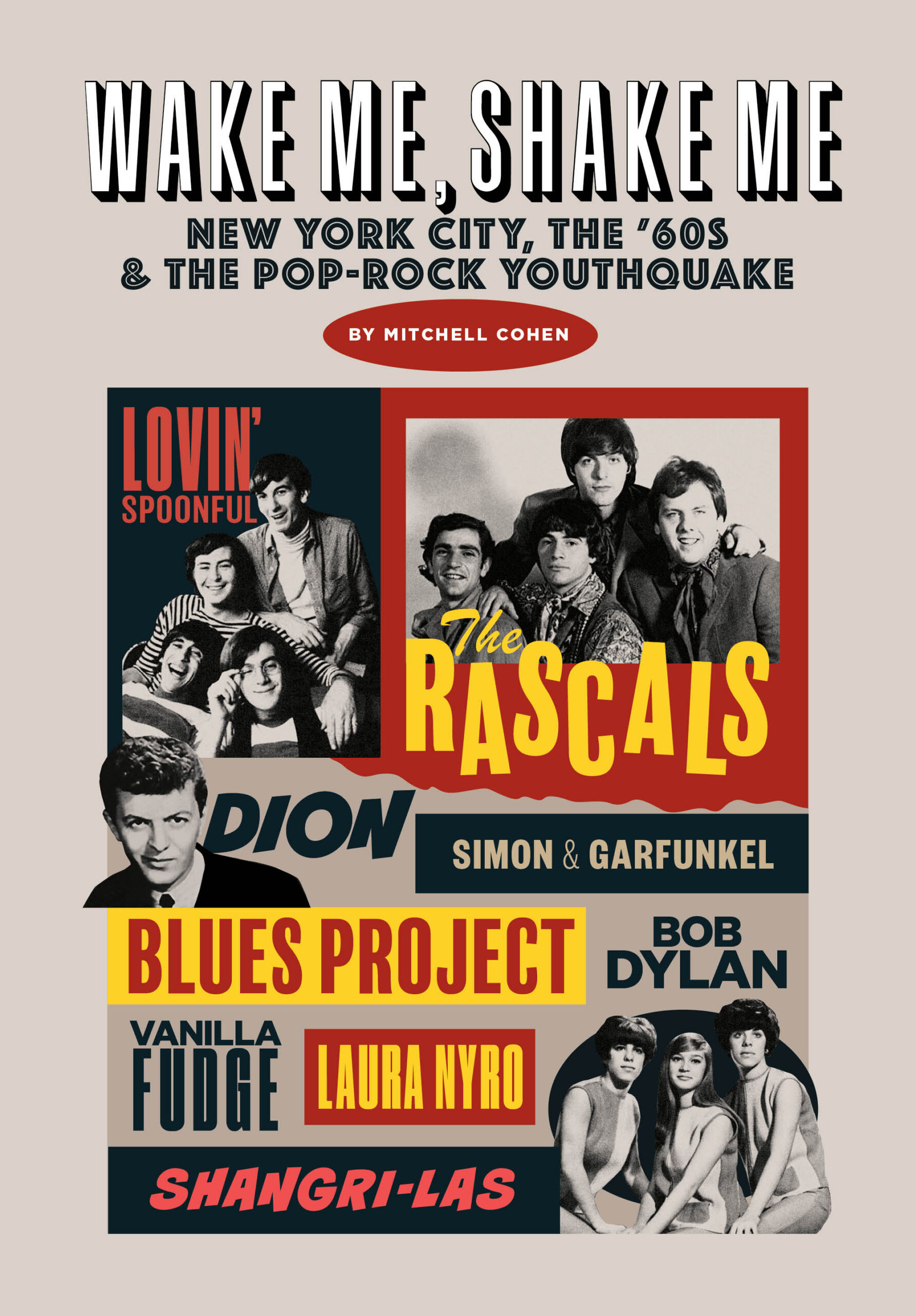 In his 2026 book, Wake Me, Shake Me: New York City, the ’60s & the Pop-Rock Youthquake, author Mitchell Cohen, according to the book’s official announcement, “charts the course from doo-wop to girl groups to folk music to R&B to folk-rock to baroque rock to goodtime music with some of the city’s leading stars: the Lovin’ Spoonful, the Rascals, the Blues Project, Vanilla Fudge, the Shangri-Las, Simon & Garfunkel, Laura Nyro, Bob Dylan, Bobby Darin and Dion.
“In the book,” the press release continues, “Cohen fleshes out the story with details about the songwriters, producers, record labels, TV shows and radio stars who all played roles in creating and popularizing the music. So, Carole King, Phil Spector, Morris Levy, Alan Freed, Clive Davis, Leiber and Stoller. Mitch Miller, Murray the K and many other colorful characters figure into it.”
Cohen, it says, “who lived in New York through all of this, brings passion, amusement and curiosity to his subject, making it a vibrant, entertaining, and illuminating tale, one best accompanied by a soundtrack of great ’60s music. Cohen is the author of Looking for the Magic: New York City, the ’70s & the Rise of Arista Records (2022), the co-author of Matt Pinfield’s memoir, All These Things That I’ve Done, and, with Sal Maida, two volumes of The White Label Promo Preservation Society.”
Wake Me, Shake Me: New York City, the ’60s & the Pop-Rock Youthquake, published Sept. 1, 2026, by Trouser Press Books, is available in the U.S. here, in Canada here and in the U.K. here.
Best Classic Bands asked Cohen some questions about the book, and the New York music scene of the 1960s.
Best Classic Bands: Why did you want to write this book?
Mitchell Cohen: When I finished my book on Arista Records, which talked about the label in the context of what was happening in New York City in the 1970s, I wanted to flash back and examine the city’s place in the previous decade. That was the period, not at all coincidentally, when I was listening to pop music obsessively, going to shows, buying records, having the radio on constantly. The book is in no real way a memoir, and I’m not a character in it, but it reflects my experiences and my intense interest. Also, I wanted to discuss how all the mechanics of the pop music machine—records, radio, trade and consumer magazines, songwriters and publishers, A&R people and producers—worked together, how interdependent, and geographically compressed, everything was. Mostly though, these were artists that made a deep impression on me.
Having grown up in New York City, you experienced a lot of this music first-hand. What was the first concert you went to and what do you remember about it? And what was your favorite venue of the entire era?
The first rock and roll show I went to was in April 1961 at the Brooklyn Paramount. It was hosted by Murray the K and Clay Cole, and I kicked up a tremendous fuss about it until my mother relented and took me on the subway from the Bronx to Brooklyn so I could attend. On the bill: Dion, Del Shannon, Little Anthony and the Imperials, the Marcels, Chuck Jackson, the Capris, the Shirelles, Ben E. King, the Isley Brothers, Rosie from the Originals… I remember vividly the stage presence of the Isleys and the Olympics, Carla Thomas doing “Gee Whiz,” Dion and Del doing their then-hits. I went to the Paramount again that year, then the [Brooklyn] Fox shows, and one at the RKO Fordham in the Bronx where I was mesmerized by the Ronettes. Those are my earliest live-music memories. When I was 15, 16, my friends and I started going to the Village, to the Cafe Au Go Go, the Night Owl, Cafe Wha?, the Bitter End. I saw concerts at the Anderson Theater and Village Theater in ’67 (and Murray’s RKO 58th Street show, featuring the American debuts of Cream and the Who). Then the Fillmore East opened in ’68 and we were there all the time.
Listen to the Chiffons sing “He’s So Fine” at a Murray the K-hosted concert at the Brookyn Fox in 1963
What characterized New York City rock/pop in the ’60s and how did it differ most from what was coming out of London, L.A., San Francisco and other regions?
When I think of New York City pop, I think of the records Leiber and Stoller made with the Drifters: “There Goes My Baby,” “Save the Last Dance for Me,” “Up on the Roof,” “This Magic Moment.” Those records felt like the city, filled with romance and promise and heartbreak. The vocal groups were the real sound of New York City rock and roll; you could hear the Bronx and Brooklyn in the voices of Arlene Smith (the Chantels), Willie Winfield (the Harptones), Eugene Pitt (the Jive Five), and of course Dion. So that was the first New York City music that enthralled me. I loved early Motown (Smokey in particular, and Mary Wells), and New Orleans R&B (Ernie K-Doe, Barbara George), but I was particularly connected to the music coming out of midtown NYC: very early Phil Spector (Curtis Lee), Gerry Goffin and Carole King, Barry Mann and Cynthia Weil, early Burt Bacharach (Chuck Jackson), the Shirelles, Doc Pomus and Mort Shuman, Ernie Maresca.
You take a very deep dive into the development of the NYC rock scene. In your opinion, who was the main force in shaping what came out of the city? And is there a single event that put the city on the rock and roll map?
I suppose you could point to Don Kirshner as an architect of ’60s New York City pop, along with George Goldner, Morris Levy, Ahmet Ertegun and Jerry Wexler. The knock against New York in the official history-of-rock scheme of things is that it was too polished, or too calculated, or too “professional.” The Story of Rock is about pioneering figures like Sam Phillips, the Chess brothers, Norman Petty and Syd Nathan finding talent out in the wilderness of the real America, from places like Lubbock, Ferriday, Tupelo and Macon. So the pop being made in New York City and, most of all, Philadelphia, was less “authentic” commercial teen-bait. Even though “Tin Pan Alley” didn’t exist anymore, the term was thrown around disparagingly, to refer to all those pop tunes being created in Manhattan cubicles. Part of the impetus of the book was to put a different spin on that story. At the same time, 1961-1962, Columbia Records signed two New York City-based artists, Bob Dylan and Barbra Streisand, who completely upturned everything about folk and cabaret music: if there was a Big Bang, it was when, in 1963, The Freewheelin’ Bob Dylan and The Second Barbra Streisand Album were together on the Billboard LP charts. I think a modern NYC musical era started then.
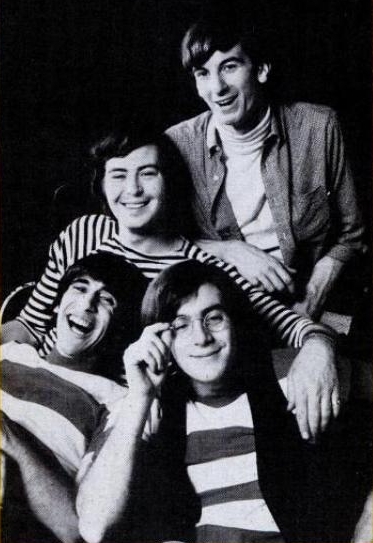
The Lovin’ Spoonful, 1965 (Photo courtesy of Trouser Press Books, used with permission}
The book name-checks literally hundreds of artists, from the very popular (Dylan, Lovin’ Spoonful, Simon & Garfunkel, Rascals) to some that made a brief splash but have been largely forgotten (Vanilla Fudge, Blues Magoos, Strangeloves). Is there a thread that ties all these together as definitively New York? In other words could, say, the Rascals or the Shangri-Las have come out of L.A.?
There was never a New York Sound—what do the Blues Magoos and Simon & Garfunkel have in common, you might wonder, except that there is a kind of outer-borough attitude that links them, and Laura Nyro, the Shangri-Las, the Vagrants, Evie Sands, the guys in the Strangeloves, even Streisand. It’s hard to pinpoint, a particular drive, and nerve (chutzpah; some might call it). Janis Ian had it, so did Richie Havens, Tiny Tim, Norma Tanega and Monti Rock III, all of whom were intersecting on the New York scene at the same time, all quintessentially New York characters, outsiders in some ways, who found/made their path into the cultural conversation.
More than any of the others, you seem to zero in on the Blues Project, a band that was never very big commercially but looms large in the memories of those who frequented the scene in the day. The book’s title comes from one of their songs. What was special about them and why should young rock fans today give them a listen? On the other hand, one band that many credit with being quintessentially New York is the Velvet Underground, but you seem to underplay their role. Why is that?
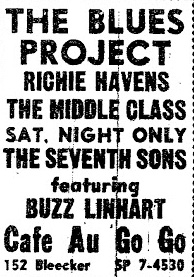 The center of the book was always going to be the Lovin’ Spoonful, the Rascals and the Blues Project. The Spoonful and the Rascals, obviously, had much more commercial success; at one point, in the 1965-1967 period when hit singles still really mattered, they were the most popular non-British groups in America, and deservedly so. They were as much fun as bands could possibly be. There was joy in what they were up to: “Come on up, and have a good time!” “Believe in the magic that can set you free!” As [Rascal] Felix Cavaliere told me once, “If you were a certain age, we got you.” That was true of the Spoonful as well and, for those of us lucky enough to live in New York, the Blues Project. They were our shared secret, one of the first real “underground” groups, and they were explosive live. That’s why I called the book Wake Me, Shake Me: it was a physical effect, Danny Kalb’s guitar that always seemed on the verge of skidding off the rails, Al Kooper’s swirling, soulful keyboard playing. Drummer Roy Blumenfeld says they were sort of a jam-band prototype on showcase pieces like “Wake Me, Shake Me,” and you can kind of hear what he means. I’d be remiss if I didn’t mention the kick my friends and I got when we saw the names of the band members: Kulberg, Katz, Blumenfeld, Kooper, Kalb. There was something affirming and inspiring about young Jewish guys making this kind of rock racket. Representation matters.
As for the Velvet Underground, as I say in the introduction, there are more books about the Velvet Underground than there are Velvet Underground albums. I mean, all of my friends and I bought the banana album, and huddled over it, trying to decode it, but I can’t say it really spoke to us at the time. We preferred the Fugs, to be honest, and went to see them often. They were funnier.
In addition to the bands, you provide a ton of detail on the radio stations, the clubs, the nascent music press, the music business and the people who ran it. How did you research this book? And what was the most surprising thing you discovered that you hadn’t known before?
I gave thanks every day to a website called World Radio History, which has archived nearly every issue of Billboard, Cash Box and Record World. I wanted to capture the time as it was happening, and there is no better resource for that than seeing what the industry was up to on a weekly basis: what artists were being covered, how advertising and editorial connected. I got to read interviews with record executives trying to read the marketplace tealeaves, seeing how “trends” like Flower Music were hyped up, then discarded. I was able to track radio trends as well, seeing how stations slowly, then rapidly, caught up with the rock audience. Also, I have many issues of Crawdaddy!, Hit Parader, Esquire and other magazines that dealt with rock and roll to some degree. I did a bunch of interviews, but I wanted this to not be not so much an oral history, people looking back. In some cases, like with Danny Kortchmar, Roy Blumenfeld, Genya Ravan, Jimmy Ryan and others, their stories filled in gaps. There was a website that listed the guests on every episode of Clay Cole’s WPIX show, and I hadn’t recalled how many local bands appeared on it, often multiple times. It really was an important platform for area artists. Many years ago, I hired Clay to do a radio spot, and asked him if his shows were preserved on video, and he told me that the station had taped over them with Yankee games. That is a terrible archival loss.
Toward the end of the book, you give a taste of what was to come in the ’70s when punk and new wave emerged. Again, New York City had a major role in that happening, but there were several years between the end of the ’60s and the birth of punk at CBGB and Max’s Kansas City when New York music seemed to fade into the background. Why did that happen?
There was a definite shift in what I’ll call the post-Monterey period. A few things came into play: Rolling Stone became the de facto voice of rock culture, and had a pronounced pro-Bay Area bias, and a distrust of the NYC music biz establishment, which was apparently insufficiently groovy for [publisher/editor Jann] Wenner. The L.A. labels—Asylum, Warner Bros./Reprise and A&M/Ode, to name a few—focused on singer-songwriters and country-rock (Joni Mitchell, Neil Young, James Taylor, Carole King, Eagles, America) and found an audience receptive to the peaceful easy feeling. A lot of East Coasters (like the Youngbloods) went west. The Spoonful and Blues Project broke up, then Al Kooper was kicked out of his own band. Personally, I was suffering from rock fatigue around that time, and I started to listen to a lot more jazz and country. It’s when I discovered Miles Davis (In a Silent Way was my gateway) and [Thelonious] Monk, and Merle Haggard and Dolly [Parton]. Not to say my story is typical, but not much rock, certainly not New York rock, excited me until the New York Dolls came along, then Patti Smith and the rest.
Watch the Blues Project sing Eric Andersen’s “Violets of Dawn” at the classsic lineup’s final performance in 1994
You list 100 singles and 100 albums at the end that basically represent what the book is about. How did you choose what to include and what to omit?
Who doesn’t like lists? There were only a few rough guidelines. No more than two albums or two singles by any artist. No artists on the singles list who were on the albums list (that could have gone on forever). Emphasis on artists who never had the chance to make an album, but sometimes (say, the Wild Ones), nothing on their album was as good as a random single that wasn’t an LP track. This all might cause distress among people who think every Rascals album is indispensable or disagree with the Gene Pitney 45 I chose. One more thing: although the book begins at the end of the Alan Freed era, the lists start in 1965 and go through the end of the decade. I could pick 100 NYC singles from 1960-1964 easy, but my focus here is on the after-Beatles rock era.
Related: Another new music book is all about lists
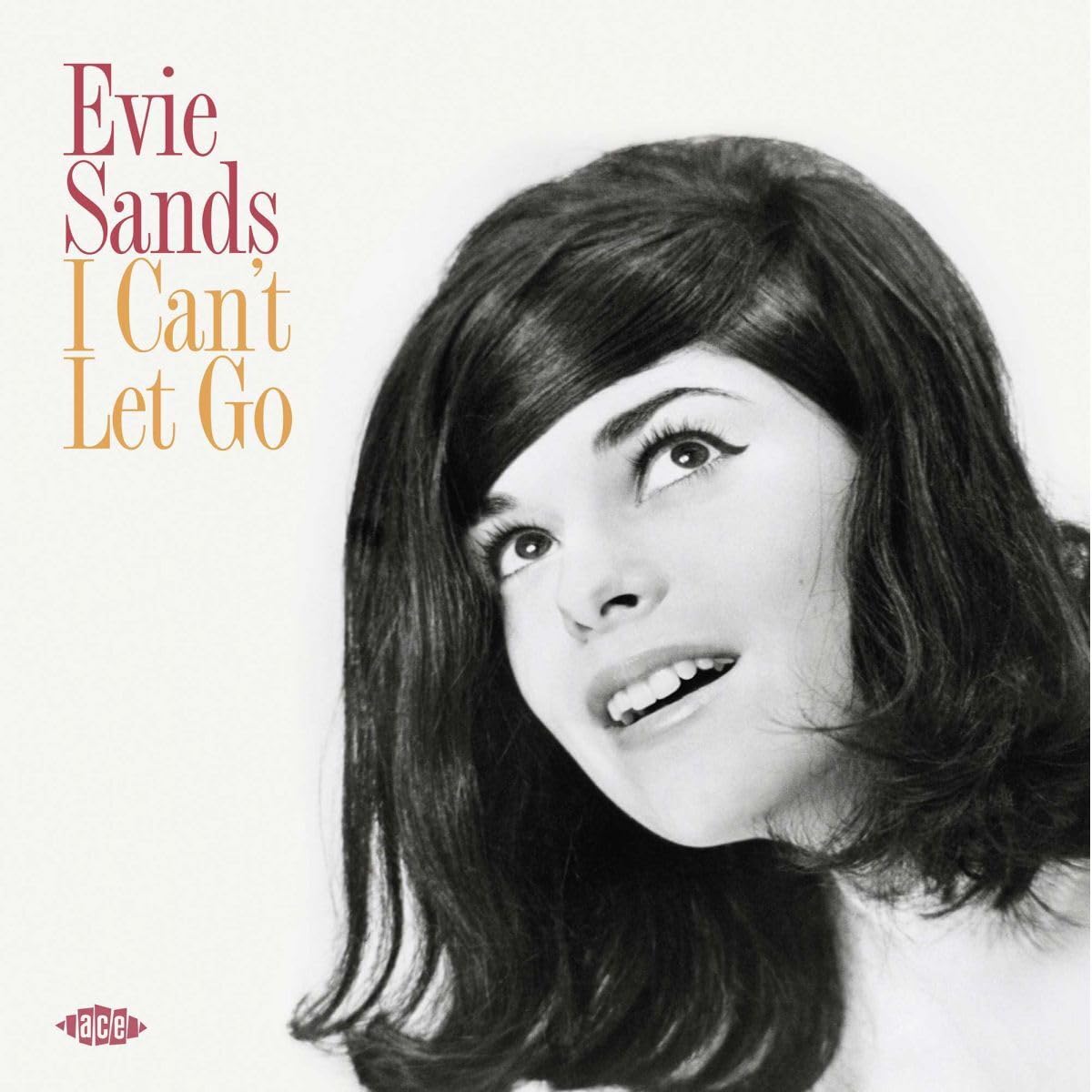 Is there one New York artist of the ’60s who got a raw deal and should have been on the front cover of this book along with the big names if things had gone their way? Whose New York story do we need to know that we don’t?
I love this question. First of all, Evie Sands, a singer from Brooklyn who worked with Chip Taylor and Al Gorgoni, and who had the worst luck. She recorded “Angel of the Morning,” “Take Me for a Little While” and “I Can’t Let Go,” only to have them covered more successfully by other artists. “Picture Me Gone,” on Cameo Records, and the Blue Cat B-side “You’ve Got Me Up Tight” are among her other should-have-been-hits. Toward the end of the decade, she signed with A&M, and finally got to make an album, Any Way That You Want Me, which would have made my LP list, except it came out in 1970. As I say in the book, a few little turns of fate, and she could have been New York’s own Dusty Springfield. Another “lost” artist is the Magicians, who put out a handful or so singles on Columbia, and were the most likely next-in-line breakthrough local band after the Spoonful, whose slot at the Night Owl they took over when the Spoonful hit the big time.
As noted above, there were other pockets in America and abroad where vibrant musical scenes popped up for a while and then dissipated. Whether we’re talking Memphis and New Orleans in the ’50s, or NYC, London/Liverpool, Detroit, L.A./S/F. in the ‘’60s, these regional scenes all had their own flavor. That simply doesn’t exist anymore. Could it ever happen again? I’d also like to delve a little bit more into radio. We had the WMCA Good Guys, WABC with Cousin Brucie and Scott Muni, and Murray the K on WINS, as well as other stations like the R&B-centric WWRL. I know every major market in the country had radio stations playing the same music, but I tend to think that the NYC jocks had a more outsized role in actually creating hit records and promoting certain artists. Was that simply because New York is so huge? Why was it so important to break a record in the city?
I guess the shortest answer is no, that’s not likely to ever happen again. When was the last time? Seattle? Manchester? I think we have to adjust our thinking, especially as regards to “bands.” I don’t want to sound cranky, but really, [the contemporary Brooklyn band] Geese? I still love going to see rock bands—Rilo Kiley were great at the Roundhouse back in early summer, Willie Nile and James Maddock are two local guys who make living, breathing rock, and Bruce’s Land of Hope and Dreams show was beyond my expectations—but the NYC scenes of the ’60s and ’70s (and even the early 2000s) are unrepeatable. Is there even local music press anymore? The internet nationalizes music, which I suppose has value if you’re trying to expose your work, but I remember when one review in the Village Voice was enough to spark interest from record labels and music fans, and when airplay on WMCA or WOR-FM made real impact. Which brings us to the role radio had in defining what was cool. I don’t want to overglamorize or get chauvinistic about New York City radio in the ‘60s—I know people from other cities who talk about their top 40 and new rock stations with the same kind of affection—but WMCA did have a distinctly New York personality, brash and widely encompassing. It played records by Joe Cuba, the Jive Five, Hector Rivera that were big in the city but barely a blip nationally. For the short time that Brooklyn-born B. Mitchel Reed had the primetime shift on WMCA, he ran the hippest ship in the city (I wish he hadn’t gone back to L.A. to help kickstart progressive rock radio; I can only imagine him running wild on FM in NYC). Then WOR-FM took early shots with Richie Havens, Janis Ian and Vanilla Fudge.
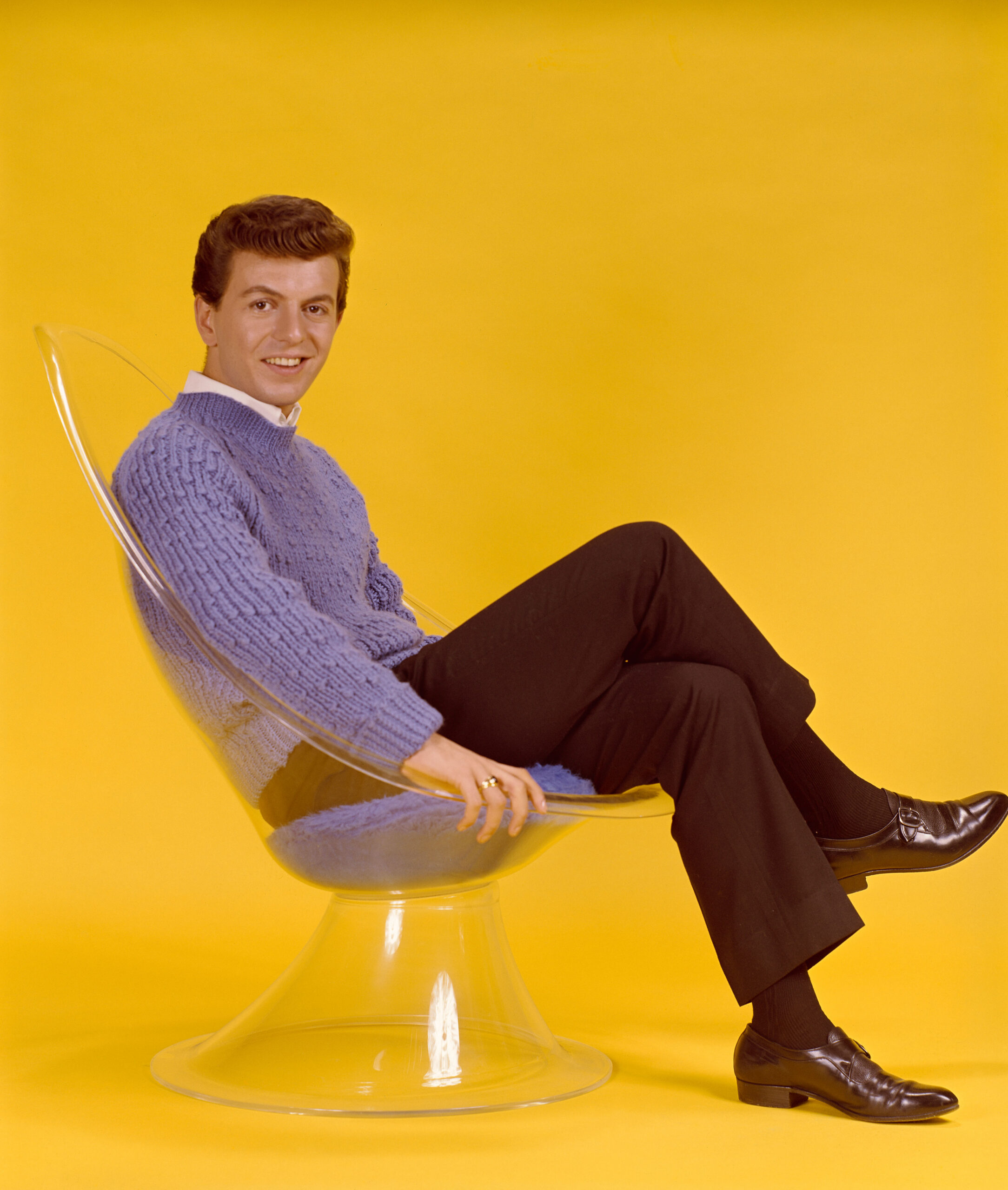
Dion in a publicity portrait from 1960 (Photo courtesy Trouser Press Books, used with permission)
Let’s talk a bit about record labels. While many of the biggest NYC artists did record for major labels, including Dylan and Simon & Garfunkel for Columbia, many of the other artists talked about in this book recorded for labels like Red Bird, Kama Sutra, Verve, Roulette and Laurie. How did those indie labels help capture and even shape the city’s music in a way that the major didn’t?
When the major labels were hesitant to invest in rock and roll, the road was open for the midtown indies. Famously, Columbia’s Mitch Miller was anti-rock and roll, and other majors like RCA Victor and Decca weren’t much more welcoming (Elvis and Buddy Holly were notable exceptions). The indies, initially in the vocal group era, acted quickly and decisively: Atlantic, Roulette and its spin-offs, Laurie, and even smaller labels like Herald-Ember, could take shots with groups like Frankie Lymon and the Teenagers, the Chantels, Dion and the Belmonts, the Clyde McPhatter iteration of the Drifters. Those labels were closer to the street: aspiring singers and songwriters could literally exit the subway station, walk to Broadway and knock on the many, many doors at 1650 and 1619, and get a hearing. Because you never know who’s knocking, what instant hit might come from a few minutes of your time. What did it take to start a new label? Rent an office, put your name on the building’s directory. Don Kirshner started Dimension with what was supposed to be a demo of “The Loco-Motion” intended to pitch to Dee Dee Sharp. Dimension released Gerry Goffin and Carole King’s demo sung by Little Eva, and it went to number one. Florence Greenberg started Scepter and Wand, Leiber and Stoller started Red Bird and Blue Cat, Bert Berns started Bang and Shout, Artie Ripp and his pals started Kama Sutra, and we wouldn’t have “Will You Love Me Tomorrow,” “Chapel of Love,” “Leader of the Pack,” “I Want Candy,” “Solitary Man,” “The Boy From New York City,” “Hang On Sloopy” or “Do You Believe in Magic” without those labels. It’s hard to imagine those records coming out on a major label.
Who was the most “New York” of the New York artists of the period, and why?
I grew up in the Bronx, so for me the most “New York” of the New York artists is Dion. This hits close to home, because I worked with him on a few projects, and I consider him a friend, but when I was just discovering rock and roll, he had gone solo and came out with “Runaround Sue,” “The Wanderer,” “Lovers Who Wander,” “Little Diane, and “Born to Cry,” and those singles (and the Lovers Who Wander album) just knocked me over. He sang with such confidence, and presence, and he couldn’t have come from anywhere but New York City. He wasn’t like the rockabilly cats, or the teen idol pretty boys (although he was featured prominently in 16 magazine). And although his tenure at Columbia Records was a mixed bag, he made singles there that rank with any blues-rock of the period, and were even a few steps ahead. Along with Dion, I’d say Laura Nyro; you can hear how she was formed by streetcorner music, and there are elements of uptown soul, midtown pop and even cabaret. She was like those girls you’d see on the subway, on their way to the High School of Music and Art, carrying cameras or guitars or art portfolios. The fact that she was criticized for her performance at the Monterey festival for being “too New York” cracks me up. What else could she possibly be?
Watch the Young Rascals perform “Good Lovin'” on The Ed Sullvan Show



6 Comments so far
Jump into a conversationI was born in Brooklyn in ‘52. I used to carry my little record case filled with 45s and always had a transistor radio nearby. All those years primed me for the Beatles and Dylan and the Airplane on and on. This interview is a real pleasure – I love all the names, many if not most I still remember and listen to. My favorite in the time and still are yes, the Spoonful and the Rascals. I went to a Beatles get together a few years ago in Big Indian and the absolute best moment was John Sebastian singing Darling be Home Soon. We all knew the words and sang along. Too much.
Thanks for mentioning the World Radio history web site (www.worldradiohistory.com). Hadn’t known about that before. Wow. In addition to Billboard / Record World /etc. it has archive copies of publications like Zoo World and Trouser Press that I used to read regularly back in the day, plus so much more.
Great article Jeff ! Mitch Cohen zeros in on Dion. We caught Dion in June at Westbury. He still has a swagger and sounds great at 87. Two of his backup singers will be in the Broadway production of The Wanderer. We also caught Dion at Fordham University about a year ago in a conversation and performance blocks from the neighborhood he grew up in. That can be found on YouTube. Great stories from Dion that day.
Thanks. I saw Dion this year too, doing a solo performance in NYC. Sounded as great as ever. He’s a national treasure.
With an interest in the Folk Rock of 1965 – 1967 often took the Path train from Jersey Ciity to the West Village. We would go to the BitterEnd with no idea who would take the stage. Through the years got close to Jesse Colin Young, John Sebastian, Steve Forbert and many others. Always a good time. Side note Taylor Swift even played there even though its max seating was 230.
My name is Rowland Scherman. In 1959, I was Billy Donahue, with a fairly good tune on CoEd Records: “Oo Darlin.” Jerry Moss was my road manager. He grew up a few years later to be the M on A&M Records. Show Biz is wacky.