
 In 1972, the Grateful Dead finally made it to Europe, after years of thinking about touring there and failing to find the time or money to do so. After several years of struggling to capture their essence in a recording studio, they’d at last managed to produce a stellar repertoire of original songs (with no extensive instrumental jams) on Workingman’s Dead and American Beauty, released in June and November 1970.
Inspired by Crosby, Stills & Nash and The Band, they’d not only fully embraced what later would be dubbed Americana, but taught themselves—a group that allowed four members to handle a lead vocal—to sing reliably on pitch, with tight harmonies. Spontaneity and improvisation had built their live following, but the quality of their songs, many of them written by guitarist Jerry Garcia and lyricist Robert Hunter, extended their reach, even getting them significant radio airplay at times other than the middle of the night.
Still, their live sets remained their main calling card, and the eponymous double-LP commonly known as Skull & Roses, released in ’71, sold well enough that their label Warner Bros. Records agreed to underwrite an even more ambitious project, the recording of an entire 22-show run of shows in England and Europe that were likely to run between three and four hours every night.
Even before the commercial release of Live/Dead in 1969, the growing cult following the band had begun surreptitiously recording performances and trading tapes, examining the seemingly endless variations the group could run on long, LSD-fueled jams like “Dark Star,” “That’s It for the Other One” and “St. Stephen,” as well as the showcases for their R&B-obsessed rabble-rousing member Ron “Pigpen” McKernan, who delivered epic versions of “Turn on Your Lovelight,” “In the Midnight Hour” and “Good Lovin’.” As Bob Weir told a journalist in 1972, “One thing acid may do for a musician is that he may drop his inhibitions and it will help stimulate his creativity.”
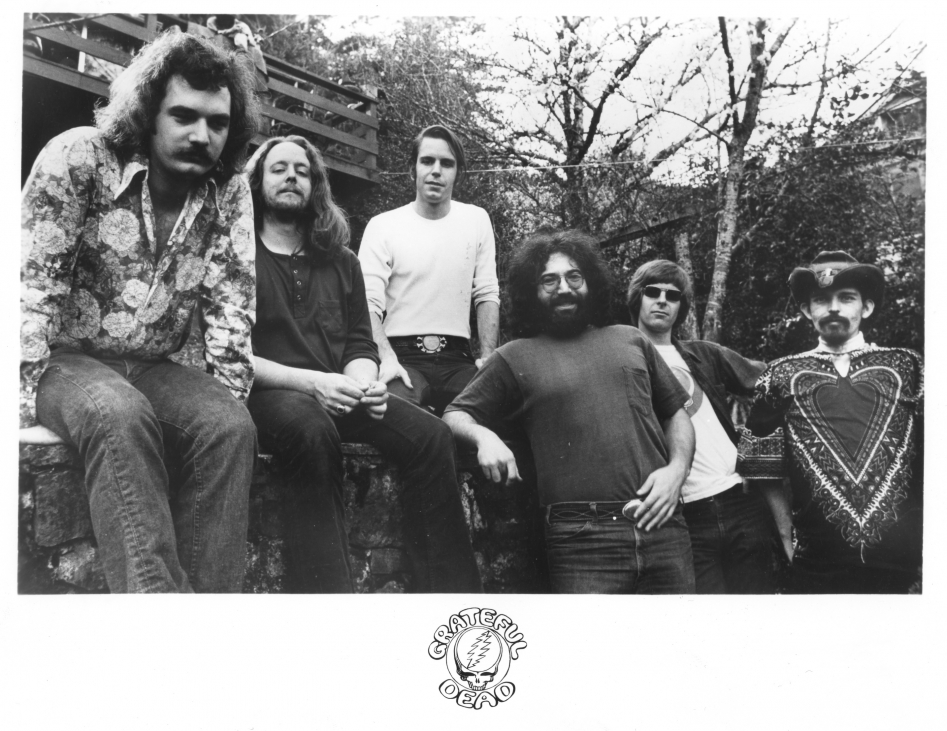
The Grateful Dead in 1972. First Warner Bros. Records publicity shot with new pianist Keith Godchaux. l. to r.: Bill Kreutzmann, Godchaux, Bob Weir, Jerry Garcia, Phil Lesh, Ron “Pigpen” McKernan (from the band’s website, used with permission)
The Grateful Dead that landed in London for their first shows at Wembley’s Empire Pool venue, to begin April 7, 1972, wasn’t the band it had been a year before. Drummer Mickey Hart, traumatized by the scandal of his father Lenny’s embezzlement of band funds, took a leave of absence starting in February 1971, not returning until October 1974. The group’s original drummer Bill Kreutzmann stepped up his game. As bassist Phil Lesh, reminiscing about their European debut, told the writer Blair Jackson, “I gotta say that Billy played like a young god on tour. I mean, he was everywhere on the drums, just kickin’ our butts every which way, which is what drummers live to do.”
McKernan almost didn’t make the shows. As he told the British magazine Disc, “I was in the hospital for three weeks, and out of the band for two and a half months. I had ulcers caused by drinking too much booze. I’m better now though, and passed the milk-only stage. I just don’t drink at all now, though I can eat what I like.” Pigpen was optimistic. Despite his best efforts to avoid alcohol and drugs, he died of a gastrointestinal hemorrhage at the age of 27 on March 8, 1973. Just a few weeks after the group returned from Europe, he’d played a final show with them at the Hollywood Bowl on June 17, 1972, subsequently cutting off contact, explaining to his bandmates, “I don’t want you around when I die.”
With Pigpen absent during 1971, the group brought in keyboardist Keith Godchaux, who played his first live show with them on Oct. 19, 1971, at the University of Minnesota. His wife Donna had more or less talked his way into a successful audition for the band, and after appearing with them for one song herself (a New Year’s Eve performance of a new Bob Weir song, “One More Saturday Night”), she was absorbed into the group as well, although unlike her husband she sometimes exited the stage when the band got into long-jam mode.
Just before they left London in May, Weir told journalist Keith Altham, “Perhaps one of the most satisfying things from our point of view on this trip has been the addition of our pianist Keith Godchaux—he has filled a gap in the band which always needed filling and we had almost given up hope of being able to. It might seem that he has a very natural and rhythmic feel which comes easy, but in fact it is the result of a lot of work and intuitive play on his part. We auditioned scores of pianists before we found Keith and the fact that we finally managed to turn up someone who has fitted so well into the band is nothing short of miraculous to me.” In Europe, having both McKernan and Godchaux available made the music soar.
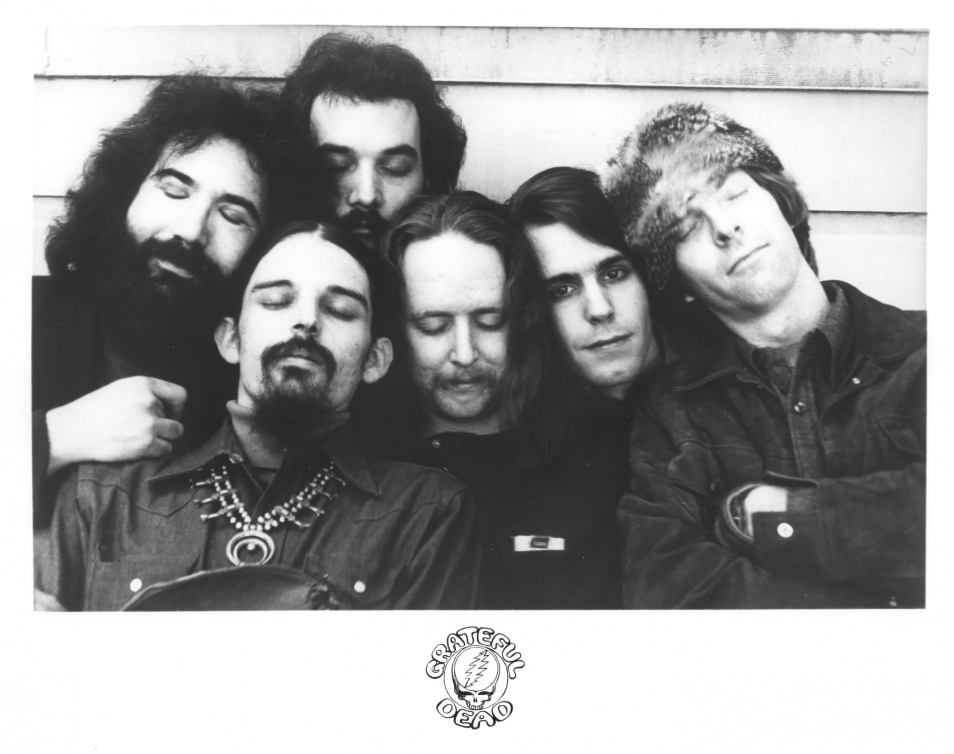
Grateful Dead 1972 (Warner Bros. Records publicity photo, from the band’s website, used with permission)
One other change had to do with Garcia’s guitar tone. As chronicled by guitarist and Dead Head Henry Kaiser, Garcia switched from his usual Gibson SG to a Fender Stratocaster as early as 1969, but it was Graham Nash’s gift in late 1970 of a Strat known as Alligator (“with a ’57 maple neck and ’63 swamp-ash body” and “really big, tall frets”) that altered Garcia’s sound, once further modifications in the wiring and the installation of an internal pre-amp were completed.
The hijinks of the 43 band members, sound and lighting techs, roadies, spouses and assorted hangers-on that invaded Europe have been well-documented in dozens of books, so let’s concentrate on the music as it was presented on Europe ’72. The original triple-LP, released that November, featured 15 songs (plus two linking jams given their own names, “Epilogue” and “Prelude”), the majority of which had not appeared on any previous Dead albums, live or studio.
The versions of “Cumberland Blues,” “China Cat Sunflower,” “I Know You Rider,” “Sugar Magnolia,” “Truckin’” and “Morning Dew” are all terrific, but whether they constitute the best performances of the tour can be debated. What’s most important about Europe ’72, and the thing that still makes it shine in the GD catalog, are those songs that never got a studio reading after its release. They all continued to grow on stage, to be sure, but there are no “definitive” studio recordings to compare to them.
The music for “He’s Gone” was composed by Garcia during a period when he was doing a run of shows with buddy Merl Saunders at the Keystone Berkeley club. Hunter said the lyrics started out being about Lenny Hart’s perfidy: “Rat in a drain ditch/Caught on a limb/You know better but I know him/Like I told you/What I said/Steal your face right off your head.” Hunter said the meaning of the song changed over the years, becoming something of an anthem for Pigpen’s big personality.
“He’s Gone” debuted April 17, 1972, in Copenhagen, but the album includes the May 10 version from Amsterdam. Taken at a speed that most later performances would back down to something more melancholy, it features Lesh’s authoritative work, and an extraordinary interplay between Weir’s rhythm guitar, Godchaux’s piano and Garcia’s lead. Garcia launches his crystalline solo at 3:50, just before a characteristically great “bridge” section, “Going where the wind don’t blow so strange/Maybe on some high cold mountain range/Lost one round but the price wasn’t anything/A knife in the back and more of the same.” (The track fades, so we don’t hear another new song, “Chinatown Shuffle,” next, unfortunately.)
Early in ’72, “One More Saturday Night” (heard here from a London show on May 26) had been recorded for Weir’s first solo album Ace, but wasn’t released until just about the time the group returned to the States. According to Dennis McNally’s A Long Strange Trip book, Weir rewrote Hunter’s original lyrics so extensively that Hunter took his name off it. (Weir also wanted to call it “U.S. Blues,” a title Hunter vetoed and used for another song, which had been known as “Wave That Flag.”)
Related: Our farewell to Bob Weir, who died in 2026
The twin-guitar intro signals a delightful ride, which develops in a Chuck Berry-ish mode that won’t let up. Kreutzmann is on fire, Godchaux shows off his New Orleans chops and Weir sings the tongue-twisting lyrics like a demon: “I went down to the mountain, I was drinking some wine/I looked up into heaven Lord I saw a mighty sign/Writ in fire across the heaven, plain as black and white/Get prepared, there’s gonna be a party tonight.”
Weir can’t just rave, he can croon like one of his heroes, Marty Robbins, as shown by his work in tandem with Garcia for the more mellow “Jack Straw,” which entered the Dead’s live repertoire on Oct. 19, 1971. Originally a Weir solo lead vocal, in Europe Garcia started trading lines, and it stuck that way, to great effect, for the next couple of decades. And how about those harmonies! This is from May 3 in Paris. (By the way, the character of “Jack Straw” is possibly a reference to the nickname of Wat Tyler, who’d led the Peasants’ Revolt of 1381 in Essex, England. The poet John Milton also referred to a “man of straw” who was without property or influence, which maybe fits this enigmatic petty thief from Wichita, who seems to be only committed to women, wine and the open road.)
Hank Williams’ “You Win Again” didn’t stay in Dead setlists very long. Garcia only sang it 23 times in a two-year period and put it on the shelf, mostly ceding the “cowboy” slot to Weir, who made “The Race Is On,” “El Paso,” “Mexicali Blues,” “Mama Tried,” “Me and My Uncle,” and others a special part of many shows. This perfunctory version is from London, the same May 24 show which yields Pigpen’s energetic take on the blues standard “It Hurts Me Too” (which somehow loses “It” on the album sleeve).
Versions by Tampa Red, Big Bill Broonzy and others existed long before Elmore James cut “It Hurts Me Too” for the tiny Chief label in 1957, but Pigpen, like most white hipsters, probably favored the James version, or the 1962 cut by Junior Wells. Garcia’s keening guitar is ghostly, as the group evokes a past-midnight honky-tonk from the git-go, even before the soulful lead singer takes control. The slow tempo only emphasizes the heartache, and when Pigpen wails his harmonica starting at 3:30, there’s nothing to do but surrender to a consummate performance from a guy who sounds like he knows a lot about suffering. Garcia says “me too” through his guitar.
“Brown-Eyed Woman” (a misprint of “women” corrected later) is from April 14 in Copenhagen, and is another high point of the Garcia-Hunter collaboration, one that aches to be on Workingman’s Dead. The chorus is a full-on sing-along for the audience, and the verses pack a novel’s worth of drama into small portions, referencing the passing of Prohibition in 1919 and the Wall Street Crash of 1929: “In 1920 when he stepped to the bar/he drank to the dregs of the whiskey jar/In 1930 when the Wall caved in/he paid his way selling red-eye gin…Daddy made whiskey and he made it well/Cost two dollars and it burned like hell.”
Playfully, Hunter invents a place called Bigfoot County, where shacks collapse under heavy snowfall and the narrator admits he “turned bad” because his mama didn’t discipline him as much as his seven brothers.
Hunter’s sly humor is also evident in the May 26 performance of “Ramble on Rose,” which he told Relix’s David Gans “is the closest to complete whimsy I’ve come up with. I just sat down and wrote numerous verses that tied around ‘Did you say?’” The evangelist Billy Sunday, broadcaster Wolfman Jack, serial killer Jack the Ripper, Frankenstein and his creator Mary Shelley, and “Crazy Otto,” the ragtime pianist Johnny Maddox, all get shout-outs.
Garcia sings at his absolute best, while Lesh, Kreutzmann and Godchaux gambol about him, competing to see who can generate more swing. As good as the verses and chorus are, the bridge section provides a reason for audiences to cheer for the next 20 years: “I’m gonna sing you a hundred verses in ragtime/I know this song it ain’t never gonna end/I’m gonna march you up and down the local county line/Take you to the leader of the band.”
“Mr. Charlie” is another jolly number, perhaps based in some darker American history, as “Mr. Charlie” is Black slang for hostile white folks. Written by Hunter and McKernan, and a jumpy, funky showcase for the whole band, it entered the repertoire July 31, 1971, and after Pigpen sang it at all four shows at the London Lyceum to conclude the European trek, it unfortunately went away until revived by post-Jerry configurations of the band, in honor of Mr. Pen.
It’s a tough call, but is “Tennessee Jed” the best song the Dead never cut in the studio? The loping, off-kilter rhythm is nonpareil, the cascading guitar that underpins the structure is one of Garcia’s peppiest riffs, the chorus is full of joy, and the lyrics in all six verses keep the surreal jokes coming, with a talking dog and slot machine displays agreeing the protagonist should “head back to Tennessee, Jed.” Like “Truckin’,” it’s a defiant manifesto for outsiders, hedonists and wanderers: “Drink all day and rock all night/Law come to get you if you don’t walk right.”
Related: A 1976 interview with Jerry Garcia
Possibly inspired by Uncle Dave Macon’s “Old Plank Road” (and certainly by the title character of a 1940s radio show aimed at young boys like Robert Hunter), it came to Hunter when he was intoxicated one night in Barcelona. He wrote in his Box of Rain book of lyrics, “Topped up on vino tinto, I composed it aloud to the sound of a jaw harp twanged between echoing building faces by someone strolling half a block ahead of me in the late summer twilight.”
Upon release in November 1972 (and reportedly after some overdubs and fixes to the tapes engineers Betty Cantor and Bob Matthews brought home), Europe ’72 split the listening public and rock critics. The word “boring” occurs in a number of high-profile reviews, but it became a bona fide hit with existing fans and those finally convinced to “get on the bus.” The triple-LP peaked at #24 in Billboard, and the “Sugar Magnolia” single just scraped into the Hot 100. For Warner Bros., there was “nothing left to do but smile, smile, smile,” in the words of “He’s Gone.”
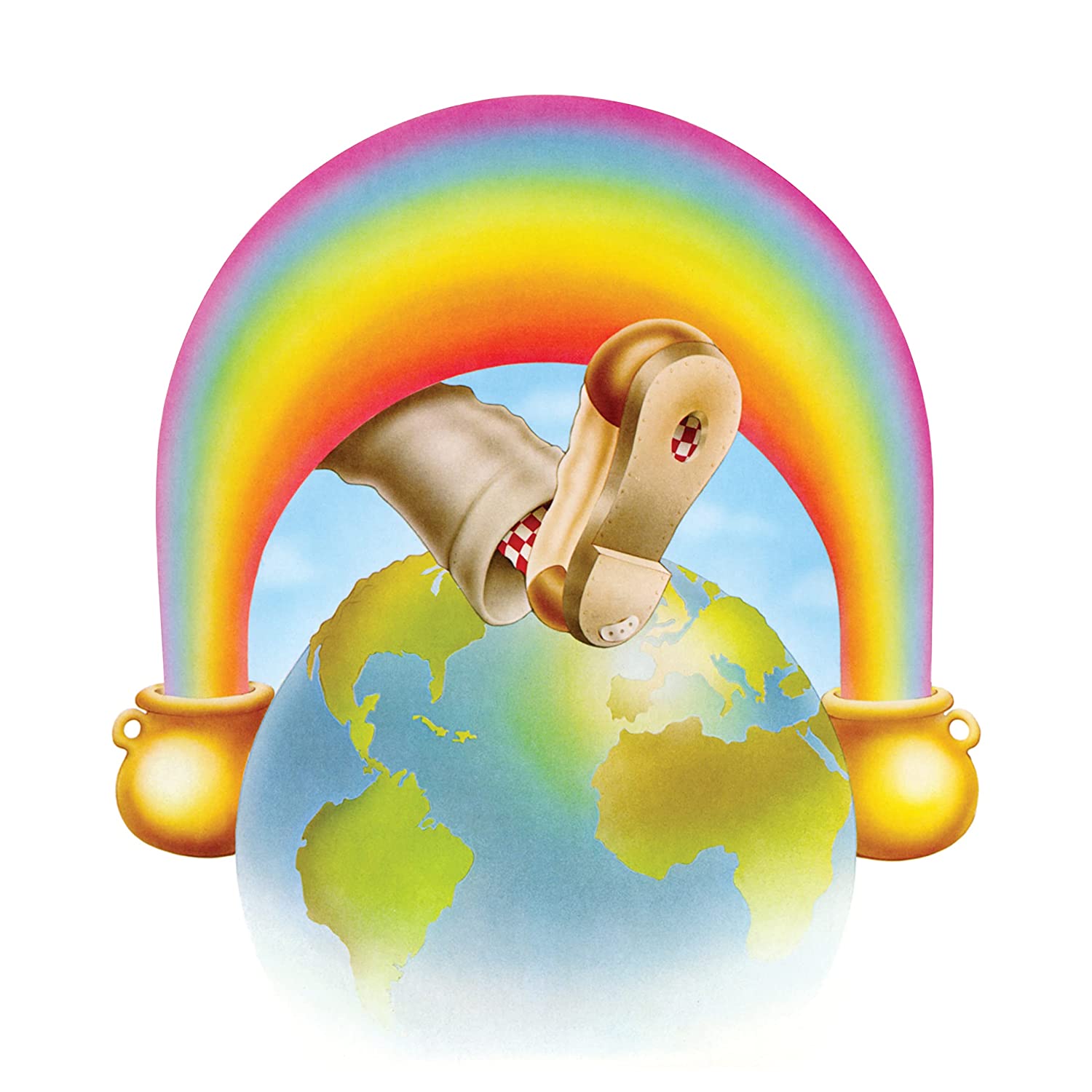
The whimsical artwork by counterculture veterans Alton Kelley and Stanley Mouse echoed the freewheeling music. On the front cover, a well-worn shoe strides across the globe under a rainbow emanating from two pots o’ gold, and the back illustrates a contemporary dumb joke (goofball kid strikes his forehead in a “doh” gesture, forgetting he’s holding an ice-cream cone). The album title that was rejected was “Europe on $5,000 a Day.” What, us worry?
The ambivalent reaction to Europe ’72 mirrored an aspect of the tour itself, which saw the huge traveling entourage dividing into comically warring factions as they drove thousands of miles to unfamiliar venues. As Hunter told Blair Jackson, “The Bozo bus was for people who wanted to be tripping out and raving all the time. The Bolo bus was people who preferred to sink totally into their own neuroses, or just sleep.” It can be argued that no matter how the track list fell, it couldn’t satisfy both constituencies.
The ’72 tour so fascinated Deadheads that when Rhino Records finally released a 73-CD box of the whole enchilada in 2011, the 7,200 copies of the limited edition sold out in four days. As the saying goes, first asserted in the original album’s wacky liner notes, “There is nothing like a Grateful Dead concert.”
But let’s give Pigpen, talking to Disc in 1972, the last word: “Coming to Britain is just an opportunity for us to see Europe. I don’t personally care if I come home with no money, as long as we cover what we put out. We’ve been trying to have the ticket prices put down for the concerts here because we don’t like to burn people. I don’t mind having more dollars in my pocket but that’s not primarily our reason for being here.”
Listen to an outtake from Europe ’72, “Greatest Story Ever Told,” with Donna Jean Godchaux on vocal harmonies
The album, and other Dead stuff, are available in the U.S. here, in Canada here and in the U.K. here.



1 Comment so far
Jump into a conversationVery interesting story about the band & there songs & how they came about lots of good memories brought back from the 80s with all my buds back then all jumping in my van & going to shows