
Talking Heads’ David Byrne—The Lost Tapes: A Vintage 1979 Interview
by Ben Brooks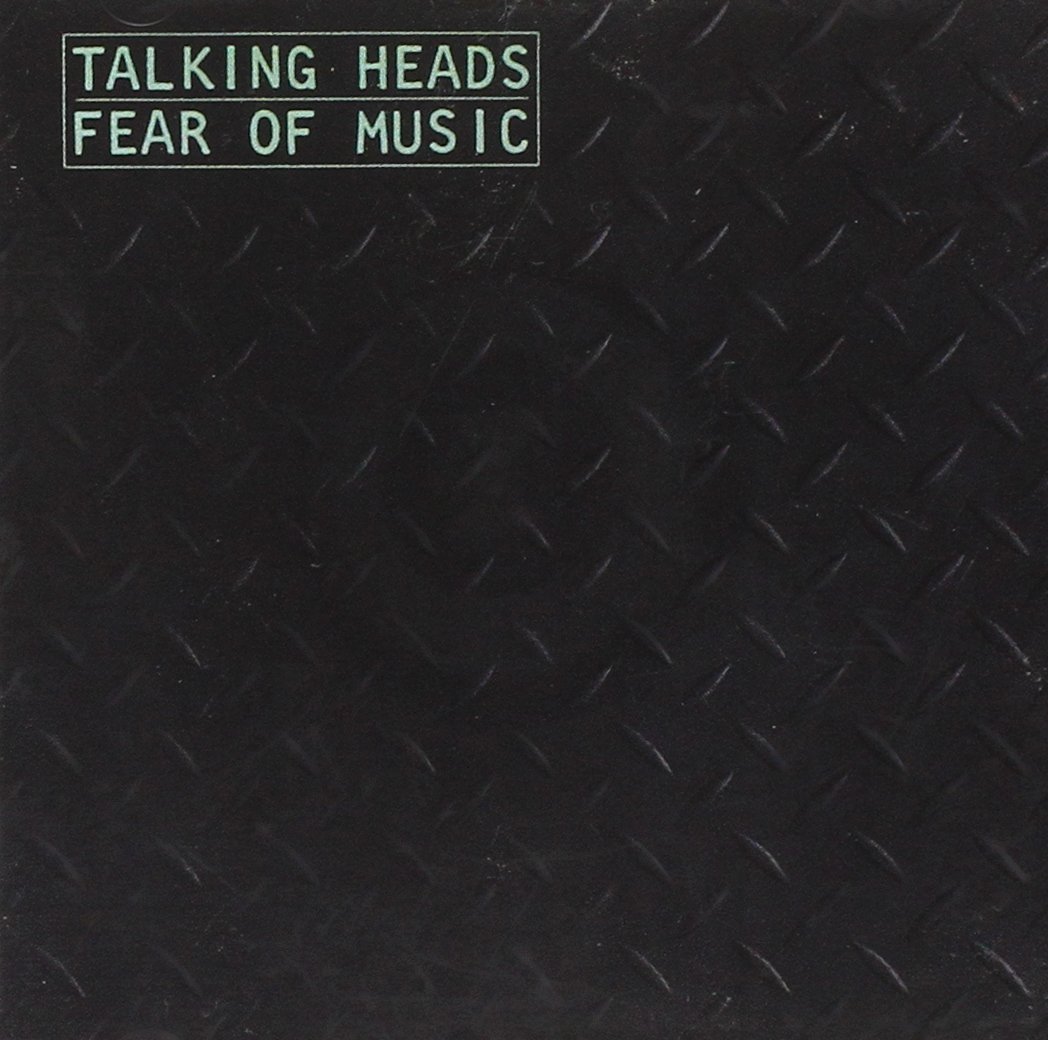 Nervously chewing on ice from a plastic cup, eyes darting anywhere but into mine, David Byrne didn’t exactly radiate rock star swagger when we met on September 27, 1979, inside the Burbank offices of Warner Bros. Records. Dressed like a slightly rumpled college kid—button-down shirt, pen in the pocket, hair slicked back with almost surgical care—he seemed more like an anxious grad student than the leader of one of the most forward-thinking bands in America. At first, the conversation stuttered. Byrne fidgeted, paused, chewed ice. But, despite the awkward vibe we eventually clicked and Byrne opened up.
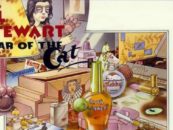
Just days earlier, Talking Heads had lit up Hollywood’s Stardust Ballroom, and the night of my interview they were set to share a bill at the Greek Theatre with the B-52’s—two art-school misfit bands redrawing the edges of what rock music could be. Talking Heads’ new album, Fear of Music, was barely a month old and already unsettling expectations: twitchy rhythms, anxious grooves, songs that sounded wired, urban and faintly paranoid—like the inside of Byrne’s head.
Starting with the groundbreaking Brian Eno collaboration, My Life in the Bush of Ghosts, a record that helped sketch the blueprint for sampling culture long before it became ubiquitous, Byrne made his first foray into many diverse and expansive solo excursions to come.
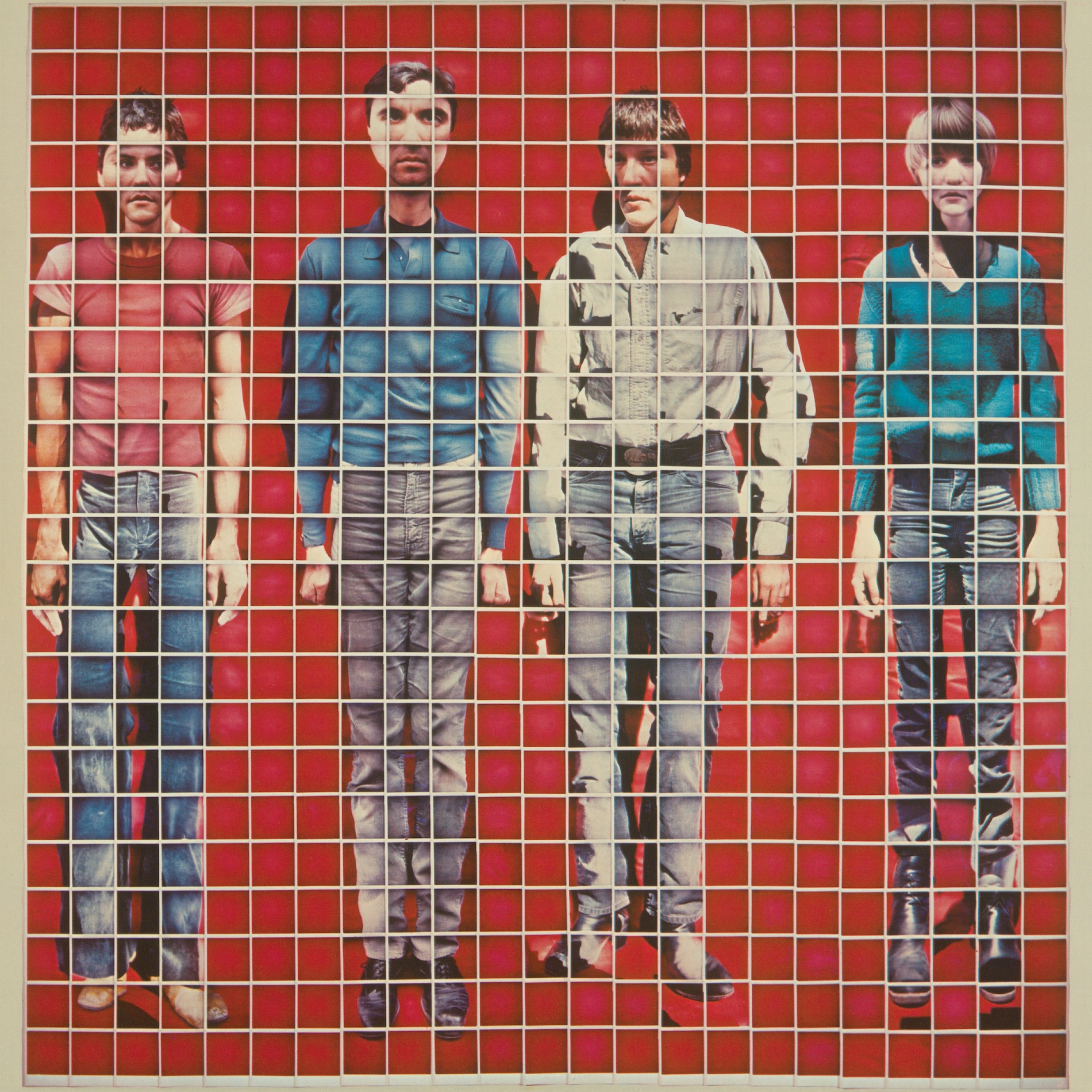
Meanwhile, Talking Heads albums like Remain in Light would fracture and rebuild funk, punk and world music into something entirely new, yielding songs like “Once in a Lifetime,” a dislocated sermon for the modern age. There would be hits—“Burning Down the House” chief among them—and the electrifying 1984 concert film Stop Making Sense, directed by Jonathan Demme, which captured Byrne at his most kinetic and enigmatic.
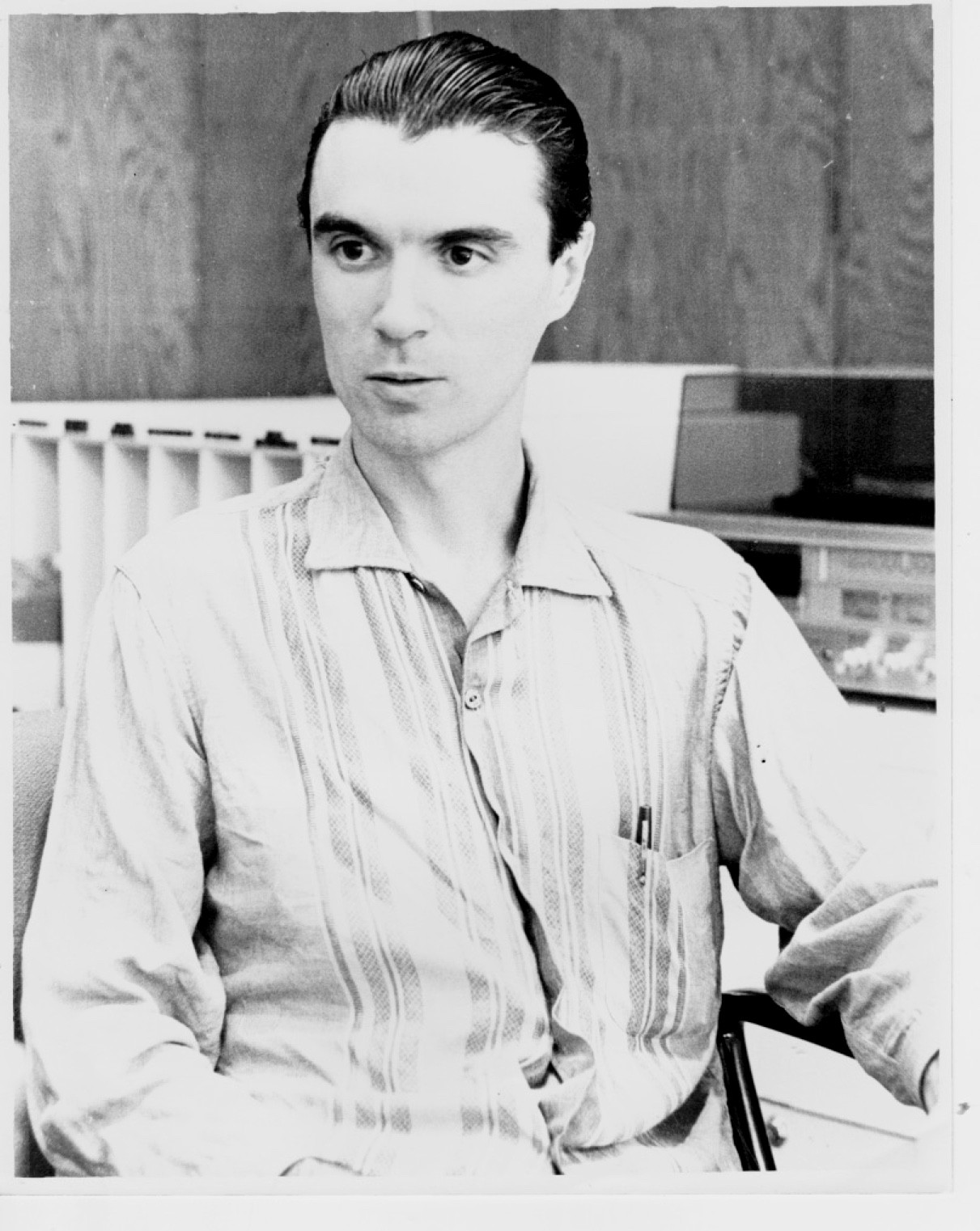
David Byrne, late September, 1979. (Photo: Ben Brooks Archives; used with permission)
But on that late-September afternoon in 1979, all of that and much, much more lay ahead. For now, Byrne was simply a curious mind in motion (years later he self-diagnosed as having mild Asperger’s syndrome)—restless, analytical, and slightly ill at ease—trying to articulate the strange, exhilarating music he was helping bring into the world.
Ben Brooks: I’m curious how Talking Heads got started. Were you essentially a starving artist before having success with Talking Heads?
David Byrne: Yeah, more or less. I wasn’t starving. But I just had a regular day job.
What were you doing?
For a while I worked as a theater usher. And for a while I worked as a stock man. I was a dishwasher for a while.
Was Talking Heads a success right off the bat?
No, it was slow. Same with all the bands of that time. We were playing to 10 or 20 people. And then the next time, 10 more. Then the next time, 10 more than that. That’s pretty much the way it’s been ever since we started. Just a gradual build-up, which seems to be nice and reasonable.
How long was the band together and performing at clubs before you got signed?
A little over a year, I think. And then we waited. It was another six months, at least, before we started recording.
Is the band pretty democratic?
I don’t tell other people what to do. But, it’s not democratic. I don’t think democracy works. But everybody has a voice.
So if democracy doesn’t work, what does?
I don’t know exactly. Something else, but I don’t think democracy works. For instance, I think a democratically run business can run into problems very quickly. You just can’t make decisions quick enough.
Who makes the decisions for Talking Heads? Do you?
That’s what I mean. I don’t go around saying, “I do this and you do that and we do this.” I write songs, but everybody has a voice. I don’t like to talk about it too much because then it doesn’t make things easier for working in the band.
You’ve been playing music all your life and playing in different bands. Was Talking Heads a concept before it was formed?
We arrived at what we are sort of by a process of elimination. As we went along. We said, well, we’re not going to do this or that. We’re not going to do drum solos, wear clothes like such and such, and all that. And that just sort of left us with what we are. We didn’t decide what we were going to be.
Did you go through a lot of members?
No, no, no. We started off as three. And then after a while we decided we might like somebody to play guitar and keyboards—what Jerry [Harrison] does. So, we auditioned some people and after a while we arrived at Jerry.
Do you feel that you’re part of the new wave that started to happen in the wake of punk?
There wasn’t any movement when we started. It was just a couple of bands playing in a club. Then, later on, people started calling it punk or new wave or whatever. I think we felt like we had some kind of feelings in common in terms of our attitudes toward audiences and things like that. But musically, we felt we were pretty different from a lot of the other bands.
Have you been singing for a while?
I’ve been singing for about five years or so. Not all the time, though.
In the same sort of style that you sing with Talking heads?
Yeah, I guess so. I don’t know. I never listened to it that much. I just sing in my normal voice. I tried not to sound like whatever the preconceived idea was. I didn’t want to sound like Mick Jagger. I think I’ve gotten a little better over time.
What do you think about people calling your music neurotic?
I think that might be the case. I can’t say they’re absolutely wrong. I think they’re only seeing one aspect of it though.
What are some of the other aspects?
I can’t talk about it. I think kids in the audience have no trouble understanding the music. But I’m not very good at putting it into words. I think people that hear it have no trouble with it.
What inspired “Psycho Killer”?
I’d never written a song before, and I wanted to see if I could write one. I thought I’d write one with an Alice Cooper-type subject, but in a more introspective style. So now I’ve stopped writing in that style and started writing songs that are more believable, to me anyway.
Were you surprised when that one took off?
Yeah, because I didn’t think it sounded that good. I thought it was an OK song. But, as far as that album [Talking Heads:77], there were other songs that sounded better. That’s the way it goes.
What was your favorite tune on Talking Heads:77?
I thought “No Compassion” sounded the best.
And what do you like on Fear of Music?
My favorites are “Animals,” “I Zimbra,” “Electric Guitar” and “Air” and a couple of others. Probably nothing that would be a single.
Punk to me is cynical, rebellious, back to the basics. Not intellectual. Your music is sort of the same way too. Yet I have this image of Talking Heads as being an intellectual, arty band. Do you have a concept and artistic vision?
It’s pretty much intuitive, although I think about it and I get excited by ideas. A lot of the decisions are intuitive, but they’re probably based on some idea or some concepts I’ve been excited about.
On the new album I don’t hear any love songs. What inspired a song like “Animals”?
Yeah, I thought love songs were too easy to write. I thought I should challenge myself and write songs about other subjects. And if I pick a subject like animals, then the easy way would be to write about how cuddly some animals are. Or, how animals are going to show us the right way to live in harmony with one another. But it’s more of a challenge to write about the opposite point of view. So whatever it is, you just take the opposite point of view and try to make that believable. And that sometimes can make an interesting song.
I guess that’s what I mean by artistic or conceptual.
“Animals” is one song where I wrote the words and sang them after all the music was recorded. I can’t play my guitar part and sing at the same time. It’s a disappointment for life! But I’m glad I did it that way on the record because I’d been worried that some of my lyric writing and vocal phrasing might be limited by what I can play and sing on guitar at the same time. So I thought, oh, if I can write lyrics separately like that, then the words might have a slightly different relationship to the music than some of the other songs. Something interesting might happen.
I had a discussion with someone about the lyrics of “Artists Only,” from More Songs About Buildings and Food. It’s very angsty and self-doubting.
Our friend from RISD (Rhode Island School of Design), Wayne Zieve, wrote the words to that one. So I can’t tell you anything about it. I asked him the last time I saw him and he couldn’t tell me anything about it. I don’t know what the guy was thinking. I think he was sincere when he wrote the words. I think he was sort of desperate. He wanted to have his paintings in galleries and stuff like that.
A true frustrated artist!
We invited him on stage to sing the song in Chicago. I even wrote out the words for him so he could remember them. But he forgot them all and started ranting and raving about all these fucking gallery owners and all this shit. I take my painting slides around and nobody… blah, blah, blah. Really ranting and raving about all this stuff.
Was it embarrassing or was it just sort of an event?
Oh, I thought it was great. I think his parents were in the audience so he felt a little funny afterwards. I think he had gotten real nervous before and so he drank a bit.
Related: Our review of Tentative Decisions, a collection of early Talking Heads
There was a lot of response to Talking Heads’ version of Al Green’s “Take Me To the River.” A lot of people thought what is this? Why are they covering this? And then it was a hit song. How did you decide to do that tune?
We had done a few cover songs and that one was really popular. And people in the audience would always say, “Oh, you got to record this one!” When we did it, I thought it was a real off-the-wall song. It’s almost a gospel number. But people seem to like it, obviously, and seem to like it on the album too. So there it went.
How do you write? Do you pick up a guitar?
No, I have a different process for every song. Some songs are words and letters that I put to music. Some of them are words that I just plop on top of an already existing arrangement that the band has done. Sometimes, the whole song is done and recorded and then I write words to that. So it’s all different ways. That way I feel like I won’t get stuck in a formula.
Is writing a long process for you? Is it something that comes together real fast?
Sometimes the ideas come quickly, but I think they couldn’t come without some sort of gestation period. I think it could take months for the ideas to simmer and then all of a sudden it’s taking shape. Wow I could make a song out of that. But actually putting them together takes only about two or three months.
I think the newest album, Fear of Music, is the best one so far.
I think it sounds best on the turntable, whatever that means. It just sounds clear, organized. It sounds like a better record.
Why is that?
There was no good reason for that. We didn’t take any more care with the production of anything. The recording technique isn’t any better. If anything, it’s sloppier. But it came out sounding crisper or something.
I felt that there were things about the second album, More Songs About Buildings and Food, that I didn’t like compared to the first one. There was this dragginess to it and I thought, oh, maybe it’s Brian Eno. Maybe Eno’s sort of slowing things down and making it heavy. But then I think Fear of Music is really, really good.
We would have made a record that sounded like the second even if Eno wasn’t involved. We wanted to make one that sounded different than the first one. I feel that there’s no right or wrong way to record a particular song. You could do about seven different versions and each one would be valid and people would have their favorites.
Talking with Robert Fripp a few weeks ago, he told me that he thought that Fear of Music was going to be the best album of 1980.
I wasn’t even there. He comes in and you roll the tape and he just plays along without even listening to it beforehand. He’s really good at coming up with stuff. And then he goes, “That’s it.” He packs up his guitar. He does it the same way when he works on other people’s things. But we’ve worked together on some of Eno’s stuff more recently that was a little more formal.
And did he spend more time on that?
Yeah, there was a little more discussion about, why don’t you play this and I’ll do this part or oh, this bit sounded real nice. I hate talking about guitars and guitar parts.
You have a pretty unique guitar style yourself. It’s so rhythmic.
I think that’s because of when I wasn’t in a band. I had to make noises on guitar, like drums. I’d hit my finger on strings and stuff so that it sounded more rhythmic. I never learned. I have yet to learn how to play lead guitar.
Talking Heads isn’t really a lead guitar band.
No.
Was your musical experience before Talking Heads in typical top 40 or R&B bands? What type of music? Or was it always sort of experimental?
I loved pop music and I loved weird stuff too. Stuff that’s experimental, for lack of a better word, is directed toward a mindset. I don’t think experimental and popular have to be mutually exclusive.
In other words, some music may seem experimental, but in terms of its accessibility to the people, it might be just the same as obvious commercial music?
Yeah, I think it can still be popular. Not always, but it’s possible.
I think Talking Heads have proved that. Don’t you feel like you’ve been able to gain popularity with more experimental music than the usual pop fare?
We’re getting there. I don’t mean as far as success. I’m happy with our success. People still see that dichotomy, one or the other. If we become wildly successful, they’re going to say we’ve sold out. Have we changed a bit? We’ve changed, but we haven’t changed in terms of our music being experimental.
Do you ever get tired of doing the tunes over and over again every night?
Not too much. It’s not too bad. The only drawback for me with touring is I can’t do other things as well. I can’t get involved in any other projects or any other interests.
That must be tough. Some people say they can write on the road.
Yeah, I can’t do that. Maybe I should ask them how they do it.
But, you do enjoy the touring?
Yeah, it’s fun. You get to travel and you get to go to places you would not likely visit on your own, like Boise (Idaho) and places like that. We’re going there. I mean, you wouldn’t go there for a vacation.
Tickets to see David Byrne on tour can be purchased here. Talking Heads’ recordings, including many expanded editions, are available in the U.S. here and in the U.K. here.




No Comments so far
Jump into a conversationNo Comments Yet!
You can be the one to start a conversation.