
Rockin’ All Over the World: 13 Great John Fogerty Solo Songs
by Shrinivas Kodape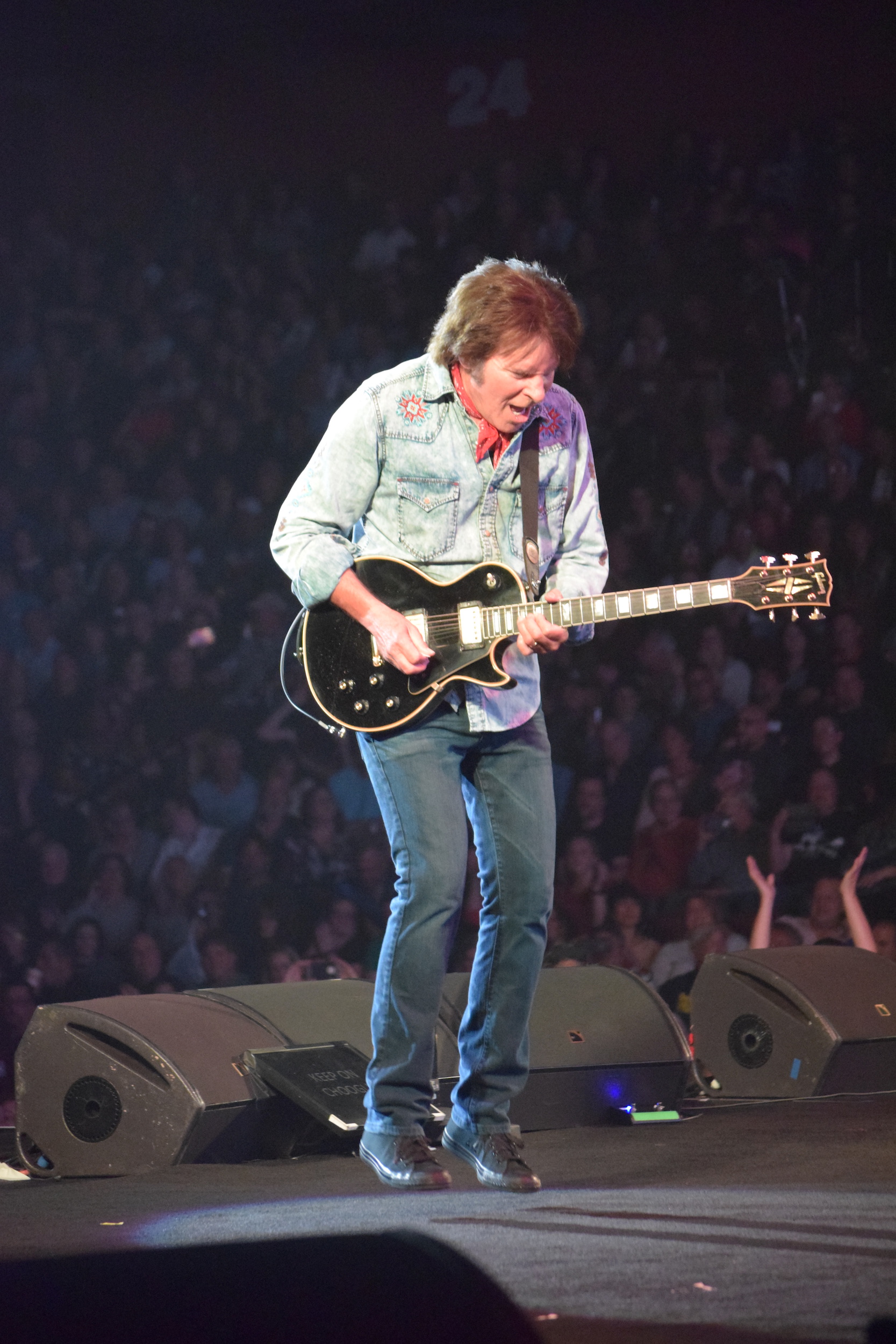
John Fogerty performing in 2018 (Photo: used with permission)
A legendary catalog with Creedence Clearwater Revival has often cast a long shadow over everything that came after, but plenty of gold remains once you step outside that celebrated quartet’s work. From country and rockabilly to trademark swamp-rock, roots music and sharply observed social commentary, John Fogerty‘s post-CCR output proved that the unmistakable vocal rasp, stinging Telecaster twang and instinct for concise American songwriting remained undiminished.
Here are 13 standout tracks from those years, arranged in chronological order.
“Jambalaya (On the Bayou)” (The Blue Ridge Rangers, 1973)
Hank Williams’ country standard was an obvious choice to kick off this inaugural post-band project. Credited to a fictitious outfit, the LP was an all-covers affair, with the multi-instrumentalist handling every instrument in the studio. Released as a 45, this buoyant bayou stomp made it to #16 on the Hot 100, affirming that the deep roots foundation that had anchored his previous work was alive and kicking.
“Hearts of Stone” (The Blue Ridge Rangers, 1973)
While the debut leaned heavily into country traditions, it also dug deep into the golden era of vocal R&B and doo-wop with this sharp reading of the Rudy Jackson/Eddy Ray classic—originally popularized in 1954 by the Jewels and the Charms. Stripping away the street-corner vocal arrangement in favor of punchy acoustic strumming and twang, the single rose to #37 on the Hot 100.
“Almost Saturday Night” (John Fogerty, 1975)
Few cuts have ever bottled the pure release of the impending weekend quite like this. Appearing on the first release bearing his own name rather than a rural pseudonym, the track is a model of economy: three minutes of crisp power chords, joyous propulsion and infectious hooks. Dave Edmunds famously embraced its rockabilly pedigree for a 1981 cover hit, but the original cut remains the definitive rush.
“Rockin’ All Over the World” (John Fogerty, 1975)
Another gem tucked inside that 1975 LP, this unabashed anthem of four-on-the-floor guitar boogie soon took on a massive life of its own. British roadhouse favorites Status Quo retooled it into a U.K. #3 juggernaut in 1977 and famously opened the historic Live Aid concert at Wembley Stadium with it in July 1985. The original is leaner and twangier, driven by pure roadhouse drive.
“The Old Man Down the Road” (Centerfield, 1985)
When the singer-songwriter re-emerged after a nearly decade-long recording hiatus, he didn’t hedge his bets. Powered by an ominous, slinking minor-key riff and syncopated handclaps, this lead single roared straight into the Top 10 (#10 pop, #1 Mainstream Rock). It also infamously triggered a bizarre, headline-grabbing lawsuit by Fantasy Records owner Saul Zaentz, who claimed the melody plagiarized Fogerty’s own Creedence classic “Run Through the Jungle”. The composer brought an electric guitar into the courtroom, demonstrated his creative signature live to the jury and walked away victorious.
“Big Train (From Memphis)” (Centerfield, 1985)
First issued as the B-side to “The Old Man Down the Road” before receiving its own single release (peaking at #38 on the Mainstream Rock chart), this locomotive rocker serves as an explicit love letter to Sam Phillips, Sun Records and the birth of rockabilly. Referencing Elvis Presley (“Like no one before, he let out a roar/And I just had to tag along”), the track features a driving slap-bass rhythm and an exuberant vocal tribute to the Southern sounds that ignited a young songwriter’s imagination.
Related: John Fogerty talks about writing “Proud Mary”
“Rock and Roll Girls” (Centerfield, 1985)
Showing off a lighter, sunny pop sensibility, this breezy tune borrows a lyrical nod and rhythmic swing from the Rockin’ Rebels’ 1962 instrumental “Wild Weekend.” Reaching #20 on the Hot 100, the track features an unusual treat: a ripping, raspy tenor saxophone solo played by Fogerty himself with abandon.
“Centerfield” (Centerfield, 1985)
Rock ’n’ roll and baseball have rarely crossed paths as seamlessly as they do on this joyous fable. Built around a handclap beat and chucking rhythm guitar—replete with callouts to Willie Mays, Ty Cobb and Joe DiMaggio—it instantly transcended standard pop radio. An indispensable fixture in ballparks nationwide, it ultimately earned a rare, formal honor at the National Baseball Hall of Fame induction ceremony in Cooperstown in 2010.
“Change in the Weather” (Eye of the Zombie, 1986)
The 1986 follow-up favored darker lyrical themes and slicker ’80s keyboard production that alienated some purists. But this cut was the clear standout link to the classic swampy sweet spot. Anchored by a bruising guitar lick and an insistent backbeat, it proved that even in the midst of synthetic mid-’80s trends, the signature grit remained undiluted.
“Southern Streamline” (Blue Moon Swamp, 1997)
Following another lengthy silence, 1997 brought a major creative resurgence with an LP that went on to win the Grammy Award for Best Rock Album. Issued as the second single, the cut is pure bluegrass-meets-rock adrenaline. Bolstered by blazing chicken-picking guitar and the soaring high harmonies of the Lonesome River Band, it’s a breathless celebration of the iron horse rolling through the South.
Related: Our review of Fogerty’s 80th birthday concert
“Hot Rod Heart” (Blue Moon Swamp, 1997)
Classic American rock tropes don’t get much simpler than fast cars, highway asphalt and roaring engines. The arrangement wastes zero energy on studio trickery; it’s a straightforward, windows-down cruiser driven by a chugging groove and genuine enthusiasm, demonstrating an enduring knack for uncomplicated road anthems.
“Deja Vu (All Over Again)” (Deja Vu All Over Again, 2004)
As the war in Iraq escalated in the early 2000s, the veteran songwriter looked back at the tragedy of the Vietnam era that had once inspired blistering protest anthems like “Fortunate Son.” But where those ’60s cuts raged with furious volume, this acoustic title track takes a melancholy, reflective route. Framed around Yogi Berra’s famous aphorism, it stands among the most poignant and restrained anti-war ballads in the entire catalog.
“Creedence Song” (Revival, 2007)
For decades, lingering legal rancor and bad blood made the old group’s legacy a painful, off-limits subject. But on 2007’s aptly titled comeback, the past was finally met with a grin. Kicking off with a quintessential bayou-chug rhythm, the lyrics directly celebrate the unmistakable sound that started it all: “You can’t go wrong if you play a little bit of that Creedence song.” It’s joyous, self-referential and a welcome embrace of an enduring musical identity.
Fogerty’s solo albums are available in the U.S. here, in Canada here and in the U.K. here.



No Comments so far
Jump into a conversationNo Comments Yet!
You can be the one to start a conversation.