
 When people talk about the music of 1967, the conversation often centers on such highlights as Sgt. Pepper’s Lonely Hearts Club Band, Surrealistic Pillow, Are You Experienced, The Doors and the rest of the established Summer of Love canon. But AM radio painted a much wider picture, filled with adventurous singles that mixed harmony-pop, garage-rock, blue-eyed soul and orchestral experimentation.
Some of these records were genuine hits, others barely dented the charts, yet all of them capture a side of 1967 that tends to get lost when the year is reduced to psychedelic landmarks. These 12 songs reveal just how diverse, unpredictable and radio-friendly rock and pop could be during one of music’s most celebrated years.
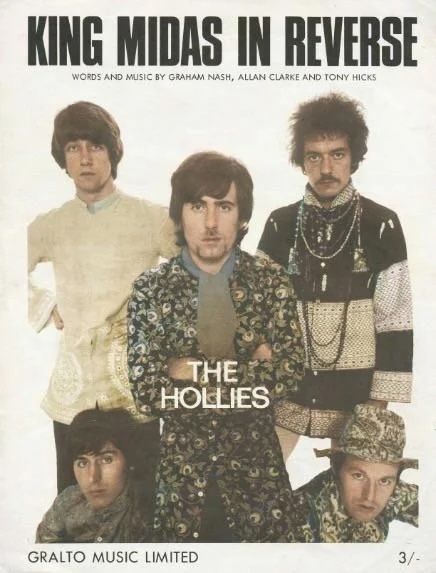
The Hollies—“King Midas in Reverse” (Dear Eloise/King Midas in Reverse)
Graham Nash steered the Manchester hitmakers into unusually ambitious territory with orchestral textures and a decidedly melancholy mood. The gamble paid off artistically, even if it stalled commercially, peaking at #18 in the U.K. and #51 on the Hot 100.
The Buckinghams—“Mercy, Mercy, Mercy” (Time & Charges)
Joe Zawinul’s jazz composition was transformed into a crisp Chicago pop-soul workout complete with punchy brass and a contagious groove. The single became another major success for the band, reaching #5 on the Hot 100 in 1967.
Every Mother’s Son—“Come On Down to My Boat” (Every Mother’s Son)
Bright guitars and buoyant harmonies made this one of the summer’s most irresistible slices of sunshine pop. The record rode that carefree energy all the way to #6 on the Hot 100, giving the New York quintet its biggest national hit.
The Music Explosion—“Little Bit O’ Soul” (Little Bit O’ Soul)
Fuzz bass, pounding drums and a shout-along refrain turned this into a garage-rock staple that still sounds wonderfully unruly. Audiences responded immediately, sending it to #2 on the Hot 100 during the summer of 1967.
The Royal Guardsmen—“Snoopy’s Christmas” (Snoopy and His Friends)
Part of the group’s improbable run of Snoopy novelty tracks, this seasonal follow-up balanced cartoon whimsy with surprisingly sturdy pop craftsmanship. The martial beat and memorable chorus helped carry the record to #1 on Billboard’s Christmas chart, though it’s an overlooked holiday track.
The Five Americans—“Western Union” (Western Union)
A sharp combo-organ riff and telegraph-inspired rhythm gave this Dallas group one of the most distinctive sounds on AM radio. The quirky concept connected strongly with listeners, pushing the single to #5 on the Hot 100.
The Four Seasons—“Beggin’” (New Gold Hits)
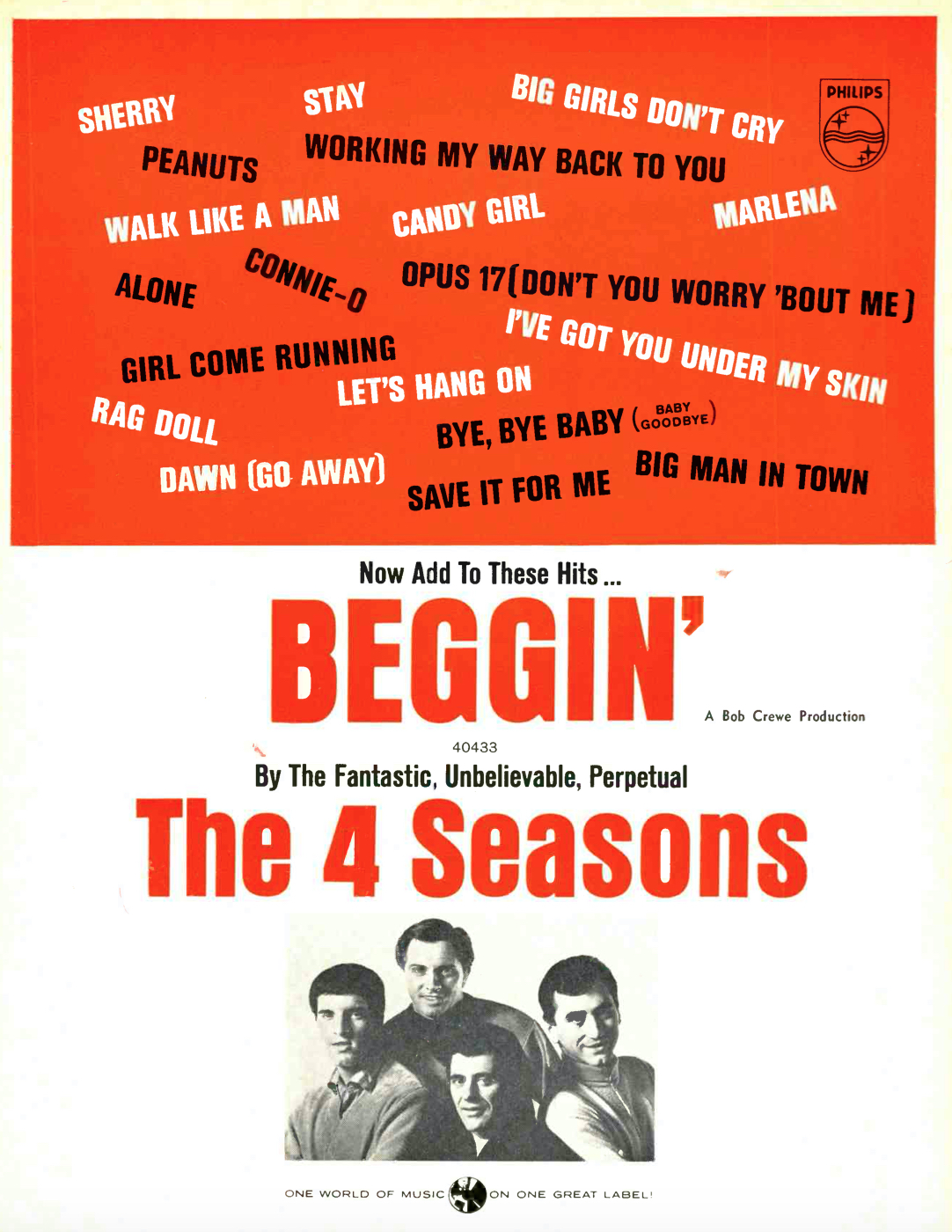
This ad for the single appeared in the Feb. 18, 1967 issue of Record World.
A relentless bass line and one of Frankie Valli’s most urgent vocals gave this blue-eyed soul performance a tougher edge than many of the group’s earlier harmony hits. Although it reached #16 on the Hot 100, it has long lived in the shadow of the quartet’s bigger chart-toppers.
? and the Mysterians—“Can’t Get Enough of You Baby” (Action)
The Farfisa organ attack that powered the band’s breakthrough remained intact, but the approach was smoother and more melodic this time around. The record became another national hit, climbing to #56 on the Hot 100 in 1967.
Tommy James and the Shondells—“Mirage” (I Think We’re Alone Now)
A deceptively sophisticated melody and subtle studio flourishes hinted at the more adventurous direction the group would soon pursue. Overshadowed by a string of massive hits, it nevertheless reached #10 on the Hot 100.
Whistling Jack Smith—“I Was Kaiser Bill’s Batman” (Around the World With Whistling Jack Smith)
A jaunty military march and virtuoso whistling turned this quirky British novelty track into an unexpectedly memorable instrumental hit. Stripping away the rock tropes of the era for a music-hall bounce, the record proved to have genuine international appeal, reaching #20 on the Hot 100.
Related: Want to know more about Whistling Jack Smith and Kaiser Bill?
Sally Field—“Felicidad” (Star of The Flying Nun)
Long before becoming an Academy Award-winning actress, the former Gidget star ventured briefly into sunshine-pop territory with light Latin seasoning and effortless charm. The recording remains a delightful period curiosity that captures the brighter, breezier side of 1967 pop, though charting at just #94.
The Staple Singers—“For What It’s Worth” (For What It’s Worth)
Buffalo Springfield’s protest anthem was recast as a gripping gospel-soul statement built around Pops Staples’ tremolo-drenched guitar and Mavis Staples’ commanding lead vocal. The transformation gave the song a deeper sense of urgency and showed how seamlessly roots music could engage with the social concerns of the rock era.





No Comments so far
Jump into a conversationNo Comments Yet!
You can be the one to start a conversation.