
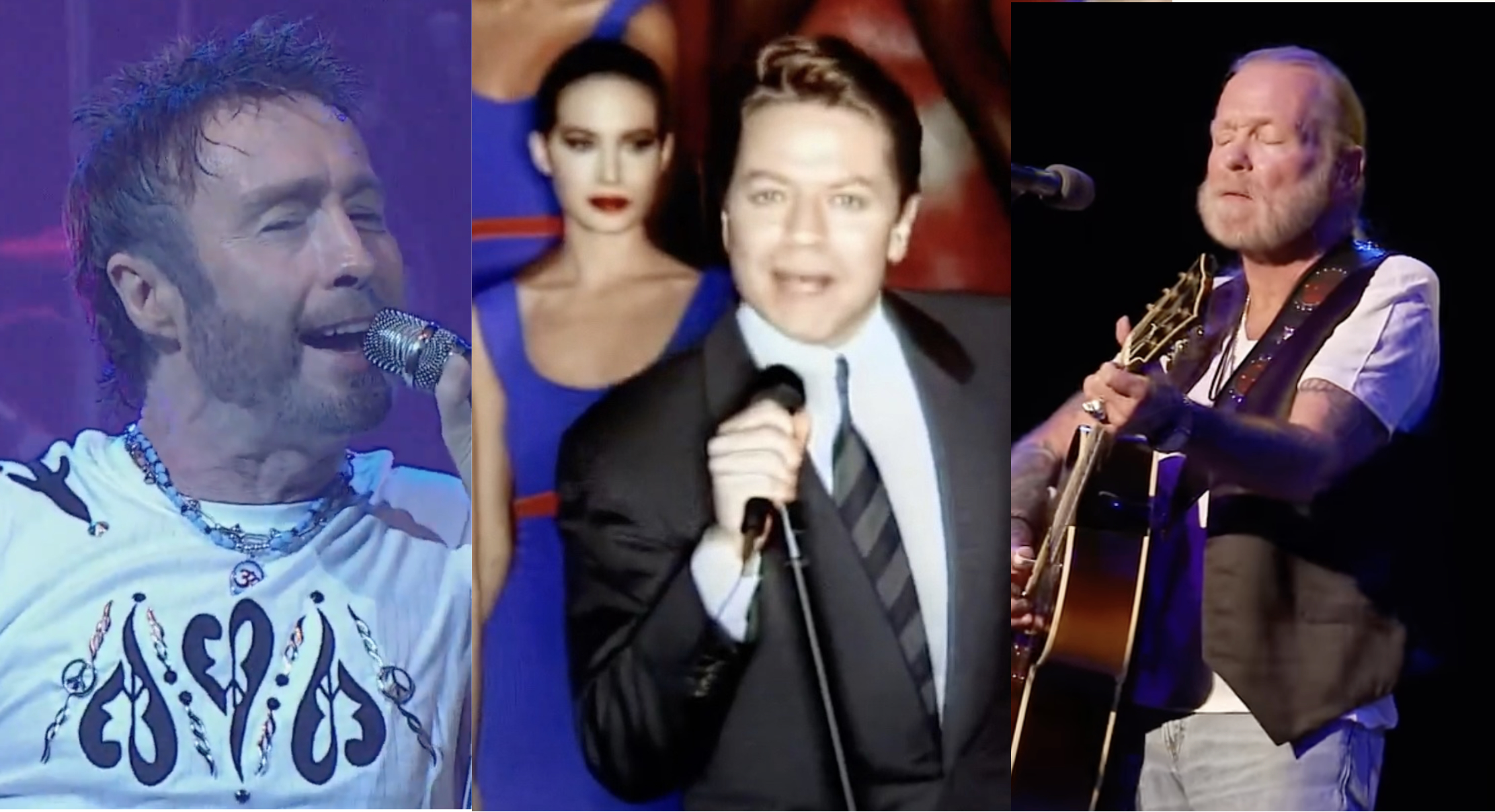
Three of the best: Paul Rodgers, Robert Palmer and Gregg Allman.
Blue-eyed soul has taken many forms over the decades—Southern and gritty, British and bluesy, horn-driven, gospel-tinged, rooted in the R&B traditions of Memphis, Detroit and New Orleans. Our first edition, from 2015, covered some of the genre’s biggest names including Daryl Hall and Boz Scaggs. This second installment continues with 12 more singers who reflect that same range, from Gregg Allman’s stripped-down solo work to Robert Palmer’s New Orleans funk debut with the Meters and Lowell George.
They came from rock bands, soul revues and pop groups, and a few went on to build substantial solo careers of their own. Each one knew how to put real feeling into a what became a signature song.
Gregg Allman—“Midnight Rider” (Laid Back, 1973)
Gregg Allman stripped away much of the Allman Brothers Band’s guitar-heavy attack for his debut solo album, surrounding himself instead with gospel-tinged backing, horns and a more intimate arrangement. The result gives this familiar road song a mournful, lived-in quality that puts his soulful voice front and center.
Delbert McClinton—“Giving It Up for Your Love” (The Jealous Kind, 1980)
McClinton had been steeped in blues and R&B long before this rollicking number became one of his biggest hits. His rough-edged delivery and deep feel for Southern rhythm make the track sound less like a performance than a barroom confession with a killer groove.
Billy Vera—“At This Moment” (By Request: The Best of Billy Vera & the Beaters, 1986)
Vera’s great gift was making vulnerability sound completely natural. Originally recorded live in 1981, the song found a massive second life after its feature on Family Ties, eventually climbing all the way to #1 on the Hot 100 in early 1987.
Paul Rodgers—“Feel Like Makin’ Love” (Straight Shooter, 1975)
Rodgers could deliver hard rock with thunderous force, but this Bad Company staple showcases the softer, bluesier side of his voice. The acoustic opening and restrained verses give way to a soaring chorus, revealing just how much soul lived inside one of rock’s most commanding frontmen.
Mitch Ryder—“Sock It to Me, Baby!” (Sock It to Me!, 1967)
Ryder was one of the great shouters of the 1960s, attacking R&B material with the kind of vocal abandon that made his records feel almost combustible. This 1967 single with his band, the Detroit Wheels, reached #6 on the Hot 100, and is a terrific showcase for that Detroit-bred intensity.
Billy Joe Royal—“Down in the Boondocks” (Down in the Boondocks, 1965)
Written and produced by Joe South, Billy Joe Royal’s breakthrough hit blended country, pop and Southern soul into something immediately distinctive. His plaintive delivery perfectly captures the song’s sense of longing, helping it climb to #9 in 1965.
Michael McDonald—“I Keep Forgettin’ (Every Time You’re Near)” (If That’s What It Takes, 1982)
His husky, instantly recognizable voice made McDonald one of the defining blue-eyed soul voices of the late ’70s and ’80s. His solo debut gave him the perfect setting for this sophisticated R&B groove, which reached #4 on the Hot 100.
Cory Wells—“Mama Told Me (Not to Come)” (It Ain’t Easy, 1970)
One of Three Dog Night’s great vocalists gave Randy Newman’s offbeat composition a wonderfully loose, almost mischievous vocal treatment. The band’s funkier, more muscular arrangement turned it into a #1 pop hit while giving Wells plenty of room to show his soulful grit.
Related: Three Dog Night was the rare ’60s/’70s rock band that had hits almost exclusively with cover songs
David Clayton-Thomas—“Spinning Wheel” (Blood, Sweat & Tears, 1968)
Blood, Sweat & Tears’ longtime frontman brought a powerful R&B presence to the band’s adventurous blend of rock, jazz and brass. His own composition became one of their signature songs, climbing to #2 on the Hot 100 in 1969 and cementing his reputation as one of rock’s most forceful soul singers.
Burton Cummings—“Stand Tall” (Burton Cummings, 1976)
Best known for his years fronting the Guess Who, Cummings proved he could carry an emotionally charged solo record with equal authority. His piano-led performance turns heartbreak into a soaring pop-soul statement, reaching #10 on the Hot 100.
Southside Johnny and the Asbury Jukes—“I Don’t Want to Go Home” (I Don’t Want to Go Home, 1976)
With its brass charts, R&B groove and Jersey Shore swagger, this was a clear declaration of intent from a singer steeped in classic soul traditions. The Steven Van Zandt composition became Southside’s signature song and anchored the Jukes’ Stax-influenced sound.
Robert Palmer—“Sneakin’ Sally Through the Alley” (Sneakin’ Sally Through the Alley, 1974)
Palmer’s solo debut found him diving headfirst into New Orleans R&B and funk, backed by the Meters and Little Feat’s Lowell George. His cool, supple delivery was already fully formed, making this Allen Toussaint cover an ideal showcase for the soulful instincts that defined his career.
[Our first edition covered some of the genre’s biggest names including Daryl Hall and Boz Scaggs.]




2 Comments so far
Jump into a conversationAs usual, all great selection of artists and associated tunes included in Parts I and this Part Il.
However, while realizing you can’t please everyone (Thanks Ricky Nelson), I would be remiss to not mention that one of the greatest soul singers should have been included – That being the superb powerhouse vocalist Jimmy Hall, of Wet Willie fame, and as representative tunes, I would select (there are many) the timeless “Keep On Smilin'” and “Street Corner Serenade”, as well as many other deep cuts.
Jimmy Hall still performs occasionally, and his voice hasn’t lost an octave.
i would add chris rea on the road to hell