
 Before Talking Book, Innervisions, Fulfillingness’ First Finale and Songs in the Key of Life made Stevie Wonder one of the most acclaimed artists of the 1970s, he had already spent nearly a decade building an extraordinary catalog for Motown. What began with a live hit by a 12-year-old harmonica prodigy developed into a remarkable run of increasingly sophisticated soul singles that revealed dramatic growth in both performance and songwriting.
Prior to those universally celebrated classic albums—the latter three each won the Grammy for Album of the Year—he had already developed the vocal authority, melodic imagination and rhythmic inventiveness that would make him one of popular music’s most important and influential artists. Far from being merely a prelude to later masterpieces, this body of work—recorded primarily with Motown’s studio band, the Funk Brothers—stands as one of the strongest early-career catalogs produced by any major popular artist of the 1960s. These 12 recordings trace the evolution from “Little Stevie,” born Stevland Morris on May 13, 1950, into the confident young artist who was poised to enter his classic period.
“Fingertips” (Recorded Live: The 12-Year-Old Genius, 1963)
The live recording that introduced the young performer to a national audience still sounds thrillingly spontaneous. Its call-and-response energy, enthusiastic crowd interaction and exuberant harmonica playing helped make it one of Motown’s earliest major live hits, reaching #1 on both the Hot 100 and the R&B chart.
“Uptight (Everything’s Alright)” (Up-Tight, 1966)
This was the record that established him as a genuine pop and R&B force rather than a former child novelty act. Driven by a propulsive rhythm and an irresistible hook, it remains one of the defining Motown singles of the mid-1960s and climbed to #3 on the Hot 100 and #1 on the R&B chart.
“Nothing’s Too Good for My Baby” (Up-Tight, 1966)
A playful vocal performance gives this upbeat soul number much of its charm. The track captures the label’s trademark combination of punchy rhythms, bright horns and infectious melodic momentum.
“A Place in the Sun” (Down to Earth, 1966)
Warm and optimistic, the song revealed a more mature emotional sensibility than many of the earlier recordings. Its graceful melody and uplifting lyric helped make it one of the most enduring ballads from this period.
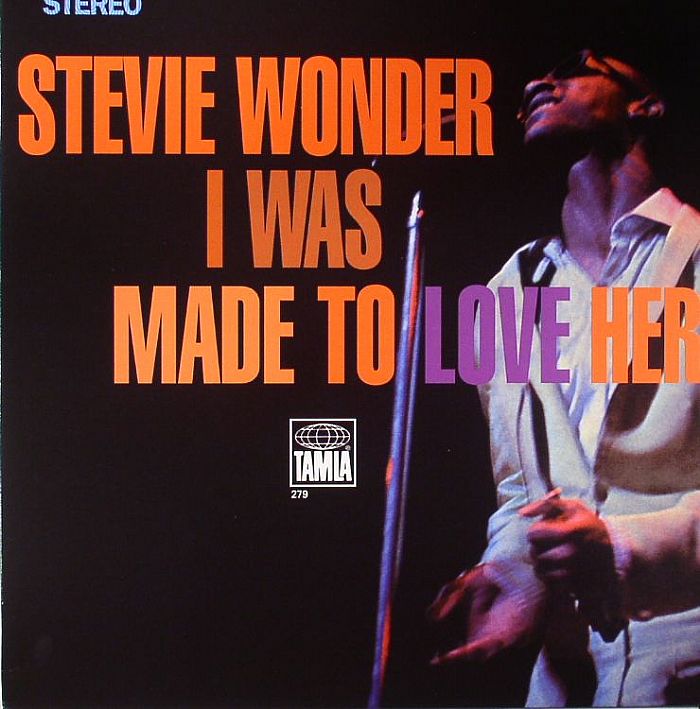
“I Was Made to Love Her” (I Was Made to Love Her, 1967)
Built around a driving bass line and a passionate lead vocal, this classic single showed complete confidence and authority. Few Motown records of the era matched its combination of energy, groove and emotional conviction, and its #2 Hot 100 peak and #1 R&B showing confirmed his status as one of the label’s premier hitmakers.
“Shoo-Be-Doo-Be-Doo-Da-Day” (For Once in My Life, 1968)
The buoyant melody and relaxed rhythmic feel demonstrate how much growth had taken place as both a performer and songwriter. The record balances pop accessibility with a distinctly soulful exuberance.
Related: When Stevie Wonder sang with Tom Jones
“For Once in My Life” (For Once in My Life, 1968)
Although the song had been recorded previously by other artists as a slower ballad, this version transformed it into a joyful declaration of love. The spirited vocal performance gives the familiar standard a completely new sense of urgency and celebration, helping send it to #2 on both the Hot 100 and the R&B chart.
“My Cherie Amour” (My Cherie Amour, 1969)
Elegant, romantic and beautifully constructed, this became one of the signature recordings of the early career. The gentle arrangement and memorable melody showcase an increasingly sophisticated approach to songwriting, and the single reached #4 on the Hot 100 while becoming an international success.
“Yester-Me, Yester-You, Yesterday” (My Cherie Amour, 1969)
This reflective soul ballad explores themes of memory and lost love with unusual subtlety for such a young artist. Its polished production and heartfelt vocal make it one of the standout recordings from the late-1960s Motown period.
“We Can Work It Out” (Signed, Sealed & Delivered, 1970)
This reinterpretation of the Beatles’ classic is anything but a straightforward cover. Infused with gospel energy, rhythmic shifts and exuberant ensemble vocals, it demonstrates a growing ability to reshape outside material into something distinctly personal.
“Signed, Sealed, Delivered (I’m Yours)” (Signed, Sealed & Delivered, 1970)
One of the great feel-good singles of the era, this record also marked an important creative turning point. With its funkier groove and stronger personal imprint, it pointed directly toward the more self-directed work that would define the 1970s. The song reached #3 on the Hot 100 and #1 on the R&B chart.
“If You Really Love Me” (Where I’m Coming From, 1971)
Closing this early-years survey, the song serves as a clear bridge to the classic period that followed. Its sophisticated structure, shifting rhythms and adventurous arrangement anticipate the breakthroughs that would soon arrive on Music of My Mind and Talking Book. The single peaked at #8 on the Hot 100 and #4 on the R&B chart, signaling that a major artistic transformation was already underway.
Wonder’s vast catalog is available in the U.S. here, in Canada here and in the U.K. here.
Bonus Video: Listen to the original studio version of “Fingertips”





No Comments so far
Jump into a conversationNo Comments Yet!
You can be the one to start a conversation.