
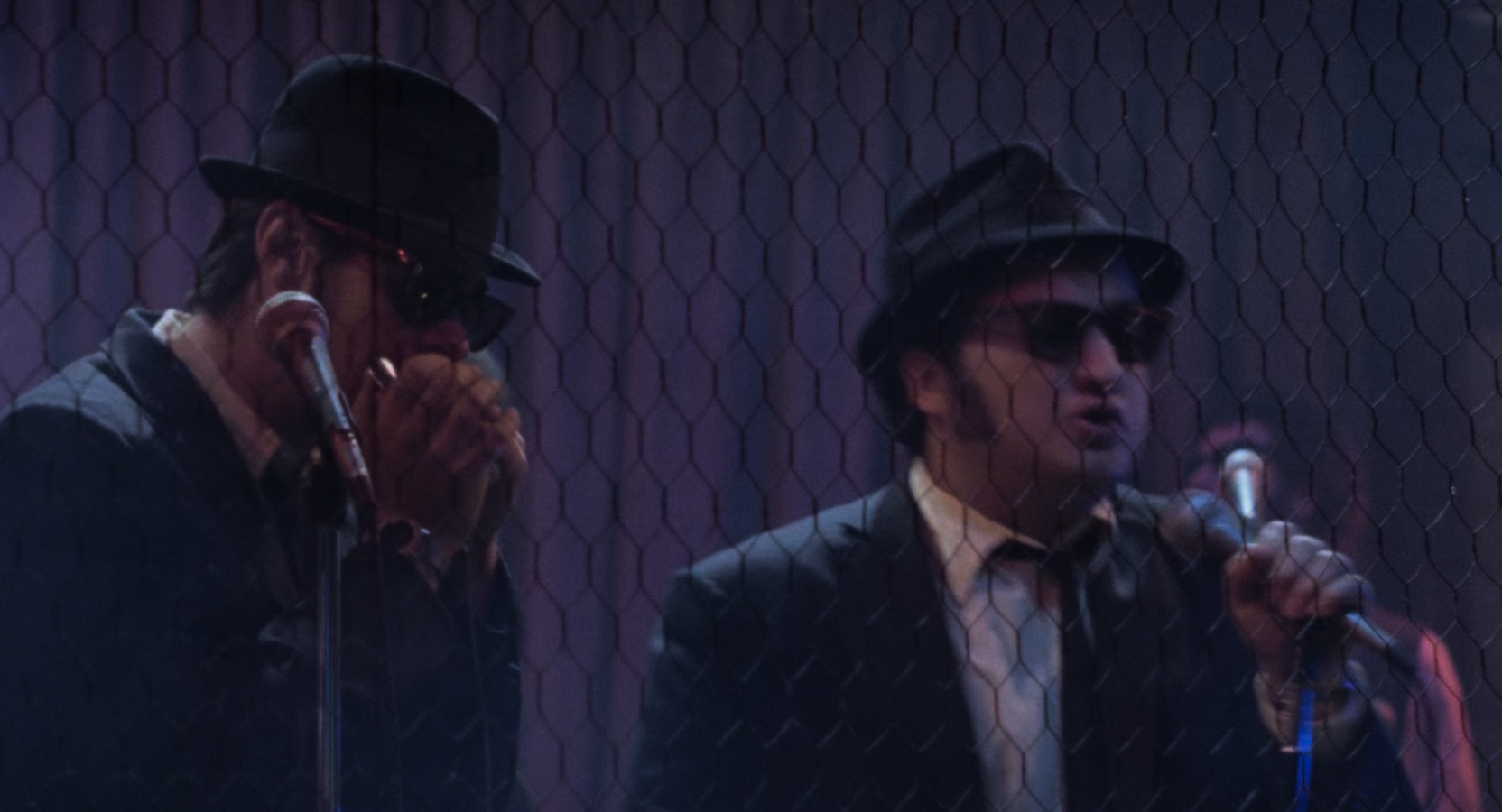
Dan Aykroyd and John Belushi (aka Elwood and Jake) of The Blues Brothers.
The new decade arrived with plenty of musical upheaval. New wave was gaining ground, disco remained a powerful force and established rock and pop artists were finding new ways to navigate a rapidly changing landscape.
Amid all that activity, some terrific songs were overlooked—or have simply faded from memory. Here are 12 from 1980 that deserve another spin.
Daryl Hall and John Oates—“How Does It Feel to Be Back” (Voices)
The opening track and first single from the LP gave Hall and Oates a taste of the commercial resurgence that was about to arrive. John Oates supplies the lead vocal, while his jangling 12-string guitar and G.E. Smith’s bright guitar work give the track a distinctly guitar-oriented sound. Though it reached #30 on the Hot 100, it was overshadowed by the album’s three bigger hits: “You’ve Lost That Lovin’ Feelin’,” “Kiss on My List” and “You Make My Dreams.”
The Records—“Hearts in Her Eyes” (Crashes)
The British power-pop quartet had already announced itself with “Starry Eyes,” but this ringing, perfectly constructed follow-up deserved a wider audience. Written by Will Birch and John Wicks and first recorded by the Searchers, it was issued as a single in 1980, another reminder of how effortlessly the group could marry ’60s pop instincts to the sharper sound of its own era.
Dr. Hook—“Sexy Eyes” (Sometimes You Win)
A polished blend of soft rock and disco, this was hardly a commercial also-ran: it reached #5 on the Hot 100 and became one of the group’s biggest U.S. hits. Time was less kind to it than the charts were, which made its easy groove and instantly recognizable chorus all the more worthy of rediscovery.
The Tourists—“I Only Want to Be with You” (Reality Effect)
The pre-Eurythmics Annie Lennox and Dave Stewart put their stamp on the Dusty Springfield classic, with Lennox reportedly cutting her vocal in a single take. Released in the U.K. in 1979 and in the U.S. in 1980, the record reached #4 in Britain and #83 in the U.S.; its handclaps, chugging bass and aggressive guitar gave the familiar song a decidedly new-wave makeover.
Joan Armatrading—“Me Myself I” (Me Myself I)
The English singer-songwriter brought a tougher pop-rock edge to her songwriting on this title track, recorded in New York with an impressive cast that included Chris Spedding, Hiram Bullock, Will Lee, Marcus Miller, Anton Fig and Clarence Clemons. The single reached #21 in the U.K., while the album climbed to #5, making it one of the strongest commercial showings of her career.
The Manhattan Transfer—“Twilight Zone/Twilight Tone” (Extensions)
The vocal quartet ventured into decidedly futuristic territory with this jazz-pop interpretation inspired by Rod Serling’s series. Originally appearing on the 1979 album, it became a 1980 single and a sizable dance hit, showing just how far the group could stretch its sophisticated harmonies without sacrificing pop appeal.
The Brothers Johnson—“Stomp!” (Light Up the Night)
Quincy Jones, Louis Johnson, George Johnson and Rod Temperton had a pretty potent formula here: an indelible groove, infectious vocals and a bass line that practically demands to be played loud. Released in February 1980, it topped both the Billboard R&B and Dance charts and reached #7 on the Hot 100, with Louis Johnson’s trademark thumb-driven bass work providing much of the song’s propulsion.
Related: What were some overlooked songs of 1979?
Robin Lane and the Chartbusters—“When Things Go Wrong” (Robin Lane & the Chartbusters)
Boston’s burgeoning new wave scene produced few singles as direct and guitar-driven as this one. It reached #87 on the Hot 100 in 1980, then had a second life the following year when its video became the 11th to air on MTV’s inaugural broadcast day.
Rocky Burnette—“Tired of Toein’ the Line” (The Son of Rock and Roll)
Rockabilly made an unlikely return to the pop charts in 1980, and Burnette was its most conspicuous new ambassador. The son of rockabilly pioneer Johnny Burnette, he took this irresistibly retro rocker to #8 on the Hot 100, giving him his biggest hit.
Ian Lloyd—“Do You Wanna Touch Me (Oh Yeah)” (3WC)
The former Stories frontman gave the Gary Glitter/Mike Leander composition a harder-rocking treatment, with Mick Jones of Foreigner supplying the lead guitar. Issued as a single from the LP (Third Wave Civilization) in 1980, Lloyd’s version was a fascinating snapshot of a ’70s pop-rock singer adapting to the more muscular sound of the new decade.
The Blues Brothers—“Gimme Some Lovin’” (The Blues Brothers: Original Soundtrack Recording)
The band turned the Spencer Davis Group favorite into a full-throttle workout, replacing the original’s organ-driven attack with a muscular horn arrangement and the firepower of musicians including Steve Cropper and Donald “Duck” Dunn. Released as a single from the 1980 film soundtrack, it reached #18 on the Hot 100 and remains one of the project’s definitive performances, though it’s overshadowed by “Soul Man” and “Rubber Biscuit” from their debut.
Kim Carnes—“Cry Like a Baby” (Romance Dance)
“Don’t Fall in Love With a Dreamer,” her duet with Kenny Rogers earlier that year, helped established her as a singer to be reckoned with. Before “Bette Davis Eyes” fully transformed her career, Carnes was already developing the raspy, instantly identifiable vocal style that would become her trademark. Her version of the Dan Penn/Spooner Oldham classic (made famous originally by the Box Tops) reached #44 on the Hot 100, giving her first charting album two sizable singles.




No Comments so far
Jump into a conversationNo Comments Yet!
You can be the one to start a conversation.