
Bob Weir, Grateful Dead Founding Member, Dies at 78
by Jeff Tamarkin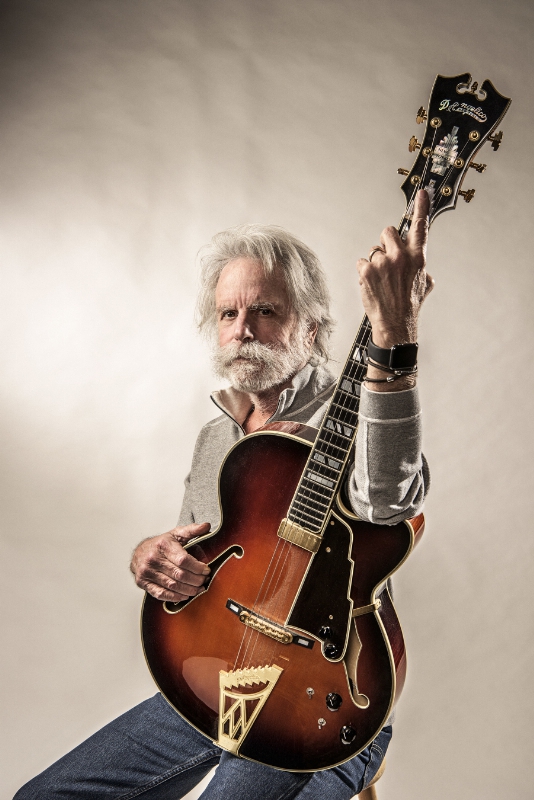
Bob Weir (Photo: Columbia/Legacy Recordings)
Bob Weir, the guitarist and vocalist who co-founded the Grateful Dead in 1965 and remained at the band’s forefront for the rest of its 30-year run, has died. His death today, Jan. 10, 2026, at age 78, was due to “an underlying lung issue after he beat cancer,” according to a report by TMZ, which noted that an official confirmation of Weir’s passing was posted to the musician’s social media pages. (See below.)
In addition to his work with the Grateful Dead, Weir was a key figure in several offshoot bands, such as Kingfish in the 1970s and, Ratdog and, in more recent years, Dead and Company.
Weir’s family issued the following statement on his death: “It is with profound sadness that we share the passing of Bobby Weir. He transitioned peacefully, surrounded by loved ones, after courageously beating cancer as only Bobby could. Unfortunately, he succumbed to underlying lung issues.
“For over sixty years, Bobby took to the road. A guitarist, vocalist, storyteller, and founding member of the Grateful Dead. Bobby will forever be a guiding force whose unique artistry reshaped American music. His work did more than fill rooms with music; it was warm sunlight that filled the soul, building a community, a language, and a feeling of family that generations of fans carry with them. Every chord he played, every word he sang was an integral part of the stories he wove. There was an invitation: to feel, to question, to wander, and to belong.
“Bobby’s final months reflected the same spirit that defined his life. Diagnosed in July, he began treatment only weeks before returning to his hometown stage for a three-night celebration of 60 years of music at Golden Gate Park. Those performances, emotional, soulful, and full of light, were not farewells, but gifts. Another act of resilience. An artist choosing, even then, to keep going by his own design. As we remember Bobby, it’s hard not to feel the echo of the way he lived. A man driftin’ and dreamin’, never worrying if the road would lead him home. A child of countless trees. A child of boundless seas.
“There is no final curtain here, not really. Only the sense of someone setting off again. He often spoke of a three-hundred-year legacy, determined to ensure the songbook would endure long after him. May that dream live on through future generations of Dead Heads. And so we send him off the way he sent so many of us on our way: with a farewell that isn’t an ending, but a blessing. A reward for a life worth livin’.”
Many of Weir’s bandmates—including the Dead’s Mickey Hart and Dead & Company’s John Mayer—as well as such musical peers as Joan Baez, Paul McCartney, and John Fogerty posted tributes to their friend.
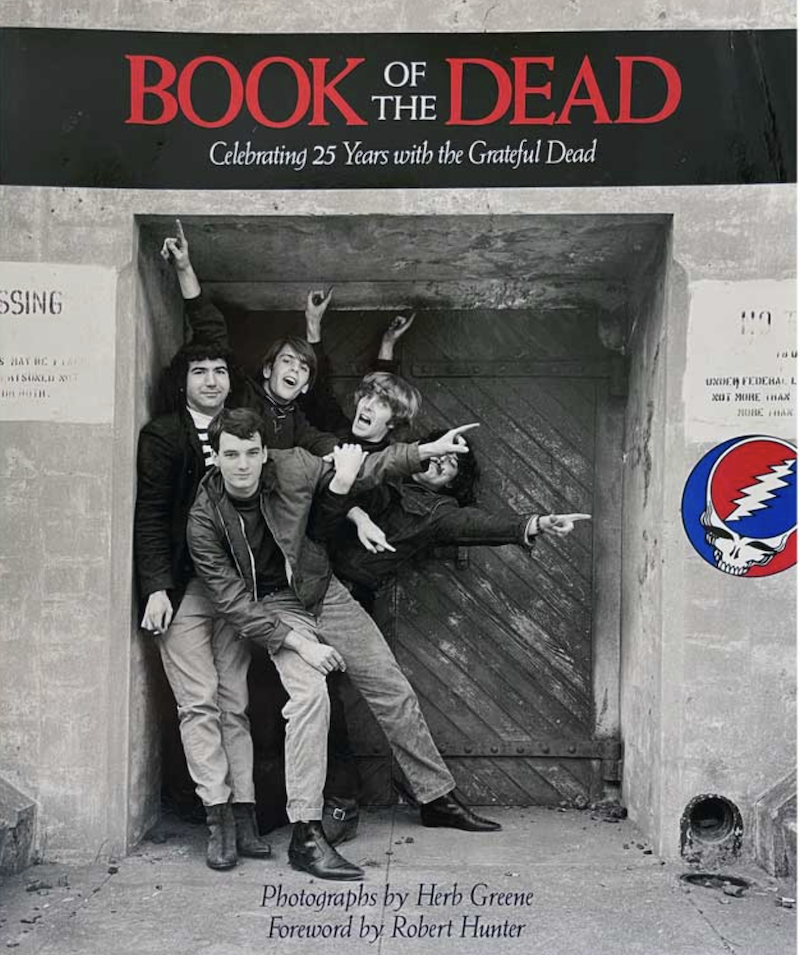
‘Book of the Dead,’ a collection of Herb Greene’s Grateful Dead portraits; the teenaged Weir is second from left in back row.
Weir was the youngest member of the band when it came together as the Warlocks in 1965. Born Oct. 16, 1947, he brought a unique style of rhythm guitar playing that synced perfectly with Jerry Garcia’s ever-imaginative and unpredictable lead guitar lines, Ron “Pigpen” McKernan’s organ and the rhythm section of bassist Phil Lesh—who died in 2024—and drummer Bill Kreutzmann. The latter, along with the band’s other drummer, Mickey Hart, who joined the Dead in 1967, and early keyboardist Tom Constanten, remain the only surviving members. (In addition to Garcia, Weir, McKernan and Lesh, the band has also lost keyboardists Keith Godchaux, Brent Mydland and Vince Welnick. Singer Donna Jean Godchaux-MacKay also died, in 2025.)
Related: Our obituary of Donna Jean Godchaux-MacKay
With his long ponytail and youthful good looks, Weir was as close as the Dead came to having a conventional rock star in its ranks. His strong, clear vocal performances applied equally well to a rocker like “One More Saturday Night” and the band’s cover of Chuck Berry’s “Johnny B. Goode,” a soaring ballad (“Looks Like Rain”) or a rousing cowboy tune (“Mexicali Blues”). Weir, often in collaboration with Robert Hunter or John Perry Barlow, provided some of the Dead’s more complex, sophisticated and durable songwriting, in songs like “Weather Report Suite” (to which Eric Andersen also contributed) and “Estimated Prophet,” as well as anthemic staples of the group’s live show such as “Cassidy,” “The Music Never Stopped” and “Playing in the Band.”
Born Robert Hall Parber, in San Francisco, he was given up for adoption and raised by Frederic Utter Weir and Eleanor Cramer Weir in the San Francisco suburb of Atherton. Bob Weir attended several different elementary and high schools and began playing guitar at age 13, and met Jerry Garcia on New Year’s Eve of 1963-64 in a Palo Alto music store. They first formed an acoustic outfit called Mother McCree’s Uptown Jug Champions, which eventually morphed into the Warlocks and then the Grateful Dead. The quintet famously became the house band for the Acid Tests, the LSD-fueled parties hosted by Ken Kesey and the Merry Pranksters, and spent much of the 1960s as an experimental/psychedelic outfit, with influences ranging from folk to blues to jazz and vintage rock and roll. They signed to Warner Bros. Records and released their self-titled debut album in 1967, but saw little success until 1970 with the back-to-back releases of Workingman’s Dead and American Beauty, albums that saw them incorporating more folk and country influences.
Never known for their studio recordings as much as their live shows, they didn’t find true commercial success until 1987’s In the Dark album and the single “Touch of Grey,” their only releases to make the Billboard top 10.
Throughout their three-decade run, the Grateful Dead continually grew their concert audience until they became a massive stadium act, also playing many of the best known rock festivals of the era—including Monterey Pop and Woodstock—and maintaining a reputation as a band that not only improvised within their songs—they are often credited with spawning the jam-band movement—but never repeating the same setlist twice.
With the 1995 death of Garcia, the Grateful Dead folded but several offshoots continued to keep the legacy alive, many of them fronted by Weir. He also maintained a solo career that began with the 1972 release of his album Ace, which was basically a Grateful Dead album posing as a solo effort. Other solo and group projects followed, including Bobby and the Midnites and the popular Ratdog, and Weir toured until nearly the end of his life. Weir’s final solo album, Blue Mountain, was released in 2016. He released two live albums in 2022 with the Wolf Bros band.
Weir was the subject of the 2014 documentary film The Other One: The Long, Strange Trip of Bob Weir.
Grateful Dead’s extensive recorded legacy, books and merch are available in the U.S. here, in Canada here and in the U.K. here. Weir’s solo work is available here.

6 Comments so far
Jump into a conversationBeautiful and brilliant tribute to his life Jeff! Thanks so much!
Bob Weir played live before more people than any other artist in the history of music.
Weir gunna miss ya Bobby
Farewell to a true legend whose often intricate songs was an important part of the Grateful Dead songbook..And his unique guitar playing really was the glue that kept Grateful Dead together. Although he never received the same king of worship like Jerry Garcia and to a lesser intent Phil Lesh. Rather strange the obituary doesn’t mention that he finally got the recognition and popularity he deserved with Dead And Company. Again filing stadiums as in the old GD days and reaching out to a new legion of younger fans. And taking his final bow with three sold out concerts at the GD60 event in Golden Gate Park this summer. May the four winds blow you safely home and thanks for the great adventure.
Beautifully written, Jeff. Your words have often been a guide to this British fifty-something kid back before home internet when finding import copies of Relix or the odd rock book (including your Airplane title) was the only source of info on favourite music from (then) twenty years earlier and half a world away. I know you became friends with many of the SF stalwarts and wish you condolences on the passing of Bob, and if course thoughts and love to the Weir family. Best, R x
Thanks so much for the kind words, Rob.