
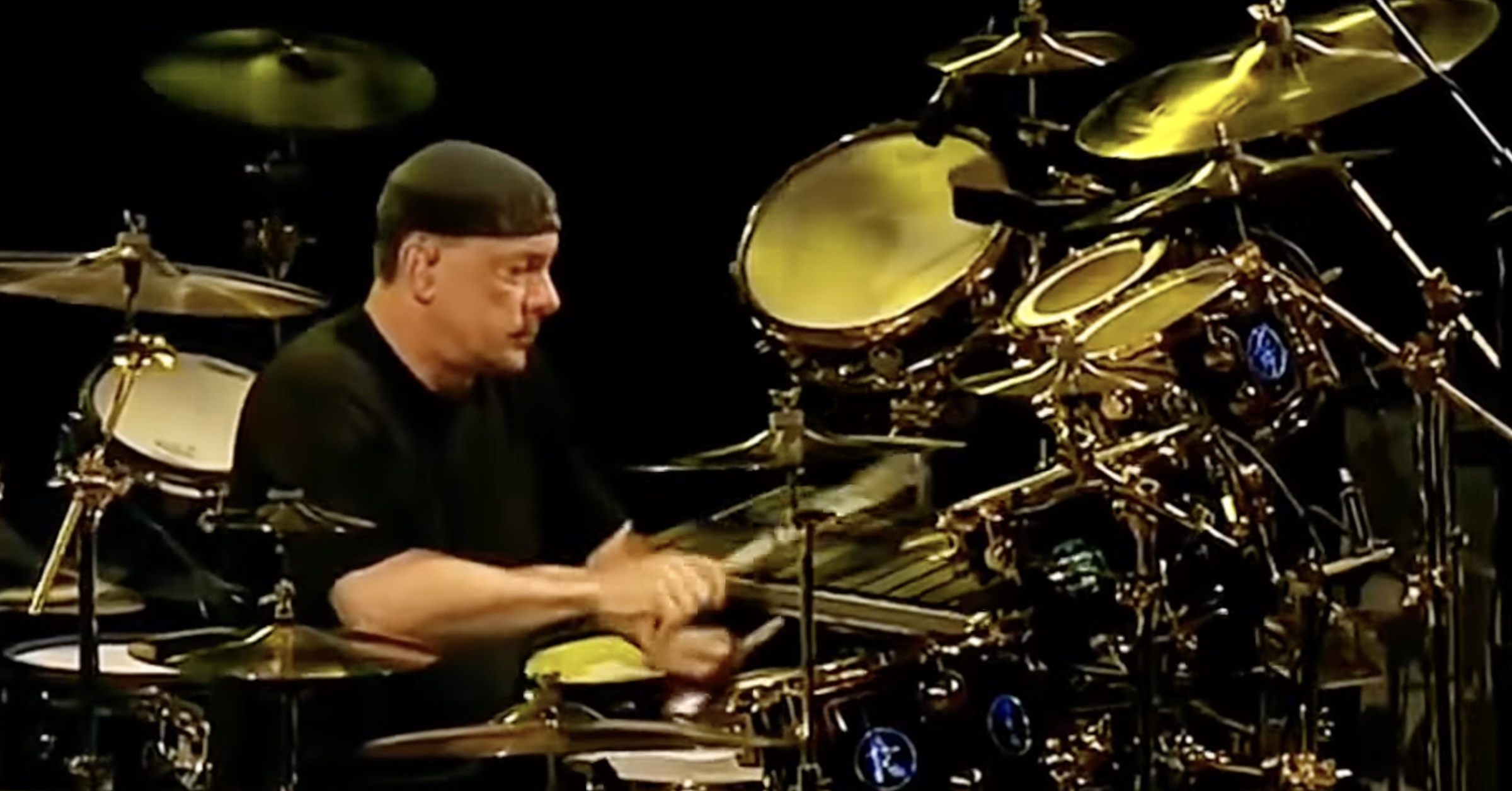
Rush’s Neil Peart in Frankfurt, Germany, 2004.
In rock ‘n’ roll, while it’s often a screaming guitar solo or commanding vocal that gets star billing, it’s sometimes a drum beat that sets the tone before the first note has been played or lyric has been sung. A powerful drum intro is more than just the drummer calling in the band. It sets the feel, tempo and sometimes the entire sonic landscape of the track. It can set the tone in just a few seconds, sometimes from a single snare shot, tom-tom pattern or stomping foot.
Over time, and certainly by the late ‘70s/early ‘80s, advancements in recording technology offered producers new tools to record drums with greater clarity and impact. The drum kit morphed from the rhythmic undercurrent of a track to a driving sonic feature through close miking, compression and the use of studio effects, like gated reverb. As a result, a drum intro often evolved into a strong, individualistic and unique gateway to a song.
With these 12 tracks, it’s the drummer who establishes things in the first few beats before the rest of the band joins in.
“Hot for Teacher”—Van Halen (1984)
Drummer Alex Van Halen recorded the intro on his huge Ludwig kit—just double-bass blasts before the rest of the band jumped in (as well as brother Eddie’s instantly identifiable guitar solo even begins). Despite the video’s (and schoolboy Waldo’s) massive exposure on MTV, “Hot for Teacher” only reached #56 on the Hot 100 as the fourth single released from their 1984 album, which sold more than 10 million copies in the U.S. alone.
“Tom Sawyer”—Rush (1981)
The song‘s first groove is all precision, courtesy of Neil Peart. The opening hi-hat and snare are sharp and rhythmic, setting a pace for the synthesizer riff that soon follows. The classic rock favorite led off the band’s groundbreaking album Moving Pictures. At Le Studio in Quebec, “the Professor”‘s elaborate set-up included his Slingerland snare and Zildjian cymbals. It set a standard for disciplined power and progressive rock precision.
“Born in the U.S.A.”—Bruce Springsteen (1984)
The massive drum-snare hit launches the classic, courtesy of the E Street Band’s Max Weinberg. The bulk of the album’s recording was done at the Power Station in New York City, where the drums were treated with heavy compression and reverberation. In an interview, Springsteen said he told “Mighty Max” that the drumming was “just as important as the singing” because it captured the “confusion and bombs” that were alluded to in the song.
“We Got the Beat”—The Go-Go‘s (1981)
This infectious track is one of the defining songs of ’80s new wave, from the very first note as Gina Schock‘s buoyant drum beat kicks things off. While the group had first released the single in 1980 for Stiff Records, the re-recorded version they included on their debut album, Beauty and the Beat, is the one that broke through, reaching #2 on the Hot 100 with the help of legendary producer Richard Gottehrer.
“Sunday Bloody Sunday”—U2 (1983)
The powerful and imposing opening snare beat from Larry Mullen Jr. lays out a marching rhythm to open the track, creating the tense emotional feel of the song, released on the band‘s third studio album, War. Mullen’s drumming provides an instant foundation before Bono and The Edge make their entrance. Though it didn’t chart, it quickly established itself as one of the band‘s most politically charged songs.
“Love Shack”—The B-52‘s (1989)
The rhythm section quickly establishes the groove of this classic before Fred Schneider’s fun spoken vocal begins. The drums are courtesy of sessionman Charley Drayton, and he churned out a bubbly beat that keeps everyone at the party dancing. The single, from the album Cosmic Thing, was their biggest to date, reaching #3 on the Billboard Hot 100 in 1990. If there’s a better song to get guests out of their seats at Uncle Eddie’s wedding, we haven’t heard it.
“Toad”—Cream (1966)
Long before the live rock standard of long drum solos, Ginger Baker put his kit front and center. The final track on the trio’s debut album Fresh Cream kicks off with his rolling tom-tom groove. His rhythm and jazz flourishes are there before he launches into a solo, one of the first rock records that really put a drummer front and center. The instrumental became a live staple as Cream more than doubled its length on the stage, and a model for drum solos to come.
“Driven to Tears”—The Police (1980)
Stewart Copeland offers a complex and taut rhythm which merges rock energy with a reggae flavor. Released on their third album, Zenyatta Mondatta, The hi-hat crack and crisp snare hits kick off a driving beat before Sting and Andy Summers chime in. Copeland‘s use of delay (echo) provide a 1/8 note delay to create a “busy” feel. The intro on its own could almost stand as the whole track because it is so driven and restive.
“We Will Rock You”—Queen (1977)
One of the most ubiquitous rhythms in all of rock history is the stomp-stomp-clap of this classic, written by Brian May. In an effort to not use a traditional rock drum kit, the band took overdubbed stomping feet and clapping hands to simulate drum sounds that drummer Roger Taylor would have provided. The production helped establish the rhythm that made the song a perfect sports anthem to this day. The intro is one of the most distinct beats of all time.
“I‘m Just a Singer (In a Rock and Roll Band)”—The Moody Blues (1972)
The unmistakable thumping of Graeme Edge’s drums starts out and he doesn‘t hold back as he knocks us off our feet with the driving beat before the band kicks in. The Moodys typically focused on airy strings and arrangements but they laid down a much heavier side on this 1972 favorite from Seventh Sojourn, thanks to Edge‘s powerful kick. (While the band typically relied on Mike Pinder’s Mellotron as on this track, the album included the Chamberlin, a similar tape-replay piano, which provided the “airy” strings a somewhat distinct texture before being sliced through by the rock guitars.)
“Tusk”—Fleetwood Mac (1979)
With its primal and almost tribal drum beat from Mick Fleetwood, the title track, written by Lindsey Buckingham for the group’s long-awaited 2-LP follow-up to Rumours, provides one of the most striking introductions in the Fleetwood Mac canon. The arrangement was famously augmented by the USC Trojan Marching Band with its accompanying music video filmed at Dodger Stadium.
In the Air Tonight—Phil Collins (1981)
No list on this topic would be complete without including one of the most renowned drum-breaks in rock history. Collins began his solo debut, Face Value, with a significant introduction. The session at London’s Town House was engineered by Hugh Padgham using his innovative gated-reverb-trick, giving the tom-and-snare onslaught a thunderous, detonated punch, more than two minutes in. It‘s become one of the most famous drum fills of all time.


3 Comments so far
Jump into a conversationWhat, no Zeppelin?!!
For shame…
“She Loves You” opens with the shortest most recognizable drum intro.
“rock and roll all nite”