
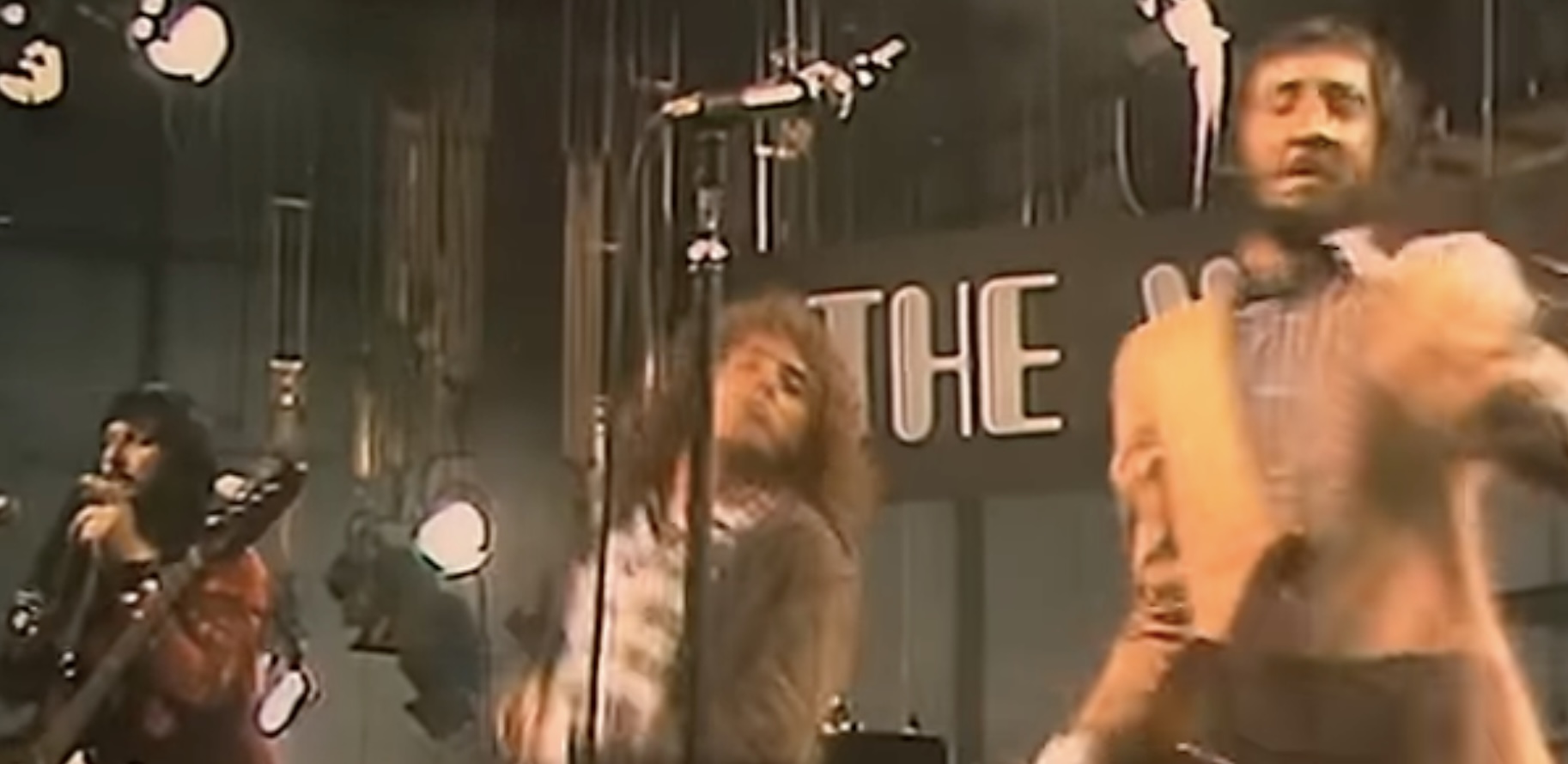
The Who’s John Entwistle, Roger Daltrey and Pete Townshend in the promotional video for 1972’s “Join Together.”
For most rock fans, 1972 was one of those years when amazing new albums seemed to be coming out every week. Vinyl was flooding into record stores, the airwaves on FM radio were opening up and rock artists, alongside soul and pop artists, were going through periods of profound creative flourishing.
Albums like Deep Purple‘s Machine Head, Chicago‘s Chicago V and The Rolling Stones’ Exile on Main St. were lining the shelves next to Elton John‘s Honky Château and Stevie Wonder‘s Talking Book.
While some tunes found immediate life on the radio, others lived on more quietly on albums with even bigger hits. But viewed collectively, they represent how richly diverse the music of that year truly was.
In no particular order, here are 12 great (overlooked) songs from 1972 that are worth listening to again.
“Rocks Off”—The Rolling Stones
Exile on Main St. starts with a bang of dusty, freewheeling power, setting the tone for the Stones’ double album magnum opus. Mick Jagger‘s cocky vocals come out roaring over Keith Richards’ fuzzy guitar riff, a blast of horns and session great Nicky Hopkins’ piano that reflect the freewheeling atmosphere of the late-night recording sessions. One of their best album openings ever.
“Join Together”—The Who
The rock-anthem was released as a U.S. single in June 1972, in between Who’s Next and Quadrophenia as a leftover from the aborted Lifehouse project. The track contains a potent harmonica riff and an unstoppable refrain about unity through music, and quickly became a hit in the U.K. and in the United States, where it remains their sixth-highest charting single. [A proper expanded edition of the project, now called Life House, was released in 2023. Various editions are available in the U.S. here, in Canada here and in the U.K. here.]
“Ain’t Wastin’ Time No More”—The Allman Brothers Band
The opening track off the hybrid studio/live double LP, Eat a Peach, Gregg Allman’s composition embodies resilience and a stubborn refusal to give up in a challenging time for the band. The song is propelled by his piano playing, and Dickey Betts’ impassioned slide guitar work, blending soul with purpose. A high point of the Allman Brothers’ work, the song remains incredibly compelling.
“Mona Lisas and Mad Hatters”—Elton John
From the Honky Château album, this ballad was influenced by the future star’s first experience of New York City. Bernie Taupin‘s colorful lyrics and Elton‘s piano playing painted an honest picture of the city and its many paradoxes. In the years since, it has become one of John‘s fan-favorite deep cuts.
“Supersonic Rocket Ship”—The Kinks
Released as a single and featured on Everybody’s in Show-Biz, Ray Davies’ delicate composition is among the Kinks’ most ebullient pieces of music. Lyrically the song dreams up a welcoming land full of joy and optimism and its airy composition is full of his’ characteristic whimsy, retaining all the early ‘70s magic the band possessed at the time.
“Use Me”—Bill Withers
From the Still Bill album, the single—though it reached #2 on the Hot 100—has been overshadowed by his signature #1 hit, “Lean on Me,” released a few months earlier. Withers’ natural, conversational lyrics and trance-like beat were key in turning ordinary human feelings into a song very much of the times. Still a classic soul playlist favorite.
“John, I’m Only Dancing”—David Bowie
Released in September as a stand-alone single to coincide with the Ziggy Stardust album, this song really embodies the glam-rock fervor that was building around Bowie. Brash guitar coupled with some uplifting sax and the star’s unmistakable, theatrical singing make this one of his most addictive early singles, and a strong reminder of just how quickly his sound was changing.
“Day Dreaming”—Aretha Franklin
This single from Young, Gifted and Black showcases the legend’s innate knack for melding soul with sophistication. Franklin’s lush vocal and smooth groove gives this romantic ode the dreamlike feeling that makes it one of her finest and most elegant recordings of the period. And, while it did reach #1 on the R&B chart and #1 pop, it’s easy to overlook it when thinking of all those other hits from her Atlantic years.
“Dialogue (Part I & II)”—Chicago
This follow-up single to “Saturday in the Park,” from the Chicago V album, is one of their most elaborate two-part songs. The track is a back-and-forth between two perspectives (with shared lead vocals by Terry Kath and Peter Cetera), the tune intersperses social messages and some serious horn-rock chops. [The song is included on 2025’s Chicago IX: Greatest Hits Expanded. The CD or 2-LP set is available in the U.S. here, in Canada here and in the U.K. here.]
“I’ll Take You There”—The Staple Singers
This inspirational tune was first released as a single in 1972 and appears on Be Altitude: Respect Yourself. Featuring a killer bass line and the comforting voice of Mavis Staples, the song combines the gospel soul of the Staple Singers with a laid-back soulful vibe. The optimistic message of the tune became one of the biggest hits of the year (though all these decades later it somehow feels overlooked).
“Never Before”—Deep Purple
The closing track on side one of Machine Head is a perfect example of Deep Purple‘s ability to combine brute-force hard rock with intelligent hooks. Ian Gillan‘s wail combines with Jon Lord‘s organ to make this a track of power and finesse. One of the best songs on this album, despite competition, most notably from “Highway Star” and “Smoke on the Water.” [A Super Deluxe Edition of the album was released in 2024 with many extras. It’s available for order in the U.S. here, in Canada here and in the U.K. here.
“Superwoman (Where Were You When I Needed You)”—Stevie Wonder
It’s hard to believe but the wonder-man actually released an album during his great ’70s run that lacked any significant hit singles. This wide-ranging two-part piece is from his Music of My Mind LP. Stacked keyboards and soul-stirring vocals are present here as he moves into uncharted creative space: a stunning period that changed pop music forever during the rest of the decade.


3 Comments so far
Jump into a conversationRocks Off should’ve been the single. As forever great as Tumbling Dice is, fans like me wanted another rocker.
Much as I loved the early Chicago, right up through the chocolate album, I found ‘Dialogue’ a bit much. I ended up buying ‘Thunder and Lightning’ by Chi Coltrane.
On the other hand, the Chicago V album package was pretty neat.
I loved “Dialogue”, with one voice (from Kath) being the cynic who questioned everything going on in the country, and the other voice (Cetera) thinking everything is pretty much okay, and if it isn’t, eh, it probably will be. And I also bought “Thunder & Lightning”, as well as “Sunshine” from Jonathan Edwards and “Good Time Charlie’s Got the Blues”, three of several noteworthy one hit wonders from ’72.