
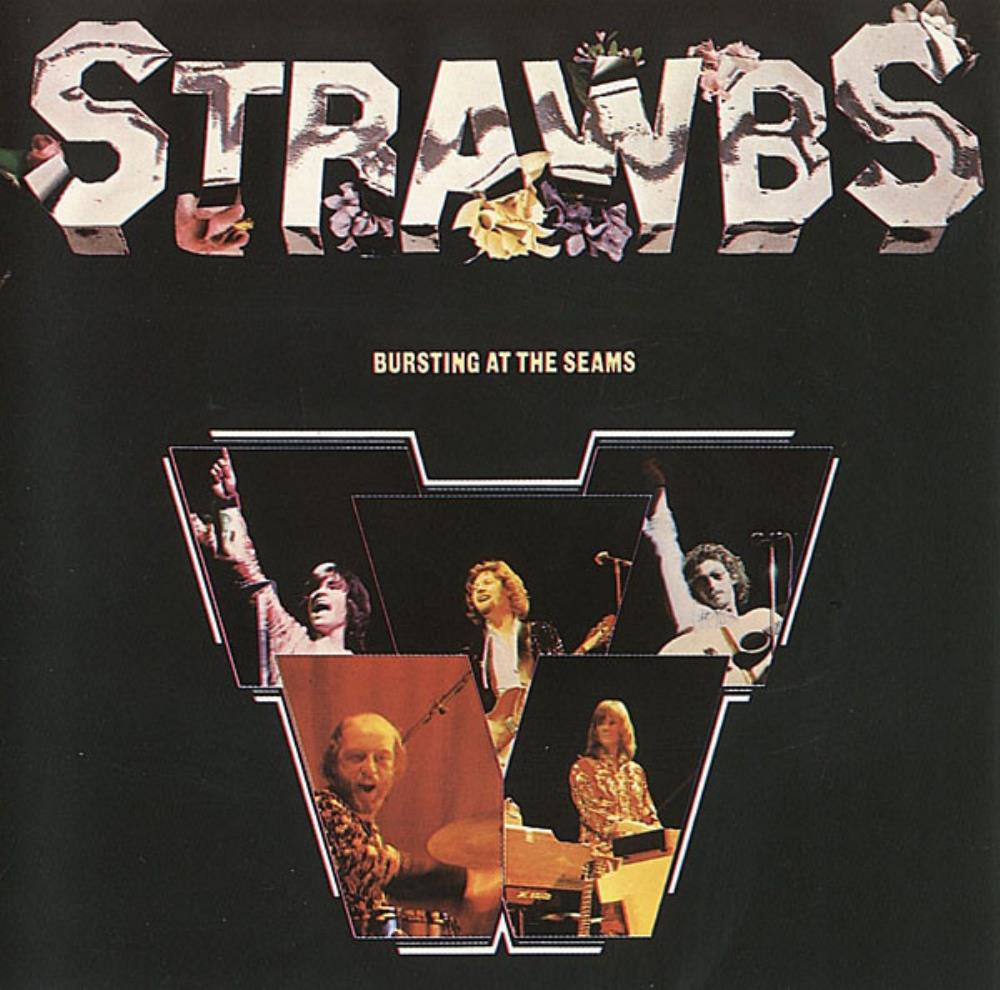
 In October 1972, lead singer and main songwriter Dave Cousins gathered the new lineup of his band Strawbs at Sound Techniques in the London neighborhood of Chelsea to record their fifth album. His longtime musical partner Tony Hooper, who’d co-founded the bluegrass duo Strawberry Hill Boys and subsequent folk-based band Strawbs, had left the group after their increasingly “progressive rock” approach alienated him.
Cousins had replaced Strawbs keyboard virtuoso Rick Wakeman (who joined Yes) with another highly respected musician, Derek John “Blue” Weaver, for their previous album Grave New World. (They were the first British group signed to American label A&M.) Comfortable with conventional keyboards and the first generations of synthesizer and mellotron, Weaver fit in well with drummer Richard Hudson and bassist John Ford, who’d left the experimental blues-rock band Elmer Gantry’s Velvet Opera to join Cousins in 1970.
 To replace Hooper, Cousins turned to Dave Lambert, a flamboyant electric guitarist with the King Earl Boogie Band, whose debut LP Cousins was producing. In 1974 Cousins told journalist Jerry Gilbert, “I’d known Dave for five years before he joined the band—he taught me to play the electric guitar and I’d shown him a few things on acoustic guitar, and we’d gone out and done folk club gigs, and then he started to come on stage with the band, and he played on my album Two Weeks Last Summer. It seemed to be a totally natural progression.”
That solo album had been released six months after Grave New World, and Cousins felt, “There’s an immediate change, to my ears anyway, that was very obvious after making that, is that [Strawbs] became much more rock orientated—much more heavy, if you like.” Lambert was keen to show Cousins his Pete Townshend moves.
Instead of working with regular producer Tony Visconti, Cousins was confident enough to produce the new sessions himself, with Tom Allom engineering, but it reportedly took 300 hours of recording time, with much arguing and trips to the studio bars when things got rough. A shortage of material meant they were working up arrangements on the fly.
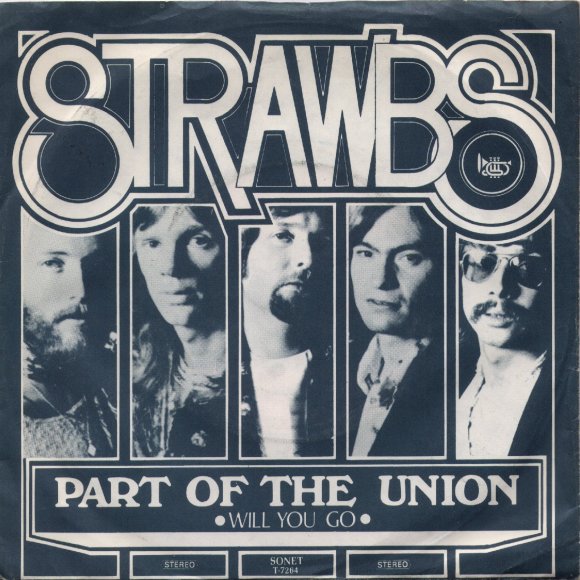
After working at Sound Techniques, final touches were completed at the Manor in Oxfordshire and London’s Morgan Studios, and the LP was issued on January 26, 1973. It had been preceded by the single version of one of Cousins’ strongest tunes, “Lay Down,” which hit #12 in the British charts and brought Strawbs onto the influential TV show Top of the Pops—and not for the last time, as the second single “Part of the Union,” did even better, denied the #1 spot only by the Sweet’s “Blockbuster.”
Going with the flow of fellow hit-makers Slade, Wizzard and T. Rex, Strawbs started wearing “glam” fashions and using makeup and glittery hairstyles on stage, a bit tongue-in-cheek. “We always used to dress up quite brightly even in the folk club days,” Cousins told Gilbert, defending against charges of selling out to commercial trends. “Some of the shirts that I wear on stage today I used to wear five years ago, but they used to be quite bizarre for the time. We were into more theatrical presentations when the first album came out. On reflection, it’s something useful to do.”
Bursting at the Seams is a solid work throughout, starting with the complex arrangement for “Flying.” Chiming guitar harmonics lead to a slow-building folk-rock blend, with Cousins’ breathy vocal, Weaver on organ, and a celestial chorus. At two minutes it changes gears into a full instrumental extravaganza, with an unusual blend of electric banjo (Cousins) and mellotron, before Lambert takes over at three minutes to lead a Byrds-influenced section. Ford almost quotes the bass slide from “Mr. Tambourine Man.”
The lyrics are poetic: “And just as in the willow pattern fantasy/The boy and girl have crossed the bridge of tears.” Cousins was sometimes criticized for his penchant for romantic versification. As he told writer Steve Turner upon the LP’s release. “I used to be very flowery. People would describe my songs as being ‘precious.’ I wrote a line to those people in ‘Queen of Dreams’ [from Grave New World]: ‘Precious gifts I bring you/From rusting hulls of the deep!’ It was a dig, really. My lyrics then were too over-poetic. Now I’m much more blunt and straightforward. I used to hide everything in symbolism.” Given the florid words he still supplies for Bursting at the Seams, doth he protest too much?
“Lady Fuschia,” written by Hudson and Ford, relies on a variety of guitar tones from 6- and 12-strings and Lambert’s electric lead, and Hudson even adds a sitar for extra color. Hudson and Ford harmonize beautifully.
According to Cousins, “Stormy Down” “was a hill we saw when we were driving back one night from Swansea. I thought it was such a great name. Later that night we got lost in the dark on our way home and the song is about that experience. It was really scary.” It’s an upbeat piano-driven pop song that Lambert enlivens by imitating a pedal steel guitar, and the chorus is super-catchy.
“Down by the Sea” is one of the most obvious “prog” performances on the album, with mellotron and ominous guitars announcing a Moody Blues-like atmosphere by the time Cousins enters with an understated, spooky lead vocal, Weaver’s organ in support. Suddenly, he’s interrupted by slashing guitar chords and a very Who-like rave-up. Cousins’ lyrics are dramatic: “In their dismay and blind confusion/The weeping widows clutch their shawls/While as the sea mist ever deepens/The sailors hear the sirens’ calls.”
Just past the three-minute mark, the tempo changes again, with a folk interlude, mellotron eventually taking the place of a string section. The last minute is an impressive classical mélange of Vaughan Williams and Elgar, with Hudson playing timpani-like drums. The real orchestral arrangement is uncredited.
“The River” ends the original vinyl side with Cousins’ delicate minor-key song, often played in live performance just before “Down by the Sea.” It’s a dramatic performance, but the words seem overdone: “I shivered in the bitter wind/Three times the cockerel crowed/I waited for the river/But the river did not flow.”
The Hudson-Ford composition “Part of the Union,” which leads off side two, almost didn’t make the album. Cousins once explained, “It came down to a clash between ‘Burn Baby Burn,’ which they wanted to do, and ‘Down by the Sea,’ one of my songs that seemed to epitomize what the band was all about at that time. I had to force them to do ‘Stormy Down’ and ‘Down by the Sea’ to establish a continuity of sound before going ahead with ‘Part of the Union.’” The future #2 single, based humorously (they hoped) on their experience in factory jobs, had been worked up during the summer in Cousins’ absence, intended for a Hudson-Ford release.
In a Britain that knew more than its share of management-worker hostilities, the record outraged some politicians and energized the rank-and-file: “I say what I think, that the company stinks/Yes I’m a union man/When we meet in the local hall/I’ll be voting with them all/With a hell of a shout, it’s ‘Out brothers, out!’/And the rise of the factory’s fall.”
Containing all the elements of a proper sing-along novelty pop ditty, “Part of the Union” worked brilliantly as a single, but became a sore thumb on an album mostly dedicated to serious motifs. The nearly seven-minute, two-part “Tears and Pavane” that follows re-establishes the LP’s progressive flow. Again, Hudson and Ford shine as a highly dramatic rhythm section, backing up Lambert’s flamenco-infused electric guitar and Weaver’s curtain-like mellotron passages, and his uncredited harpsichord.
“I wrote ‘Tears’ in Germany and John had written ‘Pavan’ so we put them together,” explained Cousins. “We overdubbed an electric guitar with a nylon-string classical and the effect is rather like a bouzouki.”
Cousins’ vocal is his best on the album, and the lyrics, however high-flown, deliver: “Where are the tears that you should be crying right now?/I see the world weariness in your eyes/I hear your voice, soft and sad/Yet your laughter rings like carillons of bells in my ears.”
“The Winter and the Summer,” written and sung by Lambert, is half 13th-century troubadour, half ’70s rocker, and could fit on a Genesis or Yes album without strain. Weaver does yeoman work on organ, and imitates flute-recorders on mellotron, but it’s mostly a showcase for Lambert’s facility with stringed instruments, plugged in or not. Cousins said, “Every group he’s ever been in has been going to record this but thank goodness they never did. He sings it in his Dean Martin voice as opposed to his Stevie Winwood voice, which he uses on side one.”
Retooled to be a minute longer for the album, “Lay Down” is a plea, an anthem, and dancefloor-filler that Cousins wrote and arranged with an eye on pop chart success. This is where Lambert’s importation into the group really pays off, and Weaver—no stranger to pop success, having played with phenoms Amen Corner in the ’60s—integrates keyboards with the powerful vocal harmonies like the pro he is. With chart success, Cousins insisted, “We reached new ears at that time, which was very useful and very good, because you can’t keep on playing to the same audiences all the time because they gradually diminish.”
The album’s coda is “Thank You,” written by Cousins and Weaver, sung by Cousins’ daughter’s class at her school in Hounslow. “I gave the words and music to her teacher and then went back a couple of days later with the recorder,” explained Cousins. “Really, it’s a thank you to all those who bought ‘Lay Down’!”
During the band’s 1973 North American tour, the rest of the band tried to fire Cousins, leading to what he called “a bloodbath” and Hudson and Ford’s departure. It seemed they enjoyed the world of hit pop singles a bit too much, while Cousins was still committed to expansive, arty and sometimes difficult to play rock.
Cousins and Lambert recruited former Nashville Teens and Renaissance keyboardist John Hawken, bassist Charles Cronk (who’d played with Phillip Goodhand-Tait) and Stealers Wheel drummer Rod Coombes. The new lineup promoted their first single “Shine on Silver Sun” with another Top of the Pops appearance, and recorded their next album Hero and Heroine in Copenhagen.
Strawbs’ popularity in the United States grew, and they appeared on bills with King Crimson, Frank Zappa, Ten Years After, etc., but their commercial peak had been reached on both sides of the Atlantic. The group broke up and reformed in various guises, both electric and acoustic, always under the direction of Dave Cousins, until his death on July 13, 2025, at the age of 85. The last Strawbs album, The Magic of It All, came out in 2023: Blue Weaver and John Ford guested on four tracks. Many of their recordings are available in the U.S./worldwide here, in Canada here and in the U.K. here.
Watch Strawbs perform “Down by the Sea” live in Tokyo in 1975




2 Comments so far
Jump into a conversationGreat article about this great album. They are one of my favorites. I live 10 minutes from the Strand in Lakewood NJ where they did their 50th anniversary concert. They played there many times. I talked many times to the band as they would hang out at the theatre for long periods of time after a concert. In the 70’s I used to have to go to travel to NYC or the Capitol Theatre in Passaic NJ to see them. I was overjoyed when Strawbs were picked as one of the top 100 Prog albums of all time with the Hero and Heroine album. I was so sad to hear about Dave Cousins passing. They were frequently played on Alison Steele’s (The Nightbird) on WNEW-FM along with other great groups like Amazing Blondel, Caravan…etc. (more favorites). Listen to them when you get a chance. Alot of history there.
Completely agree with Jercor; a fabulous band on vinyl and live. I would put “Hero and Heroine” in a Top 100 Albums list, not just as that in a prog list. The opening triptyk of “Autumn: Heroine’s Theme/Deep Summer’s Sleep/The Winter Long” is a magical tonal introduction to a very fine, highly overlooked album that stands among the very best ever!