
Has the Golden Age of the Rock Bio/Memoir Already Peaked?
by Roy Trakin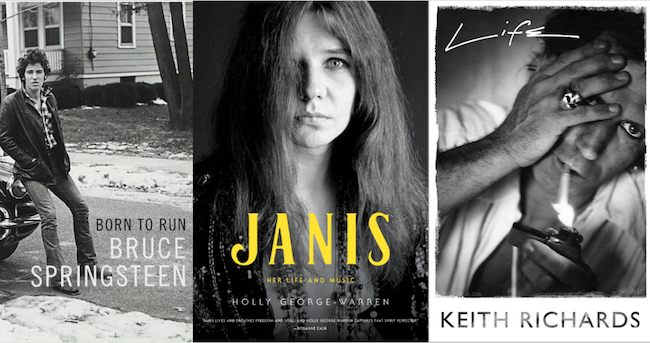
In John Ford’s classic The Man Who Shot Liberty Valance, Carleton Scott’s newspaper editor Maxwell Scott offers the ultimate apologia for history as mythology when he sonorously insists, “This is the West, sir. When the legend becomes fact, print the legend.”
That has been the credo for several generations of rock biographers and memoirists, from the early days of Jerry Hopkins’ 1972 Jim Morrison biography, No One Here Gets Out Alive, or David Henderson’s 1978 Jimi Hendrix book, ’Scuse Me While I Kiss the Sky, both credited as kick-starting the genre by attracting big-name book publishers to their commercial viability.
In 2019, the music memoir arguably reached its peak with an unprecedented series of releases, from Elton John’s tell-all, best-selling memoir, Me to Prince’s posthumous The Beautiful Ones, Morris Day’s On Time, Rick Ross’ Hurricanes, Debbie Harry’s Face It, Flea’s Acid for the Children and Liz Phair’s Horror Stories: A Memoir, along with Holly George-Warren’s acclaimed Janis Joplin bio, simply titled Janis, the only non-first-person narrative in the bunch.
David Ritz, the 76-year-old kingpin of music memoirs, whose as-told-to list includes Ray Charles, Aretha Franklin, B.B. King, Marvin Gaye, Buddy Guy, Bettye LaVette, Janet Jackson and Etta James, co-wrote the Morris Day book and was an uncredited consultant on Flea’s autobiography, explains the surge in these titles: “It’s all about legacy. As we get into our 60s and 70s, now’s the time to reflect, not only for the artists and musicians, but the general public. This just seems to be an age of introspection when it comes to our musical icons.”
George-Warren, the former head of Rolling Stone Press, its former book packaging division, who has penned biographies of Gene Autry and Alex Chilton as well as Joplin, says, “Many of these long-standing editors at publishing houses are super-savvy music fans themselves. But you still have to feed them the ammunition to convince their business and marketing people to sign these books.”
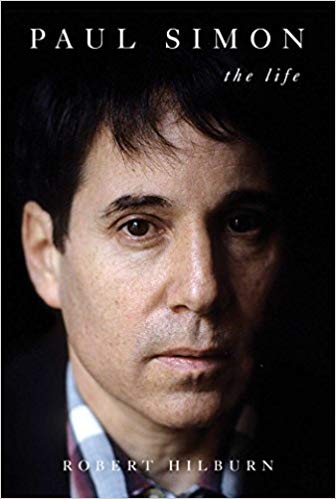 Indeed, such highly anticipated music bios as her Joplin book and Robert Hilburn’s Paul Simon tome proved to be commercial disappointments, quickly plummeting after release. In fact, most rock bios rarely sell in the 25,000-30,000 range these days, compared to million-selling first-person memoirs by the likes of Elton and Bruce Springsteen.
Joel Selvin, the longtime pop critic for the San Francisco Chronicle, who has written histories of Altamont and Monterey Pop, as well as a best-selling biography on Sammy Hagar, along with books on industry pioneers like L.A. Reid and Bert Berns, admits, “Publishers don’t give a f**k about anything that isn’t a first-person memoir. Third-person biographies are having a harder time getting deals.
“The public acceptance of these books is directly tied to the level of candor and honesty with which you approach the topic. Step up, be hard on yourself, tell the truth and they’ll love it.”
Sarah Lazin, the longtime literary agent and Rolling Stone alum who represents such rock-crit vets as George-Warren as well as Robert Christgau, Charles Cross, Ben Fong-Torres, David Fricke, Evelyn McDonnell, Ann Powers and Variety’s Shirley Halperin and Chris Willman, among many others, points to the 2010 publications of self-penned titles like Patti Smith’s National Book Award-winning Just Kids and Keith Richards’ Life, for launching the current spate of music memoirs. Before that, it was Neil Strauss’ books on Marilyn Manson (1998’s The Long Hard Road Out of Hell) and Mötley Crüe (2001’s The Dirt, turned into a Netflix biopic) that changed the idea of how a rock biography could perform in the marketplace, both of them N.Y. Times best-sellers.
“I’ve been trying to sell music books since I came to New York in 1977 with Rolling Stone,” Lazin says. “Publishers didn’t understand popular culture; they didn’t appreciate there would be an audience for these books. The industry was notorious for not doing any marketing research or outreach. It was all very unscientific.”
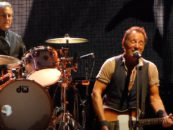
Watch Bruce Springsteen read from his memoir, Born to Run
Ben Schafer served as executive editor since 2002 at Da Capo Press, which became Hachette Books, an imprint of the Hachette Book Group, where he specializes in music and pop culture memoirs and biographies. Among his projects was Bob Mehr’s much-lauded 2016 Replacements history, Trouble Boys.
“Within the last 10 years, give or take, publishers have discovered rock books are viable,” he says. “There was a time when the conventional wisdom was, people want to listen to music, not read about it. That’s not something people can say anymore.”
Like the prefab obituaries that comprise the “morgues” at daily newspapers, artists are increasingly seeking to shape how they will be remembered.
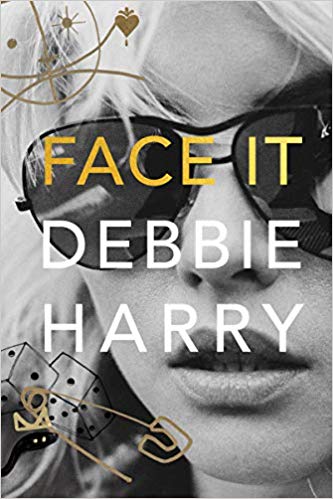 Carrie Thornton, VP/Editorial Director at Dey Street, an imprint of Harper-Collins, has published memoirs by Debbie Harry, Sonic Youth’s Kim Gordon, Johnny Marr, Peter Hook and music journalists Rob Sheffield, Lizzy Goodman and Kathy Iandoli.
“Fall is a great time to release these books because they make great gifts,” she says. “Musicians who can write books themselves are even more appealing. Who’s going to tell the story better than the person who lived it?
“Also, a focused fan base is important because we know we can market to them. That said, all the publicity and marketing in the world is great, but it really comes down to the quality of the storytelling. Word of mouth is vital for the book to keep selling after that initial promotion, and for that to happen you need a fantastic read.”
Stuart Roberts, a senior editor at Simon & Schuster, has been active in the burgeoning genre of hip-hop autobiographies, including recent efforts from Gucci Mane and Bobby “Logic” Hall, both of whom have compelling extra-musical stories to tell.
“This is a medium they feel at home in,” he says. “Both Gucci Mane and Logic can step out of the field they’re known in and still have control over their stories. Rap and hip-hop have always had to defend their cultural legitimacy, relevance and importance as an art form.”
As an example of the type of cross-promotion possible, Roberts points to Hall’s Supermarket, a fiction novel with elements of his own life that was released simultaneously as a paperback, an audio edition narrated by the author, an eBook and as an accompanying soundtrack album. “You want the book to have real cultural impact. That’s how it lasts,” says Roberts.
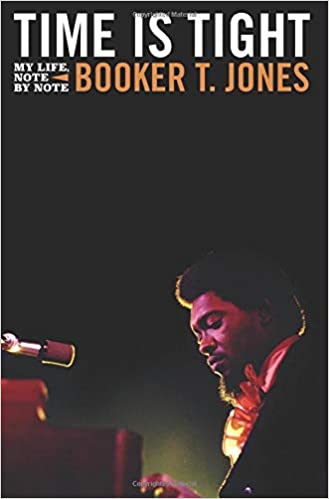 “Our goal is to do these books in a literary way,” explains Philip Marino, a senior editor at Little-Brown, who has published both Booker T. Jones’ recent memoir, Time Is Tight: My Life, Note by Note, which the legendary musician wrote without a collaborator, along with Philip Norman’s Eric Clapton biography and Gary Giddins’ ongoing three-volume history of Bing Crosby. “Memoirs should be more than just a regurgitation of live events. We want them to be immersive, page-turning documents that will be around as long as their music. We want to take advantage of what a book can be, telling a story differently from a documentary, a podcast or a magazine article.”
Marino admits to the difficulty of selling a definitive biography as opposed to a memoir or an as-told-to.
“Readers want to feel like they’re hanging out with a rock star for a while,” he says. “While that’s tough to do when the musician is not directly involved, it’s also hard to predict when fans, who pay hundreds for a concert, will show up to buy a $30 hardcover, so memoirs can also be risky books to acquire. They are costly to publish and sometimes just don’t work.”
Rakesh Satyal, an editor at HarperOne, an imprint of HarperCollins, published a book in May by Tori Amos (he previously worked on a 2005 book she co-authored with Ann Powers) and a recent Common memoir.
“We look for artists with discerning, loyal fan bases who are also avid readers,” he says.
Watch Elton John discuss his memoir, Me
Trying to explain the current proliferation of such titles, Satyal muses, “In trying times like these, we turn to artists who have had something meaningful to say in music. These people are troubadours, chronicling and cataloging our experiences as a country and in the world. We look to them for comfort and to make sense of the things we can’t make sense of.”
Adds Ritz, “We’re all trying to get at the mystery of what makes these musicians so great… The more we hear music and think about its creators, the happier I am. I think it’s endlessly intriguing because we will never totally understand this process. As long as we listen to music, there will be books and movies about these artists and their gifts.”
Of course, the recent success of rock biopics like Bohemian Rhapsody and Rocketman certainly hasn’t hurt the desire for fans to read about their favorite acts’ history. And the current popularity of audio and eBooks also represents an opportunity for publishers as does the proliferation of limited-edition coffee-table books like the recent Beastie Boys bio project, which parallels the rise of vinyl and other physical keepsakes in a digital world.
“You get something to put on your shelf to celebrate this artist you grew up with, that reflects that passion,” says Little-Brown’s Marino.
Have we started to reach the bottom of the barrel in terms of rock bios? Notable white whales for the publishing industry range from Joni Mitchell and Mick Jagger (who had to return his advance when he couldn’t deliver a manuscript) to Lady Gaga, Yoko Ono, Bonnie Raitt, Tom Waits, Randy Newman, Jack White, John Prine, Nick Cave and trans synth pioneer Wendy Carlos, as well as relative newcomers like Lorde, Frank Ocean, Blood Orange’s Dev Hynes, Cardi B, Billie Eilish and Lizzo.
“I’ve never been busier than I am now,” claims Ritz, who has just finished a book with Lenny Kravitz. “I’ve always been a hustler. I’ve been a freelancer forever. If I didn’t do this, I’d be packing bags at Whole Foods. I’m happy people want to read about the lives of these musicians.”
Former L.A. Times pop music writer Robert Hilburn has written biographies on both Johnny Cash and Paul Simon, for which he received substantial advances, but is having some difficulty coming up with his next subject, as musicians start to pen their own tales.
“Publishers are more tuned into the excitement of working directly with the artists,” he says. “Conventional biographies have suffered because of that. What I feel are missing from them is an appreciation of the music. I want to write about those artists who are going to be remembered 60 years from now. And it’s not the details of their lives that are important, but the work they left behind. That’s where the biography has its advantage, in being able to deliver a critical assessment which is essential in the history of a performer.”
“We’re all trying to get at the mystery of what makes these musicians so great,” concludes Ritz. “It’s endlessly intriguing because we will never totally understand the creative process. As long as we listen to music, there will be books and movies about these artists and their gifts.”
Watch Patti Smith read from her book Just Kids




No Comments so far
Jump into a conversationNo Comments Yet!
You can be the one to start a conversation.