
Neil Sedaka, Legendary Brill Building Singer-Songwriter (‘Breaking Up is Hard to Do’), Dies
by Greg Brodsky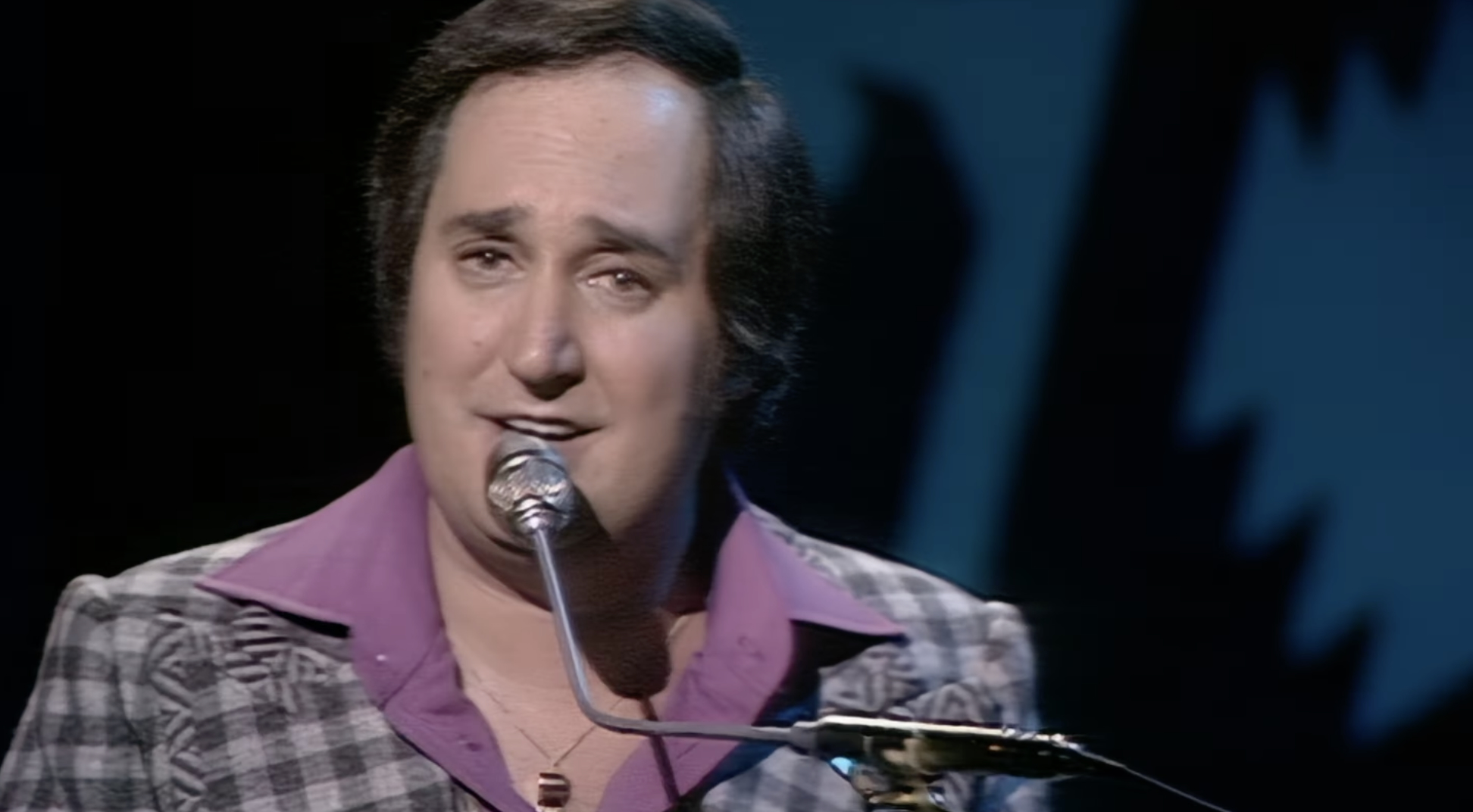
Neil Sedaka, whose career began as a teen pop sensation, evolved to that of a gifted songwriter of some 500 tunes—many while working at the acclaimed Brill Building in New York City—a hitmaker in the ’60s, as well as a surprising comeback king a decade later with several big singles in the ’70s, died Feb. 27, 2026. Sedaka, who was 86, had been taken to a Los Angeles hospital earlier in the day. A representative for the family released a statement, “Our family is devastated by the sudden passing of our beloved husband, father and grandfather, Neil Sedaka. A true rock and roll legend, an inspiration to millions, but most importantly, at least to those of us who were lucky enough to know him, an incredible human being who will be deeply missed.”
Sedaka was born on March 13, 1939, in New York City. His official website notes that his interest in music began at eight, when he would listen to “The Make Believe Ballroom” on WNEW (AM) radio. By the time he was nine, he had already begun his intensive classical piano training at the prestigious Juilliard School of Music, attending both the Preparatory School and the College.
After graduating from high school, he became a founding member of the doo-wop group the Tokens, in 1955, writing many of their early songs with his neighbor and longtime songwriter partner Howard Greenfield. Sedaka left the group in 1957 to launch a solo career.
A big break was provided by singer Connie Francis, who recorded several of the songwriters’ songs. Soon, Sedaka began to release his own singles and enjoyed a worldwide hit in 1959 with “Oh! Carol.” (The “Carol” of the title was inspired by a young fellow songwriter who would become known as Carole King.) In the new decade, he continued to achieve success as a singer, most notably with “Calendar Girl” and “Happy Birthday Sweet Sixteen” in 1961.
Meanwhile, he and Greenfield continued to score with their “benefactor,” Francis, who earned a #4 single with the title track of the feature film Where the Boys Are, in which she co-starred.
In 1962, the songwriting duo scored their biggest hit, an uptempo song called “Breaking Up is Hard to Do,” which Sedaka took to #1 in the U.S.
As popular music in the ’60s evolved, however, with the onset of the British Invasion, Sedaka’s singing style was out of vogue. He did, however, continue to achieve success as a songwriter for, among others, Tom Jones (“Puppet Man”), the Monkees (“When Love Comes Knocking at Your Door”), and the Fifth Dimension (“Workin’ on a Groovy Thing”).
Sedaka’s comeback as a singer began in the early ’70s. Veteran artist manager Harvey Lisberg explains in his 2023 memoir, I’m Into Something Good: My Life Managing 10cc, Herman’s Hermits & Many More!, that in 1971 he was visiting music impresario Don Kirshner at the Brill Building in New York, looking for songs for one of his artists. “The Brill Building had some of the finest songwriters in the world,” Lisberg wrote. “Goffin and King, Mann and Weil, Bacharach and David; they’d all been through there. I asked Donny how it worked. ‘Well,’ he said, ‘they all have a little office and they’ve all got a piano and they work on their songs, nine to five.’ For some reason I said, ‘Whatever happened to Neil Sedaka?’ I had been a massive fan of his, but he hadn’t had a hit for years and had disappeared. ‘Neil?’ said Donny. ‘He’s upstairs. He’s one of our writers.’ I couldn’t believe it. ‘You’re joking!’ I said. It was too much of a coincidence to be true. ‘I’m serious,’ said Donny. ‘Do you want to hear what he’s doing?’ He led me up some stairs, through a door and into a little room, which was about 10 feet by six. There was just about enough space for an upright piano. Sitting in front of it, large as life, was Neil Sedaka.”
One thing led to another and soon Elton John had signed Sedaka to his new Rocket Records label. In 1975, Sedaka returned to the top of the U.S. singles chart with “Laughter in the Rain,” featured on a compilation album titled Sedaka’s Back.
Sir Elton paid tribute to Sedaka, writing, “He was a dear friend and I loved working alongside him at Rocket Records in the 1970’s – and was thrilled at his renaissance. He was a truly great artist and songwriter. Alongside Howard Greenfield, he wrote some of the most iconic pop songs ever. He deserves to be in the Rock and Roll Hall of Fame.”
[Bass guitarist Leland Sklar referenced “Laughter in the Rain” in a tribute, wroting, “Neil… was a treasure to work with and this song is one of my favorite songs I was blessed to record with him. Truly one of the greatest artists of his generation.”]
A follow-up album included a slow, rearranged version of his biggest hit, 1962’s “Breaking Up is Hard to Do.” Lightning struck twice as the single reached #8 in 1975.
The remarkable Sedaka-Greenfield legacy also includes the #1 single, 1975’s “Love Will Keep Us Together,” the biggest hit for the Captain & Tennille. Greenfield died in 1986.
A postscript to the longtime association between Kirshner and Sedaka. When Lisberg had a video chat with Sedaka in 2025, he asked him about the impresario. “We had a parting of the ways,” Sedaka said. “I had the number one record in the U.S. and I said, ‘Donny, you should put me on the show [The Midnight Special].’ And he said, ‘If you bring Elton, I will put you on.’ Son of a gun.”
Fellow Brill Building denizen Carole King wrote, in tribute: “Neil Sedaka was so talented, and he inspired me to follow my dream of being a songwriter. With love and gratitude and condolences to his family.”
Micky Dolenz wrote, “I was saddened to hear of Neil Sedaka’s passing. A rare talent, he gave us many hits and co-wrote ‘When Love Comes Knocking at Your Door’ with Carole Bayer Sager, beloved by Monkees fans too. My thoughts are with his family and all who cherished his music.”
From Darlene Love: “We lost another true music legend. Neil Sedaka was one of the most talented songwriters and male vocalists of our time. So many hits. So many memories. His music will live on forever. Beyond the stage, he was a warm, gentle soul.”
Hello, friends.
I’m saddened by the news of Neil Sedaka’s passing. We grew up in the business and stayed in touch through all the years. He was a guest on my SiriusXM show and we recently just met up at the diner down the street and reminisced like old friends do. Neil wrote and… pic.twitter.com/z7w3XHnxun— ThePatBoone (@Pat_Boone) February 28, 2026
Sedaka’s recordings are available in the U.S. here, in Canada here and in the U.K. here.



6 Comments so far
Jump into a conversationGod bless you, Neil. Absolute song writing genius. And what a voice! Your wonderful songs will live forever.
R. I. P.
Another sad loss of a truly great artist- singer and songwriter who provided so many terrific songs to the soundtrack of my life. Maybe we will finally see a fitting tribute of a box set that covers his entire career that has been long overdue.
Love Pat’s and Neil’s shows on Sirius/XM. A music history lesson by the guys who started 70 years ago. I’m not much into music theory, but Neil’s shows were a wonderful education.
Neil had one of those distinct voices. As soon as the vocal hits, you know it’s him.
Another R+R Hall snub. Disgusting and sad. RIP Neil.
I was coming of age when “Sedaka’s Back” was released. It would generate 3 singles: Laughter in the Rain, That’s When the Music takes me and The Immigrant. The Immigrant was a sad song in 1975. It’s even sadder today but does demonstrate the strength of Neil’s writing and performance.