
A Vintage 1978 Interview with the Bee Gees: “We’ve Never Been Inclined to Follow Other People’s Ideas’
by Harvey Kubernik
The Bee Gees, during a career that lasted more than five decades, recorded 22 studio albums, including the monumentally successful soundtrack to the film Saturday Night Fever, and also enjoyed dozens of worldwide hit singles that featured their highly influential three-part harmonies. They achieved nine #1 hits in the U.S. (23 Top 10 singles on the Billboard Hot 100 chart in all), including “How Deep Is Your Love,” “Night Fever” and “Stayin’ Alive” from SNF, and graced charts around the world with many other classics, including “New York Mining Disaster 1941,” “How Can You Mend a Broken Heart,” “I Started a Joke,” “Lonely Days,” “Words” and “You Win Again.”
The Bee Gees—brothers Barry (born Sept. 1, 1946), Robin and his twin Maurice Gibb (born Dec. 22, 1949)—have been inducted into the Rock and Roll Hall of Fame, the Songwriters Hall of Fame, BMI Icons, the Vocal Group Hall of Fame and the Dance Music Hall of Fame.
In the January 21, 1978, issue of England’s Melody Maker, at the height of the group’s fame, I interviewed the Bee Gees for an article, “How the Bee Gees Captured America.”
“One of the reasons for the Bee Gees’ success,” explained Robin Gibb (who died in 2012), at their rented Benedict Canyon home, “is that we’ve never used music as a soap box. Music, I’ve always believed, can take you away from reality and you have the option to identify with the music. Something happens when people are bound together through a song.
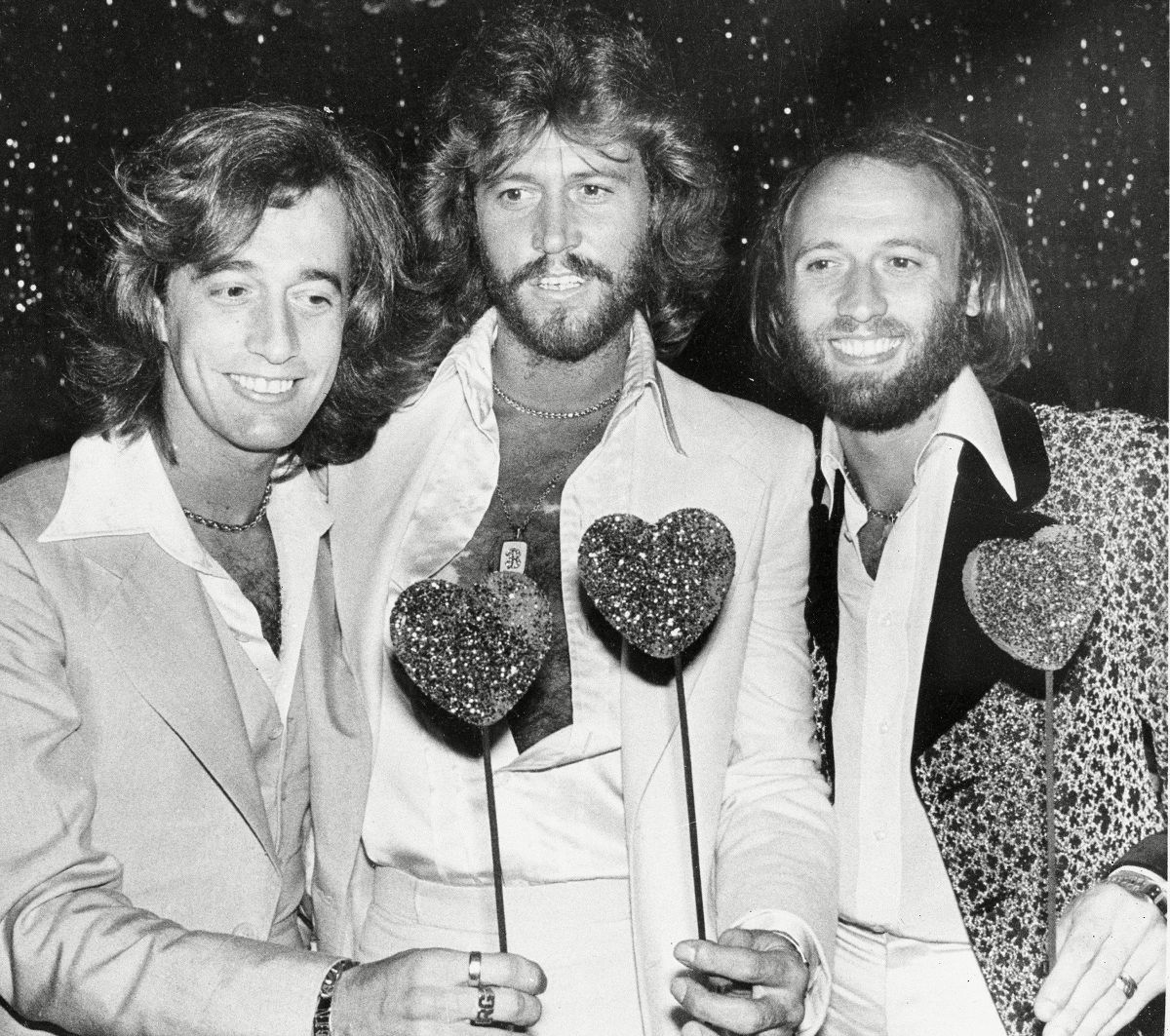
(l. to r.): Robin, Barry & Maurice Gibb (Photo courtesy of HBO)
“Like, ‘How Deep is Your Love,’” he continued. “Personalities are examined in that tune, but female or male aren’t even mentioned. It has universal connotations and it clicks with everyone. Before we cut that song, we knew we could fuse some of our own personalities into the track. Love is an anchor, it’s a foundation. Not all our songs are light and breezy. I’ve said it before, but we write our songs. We’re not interpreters. Ten years ago, most music was a social outcry, and we never subscribed to that pattern. We didn’t jump on trends and we’ve seen a lot of them the last decade. Flower power. Glitter…I think the Bee Gees have always realized that there is so much love to bring out in songs that it is a catalyst to bring people together.”
“Before, we played it safe and strict,” said Barry Gibb. “I think the kids and younger people want to open up a bit more at concerts,” he added. “We’re now more self-contained on stage and I really dig working with our band. At times we might have overused the strings and some of our work became mushy. Strings are beautiful tools to work with. They can break your heart.”
During my handful of group interviews with the Bee Gees, in 1978 I visited the set of Sgt. Pepper’s Lonely Hearts Club Band, the much-derided film that Michael Schultz directed. I spent part of the afternoon walking around the yellow brick road at the fabled Metro-Goldwyn-Mayer movie studio in Culver City with Barry Gibb and Peter Frampton, who also appeared in the film.
Del Shannon, Bobby Womack, George Benson, Helen Reddy, Johnny Rivers, Minnie Riperton, Mark Lindsay, Jack Bruce, Monte Rock III, Al Stewart, John Mayall, Alan White, Jose Feliciano, Tina Turner, Peter Noone, the Paley Brothers, Kim Fowley, Margaret Whiting, Gwen Verdon and many others appeared in a star-studded finale, conducted by George Martin.
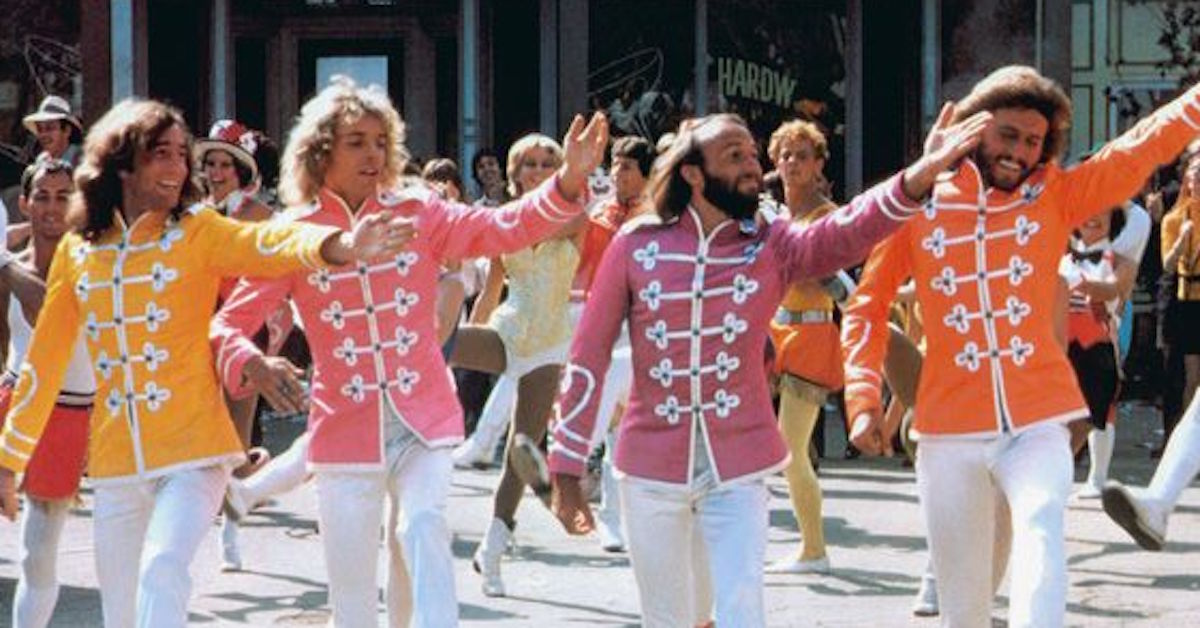
It was the last movie to be made at M-G-M under the guidance of the studio’s existing management. On the M-G-M lot, I asked Maurice Gibb about the group’s most recent studio album at the time, 1976’s Children of the World, which yielded the hit single ‘You Should Be Dancing’. The LP was much harder-sounding than its predecessor, Main Course.
“We wanted an album that was more nervous,” said Maurice (who died in 2003). “We felt Main Course was a little too varied. There were too many directions. We wanted to take the R&B flavor in Main Course a step further with Children of the World. We are always trying to establish a direction. Groups should have guidelines, but also be open for experimentation. When we did [1974’s] Mr. Natural we didn’t have a positive direction. We were thrashing about and some good things came out of that album.”
All three Gibbs were quick to credit Arif Mardin, producer of Mr. Natural and Main Course, for showing them new studio tricks and techniques.
“Our studio tactics had become lazy,” admitted Barry. “We had to own up and [Atlantic Records executive] Jerry Wexler recommended Arif.”
“Arif was incredible to work with,” said Robin, “especially with Maurice. He changed our style of recording. We would start with one instrument and build up from there, as opposed to all playing at once. It is a clearer process.”
“Arif was a producer and a referee. He organized sound around a creative base,” Maurice added.
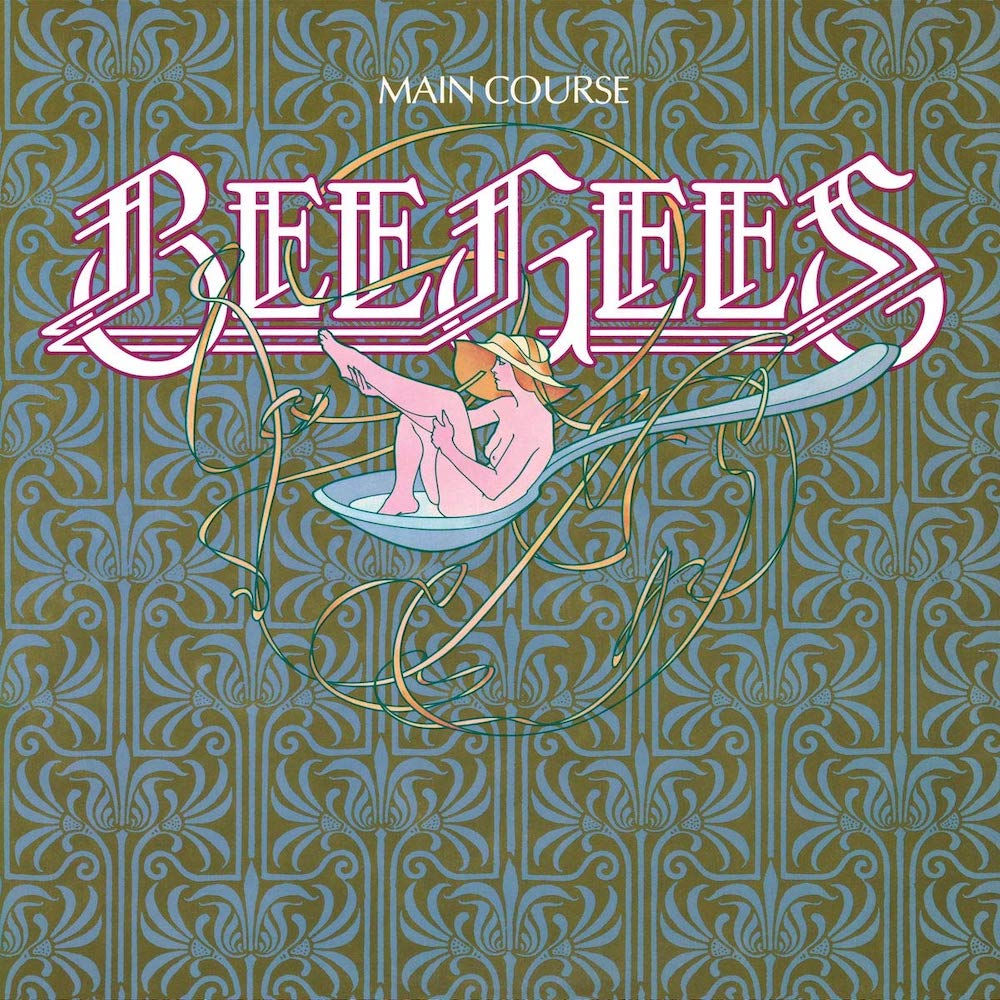
When the Gibbs recorded Main Course, they knew of previous problems and the result was three hit singles. Olivia Newton-John covered “Come On Over,” “Fanny (Be Tender with My Love)” was a hit for the Bee Gees in the U.S., “Jive Talkin’” topped the hit parade. “Nights on Broadway” was a Top 10 smash.
Watch the Bee Gees perform “Nights on Broadway” in 1975
Related: Our Album Rewind of Main Course
“We were nervous wrecks at the end of the ’60s,” said Barry, “touring, recording, promotion. I can remember a time when I walked out of my front door and there were six cars and they all belonged to me. That’s madness.
“I feel very close to my family,” he added. “We are all living in this house and planning for the future. There was an adjustment period five years ago, but all the little hassles and hang-ups have disappeared. We began to relate to each other as brothers. We don’t want to sit on our laurels. We knew we always had a lot more to offer to people than they thought we had. Right now, the family is throbbing. No one is looking out for himself and all are looking in.
“We’re working faster and I feel I can write a song in a minute with Maurice and Robin. I’m really happy that people are acknowledging our influence on popular music. You have no idea what a thrill it is to have a top five single in England. With all the new wave and punk rock out, I would have thought something like ‘How Deep Is Your Love’ wouldn’t have a chance. We always kept going forward and we’re getting stronger every day.”
Robin has changed over the last few years. He appears more confident and far from the insecure figure that toured the U.S. in the last part of the ’60s.
“I know what people think of me,” he said. “I used to be very insecure. There was a lot of pressure around me and I had trouble coping with initial stardom and touring. That’s changed, as I’ve come from this boy-to-man period the last five years. A new era has started. I feel great about the people around me. I know the Bee Gees have touched people. I can see that by our fan mail and questions fans ask when they want me to sign an autograph. The most typical question we receive through the post is ‘When are you visiting again?’
“We’ve been through all the stages, struggling, and then hitting it big, we’ve split and re-formed, had number ones, toured the world. Of course, we want to continue improving in all areas, but our main concern now is strong albums.
“We’ve never been inclined to follow other people’s ideas,” continued Robin. “If anybody’s gonna follow an idea they’re gonna follow ours. Even though the Beatles influenced a lot of our music, we never aimed to follow what they were doing. We’re still very young as far as I’m concerned and there’s a lot of work around the corner, like films. In a way, we’re just starting.”
The Bee Gees’ vast recorded legacy is available in the U.S./worldwide here, in Canada here and in the U.K. here. [Author and music journalist Harvey Kubernik’s books are available in the U.S. here, in Canada here and in the U.K. here.]





No Comments so far
Jump into a conversationNo Comments Yet!
You can be the one to start a conversation.